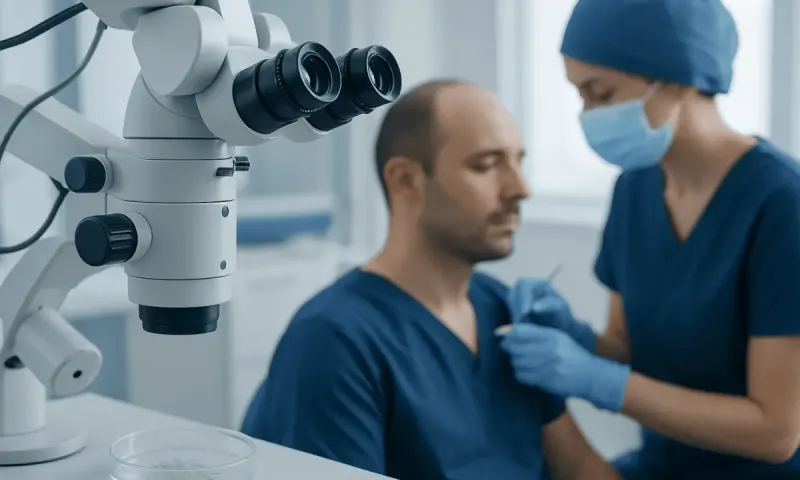
Hair Replacement Surgery: Process, Recovery, and Results
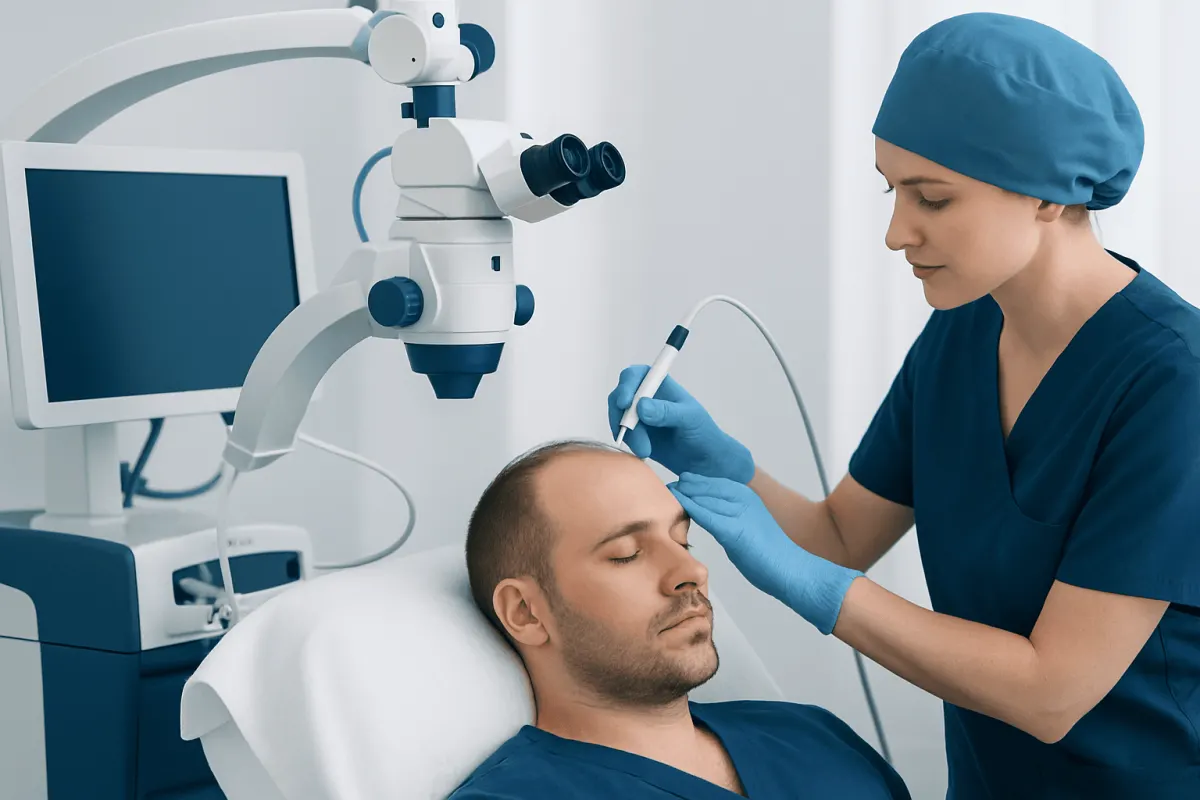
Hair replacement surgery, commonly called hair transplant surgery, redistributes a person’s own healthy hair follicles from a donor area to areas of thinning or baldness. It can provide long-lasting, natural-looking coverage for appropriate candidates, but results develop gradually and depend on the cause and future pattern of hair loss.
Hair Replacement Surgery: An Overview
Hair replacement surgery is a surgical treatment for hair loss in which healthy hair follicles are taken from a donor area, usually the back or sides of the scalp, and placed into thinning or bald areas. It is more accurately known as hair transplant surgery because it uses a person’s own follicles rather than artificial hair. The goal is to improve hair coverage and create a hairline or density pattern that looks natural as it grows.
The most common reasons for considering surgery are androgenetic alopecia, also called male- or female-pattern hair loss, and selected cases of stable hair loss caused by injury, burns or previous surgery. A transplant does not stop the underlying process of hair loss. For this reason, assessment and long-term planning are as important as the operation itself.
Two established approaches are follicular unit extraction, or FUE, and follicular unit transplantation, or FUT. In FUE, individual follicular units are removed from the donor area. In FUT, a narrow strip of donor scalp is removed and divided into grafts. A specialist can explain whether hair transplant treatment is appropriate and which technique may best suit the person’s scalp, donor supply and goals.
How Hair Transplantation Works and Who May Be a Candidate
Each transplanted graft contains one or more naturally occurring hair follicles. The surgeon places these grafts into tiny recipient sites made at carefully chosen angles and directions. This placement helps the new hair follow the surrounding hair’s growth pattern. The donor area is selected because follicles there are often less sensitive to the hormonal effects that drive pattern hair loss.
Good candidates generally have sufficient donor hair, a healthy scalp and a pattern of hair loss that can be planned safely. Adults with stable or reasonably predictable hair loss often have the most reliable planning options. Age alone does not decide candidacy, but people with rapidly changing hair loss may be advised to wait or use medical treatment first so that a future hairline can be designed conservatively.
Before recommending surgery, a clinician should identify the cause of shedding or thinning. Sudden diffuse hair loss may relate to illness, nutritional deficiency, hormonal changes, medication effects or scalp inflammation and may need a different approach. People with active inflammatory scalp disease, uncontrolled medical conditions, certain bleeding risks or insufficient donor hair may not be suitable until these issues are addressed.
- Assessment usually includes a medical history, scalp examination and review of current medicines.
- The clinician considers hair caliber, curl pattern, scalp laxity, donor density and family history of hair loss.
- Photographs and a discussion of realistic coverage, density and hairline design support shared decision-making.
Step by Step: What Happens During Hair Replacement Surgery

Hair replacement surgery is usually performed with local anesthesia, sometimes with medication to help the person feel calm and comfortable. The treatment duration varies with the number of grafts, the technique used and the areas being treated. A team may assist with graft preparation while the surgeon directs planning, harvesting and placement.
For FUE, the donor area is usually trimmed and individual follicular units are removed with a small instrument. For FUT, the surgeon removes a thin strip of scalp from the donor area and closes the incision; the strip is then carefully separated into grafts. FUT can leave a linear scar, while FUE leaves multiple tiny dot-like scars that are often less noticeable once healed, although both methods create some scarring.
Next, the surgeon creates recipient sites in the thinning area and places grafts according to the agreed design. The hairline generally requires particular care because its shape, density and direction strongly affect the final appearance. After the procedure, the person receives instructions on washing, sleeping, activity restrictions, medication use if prescribed and follow-up visits.
Neither technique is universally better. FUE may be preferred when a person wants to wear hair short or avoid a linear donor scar, while FUT may be appropriate when a larger number of grafts is needed and scalp characteristics are favorable. The choice should be based on clinical assessment rather than on a single method’s popularity.
Recovery Timeline, Results and Daily Care
In the first several days, the scalp may feel tender or tight and small crusts can form around implanted grafts. Mild swelling of the forehead or around the eyes can occur, usually settling within days. Careful washing as instructed helps keep the area clean and allows crusts to release naturally; scratching, rubbing or picking should be avoided because it can disturb healing grafts.
Many people return to non-strenuous daily activities within a few days, depending on the procedure and their comfort. Exercise, swimming, sun exposure, hats and hair products may need to be limited temporarily. The treating team provides individual guidance because recommendations can differ according to graft placement, healing progress and other health factors.
It is normal for much of the transplanted hair shaft to shed several weeks after surgery. This is often called shock shedding and does not necessarily mean the follicles have failed. New growth commonly starts after a few months, then becomes progressively fuller. Meaningful cosmetic change often takes six to nine months, while final maturation may continue for 12 months or more, especially in the crown area.
Existing hair around the transplant can continue to become thinner if the underlying pattern hair loss progresses. Some people therefore consider medical management, such as clinician-recommended topical or oral treatments, to help preserve non-transplanted hair. A doctor can discuss potential benefits, limitations and side effects in the context of the individual’s health.
Benefits, Limitations and Possible Risks
The main potential benefit of hair replacement surgery is long-lasting growth of a person’s own hair in areas with thinning. When performed with appropriate planning and careful graft placement, it can improve coverage and help restore a more balanced appearance. Because the hair grows naturally, it can usually be washed, cut and styled after healing.
However, surgery cannot create unlimited density. The donor area is finite, and a transplant cannot fully replace the density of an unthinned scalp. People with extensive hair loss may need to prioritize the frontal hairline or other visible areas. More than one procedure may be considered in some cases, but this depends on donor availability and should not be assumed.
Possible complications include bleeding, infection, swelling, numbness, prolonged redness, folliculitis, scarring and poor graft growth. An unnatural-looking hairline, uneven density or visible scarring can occur if planning or technique is unsuitable. Temporary shedding of existing hair may also occur, particularly when native hair is fragile.
Choosing a qualified medical team, disclosing all health conditions and medicines, and following aftercare instructions can reduce avoidable risks. A clinician should explain expected outcomes honestly, including the possibility that surgery may not be the best first treatment for a particular type of hair loss.
What I Wish I Knew Before a Hair Transplant
A helpful thing to understand before hair replacement surgery is that it is a long-term hair-loss plan, not simply a one-day cosmetic procedure. Transplanted follicles may be resilient, but hair that was already present can continue to thin. A natural result requires a hairline and graft distribution that account for possible future loss rather than focusing only on immediate density.
It is also important to expect a waiting period. The early appearance can look different from the final result because of swelling, scabbing and temporary shedding. New growth develops slowly, and hair texture and density can continue to improve over many months. Planning time away from work or social events may be helpful if the person prefers privacy during early healing.
Donor hair is a limited resource. An experienced clinician will assess whether it is best used to frame the face, fill the mid-scalp, address the crown or preserve options for the future. It is reasonable to ask who will perform each stage of the procedure, how the donor area will be managed and what follow-up care is included.
Hair loss should also be diagnosed before surgery. If thinning is due to a treatable medical or scalp condition, managing that condition may improve shedding or protect remaining hair. An individualized plan may combine surgery with nonsurgical treatment, observation or both.
What Happens 10 Years After a Hair Transplant?
Ten years after a hair transplant, transplanted follicles often continue to grow because they retain many of the characteristics of the donor area. They still need normal hair care and may change in color, texture or thickness as the person ages. Long-term appearance varies among individuals and cannot be guaranteed in advance.
The more common challenge is progression of hair loss in non-transplanted areas. If this occurs, the scalp may look less balanced unless the original transplant was planned with future thinning in mind. A conservative hairline, appropriate graft allocation and treatment to maintain existing hair can help support a more durable result.
Some people choose a further procedure years later if they have enough donor hair and their health and hair-loss pattern allow it. Others may prefer medical treatment, styling changes, scalp micropigmentation or no additional intervention. Long-term follow-up with a qualified clinician can help review changing goals and available options.
Acıbadem Health Point’s multidisciplinary specialists and JCI-accredited hospitals assess and treat hair-loss concerns for international patients, including discussion of appropriate surgical and nonsurgical options.
When to Seek Medical Care
A person should seek medical advice before arranging hair replacement surgery, especially if hair loss is sudden, patchy, painful, itchy, scaly or associated with redness, pus or scalp sores. These signs can suggest a medical or inflammatory scalp condition that needs diagnosis and treatment first. A clinician can distinguish pattern hair loss from other causes and discuss whether transplantation is likely to help.
After surgery, prompt medical advice is appropriate for worsening pain, spreading redness, fever, persistent bleeding, discharge, increasing swelling or any concern that the surgical area is not healing as expected. These symptoms do not always indicate a serious complication, but timely assessment is important.
People should also discuss surgery with a doctor if they have diabetes, a bleeding disorder, immune suppression, a history of <a href="https://acibademhealthpoint.com/diseases/keloid-scars/”>keloid scars, active skin disease, or use medicines or supplements that may affect bleeding or healing. Safe preparation and an individualized aftercare plan are essential parts of treatment.
Frequently asked questions
01How painful is hair transplant recovery?
Most people describe hair transplant recovery as uncomfortable rather than severely painful. Local anesthesia is used during the procedure, and afterward there may be soreness, tightness, itching or tenderness in the donor and recipient areas for several days. The treating clinician can recommend appropriate pain relief and explain how to protect the scalp while it heals.
02What I wish I knew before a hair transplant?
It is important to know that results are not immediate and that temporary shedding is expected before new growth begins. It is also important to understand that a transplant does not stop future thinning of non-transplanted hair. A realistic plan considers donor limitations, long-term hair-loss progression and whether medical treatment may help maintain existing hair.
03What happens 10 years after a hair transplant?
Transplanted hair often continues growing years later, although it ages along with the person. Hair that was not transplanted may continue to thin if pattern hair loss progresses, which can alter the overall appearance. Some people use ongoing hair-loss treatment or consider additional options if suitable donor hair remains.
04Is hair replacement surgery worth it?
Hair replacement surgery may be worthwhile for people with appropriate donor hair, a diagnosed and stable or predictable pattern of loss, and realistic goals. Its value is personal and depends on expected coverage, recovery time, future hair-loss risk and willingness to follow aftercare. A consultation with a qualified clinician helps determine whether benefits are likely to outweigh limitations for that individual.
05Is FUE better than FUT for hair replacement surgery?
Neither FUE nor FUT is best for everyone. FUE removes individual grafts and may be preferred by people who want to avoid a linear scar, while FUT can be useful when many grafts are needed and donor scalp characteristics are favorable. The suitable method depends on the person’s donor supply, hairstyle preferences, degree of hair loss and surgical plan.
06When can someone wash their hair after a hair transplant?
The timing and method of washing depend on the surgical team’s protocol, but gentle washing is often introduced soon after the procedure. The person should avoid rubbing, high-pressure water and picking at crusts until advised otherwise. Following the clinic’s specific instructions is important because grafts are most vulnerable during the early healing period.
This article is for general information only and is not a substitute for professional medical advice. Please consult a qualified doctor about your individual situation.
Hair transplant in Turkey — costs, graft counts & a free assessment
JCI-accredited · board-certified surgeons · reply within 24h
Add us as a Preferred Source to see more of our trusted health content across Google Search, AI Overviews and Discover.