Hair Dandruff and Hair Loss: What You Need to Know

Key Takeaways
- Dandruff does not always cause hair loss, but scalp inflammation and scratching can increase shedding.
- Common triggers include seborrheic dermatitis, psoriasis, eczema, fungal infection, stress, and hair care habits.
- The pattern of hair loss helps clinicians decide whether the problem is temporary shedding or a more specific scalp disorder.
- Treatment usually starts with scalp care, medicated shampoos, and addressing any underlying cause.
- A doctor should be seen if hair loss is sudden, patchy, painful, or accompanied by redness, scaling, or infection signs.
Hair dandruff and hair loss can appear together when the scalp is irritated, inflamed, or affected by an underlying condition. In many cases, the two problems are manageable once the trigger is identified and treated in a targeted way.
Overview
Hair dandruff and hair loss can show up at the same time, but they do not always mean the same thing is causing both. Dandruff is a visible sign of scalp flaking, often linked to irritation or excess skin turnover, while hair loss may reflect inflammation, breakage, shedding, or an unrelated medical condition.
For many people, the reassuring part is that this combination is often treatable. The key is to look beyond the flakes alone and ask what the scalp is trying to signal—whether it is a common condition such as seborrheic dermatitis, a reaction to hair products, a fungal infection, or a type of hair loss that needs medical attention.
When international patients consider care, the practical questions are usually simple: Is this something a medicated shampoo can calm, or does it need a dermatologist’s exam? The answer depends on the pattern of symptoms, how long they have been present, and whether the scalp is itchy, red, sore, or scaly in a way that suggests a deeper issue.
Symptoms
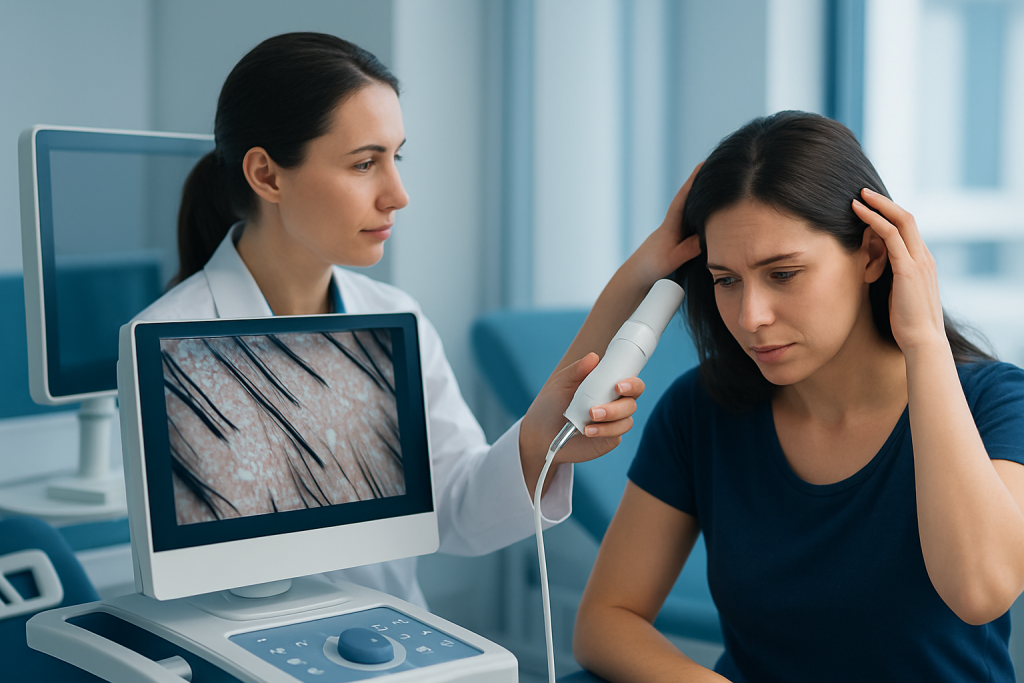
Dandruff is usually noticed as white or yellowish flakes on the scalp, hair, shoulders, or clothing. The scalp may feel itchy, oily, dry, or mildly irritated, and scratching can make the area feel even more sensitive.
Hair loss connected with scalp flaking may appear in different ways. Some people notice increased shedding in the shower or on a brush, while others see thinning along the hair part or in patches where the scalp is inflamed and hair has broken off.
- Persistent flaking on the scalp or eyebrows
- Itching, redness, or burning of the scalp
- More hair in the shower drain, brush, or pillow
- Broken hairs or thinning in affected areas
- Pain, crusting, swelling, or pus in more severe cases
Hair loss itself is not a symptom to ignore if it develops quickly or in patches. Those patterns can point to conditions such as alopecia areata, fungal infection, or inflammatory scalp disease rather than simple cosmetic dandruff.
Causes & Risk Factors

One of the most common causes behind both dandruff and hair shedding is seborrheic dermatitis, a chronic condition that creates greasy scales, irritation, and inflammation on the scalp. It often comes and goes, and flare-ups may be linked to stress, weather changes, skin sensitivity, or overgrowth of a yeast that naturally lives on the skin.
Other causes can include psoriasis, eczema, allergic reactions to hair products, infrequent washing, harsh styling routines, and fungal infections such as tinea capitis. Hair may also seem to thin more when the scalp is inflamed because scratching and repeated friction can weaken hairs and lead to breakage.
Risk can be higher in people with oily skin, neurologic conditions, autoimmune skin disease, or a personal or family history of eczema and psoriasis. Nutritional issues, thyroid disorders, hormonal changes, and significant stress do not cause dandruff directly, but they can contribute to hair shedding and make the overall picture more complicated.
It is also important to remember that dandruff and hair loss may happen together by coincidence. Androgenetic hair loss, for example, can develop while a person also has a separate scalp condition that causes flaking, so a full assessment is often more useful than assuming there is only one cause.
Diagnosis
Diagnosis usually begins with a careful scalp examination and a conversation about timing. A clinician will want to know when the flaking started, whether the hair loss is diffuse or patchy, which products are being used, and whether there are symptoms such as itching, tenderness, or scaling beyond the scalp.
In many cases, the appearance of the scalp provides important clues. A dermatologist may look for greasy flakes, sharply bordered plaques, broken hairs, inflamed follicles, or signs of infection. If the diagnosis is not clear, additional testing may be recommended to narrow the possibilities.
Possible tests can include a scalp scraping or culture for fungus, blood tests for thyroid or iron-related concerns, or, in some situations, a scalp biopsy. These tests are not used for everyone; they are chosen when the pattern of hair loss suggests that more than routine dandruff care is needed.
For people traveling from another country, it can help to bring photos of the scalp during flare-ups and a list of products already tried. That information often makes the consultation more efficient, especially when the visit is part of a short international stay.
Treatment Options
Treatment depends on the cause, and that is why there is no single approach that fits every case of dandruff and hair loss. Mild dandruff may improve with regular cleansing and medicated anti-dandruff shampoos, while more inflamed scalp conditions may need prescription-strength treatments.
Common medical options may include shampoos containing antifungal or anti-inflammatory ingredients, topical corticosteroids for short-term control of inflammation, or other prescription therapies chosen by a clinician. If a fungal infection is present, treatment must address the infection directly; if psoriasis or eczema is involved, the plan may focus on calming the skin barrier and reducing flare-ups.
If hair loss is due to shedding triggered by scalp inflammation, hair may recover gradually once the scalp settles. If the hair loss is from a separate condition, such as pattern hair loss, treatment may need to address both issues at the same time so the scalp and follicles are managed together.
Some patients also need guidance on avoiding overuse of styling products, tight hairstyles, frequent heat, or aggressive brushing. These habits do not always cause the original problem, but they can make fragile hair break more easily and make recovery harder to see.
Prevention & Self-care
Gentle routine changes can make a meaningful difference, especially when dandruff is recurrent. Washing the scalp regularly with an appropriate shampoo, letting it sit as directed before rinsing, and avoiding heavy product buildup may reduce flaking and itching.
Self-care is also about minimizing scalp irritation. Scratching, picking at scales, and using strong chemical treatments too often can worsen inflammation, so it is usually better to choose mild cleansing and a consistent routine rather than frequent experimentation.
- Choose gentle hair products and avoid known irritants
- Use medicated shampoo as advised if dandruff keeps returning
- Avoid tight hairstyles that pull on fragile hair
- Limit heat styling and harsh chemical processing during flares
- Support general health with adequate sleep, nutrition, and stress management
People who have ongoing scalp problems may find it helpful to keep a simple symptom log. Recording flare-ups, product use, stress, and changes in hair shedding can help a doctor spot patterns that are not obvious during a single appointment.
When to See a Doctor
Medical advice is especially important if hair loss is sudden, patchy, or accompanied by scalp pain, redness, swelling, crusting, or pus. These features can suggest an inflammatory or infectious condition that benefits from prompt evaluation.
A consultation is also wise when dandruff does not improve after several weeks of appropriate self-care, or when the scalp becomes so itchy and irritated that daily activities or sleep are affected. Persistent symptoms deserve a closer look because the scalp may need targeted treatment rather than repeated over-the-counter trials.
Anyone who notices widening areas of thinning, broken hairs, eyebrow involvement, or hair loss elsewhere on the body should seek assessment. These patterns can help distinguish common dandruff from conditions that require a more specialized plan.
Acibadem Health Point’s multidisciplinary specialists and JCI-accredited hospitals can diagnose and treat hair dandruff and hair loss for international patients, with coordinated care when more than one scalp issue is involved.
Living With Ongoing Scalp Flare-Ups
Some scalp conditions behave like long-term skin sensitivities rather than one-time illnesses. That can be frustrating, but it also means the goal is often control, not a one-time cure: reducing flare-ups, protecting the hair shaft, and catching changes early.
Follow-up matters because scalp symptoms can evolve. A problem that first looks like simple dandruff may later reveal psoriasis, a fungal infection, or a different type of hair loss, so revisiting the plan when symptoms persist is a sensible part of care.
For people who need care while abroad, a coordinated approach can make recovery easier. Clear instructions, follow-up planning, and a treatment summary to share with a local doctor after travel help maintain continuity once the patient returns home.
What to Expect After Treatment Starts
Improvement in flaking and itching may come before visible hair regrowth. That is normal, because the scalp often heals faster than hair follicles recover their growth cycle.
If shedding was triggered by irritation or inflammation, the amount of hair lost may gradually decrease as the scalp calms down. Regrowth can take time, and the pace depends on the cause, how long the condition has been present, and whether there is any ongoing hair breakage or separate hair-loss disorder.
It is helpful to stay in contact with a clinician if symptoms do not change as expected. Ongoing redness, scale, or shedding may mean the original diagnosis needs adjustment or that treatment should be modified to better fit the scalp’s condition.
Frequently asked questions
01Does dandruff directly cause hair loss?
Dandruff itself usually does not directly destroy hair follicles. However, the itching, inflammation, and scratching that often come with dandruff can lead to more shedding or breakage, especially if the scalp stays irritated for a long time.
02What is the most common reason dandruff and hair loss happen together?
A common explanation is seborrheic dermatitis, an inflammatory scalp condition that causes flaking and itching. Other causes, including psoriasis, fungal infection, product irritation, and unrelated hair-loss disorders, also need to be considered.
03Can anti-dandruff shampoo help hair grow back?
It can help if the hair loss is being worsened by scalp inflammation or flaking. If the person also has another form of hair loss, such as pattern thinning, shampoo alone may not be enough and a broader treatment plan may be needed.
04How do doctors tell dandruff apart from a fungal scalp infection?
They look at the pattern of scaling, hair breakage, inflammation, and whether there are patches of loss or tender areas. If needed, they may order a scalp scraping or culture so the diagnosis is more precise.
05Is hair loss from scalp irritation permanent?
Not always. Hair that sheds because of irritation or inflammation may grow back once the scalp is treated, but long-standing or severe inflammation should be evaluated early to reduce the chance of ongoing damage.
06When should someone stop self-treating and see a specialist?
A specialist should be seen if the scalp is painful, infected-looking, or not improving after a reasonable trial of home care. Sudden patchy loss, eyebrow thinning, or rapidly increasing shedding also deserve prompt assessment.
This article is for general information only and is not a substitute for professional medical advice. Please consult a qualified doctor about your individual situation.
Hair transplant in Turkey — costs, graft counts & a free assessment
JCI-accredited · board-certified surgeons · reply within 24h
Add us as a Preferred Source to see more of our trusted health content across Google Search, AI Overviews and Discover.