Gamma Knife Surgery: Candidacy, Steps and Recovery
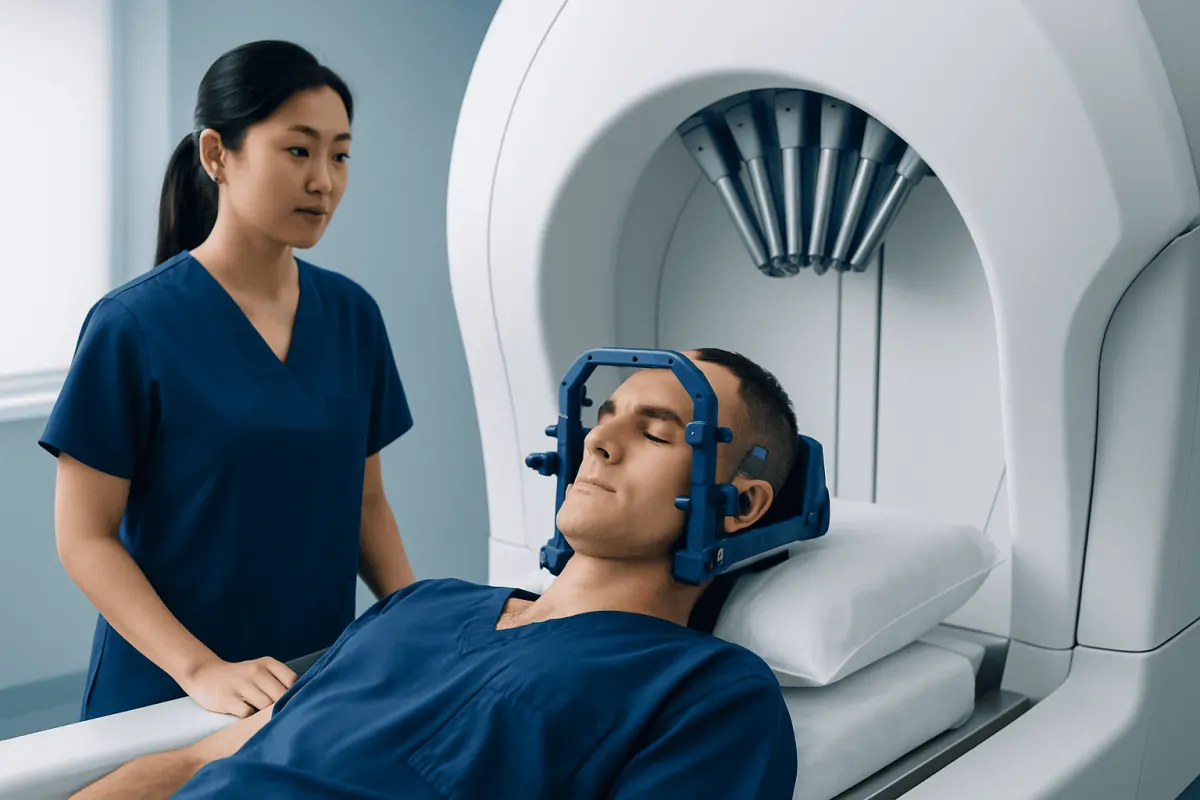
Gamma Knife surgery is a noninvasive, highly targeted radiation treatment for selected brain conditions, including some tumors, blood vessel abnormalities, and nerve disorders. Despite its name, it does not involve a surgical incision; treatment effects develop gradually over weeks to months.
Gamma Knife surgery overview
Gamma Knife surgery, also called Gamma Knife radiosurgery, is a form of stereotactic radiosurgery. It delivers many precisely aimed beams of radiation that meet at a small target inside the brain. Each individual beam has a low effect on the tissue it passes through, while the combined dose at the target is designed to treat the abnormal tissue.
Although it is called surgery, Gamma Knife treatment does not involve a cut in the scalp, removal of skull bone, or general surgical wound. It is commonly performed in one session and is often an outpatient procedure. The treatment is planned by a multidisciplinary team that may include a neurosurgeon, radiation oncologist, medical physicist, and neuroradiologist.
Gamma Knife surgery may be used for selected brain tumors, metastases, arteriovenous malformations (AVMs), trigeminal neuralgia, and some other disorders. It is not appropriate for every brain condition, and the best treatment depends on the diagnosis, location, size, symptoms, previous treatment, and overall health.
How Gamma Knife works and who may be a candidate
Before treatment, detailed MRI, CT, and sometimes angiography images are used to identify the treatment target in three dimensions. Specialized planning software allows the clinical team to shape the radiation dose around the target while limiting exposure to nearby healthy brain tissue and sensitive structures.
Potential candidates usually have a clearly defined target that can be treated accurately. Gamma Knife may be considered for small or moderately sized lesions, lesions in areas that would be difficult to reach with open surgery, or conditions where a noninvasive approach may be preferable. In some situations, it is used after surgery, alongside systemic cancer treatment, or as part of a staged care plan.
For tumors, doctors consider the tumor type, size, number of lesions, growth pattern, and proximity to important structures such as the optic nerves or brainstem. For an AVM, the shape, size, and blood-flow characteristics are important. People with trigeminal neuralgia may be considered when medicines have not provided adequate relief or are causing troublesome side effects. A specialist assessment is needed to determine whether Gamma Knife, conventional radiotherapy, open surgery, observation, or another treatment is most suitable.
It is also important to understand that Gamma Knife does not remove a lesion immediately. Radiation causes changes in targeted cells or blood vessels over time. This gradual effect can be beneficial, but it means ongoing clinical and imaging follow-up is a central part of care.
What happens during Gamma Knife surgery

Preparation commonly begins with a clinical review, discussion of consent, and imaging needed for treatment planning. Depending on the Gamma Knife system and the clinical situation, the head may be positioned with a lightweight mask or a rigid head frame. A frame is secured after local anesthetic is applied to small areas of the scalp; it helps keep the head still and provides a precise reference for treatment planning.
After positioning, the team obtains or reviews high-quality imaging. The patient then rests on a treatment couch that moves into the Gamma Knife unit. The care team monitors and communicates with the patient from outside the room. The radiation itself cannot be felt, heard, or smelled, and the patient remains awake unless medication is needed for anxiety or another reason.
The length of the appointment varies. Imaging, planning, positioning, and treatment may take several hours in total, while radiation delivery can range from minutes to longer depending on the treatment plan. There is no radioactive material left in the body after treatment, so patients are not radioactive and can safely be around family members afterward.
After the session, the frame is removed if one was used. The team checks for comfort, neurologic symptoms, and any frame-site bleeding or swelling. Most people are observed briefly and then leave with a responsible adult. For people considering this approach, Gamma Knife radiosurgery should be discussed with a specialist who can explain the expected goals and alternatives for the individual diagnosis.
Recovery timeline after Gamma Knife surgery
Recovery from the procedure itself is usually relatively quick because there is no incision in the brain or skull. Many people return home the same day and can resume light activities within one or two days if they feel well. Those who had a rigid frame may have mild scalp soreness, pinpoint bleeding, bruising, or swelling at the frame sites for a short time.
The treatment response follows a different timeline. Symptoms caused by a treated lesion may improve gradually over weeks or months, while some conditions require longer follow-up before the full effect can be assessed. For example, treated tumors may shrink, stabilize, or show treatment-related imaging changes over time. AVMs can take years to close completely, and trigeminal neuralgia pain relief may occur over days to months.
Follow-up appointments and MRI scans are essential. They allow the clinical team to assess whether the target is responding as expected and to identify swelling or other delayed effects. Some patients are prescribed corticosteroids for a limited period to reduce inflammation, particularly when swelling is anticipated; medication plans should be followed exactly as advised.
Returning to work, exercise, travel, and normal routines should be based on symptoms, the underlying condition, and the treating team’s recommendations. A person with seizures, balance problems, vision changes, or fatigue may need a more gradual return than someone without these symptoms.
Benefits and possible risks of Gamma Knife treatment
A main benefit of Gamma Knife surgery is its precision. It can treat selected targets without a craniotomy, which may avoid an open-surgery incision, a longer hospital stay, and some risks associated with conventional surgery. It can also be useful for targets located deep in the brain or close to structures where open surgery may carry greater risk.
However, Gamma Knife treatment still involves radiation and is not risk-free. Short-term effects can include headache, nausea, tiredness, scalp tenderness, or temporary discomfort where a frame was placed. Some people have few or no immediate symptoms. Depending on the treated area and the amount of swelling, doctors may recommend medicines and closer observation.
Less common or delayed risks include swelling in the treated area, seizures, changes in sensation or strength, balance problems, speech or memory changes, vision changes, radiation injury to nearby tissue, or worsening of existing neurologic symptoms. The exact risks vary substantially by the condition being treated and the target location. In some cases, the treatment may not fully control the condition, and further treatment may be needed.
Patients should ask their team about the treatment goal: control, symptom relief, reduction of bleeding risk, prevention of growth, or another objective. Understanding the goal helps set realistic expectations, particularly because the benefits are often gradual rather than immediate.
Practical self-care and when to seek medical care
On the day of treatment, it is sensible to rest, drink fluids if permitted, and have another adult available to help with transport and the first night at home. Frame sites should be kept clean and monitored according to the care team’s instructions. Patients should take prescribed medicines as directed and should not stop anti-seizure medicines, steroids, or other regular treatment without medical advice.
Contact the treating team promptly for a persistent or worsening headache, repeated vomiting, fever, increasing redness or drainage from frame sites, new or worsening seizures, confusion, weakness, numbness, speech difficulty, significant balance problems, or new vision changes. Sudden severe neurologic symptoms should be treated as an emergency and assessed urgently.
Follow-up should not be skipped even when a person feels well. Imaging findings after radiosurgery can be complex, and the clinical team is best placed to distinguish expected treatment effects from a problem needing attention. Acıbadem Health Point’s multidisciplinary specialists and JCI-accredited hospitals assess and treat suitable international patients using coordinated neurosurgical and radiation oncology care.
Frequently asked questions
01How long does it take to recover from Gamma Knife surgery?
Most people recover from the procedure itself within a few days and return home on the same day. Mild headache, fatigue, or tenderness at head-frame sites can last for several days. The underlying condition responds more slowly, often over weeks to months, so follow-up imaging remains important.
02Will I lose hair after using a Gamma Knife?
Hair loss is uncommon with Gamma Knife surgery because radiation is concentrated on a small target and does not usually affect a broad area of scalp. In some cases, temporary thinning may occur if the target is close to the skull and a scalp area receives a higher dose. The treating team can explain the likelihood based on the planned treatment area.
03Can you drive after Gamma Knife surgery?
A person should not drive home after Gamma Knife treatment because fatigue, headache, anxiety medication, or frame-site discomfort may affect safe driving. Driving afterward depends on recovery, medications, vision and neurologic symptoms, and whether the person has had seizures. The treating specialist should provide individualized advice, as seizure-related driving restrictions vary by location.
04How long does fatigue last after a Gamma Knife?
Mild fatigue may last for a few days after treatment, although some people feel tired for one to two weeks or longer. Fatigue can also relate to the underlying condition, stress, medicines, or radiation-related swelling. Persistent or worsening fatigue, especially with new neurologic symptoms, should be discussed with the treating team.
05Is Gamma Knife surgery painful?
The radiation delivery itself is painless. If a rigid head frame is used, local anesthetic is used before it is attached, though people may feel pressure or mild soreness afterward. A mask-based setup may be more comfortable for some patients, depending on the equipment and treatment plan.
06Is Gamma Knife surgery the same as brain surgery?
Gamma Knife surgery is called surgery because it treats a target with surgical precision, but it is not open brain surgery. It uses focused radiation rather than an incision. It may be an alternative to open surgery for selected conditions, but it is not suitable for every diagnosis or lesion.
This article is for general information only and is not a substitute for professional medical advice. Please consult a qualified doctor about your individual situation.
Hair transplant in Turkey — costs, graft counts & a free assessment
JCI-accredited · board-certified surgeons · reply within 24h
Add us as a Preferred Source to see more of our trusted health content across Google Search, AI Overviews and Discover.