Fungal Skin Infection: Symptoms, Causes and Treatment

Key Takeaways
- Fungal skin infections often thrive in warm, moist areas of the body and can spread through contact or shared items.
- Common symptoms include itching, scaling, redness, ring-shaped patches, and sometimes cracks or irritation.
- Diagnosis is usually based on the skin appearance and may be confirmed with a simple laboratory test.
- Treatment often includes antifungal creams, sprays, or oral medicines depending on the location and severity.
- Good hygiene, keeping skin dry, and avoiding shared personal items can help prevent repeat infections.
Skin infection fungi are common and usually treatable conditions that affect the outer layers of the skin, hair, or nails. Understanding the signs, triggers, and treatment options can help patients manage symptoms early and reduce the chance of recurrence.
Overview
Skin infection fungi refer to infections of the skin, hair, or sometimes nails caused by microscopic fungi. These organisms can live on the body without causing problems, but under the right conditions they may multiply and lead to irritation, scaling, or persistent rash.
Many people first notice a fungal infection as a patch that looks different from the surrounding skin. It may itch, peel, or slowly spread. Because several skin conditions can look similar, a careful evaluation is often helpful before starting treatment.
For patients who travel for care, fungal skin infections are usually straightforward to assess and treat, but the exact plan depends on the type of fungus, the body area involved, and whether the infection is limited to the skin or has reached the scalp or nails. A clear diagnosis also matters when symptoms have not improved with over-the-counter products.
Symptoms
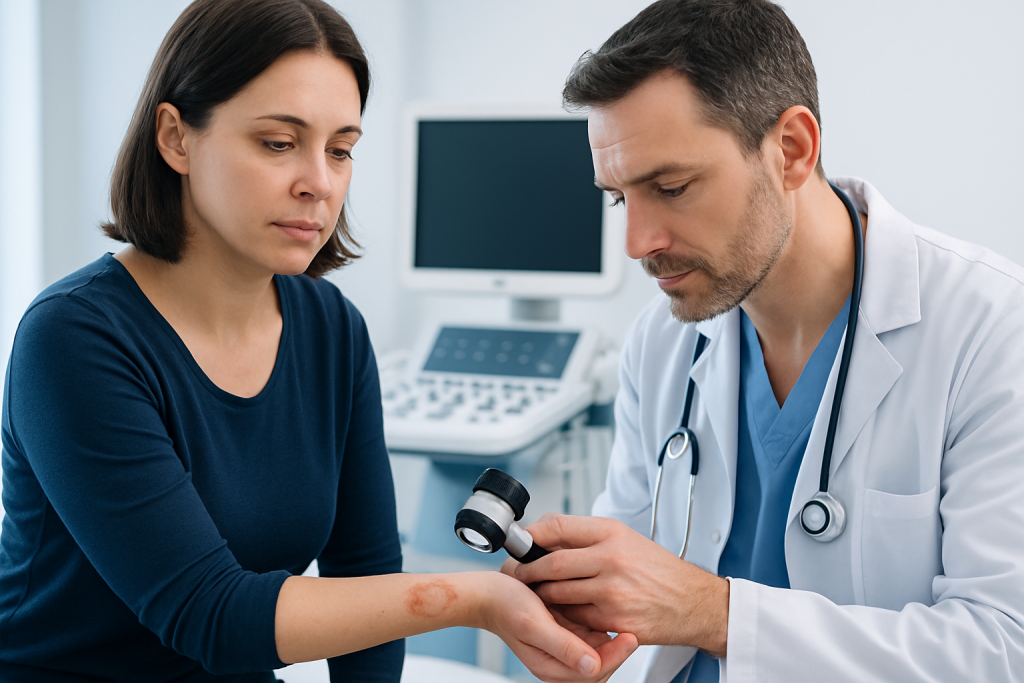
The appearance of a fungal skin infection can vary, but itching and scaling are common clues. Some infections form round or ring-like patches with a more active border, while others cause patchy redness, dryness, or cracking in skin folds.
Symptoms may develop in the feet, groin, under the breasts, between skin folds, or on exposed areas of the body. Infections on the scalp may cause flaking, broken hairs, or localized hair loss, while nail involvement can lead to thickening, discoloration, or brittleness.
- Itchy, red, or scaly patches
- Ring-shaped rash with clearer skin in the center
- Moist irritation in skin folds
- Cracked skin, especially between toes
- Thickened, discolored, or fragile nails
Not every rash is fungal, and not every fungal infection looks classic. That is one reason patients are encouraged not to rely only on appearance when symptoms keep coming back or spread despite self-care.
Causes & Risk Factors

Skin infection fungi usually belong to groups such as dermatophytes, yeasts, or molds. These organisms are common in the environment and may also spread from person to person, from animals, or from contaminated surfaces and items.
Warmth, moisture, and friction make it easier for fungi to grow. That is why infections are more likely in areas where sweat collects or the skin rubs together. People who wear tight shoes for long periods, use shared gym equipment, or spend time in humid environments may be at higher risk.
Certain health conditions and lifestyle factors can also raise the chance of infection. These include diabetes, immune suppression, frequent antibiotic use, skin injuries, and a history of repeated fungal infections. Travelers may notice flares after long flights, changing climates, or extended time in enclosed shoes and clothing.
Diagnosis
Diagnosis often starts with a skin examination and questions about where the rash began, whether it itches, and what treatments have already been used. The pattern of the rash, the body location, and the patient’s medical history may point toward a fungal cause.
When the diagnosis is uncertain, a clinician may gently scrape a small sample of skin, hair, or nail for laboratory testing. This can help identify the fungus and distinguish it from eczema, psoriasis, contact dermatitis, or bacterial infections.
In more persistent or unusual cases, additional tests may be used, especially if the patient is not improving or if the infection seems to involve deeper structures. A careful diagnosis helps avoid unnecessary medications and supports a more targeted treatment plan.
Treatment Options
Treatment depends on the type and location of the infection. Many skin fungal infections respond well to topical antifungal medicines applied directly to the affected area. These are commonly used for limited rashes on the body, feet, or groin.
When the infection is widespread, involves the scalp or nails, or does not improve with topical therapy, a doctor may recommend oral antifungal medicine. The choice of treatment is individualized, since other health conditions and current medications can affect what is safest.
Supportive steps may also be part of care, especially when the skin is irritated or cracked. Patients may need guidance on how long to continue treatment even after symptoms begin to improve, since stopping too early can allow the infection to return.
- Topical antifungal creams, lotions, or sprays
- Oral antifungal medicines for more extensive infections
- Cleaning and drying affected areas carefully
- Treating contributing issues such as sweaty footwear or skin friction
Prevention & Self-care
Keeping the skin cool, dry, and clean is one of the most effective ways to reduce fungal growth. After bathing or sweating, gently drying skin folds, between the toes, and other moist areas can make a meaningful difference.
Simple daily habits can also lower the chance of reinfection. Patients are often advised to change socks and underwear regularly, wear breathable fabrics when possible, and avoid walking barefoot in shared wet areas unless appropriate footwear is worn.
Shared towels, razors, shoes, and personal grooming items can carry fungi from one person to another. If one household member has a fungal infection, other family members may benefit from careful hygiene and prompt attention to any new rash or itching.
For those receiving treatment while abroad or preparing for follow-up after travel, it helps to keep a record of what medicine was prescribed, how it was used, and whether the rash changed. That makes continuity of care easier when seeing a local doctor after returning home.
When to See a Doctor
Medical advice is a good idea when a rash is painful, rapidly spreading, or not improving after a brief period of self-care. Patients should also seek assessment if the infection involves the scalp, nails, face, or a large area of skin.
People with diabetes, weakened immune systems, or recurrent fungal infections should not wait too long before getting checked. In these situations, even a small skin problem can become harder to manage if it is left untreated.
It is also sensible to see a doctor if the rash looks different from previous fungal infections, if there is pus or fever, or if there is uncertainty about the diagnosis. Acibadem Health Point’s multidisciplinary specialists and JCI-accredited hospitals support international patients in diagnosing and treating this condition with coordinated, patient-centered care.
Living With Recurrent Fungal Infections
Some people find that fungal infections return even after treatment. When that happens, the next step is usually not simply using the same cream again, but looking for the reason the fungus keeps coming back. Shoes that stay damp, repeated exposure in gyms or pools, or an untreated household source can all play a role.
Patients who travel frequently may need a practical plan that fits different climates and schedules. Packing breathable socks, a spare pair of shoes, and prescribed treatment when advised can help maintain control between visits.
If recurrences continue, a clinician may review the diagnosis and check for hidden contributors such as diabetes, excess sweating, or another skin condition. Ongoing communication with a doctor often leads to better long-term control than repeated short-term treatment alone.
Frequently asked questions
01Are all itchy rashes caused by fungi?
No. Many skin conditions can itch and look similar, including eczema, allergies, psoriasis, and bacterial infections. A clinician may recommend an exam or simple test if the cause is unclear.
02Can a skin fungal infection go away on its own?
Some mild cases may improve temporarily, but many persist or spread without treatment. Using the right antifungal medicine usually leads to more reliable healing.
03Why do fungal infections often return?
Recurrence is common when the skin stays moist, shoes or clothing trap sweat, or there is ongoing exposure from shared items or another infected area. Treating the visible rash and the underlying trigger helps reduce repeat episodes.
04Is a fungal skin infection contagious?
Some are contagious, especially those spread by direct skin contact, shared items, or contaminated surfaces. Good hygiene and not sharing personal items can lower the risk of passing it on.
05Do fungal infections affect only the skin?
No. They can also affect the scalp and nails, and the treatment approach may change depending on the site. Nail and scalp infections often need a more detailed medical review.
06When should oral treatment be considered?
Oral antifungal medicine may be considered when the infection is extensive, involves the scalp or nails, or does not improve with topical treatment. A doctor should decide which option is safest based on the person’s overall health and current medicines.
This article is for general information only and is not a substitute for professional medical advice. Please consult a qualified doctor about your individual situation.
Hair transplant in Turkey — costs, graft counts & a free assessment
JCI-accredited · board-certified surgeons · reply within 24h
Add us as a Preferred Source to see more of our trusted health content across Google Search, AI Overviews and Discover.