FUE vs FUT Hair Transplant: Comparing Techniques
Neither FUE nor FUT is universally better: FUE removes individual follicular units and avoids a linear donor scar, while FUT removes a narrow strip of donor scalp and may be appropriate when scalp characteristics support it. The right technique depends on the cause and pattern of hair loss, donor-hair supply, hairstyle preferences, and long-term treatment plan.
FUE vs FUT Hair Transplant at a Glance
| Feature | FUE | FUT |
|---|---|---|
| How grafts are collected | Individual follicular units are removed with a small extraction tool. | A narrow strip of donor scalp is removed and follicular units are dissected from it. |
| Donor-area scar | Many tiny, usually dot-like scars rather than one line. | A linear scar at the donor site. |
| Haircut considerations | Often suits people who prefer very short hairstyles, although donor trimming is commonly needed. | The linear scar is generally easier to conceal when hair is kept longer. |
| Potential limitations | Removing too many grafts or removing them too closely together can thin the donor area. | Scar widening, tightness, or numbness can occur in the strip-harvest area. |
| Results | Can look natural when grafts are well planned and placed. | Can look natural when grafts are well planned and placed. |
Neither FUE nor FUT is automatically the better procedure. The FUE vs Hair Transplant: From Donor Strip to Growth" class="ahp-ilk">FUT hair transplant difference is mainly the way grafts are harvested: follicular unit extraction, or FUE, removes units one at a time, while follicular unit transplantation, or FUT, commonly refers to strip harvesting followed by careful graft preparation. Both methods transplant naturally occurring groups of hairs into thinning areas.
In either approach, the quality and availability of donor hair are central to a safe plan. A transplant redistributes existing hair; it does not create new follicles or stop future hair thinning. For this reason, the best choice considers current hair loss as well as how it may change over time.
How a Clinician Decides Which Technique Fits
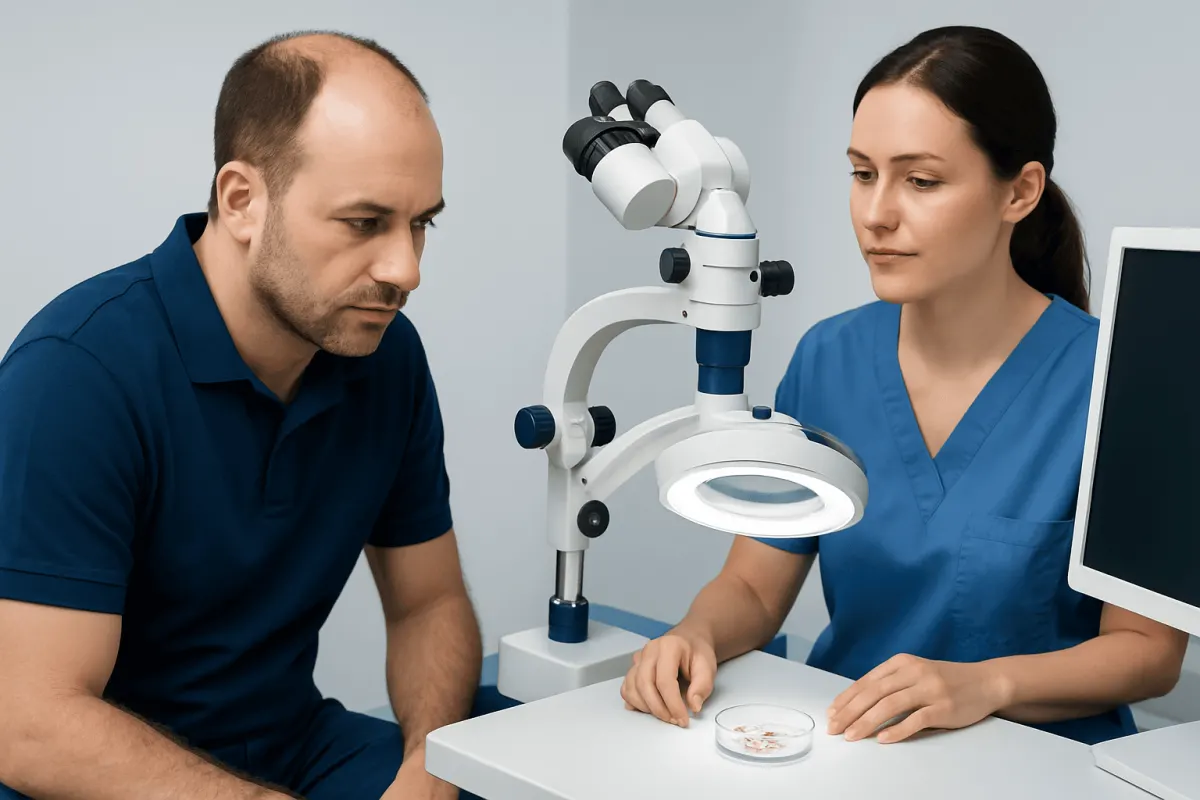
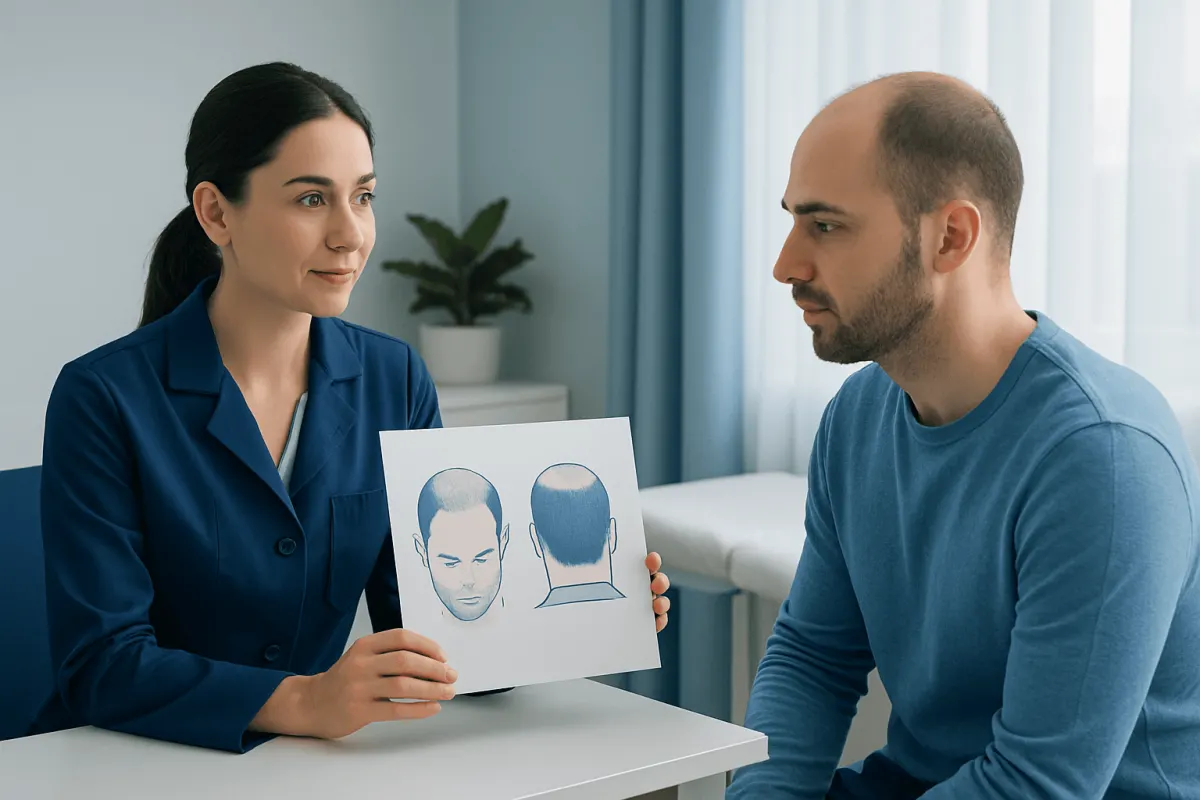
A clinician first confirms the cause of hair loss. Gradual pattern hair loss is a common reason to consider transplantation, but sudden shedding, patchy loss, scalp inflammation, infection, medication effects, and nutritional or hormonal conditions may require a different approach. The consultation may include a scalp examination, medical history, photographs, and close inspection of hair density and thickness.
The clinician assesses the donor zone at the sides and back of the scalp, including hair caliber, density, signs of miniaturization, and scalp flexibility. They also discuss the desired hairline, crown coverage, family history of hair loss, preferred hairstyle, and expectations about density. FUE and FUT cannot be reliably chosen from a graft target alone; they require a long-term estimate of how much donor hair can be used safely.
FUE may be favored for a person with a suitable donor area who wishes to avoid a linear scar or wear their hair short. FUT may be considered for someone with good scalp laxity who is comfortable concealing a linear scar and whose graft needs make strip harvesting practical. In selected cases, a clinician may discuss staged treatment or a combination approach, but this should be individualized rather than routine.
FUE: Process, Advantages, and Limitations
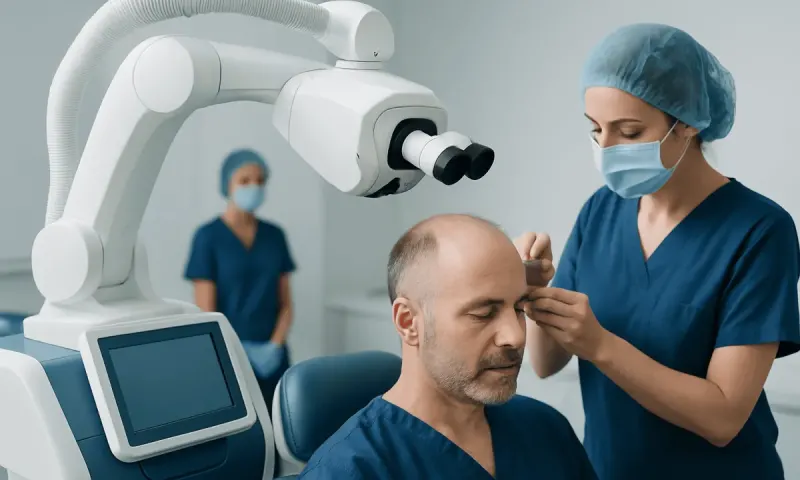
During FUE, the surgical team removes follicular units individually from the donor area, usually after the scalp has been numbed with local anesthetic. The units are checked, stored appropriately, and placed into small recipient-site openings designed to control the direction, angle, and distribution of new growth. The donor area is often trimmed or shaved to allow accurate harvesting, although preparation varies between patients and techniques.
Why choose FUE over FUT?
People may choose FUE because it does not leave a single linear scar and can be more compatible with shorter hairstyles. It may also be a reasonable option when scalp tightness makes strip removal less suitable. However, FUE has trade-offs: it can take longer, requires careful spacing of extractions, and may cause a visibly thinned donor area if too many grafts are removed from an unsafe zone.
Is FUT more painful than FUE?
Both procedures are usually performed with local anesthetic, so significant pain should not be felt during graft harvesting, although injections and pressure sensations can be uncomfortable. After surgery, some people experience more tightness at a FUT closure site, while FUE can cause tenderness, swelling, itching, or sensitivity in multiple small donor sites. Pain experiences vary, so it is not accurate to say that FUT is always more painful than FUE; the surgical plan, aftercare, and individual healing response all matter.
FUT: Process, Advantages, and Limitations
With FUT, a clinician removes a narrow strip of hair-bearing scalp from the donor area and closes the skin with stitches, staples, or another closure method. Technicians or the surgical team then divide the strip under magnification into individual follicular units for implantation. The procedure leaves a linear scar, whose appearance can be influenced by scalp tension, healing, surgical technique, and individual scar biology.
FUT may be useful when a person has adequate scalp laxity and prefers a strategy that preserves hair surrounding the strip for potential future planning. It can be considered when a substantial number of grafts is needed and the individual normally wears hair long enough to cover the donor scar. It is not the right choice for everyone, particularly someone who strongly prefers a very short haircut or has factors that may increase concerns about visible scarring.
When people ask, ‘FUE vs FUT hair transplant—which is better?’, the answer depends on priorities rather than on a single winner. The FUE vs FUT hair transplant pros and cons include scar type, donor capacity, scalp features, recovery preferences, and possible future procedures. Both can provide well-distributed, natural-looking growth when graft handling, hairline design, and donor conservation are appropriate.
Expected Results and Safe Graft Planning
Transplanted hairs commonly shed in the first weeks after surgery before new growth begins. Early growth may be fine or uneven, with visible improvement developing gradually over several months. It often takes around 9 to 12 months to judge the fuller result, and crown areas may take longer. A realistic goal is improved coverage and framing rather than the density of an adolescent hairline.
Is 4000 grafts overharvesting?
A 4,000-graft procedure is a large session, but the number alone does not prove overharvesting. Whether it is safe depends on donor density, hair thickness, scalp size, the stability of the donor zone, the percentage of units collected, and how evenly those units are distributed. A graft can also contain more than one hair, so graft count is not the same as individual hair count.
Overharvesting can leave the donor area looking sparse or uneven, especially if future hair loss exposes areas that initially appeared secure. A responsible plan maps the donor zone, reserves enough hair for potential future needs, and does not promise complete coverage of every thinning area. If a second session may be needed, preserving donor supply becomes even more important.
Managing Ongoing Hair Loss Before and After Surgery
Hair transplantation is most predictable when the hair-loss pattern is understood and reasonably stable. For genetic pattern hair loss, a dermatologist may discuss medical therapies that can help reduce shedding or support existing hair, depending on the person’s sex, health history, reproductive plans, and treatment preferences. Evaluation and treatment of an underlying scalp or medical condition may be more appropriate than surgery when hair loss is rapid, patchy, painful, or associated with scaling.
What did Elon Musk use to regrow hair?
There is no reliable, confirmed public medical record that establishes what Elon Musk used for hair regrowth. Changes seen in public photographs cannot identify a specific procedure, medication, or treatment plan. Celebrity examples are therefore not a safe basis for deciding between FUE, FUT, medicines, injections, or other hair-loss treatments.
Anyone considering a transplant should ask about evidence, likely benefits, limitations, side effects, and how treatment fits with future hair loss. Some non-surgical options may be useful for suitable patients, while the evidence for certain adjunctive treatments varies. A qualified clinician can help create a plan that addresses both the existing thinning area and the need to protect remaining hair.
Recovery and Self-Care After FUE or FUT
After either procedure, small crusts, temporary redness, swelling, mild tenderness, and numbness can occur. The treating team gives individualized instructions on washing, sleeping position, wound care, activity, and when it is safe to resume exercise, hats, swimming, and hair products. Newly placed grafts should not be rubbed, scratched, or picked, particularly during the early healing period.
FUT patients also need to protect the donor incision while it heals and attend follow-up for closure care when needed. FUE patients should follow instructions that protect the many small extraction sites. Avoiding smoking and following advice about prescribed medicines can support healing; no one should stop a regular medication unless the prescribing clinician advises it.
It is sensible to choose a licensed, experienced medical team that explains the donor-area plan, potential scarring, recovery requirements, and realistic cosmetic outcome before surgery. Clear photographs and follow-up reviews can help monitor healing and future hair-loss progression.
When to Seek Medical Care
A person should arrange a medical assessment before pursuing hair restoration if hair loss is sudden, patchy, accompanied by scalp pain, itching, scaling, pustules, or scarring, or if it follows a new medicine or illness. After a transplant, the treating team should be contacted promptly for increasing redness, worsening pain, pus-like drainage, fever, significant bleeding, rapidly increasing swelling, or a suspected medication reaction.
For international patients, Acıbadem Health Point’s multidisciplinary specialists at JCI-accredited hospitals can assess hair and scalp concerns and discuss appropriate medical or surgical options. A consultation should focus on diagnosis, donor preservation, and a plan that remains appropriate if hair loss continues.
Frequently asked questions
01Which procedure leaves the more noticeable scar, FUE or FUT?
FUT leaves one linear scar in the donor area, while FUE leaves multiple small dot-like scars. Either type can be visible in some circumstances, especially with very short haircuts, light-colored hair, or certain healing patterns.
02Does FUE provide better results than FUT?
Both FUE and FUT can create natural-looking results because the same type of follicular units can be implanted. Final appearance depends more on donor planning, graft survival, hairline design, placement technique, and ongoing hair loss than on the harvesting method alone.
03Can FUE and FUT be performed together?
In some carefully selected patients, a clinician may discuss using both approaches across separate sessions or as part of a broader donor-management plan. This is not necessary for most people and should only be considered after a thorough assessment of scalp and donor characteristics.
04Will transplanted hair fall out after surgery?
Temporary shedding of transplanted hairs in the weeks after surgery is common and does not necessarily mean the grafts have failed. New hairs typically begin growing gradually over the following months, but the exact timeline differs between individuals.
05How long do FUE and FUT results last?
Hair transplanted from a stable donor area is generally more resistant to genetic thinning than hair in the recipient area. However, surrounding non-transplanted hair can continue to thin, so medical treatment and future planning may still be important.
06Who should postpone a hair transplant?
People with unexplained, sudden, active, or inflammatory hair loss should first have the cause assessed and treated. Surgery may also be postponed when hair loss is progressing quickly, donor supply is insufficient, expectations are unrealistic, or a health condition needs to be stabilized.
This article is for general information only and is not a substitute for professional medical advice. Please consult a qualified doctor about your individual situation.
Hair transplant in Turkey — costs, graft counts & a free assessment
JCI-accredited · board-certified surgeons · reply within 24h
Add us as a Preferred Source to see more of our trusted health content across Google Search, AI Overviews and Discover.