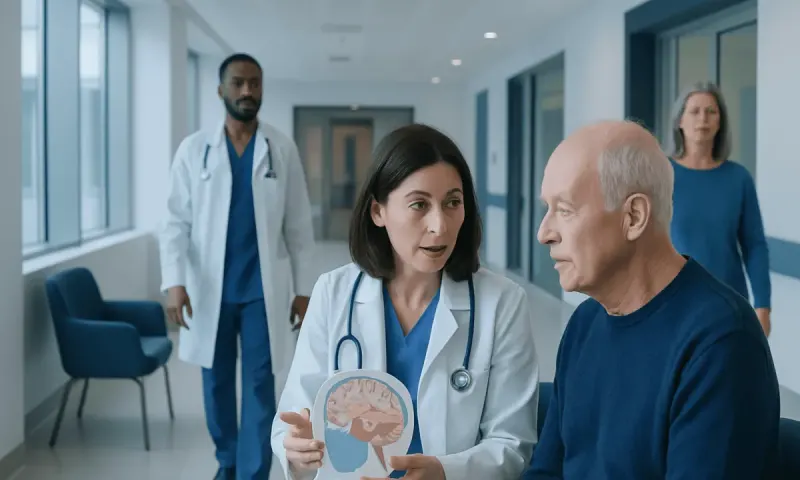
Frontal Lobe Stroke Symptoms, Treatment, and Recovery

A frontal lobe stroke occurs when blood flow to part of the frontal lobe is blocked or, less commonly, when bleeding occurs in this area of the brain. It can affect movement, speech, judgment, personality, attention and daily functioning, but prompt emergency care and rehabilitation can support recovery.
What Is a Frontal Lobe Stroke?
A frontal lobe stroke happens when a blood vessel supplying the frontal part of the brain becomes blocked (ischemic stroke) or ruptures (hemorrhagic stroke). The frontal lobes sit behind the forehead and help coordinate voluntary movement, attention, language, planning, decision-making, emotional regulation and aspects of personality. The effects therefore vary according to the precise area and side of the brain involved.
Most strokes are ischemic, meaning a clot interrupts blood flow and deprives brain tissue of oxygen. Hemorrhagic strokes occur when bleeding damages or compresses brain tissue. Both types need urgent medical assessment because early treatment may limit injury and improve the chance of recovery.
A frontal lobe stroke does not always look like the stroke portrayed in films or television. Some people develop obvious weakness or speech problems, while others first show confusion, poor judgment, reduced initiative, unusual behavior or difficulty carrying out familiar tasks. These changes are real neurological symptoms, not simply a lack of effort or a personality choice.
How a Frontal Lobe Stroke May Affect Daily Life
The frontal lobes work as part of connected brain networks. For this reason, a stroke in this region can affect several abilities at once. A person may know what they want to do but struggle to start, organize or complete the steps needed to do it. This is sometimes called executive dysfunction.
Possible changes include reduced concentration, slower thinking, difficulty switching between tasks, impulsive decisions, apathy, irritability, socially inappropriate behavior or reduced awareness of difficulties. Family members may notice these changes before the affected person does. Such symptoms should be approached with patience and assessed by a healthcare professional.
The left frontal lobe is often important for producing language. When it is affected, a person may understand conversation but find speaking, writing or forming sentences difficult. A stroke involving motor areas can cause weakness, clumsiness or loss of control on the opposite side of the body, often affecting the face, arm or leg.
Recovery is highly individual. It depends on the location and size of the stroke, its cause, how quickly treatment begins, overall health and access to rehabilitation. Improvement may continue over months or longer, particularly when therapy is tailored to the person’s goals and needs.
Symptoms That May Signal a Stroke

Stroke symptoms usually begin suddenly. The FAST message is a useful reminder: Facial drooping, Arm weakness, Speech difficulty and Time to call emergency services. Even if symptoms improve quickly, they can indicate a transient ischemic attack (TIA), sometimes called a “mini-stroke,” which still requires urgent assessment.
In a frontal lobe stroke, symptoms may be more subtle or may occur alongside the usual FAST signs. Sudden difficulty initiating actions, confusion about familiar routines, marked personality change, poor judgment, loss of inhibition, trouble finding words, or new problems with attention can be important warning signs.
- Sudden weakness, numbness or loss of coordination on one side of the body
- New difficulty speaking, understanding language, reading or writing
- Sudden facial droop or uneven smile
- Unexpected confusion, disorientation or difficulty completing familiar actions
- New severe balance problems, vision changes or a severe headache, particularly with possible bleeding
Symptoms cannot reliably identify the stroke type or exact brain location. A person should not drive themselves to hospital or wait to see whether symptoms pass. Emergency teams can begin assessment while arranging rapid transfer to an appropriate stroke center.
Causes and Risk Factors
Ischemic frontal lobe strokes may result from a clot forming in a brain or neck artery, or from a clot traveling from elsewhere in the body, often the heart. Atrial fibrillation, an irregular heart rhythm, is one important source of blood clots. Narrowing of the carotid arteries in the neck can also contribute to stroke risk.
Hemorrhagic stroke may be related to long-standing high blood pressure, blood vessel abnormalities, certain medicines that affect clotting, head injury or other less common causes. Determining the cause matters because treatment and future prevention are different for ischemic and hemorrhagic stroke.
Some risk factors cannot be changed, including increasing age, family history and a previous stroke or TIA. However, many important risks can be reduced. These include high blood pressure, diabetes, high cholesterol, smoking, physical inactivity, unhealthy diet, excess alcohol intake, obesity and untreated sleep apnea.
Regular medical care is especially important for people with cardiovascular disease or atrial fibrillation. Taking prescribed medicines consistently and attending follow-up appointments can help lower the risk of another stroke.
How Doctors Diagnose a Frontal Lobe Stroke
Diagnosis begins with a rapid clinical assessment. The team asks when symptoms began or when the person was last known to be well, reviews medications and medical history, and performs a neurological examination. This includes testing strength, sensation, speech, vision, coordination, attention and awareness.
Brain imaging is essential. A CT scan can quickly identify bleeding and may show early signs of ischemic stroke. MRI may provide more detailed information about small or early areas of brain injury. CT or MR angiography may be used to examine blood vessels and identify a blockage or narrowing.
Further tests can help find the cause. These may include blood tests, an electrocardiogram, heart rhythm monitoring, echocardiography and imaging of neck arteries. Cognitive, speech and swallowing assessments are also valuable because problems may not be immediately obvious in the emergency setting.
A diagnosis should not be based on behavior changes alone. Sudden confusion or altered behavior can have several causes, including infection, seizures, medication effects or low blood sugar. Clinicians evaluate these possibilities while treating suspected stroke as an emergency.
Treatment and Rehabilitation
Acute stroke treatment is time-sensitive and depends on the stroke type, timing, imaging findings and individual health factors. For eligible people with ischemic stroke, clot-dissolving medication may be considered within an appropriate treatment window. Some people with a large-vessel blockage may be candidates for mechanical thrombectomy, a procedure that removes a clot from a blocked brain artery.
Hemorrhagic stroke care focuses on controlling bleeding-related complications, blood pressure and pressure inside the skull, as well as addressing the underlying cause. Some people require neurosurgical or endovascular procedures. Stroke teams also provide supportive care, including safe swallowing assessment, prevention of complications and early mobilization when appropriate.
Rehabilitation often begins in hospital and may continue after discharge. Physiotherapy can support mobility and strength; occupational therapy can help with self-care, safety and return to daily activities; speech and language therapy can address communication and swallowing. Neuropsychological rehabilitation may help with attention, planning, memory, insight and behavioral changes.
Family education is an important part of care. Structured routines, written reminders, one task at a time and a calm environment can be useful for some people with executive-function difficulties. Acıbadem Health Point’s multidisciplinary specialists and JCI-accredited hospitals diagnose and treat stroke for international patients, with rehabilitation plans based on individual needs.
Prevention and Practical Self-Care After Stroke
After a frontal lobe stroke, prevention focuses on the cause identified by the medical team. This may include medicines for blood pressure, cholesterol, diabetes, atrial fibrillation or clot prevention. Medication changes should only be made with professional guidance, particularly after a hemorrhagic stroke.
Healthy routines support vascular health: avoiding tobacco, limiting alcohol, choosing a balanced eating pattern, staying physically active within medical advice, maintaining a healthy weight and sleeping well. Monitoring blood pressure at home may be recommended for some people. Regular follow-up helps clinicians adjust prevention plans as recovery progresses.
At home, practical safety measures may be needed while judgment, movement or attention are affected. These can include supervision with cooking, medication organization, fall prevention, a gradual return to work or driving, and involving trusted family members in appointments. Driving should only resume when a doctor confirms it is safe and local legal requirements are met.
Emotional changes after stroke are common. Depression, anxiety, frustration and fatigue can affect both the person and their caregivers. Discussing these symptoms openly with the stroke team can lead to appropriate support, counseling or treatment.
When to Seek Medical Care
Seek emergency medical care immediately if anyone develops sudden facial weakness, arm or leg weakness, trouble speaking, confusion, severe coordination problems, vision changes or an abrupt unusual headache. Note the time symptoms started, or the last time the person was known to be well, and call local emergency services.
Do not wait for a clinic appointment, give food or drink to someone with possible swallowing difficulty, or assume symptoms are due to stress, tiredness or aging. Rapid evaluation is important even when symptoms disappear, because a TIA can be a warning of a future stroke.
After a diagnosed stroke, contact the medical team promptly for new or worsening neurological symptoms, repeated falls, choking or coughing during meals, severe mood changes, seizures, or concerns about medication side effects. Planned follow-up is also essential for monitoring recovery and reducing the risk of another stroke.
Frequently asked questions
01Can a frontal lobe stroke change personality?
Yes. Because the frontal lobes help regulate behavior, judgment and emotional responses, some people experience apathy, irritability, impulsivity or reduced social awareness after a stroke. These changes are neurological effects of the injury and should be discussed with the stroke care team, as rehabilitation and psychological support may help.
02What side of the body is affected by a frontal lobe stroke?
The brain usually controls movement on the opposite side of the body. A stroke in the left frontal lobe may cause weakness or coordination problems on the right side, while a right frontal lobe stroke may affect the left side. The exact effects depend on which frontal lobe networks are involved.
03Can someone recover from a frontal lobe stroke?
Many people improve after a frontal lobe stroke, although the degree and pace of recovery vary widely. Early medical treatment, prevention of further stroke and individualized rehabilitation can support the best possible function. Some cognitive, emotional or behavioral changes may need longer-term support.
04How is a frontal lobe stroke different from other strokes?
All strokes result from interrupted blood flow or bleeding in the brain, but symptoms reflect the affected brain region. Frontal lobe strokes may particularly affect planning, motivation, movement, speech production and behavior. Imaging is needed to identify the location and type of stroke accurately.
05Can stress cause a frontal lobe stroke?
Stress alone is not usually considered a direct cause of stroke. However, chronic stress may contribute indirectly through high blood pressure, poor sleep, smoking, unhealthy eating or reduced physical activity. Managing cardiovascular risk factors with a healthcare professional is the most reliable prevention approach.
06Why can a person seem normal physically after a frontal lobe stroke?
A small or strategically located frontal lobe stroke may primarily affect attention, judgment, language or behavior rather than obvious strength. These difficulties can still have a major effect on safety and independence. Sudden changes in thinking or behavior need urgent medical evaluation, especially if they occur with any other possible stroke sign.
This article is for general information only and is not a substitute for professional medical advice. Please consult a qualified doctor about your individual situation.
Explore treatments in Turkey — costs, top hospitals & a free quote
JCI-accredited · board-certified surgeons · reply within 24h
Add us as a Preferred Source to see more of our trusted health content across Google Search, AI Overviews and Discover.