Foods That Cause Bowel Obstruction: What to Eat and What to Avoid

Key Takeaways
- Most foods do not cause bowel obstruction in healthy people, but some foods can contribute to blockage in people with narrowing, scar tissue, or bowel disease.
- High-risk foods often include tough fibrous vegetables, fruit skins, seeds, nuts, popcorn, and large amounts of dried food.
- Symptoms such as cramping pain, vomiting, bloating, and inability to pass stool or gas need prompt medical attention.
- A low-residue or individualized diet may be recommended after surgery or during certain digestive conditions.
- Prevention depends on chewing well, eating slowly, staying hydrated, and following a doctor’s diet plan when risk is higher.
Foods that cause bowel obstruction are usually not a problem for most people, but certain high-risk situations can make some foods more likely to trigger a blockage. This article explains which foods to avoid, who needs extra caution, and when medical care is needed.
Overview
When people search for foods that cause bowel obstruction, they are often looking for a practical answer: which foods should be avoided, and for whom? The short answer is that food alone does not usually create an obstruction in a healthy bowel. Problems arise when the intestine is already narrowed, inflamed, scarred, or recovering from surgery, because certain foods can be harder to move through.
A bowel obstruction means that food, fluid, and gas cannot pass normally through the intestines. Some blockages develop from medical causes such as adhesions, hernias, tumors, inflammatory bowel disease, or twisted bowel segments. In these settings, food choices matter because a bulky or stringy item may get caught more easily.
For international patients deciding whether to travel for treatment, understanding diet-related triggers is especially useful. A clear eating plan can reduce discomfort before a flight, after surgery, or during follow-up care with a specialist. The safest approach is to match the diet to the person’s condition rather than relying on a one-size-fits-all food list.
Symptoms to Watch For

Symptoms of bowel obstruction often build over hours or days. Crampy abdominal pain, swelling or bloating, nausea, vomiting, and difficulty passing stool or gas are common warning signs. Some people also notice a feeling of fullness after eating only a small amount.
The symptoms can vary depending on whether the blockage is partial or complete. With a partial obstruction, some stool or gas may still pass, and symptoms may come and go. With a complete obstruction, pain and vomiting may be more persistent and the abdomen can become increasingly distended.
These symptoms should not be treated as simple indigestion if they continue or worsen. A bowel obstruction can become urgent, especially if there is fever, severe pain, dehydration, or signs of shock. Eating should stop until a clinician has assessed the situation.
Causes & Risk Factors
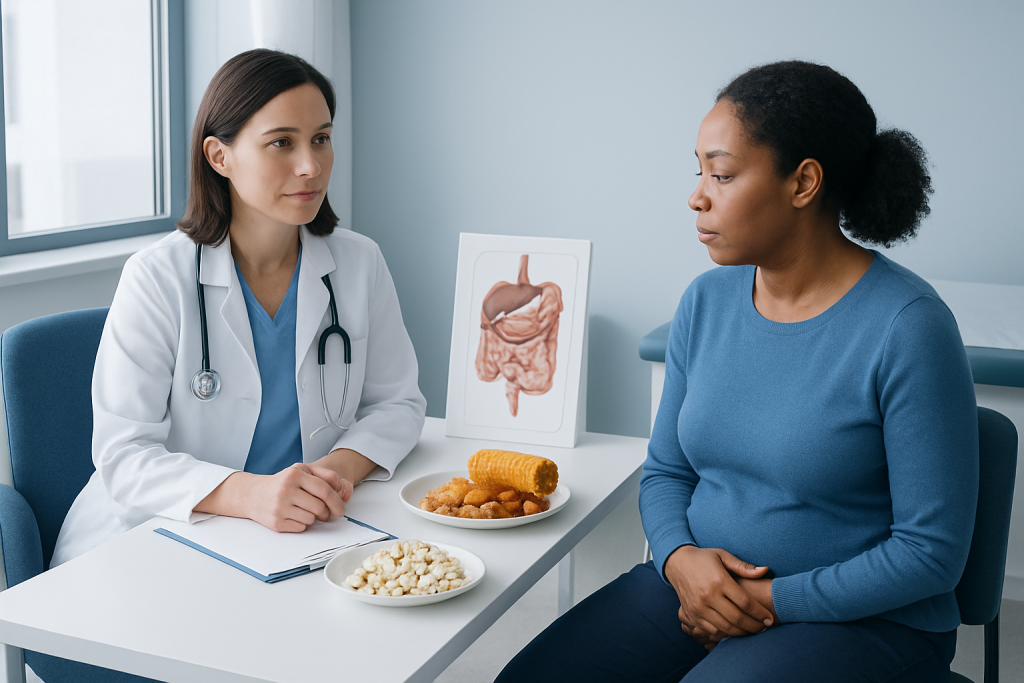
Foods are rarely the root cause of bowel obstruction by themselves. More often, they become a problem when the digestive tract is already vulnerable. Common risk factors include previous abdominal surgery, which can leave behind adhesions, as well as Crohn’s disease, strictures, hernias, colon cancer, and conditions that slow bowel movement.
Certain foods are more likely to cause trouble because they are fibrous, bulky, or difficult to break down. These include celery, corn, mushroom stems, raw cabbage, fruit and vegetable skins, popcorn hulls, seeds, nuts, dried fruit, and large amounts of stringy meats if chewing is poor. In people with a narrowed bowel, even healthy foods can become problematic if portions are large or not prepared well.
Risk can also rise when someone eats quickly, does not chew thoroughly, drinks too little fluid, or follows a diet that is very high in roughage during a flare-up. Children, older adults, and people with dental problems may have additional difficulty chewing and digesting tougher foods.
Diagnosis
Doctors diagnose bowel obstruction by combining symptoms, physical examination, and imaging. They may ask about recent surgeries, bowel disease, prior episodes, and the foods eaten before symptoms began. This history helps determine whether the problem might be partial, complete, or related to a specific food item.
Imaging tests are often used to confirm the diagnosis. An abdominal X-ray or CT scan can show where the blockage is and whether the bowel is swollen. Blood tests may be ordered to check for dehydration, infection, or signs that the bowel is under stress.
If the obstruction is suspected in someone with Crohn’s disease, prior surgery, or cancer, the doctor may look for the underlying cause as well. This matters because treatment and diet advice depend on what is actually narrowing the bowel, not only on the foods that were eaten.
Treatment Options
Treatment depends on the type and severity of the obstruction. Some partial obstructions are managed in the hospital with bowel rest, IV fluids, correction of electrolytes, and careful monitoring. In more serious cases, a tube may be used to decompress the stomach, or surgery may be needed to remove or bypass the blockage.
If a person has a history of obstruction or bowel narrowing, a doctor or dietitian may recommend a low-residue or modified-fiber plan for a period of time. This usually focuses on softer foods that are easier to digest, while limiting items that leave more undigested material behind. The exact plan should be individualized, especially for people recovering from surgery or living with inflammatory bowel disease.
Examples of better-tolerated choices can include well-cooked vegetables without skins, tender proteins, refined grains, smooth nut butters if allowed, yogurt, eggs, and soft fruits without seeds or skins. The goal is not to create an overly restrictive diet forever, but to reduce the chance of blockage while the bowel is healing or narrowed.
Prevention & Self-care
For people at higher risk, prevention starts with the way food is prepared and eaten. Chewing slowly and thoroughly, taking smaller bites, and drinking enough fluids can make a meaningful difference. It also helps to cook vegetables until soft, remove tough skins and seeds, and avoid eating large amounts of high-risk foods in one sitting.
A doctor may advise a low-fiber approach during certain phases of care, such as after bowel surgery, during a flare of Crohn’s disease, or when a stricture is present. In those situations, it is important not to improvise based on internet advice alone. A diet plan should be tailored to the person’s diagnosis, symptoms, and treatment goals.
Practical self-care can also include keeping a food and symptom log, which may help identify patterns that trigger discomfort. For patients traveling from another country, bringing a written summary of prior surgeries, imaging, and medications can make diet and treatment planning smoother with the receiving specialist team.
- Choose soft, well-cooked foods when advised.
- Avoid eating quickly or while distracted.
- Be cautious with nuts, seeds, popcorn, and fibrous peels if you have a narrowing.
- Follow post-operative instructions closely.
- Seek personalized advice before making major diet changes.
When to See a Doctor
Medical evaluation is important if someone has persistent abdominal pain, repeated vomiting, significant bloating, or cannot pass stool or gas. These signs may indicate a bowel obstruction and should not wait for home remedies to work. A clinician can determine whether urgent testing or hospital care is needed.
People with Crohn’s disease, prior abdominal surgery, hernias, or a history of blockage should contact a doctor early if new digestive symptoms appear. Even a partial obstruction can worsen if eating continues normally. Prompt care can prevent dehydration and other complications.
For patients seeking an international opinion or treatment plan, Acibadem Health Point’s multidisciplinary specialists and JCI-accredited hospitals diagnose and treat digestive conditions such as bowel obstruction for international patients. Whether care is needed for imaging, surgery, or recovery guidance, the important step is to get an expert assessment rather than guessing which foods are safe.
FAQs
What foods are most likely to cause trouble with bowel obstruction?
Foods that are tough, fibrous, stringy, or hard to digest can be more problematic in people with a narrowed bowel. Common examples include popcorn, nuts, seeds, celery, corn, fruit skins, and dried fruit. The risk depends on the underlying bowel condition and how narrowed the intestine is.
Can healthy foods still cause a blockage?
Yes, in certain situations they can. Even nutritious foods may be difficult to pass if the bowel is already inflamed, scarred, or narrowed by adhesions or a stricture. Preparation, portion size, and chewing matter a lot.
Should everyone avoid high-fiber foods?
No. Most people benefit from a balanced diet that includes fiber. Only people with specific digestive conditions, recent surgery, or a doctor’s recommendation may need a temporary low-fiber or low-residue plan.
What is a low-residue diet?
A low-residue diet limits foods that leave a lot of undigested material in the intestine. It is often used short term after surgery or during bowel narrowing to reduce stool bulk and ease passage. A doctor or dietitian can explain which foods fit that plan.
How can someone reduce the chance of food-related blockage?
Eating slowly, chewing well, staying hydrated, and avoiding large portions of high-risk foods can help. People with known bowel narrowing should follow the specific diet advice given by their care team. If symptoms start, they should stop eating and seek medical advice.
When is bowel obstruction an emergency?
It becomes urgent when pain is severe, vomiting is repeated, the abdomen is very swollen, or stool and gas stop passing. Fever, weakness, or dehydration are also concerning. Prompt medical assessment is the safest next step.
This article is for general information only and is not a substitute for professional medical advice. Please consult a qualified doctor about your individual situation.
Persistent digestive symptoms? Get evaluated in Turkey
JCI-accredited · board-certified surgeons · reply within 24h
Add us as a Preferred Source to see more of our trusted health content across Google Search, AI Overviews and Discover.