FIT vs Cologuard: Which Stool Test Is Right for You?
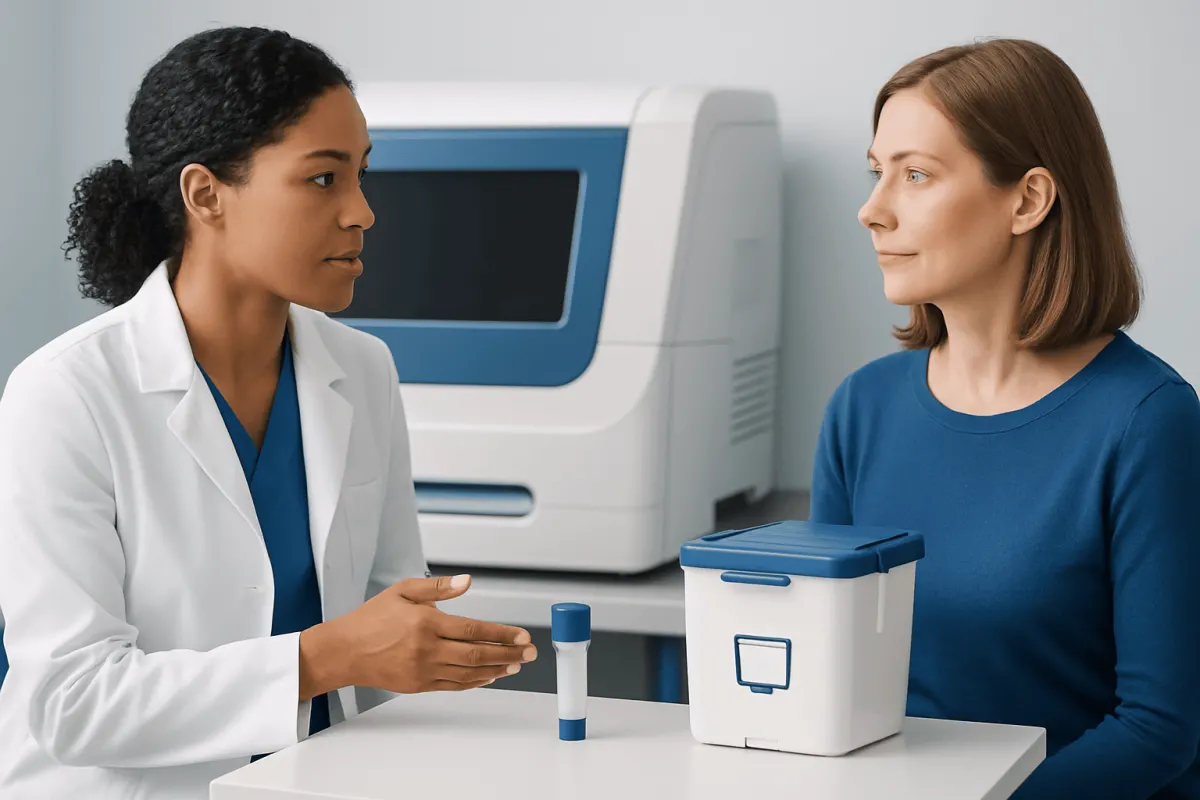
Fecal immunochemical test vs Cologuard compares two home stool-based options for colorectal cancer screening. FIT detects hidden blood in stool, while Cologuard combines hidden-blood testing with testing for certain DNA changes; either positive result should be followed by a diagnostic colonoscopy.
Fecal Immunochemical Test vs Cologuard: A Side-by-Side Comparison
The fecal immunochemical test (FIT) and Cologuard are stool-based screening tests used to look for signs of colorectal cancer in people who do not have concerning symptoms and are considered to have average risk. FIT detects tiny amounts of human blood that may not be visible. Cologuard, also called a multitarget stool DNA test, checks for hidden blood and certain altered DNA markers shed into stool by some cancers and polyps.
Neither test looks directly inside the colon, and neither can confirm cancer. A positive result means that a colonoscopy is needed to identify the reason for the finding. A negative result lowers the chance that cancer is present at that time, but it does not eliminate risk or replace attention to new symptoms.
- What it detects: FIT detects human hemoglobin in stool; Cologuard detects hemoglobin plus selected DNA changes.
- How often it is usually repeated: FIT is generally done every year; Cologuard is generally repeated every one to three years, depending on local guidance and the clinician’s recommendation.
- Collection: Both are completed at home and sent to a laboratory. Cologuard usually requires collecting an entire bowel movement, whereas FIT uses a small stool sample.
- Preparation: FIT commonly requires no diet or medication changes. Cologuard usually does not require bowel preparation, though users should follow the kit instructions closely.
- After a positive result: Both require timely diagnostic colonoscopy.
The most appropriate choice depends on a person’s medical history, preferences, access to follow-up colonoscopy, and ability to repeat screening at the recommended interval. Screening recommendations can vary by country, age, and individual risk.
How a Clinician Tells FIT and Cologuard Apart
Clinicians first decide whether stool-based screening is suitable. These tests are intended for average-risk adults without warning signs such as rectal bleeding, unexplained iron-deficiency anemia, persistent change in bowel habits, or unexplained weight loss. In these situations, testing should focus on evaluating symptoms rather than using a routine screening kit.
FIT is a simple, repeated screening approach. Because bleeding from a polyp or cancer can be intermittent, completing FIT every year matters. Its main advantage is that it is straightforward and generally has fewer false-positive findings than a stool DNA test. However, it may miss cancers or advanced polyps that are not bleeding when the sample is collected.
Cologuard adds DNA marker testing, which can improve detection of colorectal cancer and some advanced precancerous lesions in one screening round. The trade-off is that it can return positive results when colonoscopy does not find cancer or an advanced polyp. A positive result can reflect benign bleeding, noncancerous changes, or test limitations, but it still requires colonoscopy.
Risk level is especially important. A person with a previous advanced polyp, colorectal cancer, a strong family history, known hereditary cancer syndrome, or long-standing inflammatory bowel disease may need an individualized surveillance plan, often using colonoscopy. Related conditions such as colon cancer and colorectal polyps require specialist-guided follow-up rather than routine at-home screening alone.
Which Is More Accurate, FIT Test or Cologuard?

For detecting colorectal cancer in a single screening round, Cologuard is generally more sensitive than FIT. This means it is more likely to identify cancer when cancer is present. It also detects more advanced precancerous polyps than FIT, although neither stool test identifies every important polyp or cancer.
Accuracy has more than one meaning. A test with higher sensitivity may also have lower specificity, meaning it may produce more positive results in people who do not have cancer or an advanced precancerous polyp. Compared with FIT, Cologuard has a higher likelihood of this type of false-positive result, leading more people to need colonoscopy that ultimately does not show a significant lesion.
FIT can still be highly effective as a screening strategy when it is done every year and positive results are followed promptly by colonoscopy. The best test is often the one a person is eligible for, is willing and able to complete correctly, and can repeat consistently. A clinician can help balance the benefits of greater single-test detection with the possibility of unnecessary follow-up procedures.
What Is the Most Reliable Test for Colon Cancer?
Colonoscopy is generally considered the most comprehensive colorectal cancer screening test because it allows a clinician to examine the inside of the rectum and colon directly. If polyps are found, many can be removed during the same procedure, which can help prevent some cancers from developing. Tissue samples can also be taken when needed.
Colonoscopy requires bowel preparation, sedation or anesthesia in many settings, and a short recovery period after the procedure. It also has uncommon but important risks, including bleeding and perforation, particularly when a polyp is removed. For these reasons, screening should be selected through an informed discussion rather than assuming one option suits everyone.
A normal, high-quality colonoscopy is usually repeated less often than stool testing for average-risk people, though timing depends on findings and personal risk. If a stool test is positive, colonoscopy is not optional “extra screening”; it becomes the diagnostic next step. Colonoscopy can clarify whether hidden blood or DNA markers were related to polyps, cancer, hemorrhoids, inflammation, or another cause.
Other screening options may also be appropriate in some healthcare systems, including CT colonography or flexible sigmoidoscopy. Their availability and recommended intervals differ, so a doctor can explain which methods are suitable for the individual.
Why Do Doctors Not Like Cologuard?
Doctors do not universally dislike Cologuard. It is an accepted screening option for selected average-risk adults and may help people who would otherwise not complete colorectal cancer screening. However, clinicians may be cautious about using it for everyone because its role is specific and its results must be interpreted in context.
One concern is the higher false-positive rate compared with FIT. A positive Cologuard result can create worry and still requires colonoscopy, even when no cancer or advanced polyp is found. It is therefore important for a person to be prepared to complete follow-up colonoscopy before choosing any stool-based screening test.
Another concern is that people may mistakenly view a negative result as protection for several years despite new symptoms or increasing risk. Cologuard is not designed for people with rectal bleeding, a history of colorectal cancer or certain polyps, inflammatory bowel disease, or known hereditary colorectal cancer syndromes. It should not be used as a substitute for a diagnostic evaluation when symptoms are present.
Finally, Cologuard does not remove polyps. Colonoscopy can both detect and remove many precancerous growths, making it especially useful for people at increased risk or those needing follow-up after an abnormal screening result.
Is a Fecal Immunochemical Test as Good as a Colonoscopy?
FIT is not the same as colonoscopy, and it does not provide the same level of direct examination. FIT only looks for hidden blood in a stool sample. It cannot see polyps, identify where bleeding is coming from, take biopsies, or remove abnormal tissue. A negative FIT can occur even when a polyp or cancer is present, particularly if it is not bleeding at the time of testing.
However, annual FIT is a well-established screening option for many average-risk adults. When used regularly and followed by colonoscopy after a positive result, it can help reduce colorectal cancer deaths. Its convenience may support consistent participation for people who are not ready for colonoscopy or cannot access it promptly.
Colonoscopy is usually preferred when someone is at increased risk, has symptoms, has had a positive stool test, or needs surveillance after polyps have been found. It may also be recommended when there is a significant family history. A gastroenterologist can determine whether colorectal cancer treatment and follow-up pathways or more intensive surveillance are relevant to the person’s situation.
Rather than asking whether FIT is “as good” in every circumstance, it can be more useful to ask which screening plan fits the person’s risk, health status, and likelihood of being completed on schedule. Delaying all screening is generally less helpful than choosing an evidence-based option with a clear follow-up plan.
What to Do With FIT or Cologuard Results
A negative FIT or Cologuard result is reassuring but should be understood as a screening result, not a guarantee. The person should repeat the test at the interval advised by their clinician and local screening program. FIT is commonly repeated annually, while stool DNA testing is commonly repeated at a longer interval. New symptoms should be discussed even after a recent negative test.
A positive result does not mean that a person has colorectal cancer. It means the test found blood, DNA changes, or both that need further assessment. The appropriate next step is diagnostic colonoscopy, ideally arranged without unnecessary delay. Repeating the stool test instead of having colonoscopy can miss the opportunity to identify the cause.
An invalid, incomplete, or delayed sample may need to be recollected. Instructions for collection, storage, and return should be followed carefully, as sample quality can affect whether the laboratory can process it. People should tell their clinician about their current symptoms, medications, prior bowel procedures, and family history before deciding on their next step.
Acıbadem Health Point’s multidisciplinary specialists and JCI-accredited hospitals can assess colorectal cancer screening needs and provide diagnostic evaluation for international patients when appropriate.
When to Seek Medical Care
Stool-based tests are for screening people without symptoms. A person should contact a doctor rather than relying on FIT or Cologuard alone if they notice visible blood in stool, black or tar-like stools, ongoing abdominal pain, a persistent change in bowel habits, unexplained weight loss, unusual fatigue, or symptoms that may suggest anemia. These symptoms are often caused by conditions other than cancer, but they deserve medical assessment.
Medical advice is also important for anyone with a positive FIT or Cologuard result. Colonoscopy is needed to investigate the result, even if the person feels well. A clinician can also review whether there are symptoms or risk factors that make colonoscopy the better first test.
People with a first-degree relative diagnosed with colorectal cancer or an advanced polyp, particularly at a younger age, should ask when screening should begin and which test is most appropriate. Those with inflammatory bowel disease, a previous colorectal cancer diagnosis, or prior high-risk polyps should follow a personalized surveillance plan rather than standard at-home testing intervals.
Frequently asked questions
01Can FIT and Cologuard be used if there is blood in the stool?
Visible rectal bleeding should be assessed by a clinician rather than managed with a routine screening test alone. FIT and Cologuard are intended for people without concerning symptoms. A doctor may recommend colonoscopy or another diagnostic evaluation based on the likely cause of bleeding.
02Does a positive Cologuard result mean cancer is present?
No. A positive Cologuard result means that blood, DNA markers, or both were detected in the sample. Many positive results are not caused by cancer, but colonoscopy is needed to determine the reason for the finding.
03What happens after a positive FIT result?
The recommended next step is a diagnostic colonoscopy. This allows the clinician to inspect the colon, take biopsies if needed, and remove many polyps during the procedure. Repeating FIT is not an adequate substitute for colonoscopy after a positive result.
04Can hemorrhoids cause a positive FIT or Cologuard result?
Hemorrhoids may contribute to blood in stool and can sometimes be associated with a positive stool test. However, it is not safe to assume hemorrhoids explain a positive result. Colonoscopy is still generally recommended to rule out polyps, cancer, or other causes.
05Who should not use FIT or Cologuard as their main screening test?
People with symptoms, a personal history of colorectal cancer or certain polyps, inflammatory bowel disease, or a known hereditary colorectal cancer syndrome usually need a different screening or surveillance approach. Some people with a significant family history may also need colonoscopy earlier or more often. A clinician can assess individual risk.
06Can a negative FIT or Cologuard result rule out colon cancer?
No screening test can rule out colorectal cancer completely. A negative result lowers the likelihood of cancer at the time of testing, but cancers and polyps can be missed. New or persistent symptoms should always be discussed with a healthcare professional, regardless of the most recent screening result.
This article is for general information only and is not a substitute for professional medical advice. Please consult a qualified doctor about your individual situation.
Persistent digestive symptoms? Get evaluated in Turkey
JCI-accredited · board-certified surgeons · reply within 24h
Add us as a Preferred Source to see more of our trusted health content across Google Search, AI Overviews and Discover.