Exercises for Triceps with Weights: Safe Techniques That Actually Help

Key Takeaways
- The triceps help straighten the elbow and support pressing, lifting, and pushing tasks.
- Good technique matters more than heavy weight when training the triceps safely.
- Common options include kickbacks, overhead extensions, skull crushers, close-grip presses, and triceps pushdowns.
- Warm-up, controlled movement, and gradual progression reduce strain on the elbows and shoulders.
- Persistent pain, swelling, weakness, or numbness should be checked by a qualified clinician.
Exercises for triceps with weights can help build arm strength, support pushing movements, and improve day-to-day function when they are done with good form and sensible progression. This guide explains the safest ways to train the triceps, what to avoid, and when pain may signal a need for medical advice.
Overview
Exercises for triceps with weights are a practical way to strengthen the muscles at the back of the upper arm. The triceps are involved when a person pushes a door open, lifts a suitcase, or presses weight overhead, so they matter in both everyday movement and structured exercise.
The safest results usually come from choosing a manageable weight, keeping the elbow joint under control, and moving through a range that feels smooth rather than forced. For people training at home, in a gym, or while traveling, the same principles apply: stable posture, slow lowering, and enough recovery between sessions.
Because the triceps share workload with the shoulders, chest, and forearms, poor form can shift stress to nearby joints. That is why a patient, technique-first approach is more effective than chasing heavy loads too quickly.
How the triceps work
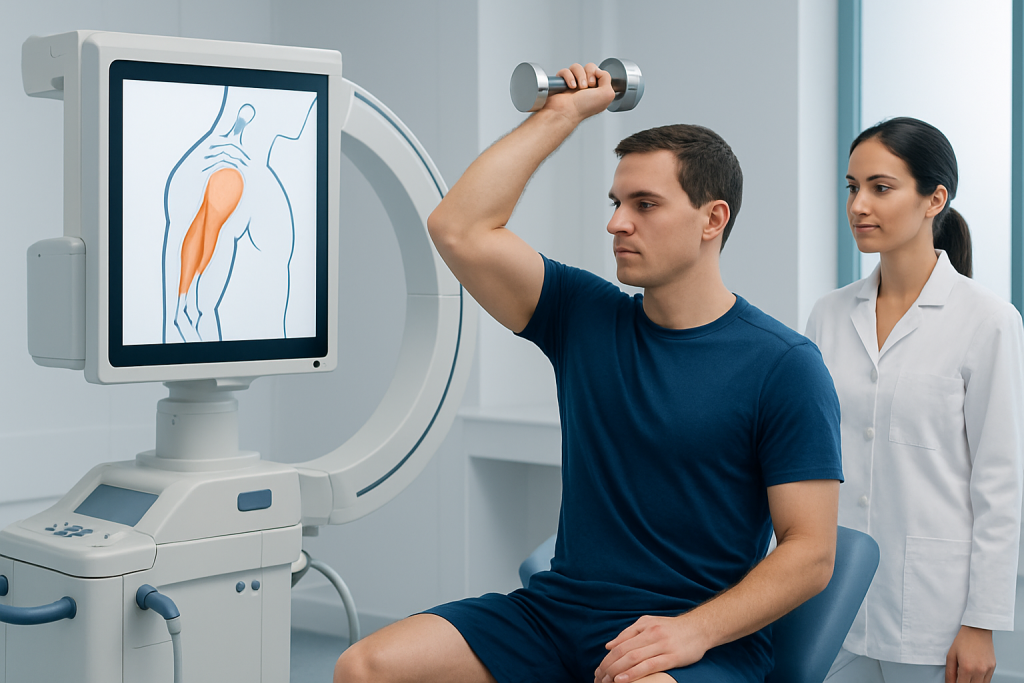
The triceps brachii is a three-headed muscle on the back of the upper arm. Its main job is elbow extension, which means straightening the arm. It also helps stabilize the elbow during pressing and supporting movements.
In practical terms, that means the triceps are active in exercises such as bench presses, push-ups, overhead presses, and many daily tasks. When they are strong and well-conditioned, the arm often feels more stable during lifting, carrying, and reaching.
Different triceps exercises with weights emphasize the muscle in slightly different ways. Some target the arm with the elbow close to the body, while others place the arm overhead or behind the torso, which changes how the long head of the triceps is challenged.
Best exercises for triceps with weights

Several exercises can strengthen the triceps effectively, and the best choice depends on comfort, equipment, and experience level. A balanced routine often includes one or two compound movements and one isolation movement.
Dumbbell triceps kickbacks are useful for learning control. The upper arm stays near the torso while the forearm extends backward. The movement is small, so it is best done with light to moderate weight and strict form.
Overhead dumbbell triceps extensions place the arms above the head and can strongly involve the long head of the triceps. This exercise should be performed with a steady torso and a weight that does not pull the shoulders or lower back out of position.
Skull crushers, sometimes called lying triceps extensions, are typically done with dumbbells or an EZ-bar. They can be effective, but the elbow path should remain controlled and the load should not be so heavy that the wrists or elbows feel strained.
Close-grip bench press or close-grip floor press uses a pressing motion to train the triceps along with the chest and shoulders. These are helpful for people who want a more functional pressing pattern rather than an isolation move alone.
Triceps pushdowns on a cable machine are often well tolerated because the resistance stays smooth throughout the movement. For many people, they are one of the easiest ways to practice triceps work with good alignment.
- Choose one or two exercises if starting out.
- Use slow, controlled lowering on each rep.
- Stop if sharp pain appears in the elbow or shoulder.
Safe technique and common mistakes
Safety starts before the first repetition. A brief warm-up with arm circles, light pressing, or very easy resistance can help prepare the elbows and shoulders for loading. The goal is not to fatigue the muscles, but to make the joints feel ready.
During each exercise, the elbow should move in a predictable line. Swinging the torso, flaring the elbows excessively, or using momentum usually means the weight is too heavy or the set is too long. A smaller range of motion is acceptable if it allows the movement to stay smooth and pain-free.
Common mistakes include locking into poor wrist position, arching the back during overhead work, dropping the weight too quickly, and training through discomfort that keeps building from set to set. These habits can irritate the tendon near the elbow or create unnecessary strain in the shoulder.
People returning after a break, a shoulder issue, or an elbow tendon problem should start with lighter loads and fewer sets. In many cases, a slower pace and a more conservative routine are more helpful than a demanding workout that is difficult to recover from.
Causes of pain or strain during triceps training
Not every ache during training means an injury, but certain patterns deserve attention. Triceps pain can come from overuse, sudden increases in weight, repeated training without enough rest, or technique that shifts force into the elbow tendon.
Shoulder tightness may also make triceps exercises feel awkward. For example, overhead extensions can be uncomfortable if a person lacks shoulder mobility or tends to arch the lower back to compensate. In those cases, a different exercise may be better tolerated.
Other possible contributors include previous tendon irritation, arthritis in the elbow, neck-related nerve symptoms, or a general decline in conditioning after inactivity. Because pain sources can overlap, persistent discomfort is worth discussing with a clinician rather than guessing at the cause.
How to build a sensible triceps routine
A useful triceps routine does not need many exercises. Two or three movements performed with attention to form are usually enough for most healthy adults. The exact plan depends on current fitness, training goals, and whether the person is also doing chest, shoulder, or back work.
A simple session may include one pressing movement, such as a close-grip press, followed by one isolation exercise, such as pushdowns or overhead extensions. Repetition ranges can vary, but moderate reps with controlled tempo are often easier on the joints than very heavy, low-rep work done without practice.
Progress should be gradual. If the last repetitions can be completed with stable form and without pain, a small increase in weight or repetitions may be reasonable next time. Rest days matter as well, because muscles generally adapt during recovery, not during the workout itself.
For people traveling for care or trying to maintain fitness away from home, consistency matters more than perfect equipment. A pair of dumbbells, a cable machine, or even a resistance band can keep the triceps active while the body stays under a manageable training load.
Prevention and self-care
Preventing irritation is mostly about respecting the joints. A warm-up, a steady tempo, and a gradual increase in training volume can all reduce the chance of overuse. It also helps to vary exercises so the same tissue is not stressed in exactly the same way every session.
Recovery strategies are simple but important. Adequate sleep, hydration, and spacing similar workouts apart can support muscle repair. If an exercise feels unusually heavy on a given day, reducing the weight or shortening the session is often a wiser choice than pushing through.
After training, mild muscle fatigue is common, but lingering sharp pain is not something to normalize. Gentle mobility work and light activity may be enough for routine soreness, while worsening pain, visible swelling, or a loss of strength should prompt medical review.
When to see a doctor
A doctor, sports medicine clinician, or physiotherapist should evaluate arm pain that is severe, does not improve with rest, or keeps returning during triceps training. This is especially important if pain is concentrated at the elbow, if there is bruising or swelling, or if the person cannot fully straighten the arm.
Medical advice is also appropriate if symptoms include numbness, tingling, weakness, a popping sensation, or pain that spreads into the shoulder, neck, or hand. These features can suggest a problem beyond simple muscle soreness.
If a person is unsure which exercise is safe after an injury or surgery, professional guidance is the best next step. Acibadem Health Point’s multidisciplinary specialists and JCI-accredited hospitals diagnose and treat musculoskeletal conditions for international patients, including those needing exercise guidance during recovery.
Frequently asked questions
01What are the safest exercises for triceps with weights for beginners?
Beginners often do well with cable pushdowns, light dumbbell kickbacks, or supported overhead extensions because these can be controlled more easily. The safest option is usually the one that allows good form without elbow or shoulder strain. Starting with light resistance and a slow pace is more important than choosing a complicated movement.
02How often should triceps be trained?
For most people, triceps work is usually done two to three times per week when it fits into an overall program. The exact frequency depends on total training volume, recovery, and whether pressing exercises are already using the triceps. Rest matters because overworked elbows and shoulders can become irritated.
03Should triceps exercises hurt?
Normal effort may feel challenging, but sharp, burning, or joint-centered pain is not expected. Mild muscle fatigue is common, while pain in the elbow or shoulder suggests the movement, load, or range may need to be changed. If discomfort keeps coming back, it should be assessed.
04Are heavy weights better for triceps growth?
Heavier weights are not automatically better. The triceps can respond well to moderate resistance performed with control and enough total work. For safety, many people make better progress by mastering form first and increasing load only when the movement stays smooth.
05Can triceps exercises worsen elbow pain?
They can if the tendon or joint is already irritated, or if the weight is increased too quickly. Exercises that involve repetitive elbow extension, especially with poor form, may aggravate symptoms. A clinician or physiotherapist can help identify which movements are appropriate.
06What should someone do if one arm is weaker than the other?
A small strength difference is common, and unilateral exercises can help address it. The weaker side should generally set the pace, rather than letting the stronger side do extra work. If the difference is large or sudden, medical assessment is a good idea.
This article is for general information only and is not a substitute for professional medical advice. Please consult a qualified doctor about your individual situation.
Joint and spine care in Turkey — expert assessment & treatment
JCI-accredited · board-certified surgeons · reply within 24h
Add us as a Preferred Source to see more of our trusted health content across Google Search, AI Overviews and Discover.