ECMO vs Heart-Lung Bypass: When Each Is Used
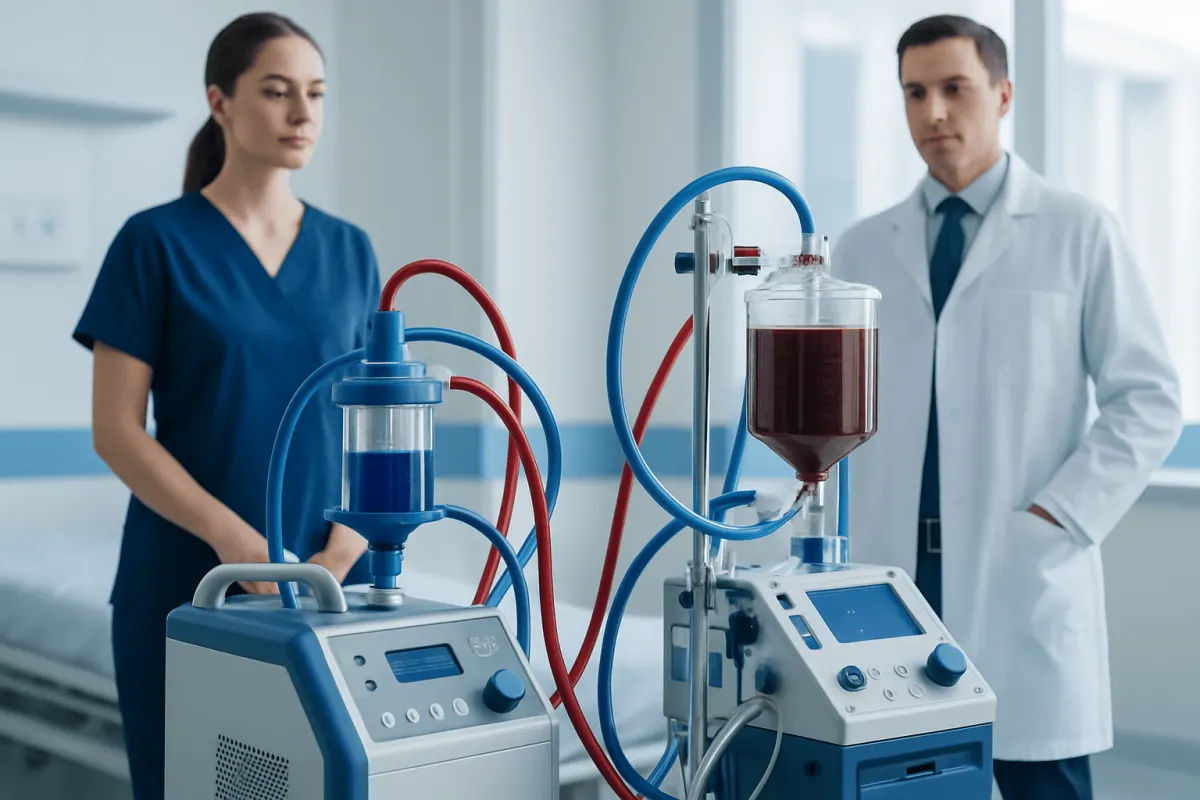
ECMO and heart-lung bypass both circulate and oxygenate blood outside the body, but they are used in different settings. Heart-lung bypass is mainly used during open-heart surgery for a limited time, while ECMO provides longer-term intensive-care support for severe heart or lung failure.
ECMO vs Heart Lung Bypass: a side-by-side comparison
ECMO vs heart lung bypass is best understood by looking at purpose and duration. Both treatments move blood through a pump and an artificial lung, called an oxygenator, which adds oxygen and removes carbon dioxide. However, a heart-lung machine is primarily used to allow surgeons to operate on a still or partially isolated heart, whereas extracorporeal membrane oxygenation (ECMO) is intensive-care support for severe, potentially reversible heart and/or lung failure.
| Feature | ECMO | Heart-lung bypass |
|---|---|---|
| Main setting | Intensive care unit, specialized transport, or sometimes the operating room | Operating room |
| Main purpose | Temporary support for severe respiratory and/or cardiac failure | Temporary replacement of heart and lung function during surgery |
| Typical duration | Days to weeks; occasionally longer in selected cases | Usually hours during an operation |
| Patient status | Usually critically ill and receiving continuous monitoring | Usually under general anesthesia for planned or urgent surgery |
| Common configurations | Venovenous (VV) for lungs; venoarterial (VA) for heart and lungs | Full cardiopulmonary bypass, tailored to the surgical procedure |
| Next step | Recovery, transition to another support device, transplant assessment, or comfort-focused care when recovery is not possible | Completion of surgery and separation from bypass |
Both forms of extracorporeal support require a highly trained team. They also carry important risks, including bleeding, clotting, infection, stroke and damage to blood cells. Decisions are individualized and involve close assessment of the underlying illness, likely benefit and the person’s wishes whenever possible.
What are the key differences between ECMO and heart-lung bypass?
The major difference is that cardiopulmonary bypass, often called heart-lung bypass, is designed for surgery. It temporarily takes over circulation and gas exchange so a cardiac surgeon can repair or replace a valve, bypass blocked coronary arteries, correct a congenital heart condition or perform another procedure. The machine is managed by a perfusionist as part of the operating-room team.
ECMO is designed to support a person outside the operating room when the lungs, heart, or both are failing despite standard treatment. VV ECMO returns oxygenated blood to a vein and mainly supports gas exchange in severe respiratory failure. VA ECMO returns blood to an artery and can support circulation as well as oxygenation, such as in selected cases of cardiogenic shock or cardiac arrest.
There are also practical differences. Heart-lung bypass often uses higher blood-flow rates, an open reservoir and a surgical field in which blood loss can be managed directly. ECMO uses a more closed circuit intended for longer support and requires ongoing intensive-care monitoring, anticoagulation planning, infection prevention, nutrition, rehabilitation when feasible and repeated reassessment of whether continued support remains appropriate.
How clinicians tell ECMO and heart-lung bypass apart

Clinicians begin with the clinical question: does the person need support during an operation, or are they experiencing life-threatening heart or lung failure outside surgery? If a procedure requires the heart to be opened or stopped, heart-lung bypass is generally the established approach. If severe failure persists after measures such as ventilation, medication, treatment of infection or blocked blood vessels, and careful fluid management, ECMO may be considered at an experienced center.
They then identify which organ needs support. Severe acute respiratory distress syndrome, severe pneumonia or other potentially reversible lung injuries may lead a team to consider VV ECMO. Profound pump failure from conditions such as severe heart attack complications, myocarditis or selected post-surgical problems may prompt assessment for VA ECMO. Related conditions may include heart failure and coronary artery disease, but not every person with these diagnoses needs extracorporeal support.
Testing may include blood-gas measurements, echocardiography, chest imaging, cardiac monitoring and laboratory tests of kidney, liver and clotting function. The team also considers neurologic status, the duration of organ failure, response to current treatment, likelihood of recovery and whether an advanced therapy, such as a ventricular assist device or transplant, is realistic and aligned with the patient’s care goals.
What makes you not a candidate for ECMO?
There is no single universal rule that makes someone ineligible for ECMO. Rather, ECMO is less likely to be offered when it is unlikely to provide a meaningful bridge to recovery, another treatment or a clear care goal. For example, irreversible advanced lung or heart disease without a suitable long-term treatment option may mean that the burdens of ECMO outweigh its potential benefit.
Other factors that may make ECMO unsuitable include severe irreversible brain injury, uncontrolled major bleeding, a condition that prevents safe anticoagulation, advanced failure of several organs with little prospect of recovery, or a terminal illness for which ECMO would not change the overall outcome. Prolonged mechanical ventilation before referral can also affect suitability in some forms of severe respiratory failure, although decisions remain individualized.
Age alone is not an automatic exclusion, and neither is a single diagnosis. A specialist team considers the whole clinical picture, including frailty, prior health, the cause of the illness, available treatments and the patient’s values. When ECMO is not appropriate, clinicians continue active care focused on the best available treatment, symptom relief and clear communication with the patient and family.
How long can you be on heart-lung bypass?
Heart-lung bypass is usually used for the duration of a heart operation, commonly from less than an hour to several hours. The exact time depends on the procedure, the complexity of the repair, prior surgery, anatomy and unexpected findings during the operation. The surgical team aims to use bypass efficiently while completing the operation safely.
Longer time on cardiopulmonary bypass is generally associated with a greater chance of complications, such as bleeding, inflammation, kidney injury or neurologic problems. This does not mean that a longer procedure is unsafe or inappropriate; some complex operations necessarily require more time. Surgeons and perfusionists use established strategies to protect organs and monitor the patient throughout the procedure.
If the heart has difficulty recovering enough function to come off bypass at the end of surgery, the team may use medications, temporary pacing, a mechanical support device or, in selected cases, transition to ECMO. This is a different clinical situation from routine bypass and requires close postoperative critical-care management.
What is the average life expectancy of someone who is on an ECMO machine?
There is no meaningful average life expectancy for a person on an ECMO machine. ECMO is not a permanent life-support treatment; it is a temporary bridge while the underlying problem improves, while another treatment is arranged, or while clinicians determine whether recovery is possible. Outcomes vary widely according to why ECMO is needed, how ill the person was before support began, age, other medical conditions and complications during care.
Some people improve enough to have ECMO removed after days or weeks and then continue rehabilitation. Others require longer support, transition to a heart-assist device, or assessment for transplant. Unfortunately, some people do not recover despite ECMO because the underlying heart or lung injury is too severe or complications develop.
The most useful question for the care team is not a single life-expectancy number, but what ECMO is intended to bridge to and what signs would show recovery or lack of recovery. Families can ask for regular updates on heart and lung function, other organ function, complications, expected milestones and the plan if support no longer offers a reasonable benefit.
What happens during treatment and recovery?
For ECMO, large tubes called cannulas are placed into blood vessels, usually in the neck, groin or chest depending on the configuration. The person receives continuous monitoring in a specialist intensive care unit. Care may include ventilation, medicines to support blood pressure or heart function, anticoagulation when appropriate, blood tests and imaging. As the lungs or heart recover, the team gradually tests whether support can be reduced safely.
For heart-lung bypass, cannulas are placed by the surgical team after anesthesia has begun. Once surgery is complete, the team restarts and assesses heart function, gradually separates the patient from the machine and reverses anticoagulation when appropriate. Recovery then depends mainly on the operation performed and the person’s overall health.
Recovery after ECMO or complex cardiac surgery can involve weakness, fatigue, breathing symptoms, sleep changes, anxiety or difficulties with concentration. Physical therapy, respiratory rehabilitation, nutrition support and follow-up with relevant specialists can be important. For people who need surgical treatment for coronary disease, Bypass Surgery: When a Second Opinion Can Change the Plan" class="ahp-ilk">coronary artery bypass surgery may involve short-term heart-lung bypass as part of the operation.
When to seek medical care
ECMO and heart-lung bypass are hospital-based treatments that cannot be arranged or managed at home. A person with sudden chest pain, severe shortness of breath, fainting, blue or gray lips, new confusion, signs of stroke, or collapse should receive emergency medical help immediately. These symptoms may signal a time-sensitive heart or lung emergency.
People with known heart or lung disease should seek urgent clinical advice for rapidly worsening breathlessness, chest discomfort, swelling with marked fatigue, palpitations with dizziness, or a major drop in exercise tolerance. Early evaluation can allow treatment before critical illness develops. For planned cardiac procedures, patients should discuss whether bypass may be used, the expected recovery and alternatives with their surgical team.
At Acıbadem Health Point, multidisciplinary specialists in JCI-accredited hospitals diagnose and treat complex heart and lung conditions for international patients. A treating team can explain whether conventional intensive care, surgery, mechanical circulatory support or another approach is most appropriate for an individual situation.
Frequently asked questions
01Is ECMO the same as a heart-lung machine?
They share important components, including a blood pump and oxygenator, but they are not used in the same way. A heart-lung machine is mainly used during surgery for hours, while ECMO provides longer temporary support in critical care for severe heart and/or lung failure.
02Can a person be awake on ECMO?
Some people on ECMO are sedated, particularly early in treatment or when they also need mechanical ventilation. In selected stable cases, clinicians may reduce sedation and support safe movement, communication and rehabilitation. This depends on the ECMO type, the underlying illness and the person’s condition.
03Does VV ECMO support the heart?
VV ECMO primarily supports the lungs by oxygenating blood and removing carbon dioxide. It does not directly provide major circulatory support for a failing heart. VA ECMO is the configuration that can support both circulation and oxygenation.
04Why is anticoagulation used during ECMO and bypass?
Blood can form clots when it flows through artificial tubing and an oxygenator. Anticoagulation helps reduce this risk, but it can also increase bleeding risk. The clinical team monitors clotting closely and adjusts treatment according to the patient’s needs.
05Can ECMO cure lung or heart failure?
ECMO does not cure the underlying condition. It gives the heart and/or lungs time to rest while clinicians treat the cause, such as infection, inflammation, a heart problem or a surgical complication. Whether recovery occurs depends on the underlying condition and response to treatment.
06Who decides whether ECMO should be started or stopped?
A specialized ECMO team makes recommendations using clinical findings, likely benefit, risks and the person’s treatment goals. When possible, the patient participates in decisions; otherwise, clinicians communicate closely with the designated surrogate and family. The need for ECMO is reassessed regularly throughout treatment.
This article is for general information only and is not a substitute for professional medical advice. Please consult a qualified doctor about your individual situation.
Heart care in Turkey — expert evaluation and treatment
JCI-accredited · board-certified surgeons · reply within 24h
Add us as a Preferred Source to see more of our trusted health content across Google Search, AI Overviews and Discover.