Early Receding Hairline: When to Seek Treatment
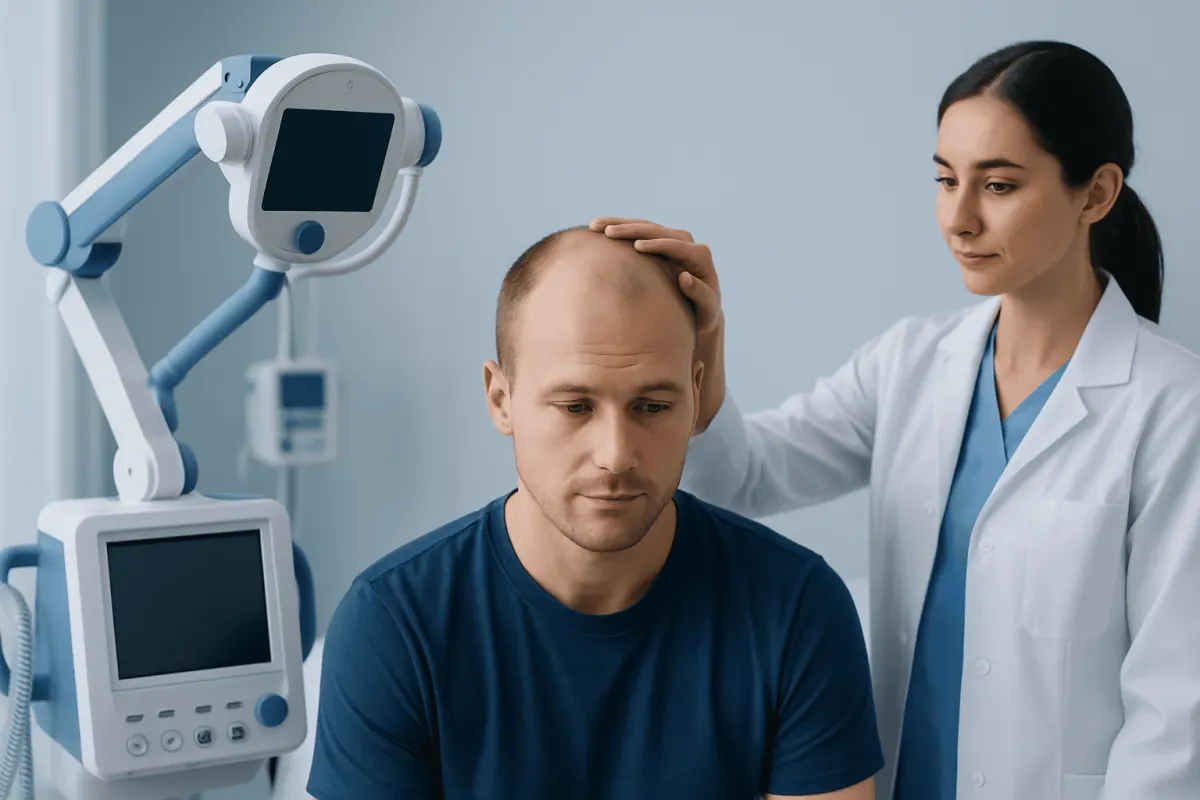
An early receding hairline is commonly related to androgenetic alopecia, a gradual pattern of hair thinning influenced by genes and hormones. A specialist can confirm the cause, discuss treatments that may slow further loss, and assess whether a hairline restoration procedure is appropriate.
Overview: What an Early Receding Hairline Means
An early receding hairline usually refers to a gradual shift backward of the frontal hairline, often first noticed at the temples. In many men, this reflects androgenetic alopecia, also called male-pattern hair loss. It may progress slowly over years, but the rate and pattern vary widely between individuals.
An early receding hairline male pattern can look like slight, symmetrical recession at both temples, producing a gentler M shape. An early receding hairline example may be a person whose central forelock remains relatively dense while the corners become more visible. Photographs taken in consistent lighting and hairstyle can help document whether a true change is occurring.
Hairline restoration surgery, usually performed as a hair transplant, can lower or rebuild selected areas of the hairline using follicles from the back or sides of the scalp. It is a long-term cosmetic option rather than a cure for hair loss, so assessment should also consider whether non-surgical treatment may help preserve existing hair.
Early Receding Hairline Stages and Other Possible Causes
Hair loss is often described using pattern-based scales such as the Norwood classification for male-pattern baldness. Early stages may involve a mature hairline, slight temporal recession, or more noticeable recession with preservation of much of the central frontal hair. These early receding hairline stages are guides rather than diagnoses; they do not predict exactly how an individual’s hair loss will develop.
Androgenetic alopecia is the most common cause of gradual recession. It is influenced by inherited sensitivity of hair follicles to androgens. However, sudden shedding, patchy hair loss, scalp inflammation, broken hairs, or loss involving eyebrows or body hair can suggest another condition and should be assessed by a clinician.
Other contributors can include traction from tightly pulled hairstyles, certain medicines, major illness, nutritional deficiencies, thyroid disorders, or inflammatory scalp disease. A dermatology assessment is especially helpful when hair loss begins rapidly, is uneven, or is accompanied by itching, pain, scaling or redness.
- Family history can increase the likelihood of androgenetic alopecia.
- Hair loss that is gradual and concentrated at the temples and crown is more typical of pattern hair loss.
- A stable hair-loss pattern is important when considering surgical restoration.
How Hairline Restoration Works and Who May Be a Candidate

Hairline restoration is most commonly a follicular-unit hair transplant. A surgeon relocates naturally occurring groups of one to four hairs, called follicular units, from a donor area—usually the scalp at the back and sides—to small recipient sites along the hairline. The placement, angle and direction of these grafts are planned to create a soft, age-appropriate transition rather than an unnaturally straight or dense line.
Follicular unit extraction (FUE) removes individual follicular units, while follicular unit transplantation (FUT) involves removing a narrow strip of donor scalp and separating it into grafts. The appropriate technique depends on donor density, hair characteristics, scalp flexibility, preferred hairstyle and clinical findings. More information about hair transplant treatment can help patients understand the general approach.
Suitable candidates generally have adequate donor hair, a healthy scalp, realistic expectations and a hair-loss pattern that is stable or being actively managed. Younger people with rapidly progressing loss may be advised to delay surgery or use medical treatment first, because a low, permanent hairline can look unnatural if hair behind it continues to thin. A consultation should include medical history, scalp examination, donor-area assessment and a discussion of future hair-loss planning.
Hairline Restoration Procedure: Step by Step
Before the procedure, the clinician reviews the proposed hairline design with the patient. This design considers facial proportions, age, likely future hair loss, existing hair density and the availability of donor follicles. Conservative planning is often important, particularly for an early receding hairline, because it preserves donor supply and leaves room for future changes.
On the day of treatment, the donor and recipient areas are prepared, and local anaesthetic is commonly used. The surgeon obtains follicular units from the donor area by FUE or FUT, then prepares tiny recipient sites in the planned hairline. Single-hair grafts are typically placed at the very front to make the edge appear softer, with selected multi-hair units positioned behind them for density.
The procedure can take several hours, depending on the number of grafts and technique used. Patients usually go home the same day with written instructions for scalp washing, sleep position, activity restrictions and follow-up. Results depend not only on graft survival but also on experienced planning and careful postoperative care.
How Long Does It Take to Recover From a Hairline Restoration Procedure?
Initial recovery after a hairline restoration procedure is usually measured in days to weeks, while hair growth takes months. Mild swelling, redness, tenderness and small crusts can occur in the recipient area during the first week. Many people can return to non-strenuous work and routine indoor activities within a few days, although visible scabbing or redness may last longer for some individuals.
Gentle washing is commonly introduced according to the surgical team’s instructions. Patients are usually asked to avoid rubbing or picking grafts, strenuous exercise, swimming, direct sun exposure and headwear that could disturb the recipient area during the early healing phase. If FUT is used, the donor-area incision also needs time to heal and can leave a linear scar.
It is normal for many transplanted hairs to shed within the first several weeks; this is known as shock shedding and does not necessarily mean the follicles have been lost. New growth often starts to become noticeable after several months, then continues to mature in thickness and coverage over roughly 9 to 12 months, sometimes longer. Existing, non-transplanted hair can still thin over time, which is why long-term planning matters.
Benefits, Risks and Is Hairline Surgery Worth It?
Potential benefits of hairline surgery include a more balanced-looking frontal hairline, improved coverage of receded temples and a result that uses a person’s own growing hair. Because transplanted follicles from the donor region are generally more resistant to pattern hair loss, the transplanted hair may provide lasting coverage. Still, it should be understood as redistribution of a limited resource rather than the creation of new hair.
All procedures have risks. These can include bleeding, infection, swelling, numbness, temporary shedding, poor graft growth, scarring, folliculitis, an uneven hairline or an appearance that does not meet expectations. A carefully performed procedure reduces risk but cannot eliminate it. People who smoke, have uncontrolled medical conditions, active scalp disease or limited donor hair may need additional assessment or may not be suitable candidates.
Is hairline surgery worth it? It can be worthwhile for a well-selected person who has stable or managed hair loss, sufficient donor hair and realistic expectations about gradual results. It may be less appropriate when loss is progressing quickly, donor reserves are limited, or the main goal is to treat diffuse thinning across a large area. A specialist can compare surgery with medical approaches and help the patient decide based on their individual priorities.
What Did Elon Musk Use to Regrow Hair?
There is no reliable public medical record confirming what treatment Elon Musk used for hair restoration. Changes in a public figure’s appearance cannot establish a diagnosis or prove whether hair growth resulted from a transplant, medication, styling, photography, or another approach. It is therefore not appropriate to treat online claims as medical evidence.
For people with pattern hair loss, clinicians may discuss evidence-based options such as topical minoxidil or prescription medicines that affect androgen activity when medically appropriate. These treatments can help some people slow progression or improve density, but they require individual assessment because benefits, side effects and suitability differ. They are also often considered when planning or maintaining the result of a transplant.
A dermatologist or hair-restoration clinician can identify the likely cause of loss and explain which options are appropriate. Self-prescribing medicines or purchasing unregulated hair-loss products online can delay proper diagnosis and may carry avoidable risks.
When to Seek Medical Care
A person should arrange a medical review if hair loss is sudden, patchy, painful, itchy, scaly, inflamed, associated with scarring, or accompanied by other symptoms such as unexplained fatigue or weight change. It is also sensible to seek advice when a gradual early receding hairline is causing concern, as earlier assessment may allow more options for protecting existing hair.
Urgent evaluation is not usually needed for slow, typical temple recession without scalp symptoms. However, a qualified clinician can distinguish a maturing hairline from pattern hair loss and identify conditions that need different treatment. Avoid harsh hair practices, unproven supplements and aggressive scalp treatments while waiting for assessment.
Acıbadem Health Point’s multidisciplinary specialists and JCI-accredited hospitals assess hair and scalp concerns and provide hair-restoration care for international patients. A consultation can help establish a diagnosis, review non-surgical options and determine whether a procedure is suitable.
Frequently asked questions
01What is stage 1 of receding hairline?
Stage 1 generally describes little or no visible hair loss, although a mature hairline may develop after adolescence. Mild temple recession can be normal in some adults, but progressive change may represent the beginning of androgenetic alopecia. A clinician can assess the pattern over time.
02Can an early receding hairline grow back without surgery?
Whether it improves depends on the cause. Pattern hair loss may respond to medical treatment in some people, especially when addressed early, while scarring hair loss needs prompt specialist care. A hair transplant moves follicles but does not treat the underlying tendency for existing hair to thin.
03Is a receding hairline always male-pattern baldness?
No. Male-pattern hair loss is common, but hairline change can also result from traction, inflammatory scalp disorders, medication effects, illness or other causes. Sudden, patchy or symptomatic hair loss should be medically assessed.
04How long does it take to recover from a hairline restoration procedure?
Most initial healing occurs over the first one to two weeks, although redness or sensitivity may last longer. Transplanted hairs often shed before new growth begins. Meaningful visible growth usually develops over several months, with final maturation commonly taking around 9 to 12 months or longer.
05What did Elon Musk use to regrow hair?
There is no confirmed public medical information about any treatment Elon Musk may have used. Photographs and media reports cannot establish a treatment method. People considering hair restoration should seek personalised advice rather than rely on celebrity speculation.
06Is hairline surgery worth it?
Hairline surgery may be a reasonable option for people with adequate donor hair, stable or managed hair loss and realistic expectations. Its value depends on individual goals, the predicted course of future hair loss and willingness to accept surgical risks and a gradual recovery. A consultation is needed to determine suitability.
This article is for general information only and is not a substitute for professional medical advice. Please consult a qualified doctor about your individual situation.
Hair transplant in Turkey — costs, graft counts & a free assessment
JCI-accredited · board-certified surgeons · reply within 24h
Add us as a Preferred Source to see more of our trusted health content across Google Search, AI Overviews and Discover.