Ear Surgery: Procedure, Benefits, Risks and Recovery

Key Takeaways
- Ear surgery is not one operation but a group of procedures for different ear conditions.
- The goal may be to improve hearing, treat infection, repair injury, or correct ear shape.
- Risks vary by procedure and can include infection, temporary dizziness, hearing changes, or scarring.
- Recovery often involves protecting the ear, limiting pressure changes, and attending follow-up visits.
- A specialist ENT evaluation is essential before choosing surgery.
Ear surgery includes a range of procedures used to treat hearing problems, repair damage, remove disease, or improve the shape and function of the ear. The right approach depends on the underlying condition, and recovery is usually guided by the type of operation performed and the person’s overall health.
Overview
Ear surgery is a broad term for procedures performed on the outer, middle, or inner ear to address medical, functional, or reconstructive concerns. For some people, the goal is better hearing; for others, it is to repair a perforated eardrum, remove chronic infection, or reconstruct an ear after injury or birth difference.
Because the ear has delicate structures that work together for hearing and balance, the type of surgery matters as much as the diagnosis. An ear, nose, and throat specialist usually explains whether the issue is best treated with observation, medication, hearing devices, or surgery, and then outlines what recovery is likely to look like.
For international patients, the decision often includes practical questions too: how long the evaluation will take, whether imaging is needed before travel, and how follow-up can be organized after returning home. A careful surgical plan should account for both the medical problem and the real-world logistics of recovery.
What ear surgery can treat
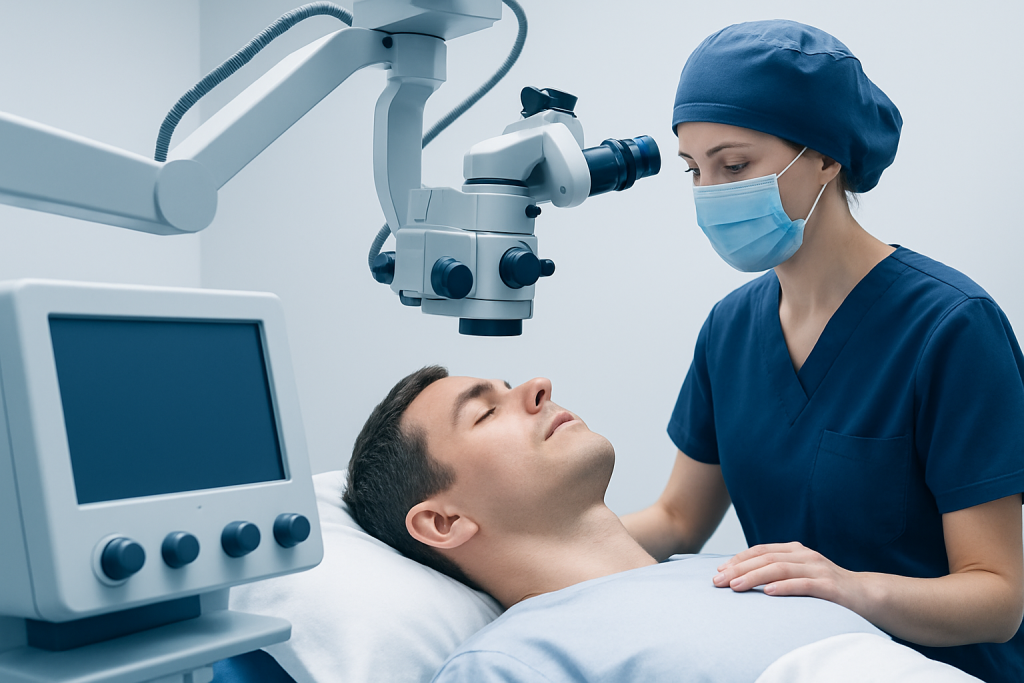
The term ear surgery covers several different operations. Some are designed to restore function, while others focus on appearance or on preventing complications from untreated ear disease. The procedure chosen depends on where the problem is located and how severe it is.
Common reasons for ear surgery include chronic ear infections, a hole in the eardrum, hearing loss related to the middle ear bones, fluid or growths behind the eardrum, narrowed ear canals, trauma, and congenital differences such as prominent ears or underdeveloped outer ear structures.
- Tympanoplasty to repair a perforated eardrum
- Mastoid surgery to remove chronic infection or cholesteatoma
- Ossiculoplasty to rebuild the tiny middle ear bones
- Stapedectomy or stapedotomy for selected cases of conductive hearing loss
- Otoplasty to reshape prominent or misshapen outer ears
Not every person with an ear symptom needs surgery. Many conditions improve with medication, ear cleaning, hearing rehabilitation, or careful monitoring. Surgery becomes more relevant when the problem is persistent, structural, or likely to worsen without intervention.
Symptoms and signs that may lead to surgery

The symptoms that prompt an ENT visit can be subtle at first. A person may notice that hearing seems muffled on one side, that the ear drains repeatedly, or that water and pressure changes cause discomfort. Children may be brought in because of recurrent infections, speech delay, or concern about ear shape.
Some ear conditions also affect balance, cause ringing, or create a feeling of fullness. In other cases, the main concern is visible change after injury or a long-standing congenital difference. The symptom pattern helps the specialist determine whether the problem is primarily conductive, structural, infectious, or cosmetic.
Examples of symptoms that may be discussed during evaluation include:
- Persistent ear pain or pressure
- Repeated ear discharge
- Hearing loss in one or both ears
- Ringing, fullness, or crackling sensations
- Dizziness or imbalance
- Visible ear deformity or asymmetry
Sudden hearing loss, severe vertigo, facial weakness, or a high fever with ear symptoms should be assessed promptly rather than waiting for a routine appointment.
Causes and risk factors
Ear problems that lead to surgery often develop over time. Chronic infections can damage the eardrum and middle ear bones, while previous ear procedures or trauma may leave scar tissue or structural changes that interfere with hearing. Some people are born with narrow canals, malformed cartilage, or a difference in the ear bones that becomes clearer as they grow.
Risk factors vary by condition but may include repeated childhood ear infections, untreated middle ear disease, exposure to loud noise, barotrauma from pressure changes, head injury, and certain inherited conditions. In some cases, no single cause is identified, especially when the issue is congenital.
It is also important to consider overall health. Smoking, uncontrolled diabetes, poor wound healing, and active nasal or sinus disease may influence surgical planning and recovery. A surgeon will usually review these factors before recommending an operation.
Diagnosis and preoperative evaluation
Before ear surgery, the specialist aims to understand exactly what part of the ear is affected and how much function remains. That evaluation usually starts with a history of symptoms, prior infections, hearing changes, medications, and any earlier operations. The physical exam may include otoscopy, microscopic ear examination, and assessment of both ears.
Hearing tests are often central to planning. An audiogram helps determine the type and degree of hearing loss, while additional tests may be used to check middle ear function. In some cases, imaging such as a CT scan is ordered to map bone anatomy or look for chronic disease.
Preoperative preparation may also include a discussion about anesthesia, blood-thinning medicines, recent illnesses, and travel timing. For patients coming from another country, it is helpful to plan enough time for consultation, surgery, and at least one postoperative review before departure.
Treatment options and what the procedure involves
Ear surgery is tailored to the diagnosis, so the experience can differ widely from one person to another. Some procedures are done through the ear canal, while others require a small incision behind the ear. Depending on the operation, the surgeon may repair tissue, reconstruct tiny bones, remove diseased tissue, or reshape cartilage.
Many ear operations are performed under general anesthesia, although some may use local anesthesia with sedation. The surgical team focuses on preserving important structures and minimizing trauma to the surrounding tissue. When hearing restoration is the aim, the surgeon may place grafts or implants to improve sound conduction.
In practical terms, the procedure often follows a pattern: anesthesia, access to the targeted area, repair or reconstruction, careful closure, and a period of observation. The exact length of surgery and the need for same-day discharge versus overnight monitoring depend on complexity and the person’s medical background.
Possible procedures include:
- Eardrum repair when a perforation does not heal on its own
- Mastoid or cholesteatoma surgery to remove destructive disease and reduce recurrence risk
- Bone-chain reconstruction to improve sound transmission
- Outer ear correction for shape concerns or trauma-related deformity
Benefits and realistic expectations
The main benefit of ear surgery is addressing a problem that medicine alone may not resolve. For some patients, that means improved hearing or fewer infections. For others, it means a more stable ear, less drainage, less discomfort, or a shape that feels more balanced and easier to live with.
Results depend on the exact diagnosis, the extent of the damage, and how long the condition has been present. Surgery can often improve function, but it may not restore the ear to normal. A good consultation will include a clear discussion of what is realistic, what alternatives exist, and whether more than one stage of treatment may be needed.
When the surgery is reconstructive or cosmetic, the benefits can also include greater confidence and reduced self-consciousness. Even then, the surgeon should explain that healing takes time and that early swelling or temporary asymmetry is common.
Risks, possible complications, and recovery
All surgery carries some risk, and ear surgery is no exception. The specific risks depend on the procedure and the structures involved, but they may include bleeding, infection, graft failure, temporary dizziness, altered taste, scarring, or continued hearing loss. In procedures near the facial nerve or inner ear, the surgeon will take extra care to protect those delicate structures.
Most people recover gradually over days to weeks, although full healing can take longer. It is common to have mild pain, pressure, muffled hearing, or a feeling of packing in the ear early on. Dressings, ear drops, or activity restrictions may be part of the recovery plan, especially after middle ear surgery.
Recovery usually includes avoiding forceful nose blowing, heavy lifting, swimming, or pressure changes until the surgeon says it is safe. Follow-up visits are important because they allow the team to check healing, remove packing if needed, and review hearing once the ear has settled.
Helpful recovery habits often include:
- Keeping the ear dry as instructed
- Taking prescribed medicines exactly as directed
- Sleeping with the head slightly elevated if advised
- Reporting worsening pain, fever, or drainage
- Attending all follow-up appointments, even if symptoms improve early
Prevention, self-care, and when to see a doctor
Not every ear condition can be prevented, but some can be managed more safely when care is sought early. Prompt treatment of repeated infections, safe management of wax, protection from loud noise, and wearing recommended ear protection during water sports or flying can all reduce strain on the ear.
After surgery, self-care is mainly about protecting healing tissue and avoiding pressure or contamination. Patients are usually advised not to insert cotton swabs or objects into the ear, because this can irritate the canal and disrupt healing. If a hearing aid or ear protector is part of long-term care, the specialist will explain when it can be used again.
Medical review is important if symptoms return after surgery or if recovery seems to stall. A doctor should be contacted for increasing pain, new drainage, fever, facial weakness, sudden hearing change, or persistent dizziness. These signs do not always mean something serious, but they do deserve a professional assessment.
Acibadem Health Point can support international patients with multidisciplinary specialists and JCI-accredited hospitals that diagnose and treat ear surgery conditions with coordinated follow-up planning.
Living with the decision: what patients often want to know next
Choosing ear surgery can feel less like selecting a procedure and more like arranging a sequence of steps: diagnosis, travel or local preparation, the operation itself, and recovery that may continue after returning home. That is why it helps to ask not only what the surgery treats, but also how hearing will be checked afterward and what the plan is if an issue comes up once the patient is back home.
A well-organized team should be able to explain the expected hospital stay, typical activity limits, and how long it may take before work, school, flying, or exercise is reasonable again. For patients traveling internationally, written instructions and a clear follow-up plan can make the experience much smoother and safer.
In the best-case scenario, ear surgery is not a single event but a carefully managed treatment pathway. When the diagnosis is clear and recovery guidance is specific, patients are better equipped to heal well and understand what improvements to expect over time.
Frequently asked questions
01What is ear surgery used for?
Ear surgery is used to treat a range of conditions affecting the ear, including chronic infection, eardrum perforation, hearing loss from middle ear problems, and some outer ear shape differences. The exact goal depends on the diagnosis and may be functional, reconstructive, or both.
02Is ear surgery painful?
Most people do not describe ear surgery itself as painful because anesthesia is used. Some discomfort, pressure, or soreness is common afterward, and the care team usually gives guidance on pain control and recovery measures.
03How long does recovery from ear surgery take?
Recovery time varies by procedure. Some people feel well within a few days, while healing after middle ear or reconstructive surgery may take several weeks or longer, with hearing improvement continuing as the ear heals.
04Will ear surgery improve hearing?
It can improve hearing in some cases, especially when the problem is related to the eardrum or middle ear bones. However, hearing outcomes depend on the underlying condition, how much damage is present, and whether the inner ear is also involved.
05Can children have ear surgery?
Yes, children may have ear surgery for recurring infections, hearing problems, or congenital ear differences. The timing and type of surgery are based on age, anatomy, hearing needs, and overall health.
06When should a person seek medical help after ear surgery?
Medical advice should be sought if pain worsens, fever develops, drainage increases, dizziness becomes significant, or there is a sudden change in hearing or facial movement. These symptoms may be part of normal healing in mild form, but they should still be reviewed if they are new or concerning.
This article is for general information only and is not a substitute for professional medical advice. Please consult a qualified doctor about your individual situation.
Explore treatments in Turkey — costs, top hospitals & a free quote
JCI-accredited · board-certified surgeons · reply within 24h
Add us as a Preferred Source to see more of our trusted health content across Google Search, AI Overviews and Discover.