E-max Veneers in Turkey: Method, Cost and Who It Suits

Key Takeaways
- Planning emax veneers turkey usually involves a remote assessment with photographs or scans, a written treatment plan, then a single trip of roughly five to seven days with two or more clinic visits.
- Quotes are normally given per tooth or per arch as indicative cost bands, and can change once a dentist examines the mouth in person.
- Suitability depends on gum health, the amount of healthy enamel present and bite factors — a qualified dentist must confirm this before any preparation begins.
- Accreditation such as JCI, verifiable dentist registration and clear written documentation are more useful selection criteria than marketing claims or before-and-after galleries.
- Most people feel comfortable flying home within a day or two of final bonding, but temporary sensitivity and minor bite adjustments are common in the first weeks.
- Aftercare at home means a UK dentist for check-ups, hygiene visits and any emergency, so records and material details should be requested in writing before departure.
E-max veneers are thin lithium disilicate ceramic shells bonded to the front of prepared teeth, and many UK patients arrange them abroad as part of a planned dental trip. This guide explains how treatment is coordinated, what a typical package covers, how costs are usually presented and who the treatment tends to suit.
What E-max Veneers Are and Why UK Patients Travel
Patients researching emax veneers turkey are usually looking at two decisions at once: a dental one and a travel one. E-max is a brand name for lithium disilicate, a strong glass-ceramic used to make thin, tooth-coloured shells that are bonded to the visible surface of prepared front teeth. They are chosen mainly for appearance — colour, shape, alignment and worn edges — and are considered a restorative rather than a purely cosmetic procedure, because healthy tooth structure is usually reduced to make room for the ceramic.
Travelling for this treatment appeals to people because dental care abroad is often priced differently from private dentistry in the UK, and because laboratory turnaround in a hospital-linked or clinic-linked lab can allow several teeth to be completed within one trip rather than over several months of appointments. Turkey has developed a large international dental sector, with English-speaking coordinators, airport transfers and hotel arrangements built around a short treatment window.
None of that changes the clinical reality: veneers are irreversible once enamel has been prepared, and they need maintenance for life. Whether they are the right option — as opposed to whitening, composite bonding, orthodontics or crowns — is a judgement only a dentist can make after examining the mouth and reviewing radiographs. This article focuses on how the journey is coordinated and what to expect practically, and readers should discuss the clinical alternatives directly with a qualified dentist.
Planning Emax Veneers Turkey: From Enquiry to Treatment Plan
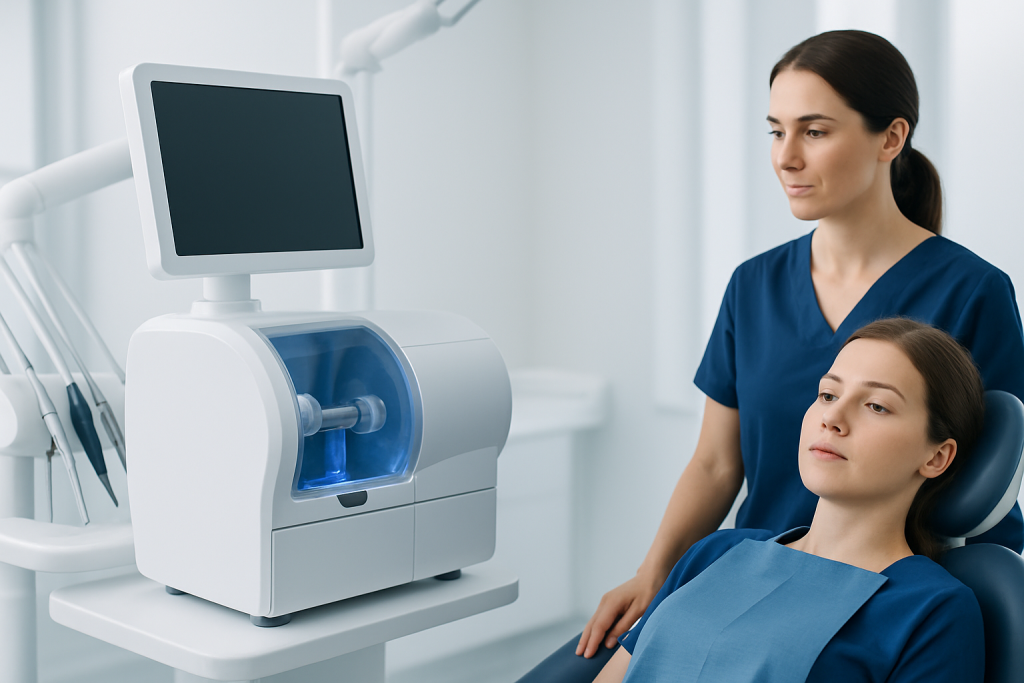
Coordinated dental travel normally begins remotely. A patient sends recent photographs of the teeth and smile, any existing X-rays or scans, and a short medical and dental history — including grinding habits, gum treatment, root canals, implants and any medication. An international patient coordinator passes this to a dentist, who reviews it and responds with a preliminary opinion on suitability and an outline plan.
Many patients then have a video consultation before committing. This is the moment to ask direct questions: how many teeth are proposed and why, whether whitening or orthodontics might reduce the number needed, how much tooth reduction is expected, which laboratory will make the restorations and what happens if a veneer needs remaking. A second opinion — from the treating team or from a dentist at home — is reasonable and should never be discouraged.
Once a plan is agreed in principle, coordination moves to logistics: proposed treatment dates, an indicative cost band, invitation letters for visa purposes where required, flight timing advice, hotel options near the clinic, transfers and interpreter support. A written treatment plan should be issued before travel, and patients should understand that it remains provisional until an in-person examination confirms gum health and the condition of each tooth.
What Happens During the Trip, Step by Step

A typical veneer trip is structured around two main clinical stages with a laboratory phase in between. On arrival day or the first working day, the dentist carries out a full examination, takes radiographs, checks gum health and photographs the smile. Any underlying problem — decay, gum inflammation, a failing filling or root canal — is addressed first, and this can change both the plan and the timeline.
Design comes next. Digital smile planning, wax mock-ups or trial smiles allow the shape, length and shade to be discussed before any preparation. Teeth are then prepared under local anaesthetic, impressions or digital scans are taken, and temporary veneers are fitted so the patient can eat, speak and see an approximation of the result while the laboratory works. A try-in appointment may follow, where the finished ceramics are checked for fit, contact points, bite and colour before being bonded permanently.
Between visits there is usually free time, but patients should stay reachable and avoid booking excursions that clash with clinic slots. Temporaries are more fragile than final veneers, so hard, sticky and heavily coloured foods are best avoided during this window.
- Day 1: examination, X-rays, gum assessment, confirmation of the plan and final quote
- Day 1–2: smile design discussion, tooth preparation, scans, temporary veneers
- Day 3–5: laboratory fabrication; rest days with the clinic on call
- Day 5–7: try-in, adjustments, bonding, bite check and aftercare briefing
What Treatment Packages Typically Include
Packages vary widely, so the useful skill is reading what is and is not covered. Most dental travel arrangements bundle the clinical work with basic hospitality, but the boundaries differ between providers and should be confirmed in writing rather than assumed from a website.
- Usually included: consultation and examination, standard radiographs, tooth preparation, digital scans or impressions, temporary veneers, laboratory fabrication, bonding, bite adjustment, airport and clinic transfers, interpreter support and a set number of hotel nights
- Often excluded: flights, travel insurance, additional hotel nights if treatment is extended, gum treatment, fillings, root canal therapy, extractions, implants, night guards, whitening of untreated teeth and any night-guard remakes
- Variable: the number of veneers covered by a headline figure, the ceramic system used, warranty or remake terms, and follow-up appointments if a patient returns later
Preparatory work is the most common reason a plan grows. Veneers are bonded to teeth and supported by gums, so periodontal treatment or restorative work may be recommended first. Patients should ask what happens if such work is identified at the first appointment — whether it can be done during the same trip, what it costs and whether the veneer timeline shifts.
It is also worth clarifying practical details: whether a night guard is provided for people who grind, whether the shade is chosen jointly, and whether photographs, scan files, the ceramic brand and batch details and a written record of treatment will be supplied to take home.
Understanding Cost Bands and Budget Planning
Responsible clinics quote in bands rather than fixed figures until a dentist has examined the mouth. Veneer pricing is normally expressed per tooth, sometimes with a package figure for a full upper arch or for the commonly requested eight to ten front teeth. Because cases differ, an online estimate should be treated as a planning range, not a contract.
Several factors move a quote within its band: the number of teeth treated, whether crowns are needed instead of veneers on heavily restored teeth, the ceramic system and laboratory used, the seniority of the dentist, and whether gum or restorative treatment is required first. Costs quoted abroad also sit alongside travel expenses — flights, insurance, extra hotel nights, meals and time away from work — so the honest comparison is total journey cost against a like-for-like UK private plan, not headline figure against headline figure.
Patients should ask for the quote in writing, in a named currency, with a stated validity period and a clear list of inclusions. Deposit terms, refund conditions if treatment cannot proceed on clinical grounds, and what happens if a veneer debonds or fractures within a defined period should all be documented. Unusually low quotes that assume no preparatory work, no follow-up and no remake provision often become more expensive later.
Choosing a Clinic: Accreditation and Credentials
Selection criteria matter more in dental travel than in domestic care, because the patient cannot easily drop in for a chat first. Accreditation is a reasonable starting filter. Joint Commission International (JCI) accreditation indicates that a hospital or facility has been assessed against international standards for patient safety, infection control, medication management and record-keeping. It is not a comment on any individual dentist’s aesthetic work, but it does signal a governed environment with audited processes.
Practitioner credentials should be verifiable. Patients can ask for the treating dentist’s name, dental school, year of qualification, registration with the Turkish authorities and any postgraduate training in prosthodontics or restorative dentistry — and expect a straightforward answer. In the UK, the General Dental Council maintains a public register that patients are used to consulting; the equivalent expectation of transparency is fair to apply abroad.
Other practical markers include: a written consent process that explains irreversibility and alternatives, radiographs taken before preparation rather than after, a named point of contact, clear complaint and remake policies, and no pressure to decide quickly or to increase the number of teeth. Before-and-after galleries, discount deadlines and promises of a particular outcome are not evidence of quality, and no clinic can guarantee a result.
Recovery, Travel Timing and Aftercare Back Home
Veneer treatment is not surgery, and most people feel well throughout. Even so, trips should be planned with a small buffer. Flying on the same day as final bonding is generally avoided; leaving at least one clear day allows any bite adjustment or comfort issue to be dealt with before departure. Anyone having extractions, gum surgery or sedation should follow the specific advice of the treating team about flying, which may be more cautious.
Temporary sensitivity to hot and cold, gum tenderness around newly prepared margins and a period of adjustment to the feel of the new edges are common in the first days to weeks. Bonded ceramic is strong but brittle at the edges, so the standard advice is to avoid biting nails, opening packaging with the teeth, chewing ice or hard crusts on the front teeth, and to use a night guard if grinding has been identified.
Aftercare planning is the part most often neglected. Before flying home, patients should collect a treatment summary, radiographs, scan files, shade and material details, and written instructions. Registering with or informing a UK dentist matters, because routine check-ups, hygiene appointments and any emergency will happen at home. Coordinated programmes typically include remote follow-up by message or video, and a route back to the treating dentist if something needs reviewing — but a local dentist remains the first port of call for pain, a debonded veneer or a chipped edge.
Who It Suits and When to Speak to a Patient Coordinator
E-max veneers tend to suit adults with healthy gums, sufficient enamel, a stable bite and specific concerns about the colour, shape or minor alignment of front teeth, who understand that the treatment is permanent and requires ongoing maintenance. They are less suitable, or need preparatory treatment first, where there is untreated gum disease, active decay, significant grinding without protection, heavily restored teeth better served by crowns, or alignment problems that orthodontics would address more conservatively. Growing teenagers are generally not candidates.
The right moment to contact a patient coordinator is once these questions are on the table rather than after a decision has been made. A coordinator can arrange a remote dental review, organise a video consultation or second opinion, explain what a package covers, outline indicative cost bands, advise on realistic trip length and handle visas, transfers, accommodation and interpreting. Being open about medical history, medication, anxiety levels and budget from the outset produces a more realistic plan.
Acibadem Health Point coordinates this process for international patients, connecting them with multidisciplinary specialists across Acıbadem’s JCI-accredited hospitals and clinics, arranging assessments and supporting the practical side of the journey. Whichever provider a patient chooses, the sensible sequence is the same: get an individual clinical assessment, read the written plan carefully, confirm what is included, and arrange aftercare at home before booking a flight.
Frequently asked questions
01How long should a trip for E-max veneers be?
Most veneer cases are planned around a stay of roughly five to seven days, allowing for examination, preparation, laboratory fabrication and final bonding. The exact length depends on the number of teeth, whether preparatory treatment such as gum therapy or fillings is needed, and laboratory scheduling. A dentist confirms the timeline after the in-person examination, and patients are usually advised to keep a spare day before flying home.
02Are E-max veneers permanent?
The preparation of the tooth is irreversible, because enamel is reduced to make room for the ceramic, so teeth will always need some form of covering afterwards. The veneers themselves are restorations with a finite lifespan and may eventually need repair or replacement, depending on oral hygiene, gum health, bite forces and grinding habits. No clinician can guarantee how long an individual veneer will last.
03How are veneer costs usually quoted?
Quotes are normally given per tooth, or as a package for a defined number of front teeth or a full arch, and are presented as indicative bands until a dentist has examined the mouth. Factors such as the ceramic system, the laboratory, the seniority of the dentist and any preparatory treatment can move the figure within that range. Patients should request a written quote listing what is included and excluded, along with deposit and refund terms.
04What is usually not included in a dental package?
Flights, travel insurance, meals and additional hotel nights are commonly excluded, as is preparatory work such as gum treatment, fillings, root canal therapy or extractions. Night guards, whitening of untreated teeth and later follow-up trips may also be separate. Because inclusions vary between providers, they should be confirmed in writing before travel rather than assumed.
05Is it safe to fly soon after having veneers fitted?
Bonding veneers is not surgery, and most people feel comfortable flying a day or two after the final appointment. Leaving a buffer day allows the dentist to check the bite and address any sensitivity before departure. Patients who have had extractions, gum surgery or sedation should follow the specific flying advice given by their treating team.
06Why does JCI accreditation matter when choosing a clinic abroad?
Joint Commission International accreditation means a facility has been independently assessed against international standards for patient safety, infection control and record-keeping. It reflects the systems around the care rather than any individual practitioner's aesthetic results. It is best used alongside other checks, such as verifying the treating dentist's qualifications and registration and reviewing the written consent and treatment documentation.
07Who looks after the veneers once the patient is back in the UK?
Routine check-ups, hygiene appointments and any urgent problem such as a chipped or debonded veneer are handled by a dentist at home, so registering with or informing a UK practice before travelling is important. Patients should bring back a treatment summary, radiographs, scan files and details of the ceramic used. Many coordinated programmes also offer remote follow-up and a route back to the treating dentist if a review is needed.
This article is for general information only and is not a substitute for professional medical advice. Please consult a qualified doctor about your individual situation.
Explore treatments in Turkey — costs, top hospitals & a free quote
JCI-accredited · board-certified surgeons · reply within 24h
Add us as a Preferred Source to see more of our trusted health content across Google Search, AI Overviews and Discover.