Does Coffee Stain Your Teeth and Can It Be Managed?

Does coffee stain your teeth? Yes. Regular coffee drinking can leave yellow-brown surface stains over time, but this type of discoloration is usually harmless and can often be reduced with good oral hygiene and professional dental care. Changes that are sudden, limited to one tooth, painful, or accompanied by swelling should be assessed by a dentist.
Does coffee stain your teeth?
Yes. Coffee can stain teeth, especially when it is consumed regularly over months or years. The discoloration is most often an external surface stain, meaning it affects the outer enamel or the thin film of plaque and deposits that can collect on teeth. It is usually harmless, although it may be cosmetically bothersome.
Coffee contains dark-colored compounds called chromogens, as well as tannins. These substances can adhere to the tooth surface and make it easier for color to build up. Stains may appear yellow, tan, or brown and are often most noticeable near the gumline, between teeth, or around areas where plaque and tartar have accumulated.
Not every change in tooth color is caused by coffee. A dentist should assess discoloration that develops quickly, affects only one tooth, occurs after an injury, or comes with pain, sensitivity, swelling, bleeding, or a bad taste. These features can point to a dental problem that needs treatment rather than a simple surface stain.
Why coffee leaves visible marks on teeth
Enamel is the hard, protective outer layer of each tooth. Although it is strong, it is not perfectly smooth. Microscopic irregularities can hold onto pigments from foods and drinks. Coffee’s chromogens are strongly colored molecules, while tannins can promote their attachment to the enamel surface.
Staining is often more noticeable when plaque is present. Plaque is a soft bacterial film that forms naturally on teeth. If it is not removed well through brushing and cleaning between the teeth, it can retain pigments. Over time, plaque can harden into tartar, also called calculus, which cannot be removed by home brushing and may look yellow or brown.
Acidity may also play a role. Coffee is acidic, though its effect differs according to the type of coffee, added ingredients, and how often it is consumed. Frequent exposure to acidic drinks can temporarily soften enamel. This does not mean coffee alone will damage teeth, but repeated sipping throughout the day may increase the opportunity for both staining and enamel wear.
- Black coffee can leave visible pigments on teeth.
- Milk may lighten the drink’s appearance but does not reliably prevent staining.
- Sweetened coffee can add cavity risk if sugar is consumed frequently.
- Tobacco use and red wine can make coffee-related discoloration more pronounced.
What coffee staining looks like and what else may cause discoloration
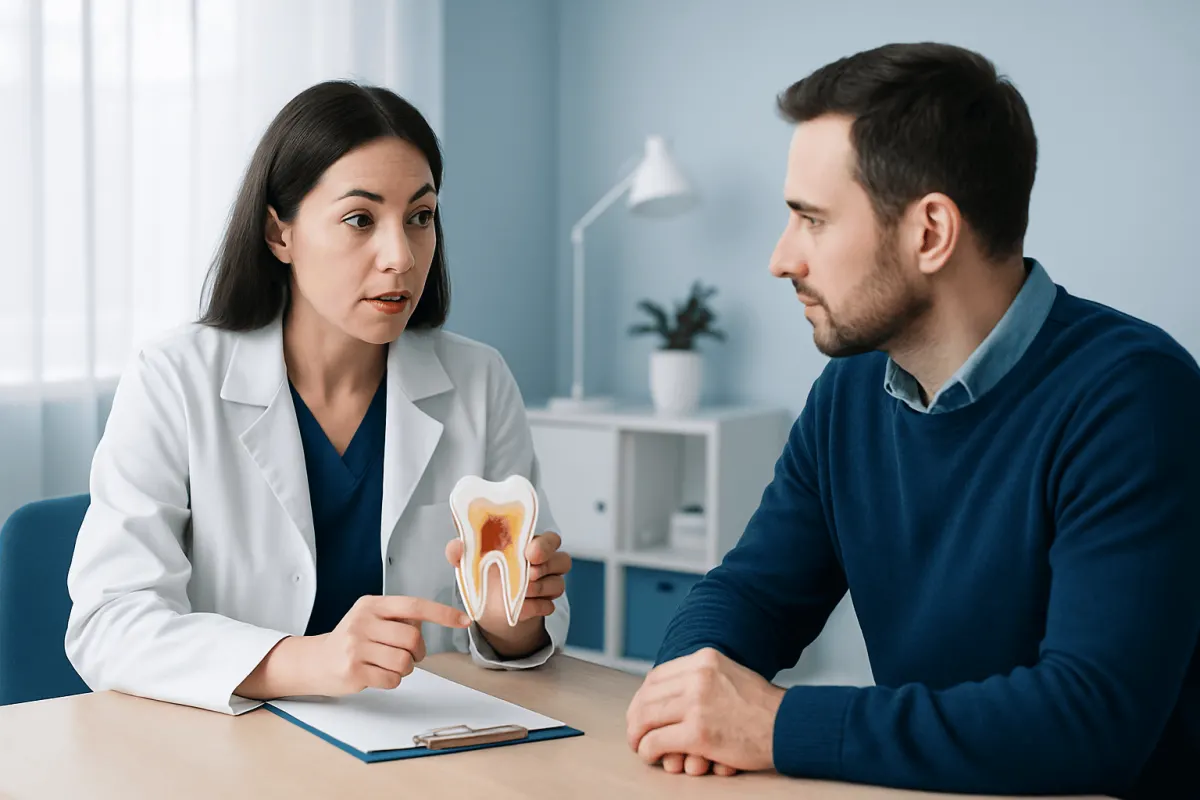
Coffee-related staining usually develops gradually. It commonly affects several teeth rather than just one, and it may look like a generalized yellowing or patchy brown discoloration. The color can be especially visible on front teeth because they are more exposed when smiling and because stains contrast with naturally lighter enamel.
Other common causes of external tooth staining include tea, cola, red wine, berries, spices, tobacco, and some mouth rinses or medicines. Poor plaque control, dry mouth, and infrequent professional cleanings can also allow stains to accumulate more easily.
Some tooth color changes arise from inside the tooth rather than from the surface. Aging can make teeth appear more yellow as enamel becomes thinner and the naturally yellow dentin underneath becomes more visible. Certain medications, excessive fluoride exposure during tooth development, previous root canal treatment, tooth trauma, and tooth decay can also alter color.
A gray, dark brown, or pinkish change in one tooth deserves particular attention, especially following a fall or blow to the mouth. It may indicate changes to the tooth’s nerve or blood supply. A dentist can distinguish surface staining from internal discoloration and identify whether care is needed.
How dentists assess tooth discoloration
For most people, a dental visit begins with questions about when the color change started, coffee and tobacco use, oral hygiene habits, diet, medications, and any previous dental injury. The dentist will examine the teeth, gums, tongue, and soft tissues of the mouth. They will look for plaque, tartar, cavities, gum inflammation, enamel wear, cracks, and signs of infection.
Surface staining can often be identified during a routine examination. The dentist or dental hygienist may gently assess whether the discoloration is on the outer surface and whether it improves after professional cleaning. They may compare the color of individual teeth and check whether a change is limited to one area.
If a tooth is unusually dark, painful, cracked, or previously injured, dental X-rays may be recommended. These images can help assess decay, infection around the root, bone changes, and other issues that are not visible from the outside. Tests of tooth sensitivity or vitality may also be used when the tooth nerve is a concern.
A dental examination is also useful before whitening. Whitening products may not work evenly on crowns, fillings, veneers, or internally discolored teeth. Treating active decay or gum disease first supports a safer and more predictable cosmetic result.
Options for reducing coffee-related stains
Professional cleaning is often the first and most appropriate option for surface stains. During a cleaning, a dental professional removes plaque and tartar and may polish away external discoloration. This can make teeth look brighter without changing their natural internal shade.
When staining remains after cleaning or a person wishes to lighten the overall tooth color, a dentist may discuss whitening options. Dentist-supervised whitening can be appropriate for some adults after an oral health assessment. Results vary according to the original tooth shade, the source of discoloration, and the presence of restorations such as crowns or fillings. Teeth whitening treatment should be individualized to avoid worsening sensitivity or overlooking untreated dental disease.
Over-the-counter whitening products may help some people with mild external staining, but they can cause temporary tooth sensitivity or gum irritation, particularly if used too often or incorrectly. Abrasive powders, charcoal products, and aggressive scrubbing are not a substitute for dental cleaning and may wear down enamel or irritate the gums.
For staining linked to cavities, worn enamel, gum disease, damaged restorations, or an injured tooth, the underlying cause should be treated rather than masked. A dentist can explain whether cleaning, restoration, root canal treatment, or another approach is needed.
Everyday habits that can help prevent stains
It is not necessary for most people to stop drinking coffee entirely to protect their smile. The goal is to reduce prolonged contact between pigments and teeth while keeping the mouth clean. Drinking coffee within a shorter period rather than taking small sips over many hours can reduce repeated exposure.
Rinsing the mouth with plain water after coffee can help wash away some pigment and acidity. Waiting about 30 minutes before brushing after acidic drinks may be gentler on enamel, particularly if a person has enamel erosion or tooth sensitivity. Brushing twice daily with fluoride toothpaste and cleaning between the teeth once daily remain the foundation of oral care.
Using a straw for iced coffee may reduce contact with front teeth for some drinks, although it is not a complete solution and may not be practical for hot coffee. Limiting added sugar is also important because frequent sugar exposure supports the bacteria that cause tooth decay.
Regular dental examinations and cleanings help remove tartar and identify early problems. People with gum bleeding, persistent bad breath, loose teeth, or visible tartar should not rely on whitening products alone; they should arrange a dental review.
When to seek medical care for tooth color changes
Gradual staining on several teeth without pain is commonly a cosmetic concern and can be discussed at a routine dental appointment. However, prompt dental advice is sensible when one tooth suddenly becomes gray, brown, black, or pink, particularly after trauma. A darkened single tooth can sometimes reflect damage inside the tooth.
Dental assessment is also important for toothache, persistent sensitivity to heat or cold, pain on biting, swelling of the gum or face, pus, fever, a bad taste, or a loose tooth. These symptoms may be associated with decay, gum disease, a crack, or infection and need professional evaluation.
Anyone with a mouth ulcer, lump, red or white patch, unexplained bleeding, or hoarseness that does not resolve within two weeks should seek evaluation from a dentist or doctor. These signs are not usually caused by coffee staining, but they should not be ignored.
Acıbadem Health Point’s multidisciplinary dental and medical specialists at JCI-accredited hospitals can assess tooth discoloration and related oral health concerns for international patients. The appropriate clinician can determine whether the change is a removable surface stain or a sign of another dental condition.
Frequently asked questions
01Does coffee stain your teeth permanently?
Coffee can cause stains that remain until they are removed through professional cleaning or whitening, but many are external and treatable. Whether a stain fully improves depends on its cause, the condition of the enamel, and whether tartar or internal discoloration is present. A dentist can advise on the most suitable option.
02How long does it take for coffee to stain teeth?
There is no fixed timeline. Staining often develops gradually with regular coffee consumption, especially when coffee is sipped frequently and plaque or tartar is present. Individual enamel characteristics, oral hygiene, smoking, and other dietary habits also affect how noticeable stains become.
03Can brushing right after coffee prevent stains?
Brushing is important for oral health, but brushing immediately after an acidic drink may not be ideal because enamel can be temporarily softened. Rinsing with water first and waiting around 30 minutes before brushing is a reasonable approach for many people. A dentist can provide individual advice for people with erosion or sensitivity.
04Does adding milk to coffee prevent tooth stains?
Adding milk may change the drink’s appearance, but it does not reliably prevent coffee pigments from staining teeth. Good oral hygiene, drinking water after coffee, and routine dental care are more dependable ways to reduce staining. Added sugar should be limited because it can increase cavity risk.
05Are coffee stains a sign of cavities?
Coffee stains alone do not mean that a person has cavities. However, dark areas can sometimes resemble decay, and plaque or tartar can collect stains while also increasing the risk of dental problems. A dentist should check any spot that is painful, soft, growing, or difficult to clean.
06Can whitening toothpaste remove coffee stains?
Whitening toothpaste may help remove some mild surface stains, usually through polishing ingredients. It does not change the internal color of teeth and may not remove deeper or longstanding discoloration. Frequent or aggressive use can contribute to sensitivity or enamel wear, so dental guidance is helpful.
This article is for general information only and is not a substitute for professional medical advice. Please consult a qualified doctor about your individual situation.
Explore treatments in Turkey — costs, top hospitals & a free quote
JCI-accredited · board-certified surgeons · reply within 24h
Add us as a Preferred Source to see more of our trusted health content across Google Search, AI Overviews and Discover.