Does Cataract Surgery Correct Vision: Procedure, Recovery and Results
Cataract surgery usually corrects the blurred, hazy vision caused by a cataract by removing the cloudy natural lens and replacing it with a clear artificial lens. It can substantially improve sight, but the final result also depends on the health of the retina, optic nerve, cornea and other parts of the eye.
Does cataract surgery correct vision?
Yes. Cataract surgery is designed to correct the vision changes caused by a cataract, which develops when the eye’s natural lens becomes cloudy. During surgery, the cloudy lens is removed and replaced with a clear artificial lens called an intraocular lens, or IOL. This allows light to reach the retina more clearly and often improves blurred vision, glare, faded colours and difficulty seeing at night.
However, cataract surgery does not correct every possible cause of reduced sight. Conditions affecting the retina, optic nerve or cornea—such as macular degeneration, glaucoma, diabetic eye disease or corneal scarring—may limit how much vision improves. A detailed eye examination helps the ophthalmologist explain what improvement is realistic for the individual eye.
The chosen IOL can also address certain focusing needs. Standard monofocal lenses are typically set for one main distance, while other lens designs may reduce dependence on glasses for selected patients. Cataract surgery planning should be individualized according to eye measurements, daily activities and the person’s visual priorities.
How cataract surgery improves sight and who may benefit
A cataract is not a film on the surface of the eye. It is a change within the natural lens behind the iris, the coloured part of the eye. As the lens loses transparency, light scatters rather than focusing sharply on the retina. This can make reading, driving, recognizing faces and coping with bright light more difficult.
Surgery is usually considered when cataract symptoms interfere with daily life, work, driving, hobbies or independence. There is no single visual-acuity number or age at which everyone needs surgery. Instead, the decision is based on symptoms, examination findings, the person’s general health and their own goals.
Before surgery, the eye team measures the eye to calculate IOL power and examines for coexisting conditions. People with dry eye, prior laser vision correction, diabetes, retinal disease, glaucoma or previous eye surgery may need additional assessment or a tailored treatment plan. An ophthalmologist can also discuss whether glasses, a change in lighting or another approach is appropriate if the cataract is not yet causing meaningful difficulty.
What happens during the procedure?

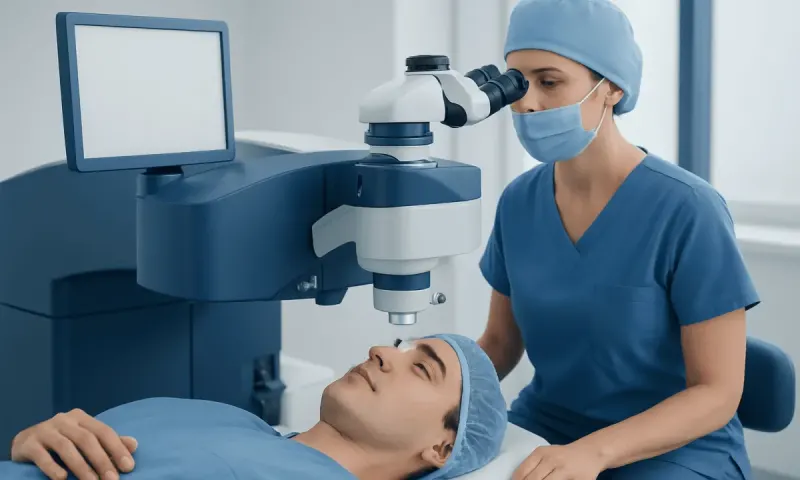
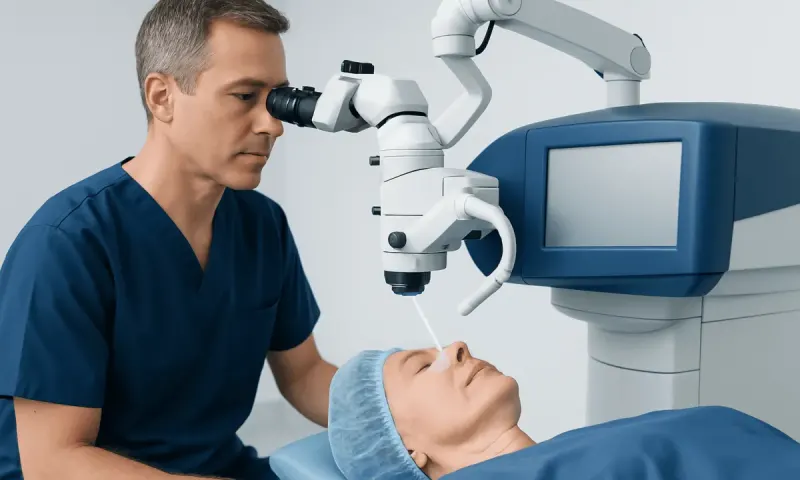
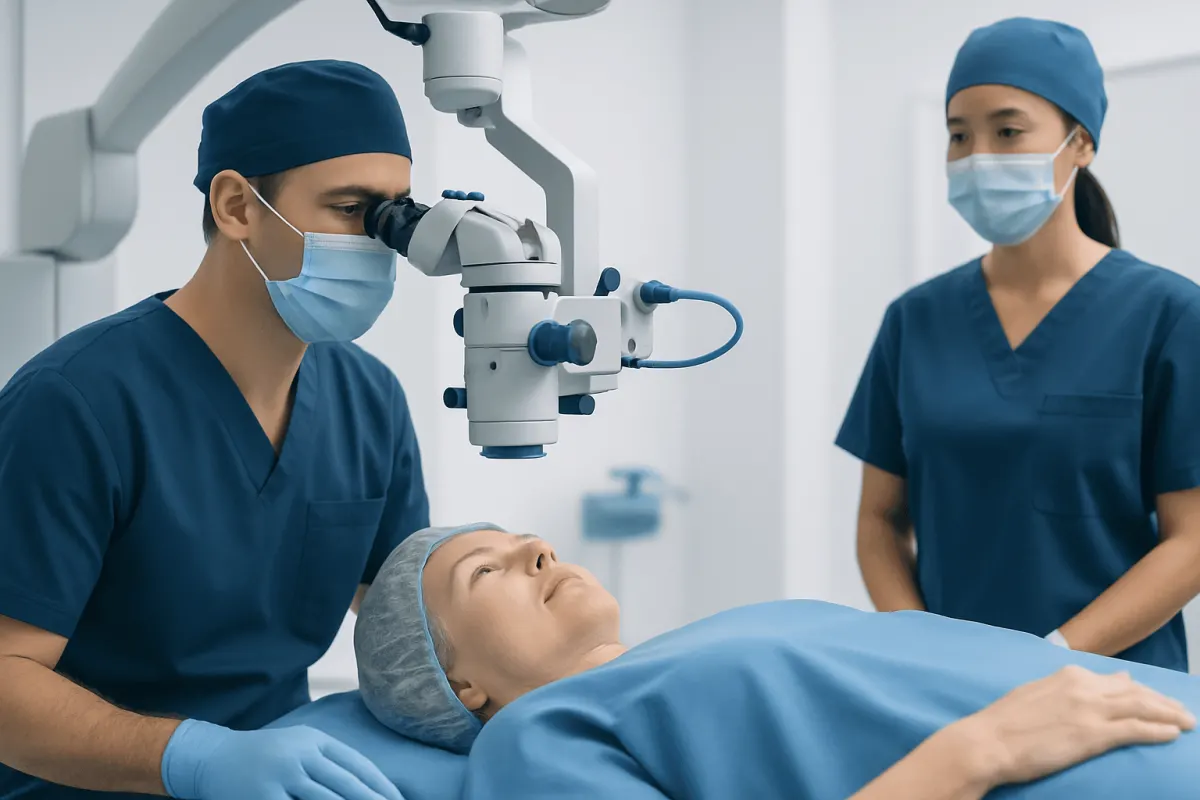
Cataract surgery is generally an outpatient procedure. The eye is usually numbed with drops, and some people receive medicine to help them relax. They remain awake but should not feel pain. The surgical team cleans and protects the area around the eye before beginning.
In the most common method, called phacoemulsification, the surgeon makes a very small opening in the cornea. Ultrasound energy breaks the cloudy lens into small pieces, which are gently removed. The folded artificial lens is then placed into the thin capsule that previously held the natural lens, where it unfolds and stays in position.
The procedure itself commonly takes a short time, although preparation and recovery at the surgical centre take longer. Surgery is normally performed on one eye at a time. If both eyes need treatment, the second operation is often planned after the first eye has begun healing and its result has been reviewed.
- Monofocal IOLs: usually provide focus at one chosen distance; glasses may be needed for other distances.
- Toric IOLs: may help correct astigmatism in suitable eyes.
- Multifocal or extended-depth-of-focus IOLs: may reduce reliance on glasses for some people, but may not suit every eye and can affect night-vision quality for certain patients.
Recovery timeline and everyday care
Vision may seem brighter or clearer within the first few days, but it can be temporarily blurry as the eye adjusts and heals. Mild scratchiness, watering, light sensitivity and a feeling that something is in the eye can occur early on. These symptoms should gradually improve rather than become more severe.
Prescription eye drops are commonly used after surgery to reduce inflammation and lower the risk of infection. The surgeon will provide individual instructions on using drops, showering, eye protection and follow-up visits. It is important not to rub or press on the operated eye.
Many people can walk, read, watch television and do light activities soon after surgery. For the first days to weeks, depending on the surgeon’s guidance, it is usually sensible to avoid heavy lifting, vigorous exercise, swimming and activities that could expose the eye to dust, water or injury. Driving should wait until vision is clear enough and the clinician confirms it is safe.
Healing often continues for several weeks. If glasses are needed, the prescription is commonly assessed after the eye has stabilized. People who have surgery in both eyes may experience a further adjustment period as the brain adapts to the new vision.
What percentage of people see better after cataract surgery?
Most people have improved vision after uncomplicated cataract surgery, particularly when the rest of the eye is healthy. Large clinical data sets commonly report that the great majority of eyes achieve good distance vision after surgery when there is no significant pre-existing eye disease. The exact percentage varies because outcomes depend on the definition of “better vision,” the lens selected, surgical factors and the population being studied.
It is more useful for an individual to discuss their likely result with the ophthalmologist than to rely on one overall number. For example, cataract removal may make the view through the lens clearer while retinal disease still limits sharp central vision. In some cases, surgery is helpful because it improves the clinician’s ability to monitor or treat disease at the back of the eye.
Even when distance vision improves substantially, some people still need glasses for reading, computer work or fine visual tasks. Lens selection can influence this, but no IOL can guarantee complete freedom from glasses or perfect vision in all lighting conditions.
How many days should I rest after eye cataract surgery?
Complete bed rest is usually not required after cataract surgery. Most people rest at home on the day of surgery and resume gentle, non-strenuous activities the following day if they feel comfortable. The eye still needs protection while it heals, so recovery should follow the surgeon’s specific instructions.
For approximately the first week, people are often advised to avoid bending deeply, lifting heavy objects, strenuous workouts and rubbing the eye. Swimming, hot tubs and contact sports are usually delayed longer because they may increase the risk of irritation, contamination or injury. The precise timing can differ according to the surgical method, healing progress and any eye conditions present.
Resting the eyes does not mean avoiding all normal visual activity. Reading or screen use is generally acceptable if it is comfortable, although breaks may help if the eye feels dry or tired. Arranging transport home and having support for the first day can make recovery easier.
What is the biggest complaint after cataract surgery?
Temporary blurred or fluctuating vision is among the most common concerns after cataract surgery. Early blurring may result from normal healing, mild corneal swelling, dryness, inflammation or adaptation to the new lens. Many people also notice that colours look brighter because the cloudy lens is no longer filtering light.
Dryness, grittiness, glare and sensitivity to light are also common short-term complaints. These usually settle with healing and the prescribed treatment plan. Some people using multifocal or extended-depth-of-focus lenses may notice halos or glare around lights, especially at night, and should discuss this possibility before choosing a lens.
A later concern can be posterior capsule opacification, sometimes described as a “secondary cataract.” The cataract itself does not grow back, but the membrane behind the IOL can become cloudy months or years later. If it affects vision, an ophthalmologist can usually treat it with a brief laser procedure called YAG laser capsulotomy.
How many years does a cataract lens last?
The artificial lens implanted during cataract surgery is designed to remain in the eye permanently. It does not wear out in the way contact lenses or eyeglasses can, and it usually does not need routine replacement. Once the cloudy natural lens has been removed, a true cataract cannot return.
Rarely, an IOL can shift position or a person may have a reason for further eye surgery, but lens exchange is not expected for most patients. Long-term eye care remains important because other conditions, including glaucoma, retinal disease and age-related macular degeneration, can still develop or progress independently of cataract surgery.
Regular eye examinations allow changes in vision to be assessed promptly. If vision becomes cloudy again after an initially successful operation, an eye professional can determine whether posterior capsule opacification, dry eye, a glasses prescription change or another eye condition is responsible.
Benefits, risks and when to seek medical care
The main benefit of cataract surgery is clearer vision that supports daily activities and quality of life. It may reduce glare, improve contrast and make colours appear more natural. For many people, it also provides an opportunity to reduce certain refractive errors through IOL selection, although glasses may still be useful or necessary.
Like all surgery, cataract surgery has potential risks. These include infection, bleeding, raised or low eye pressure, swelling, retinal detachment, IOL displacement and changes in vision that require additional treatment. Serious complications are uncommon, but the individual risk may be higher with certain eye diseases or medical conditions. Discussing benefits, alternatives and risks with the surgeon supports informed consent.
When to seek medical care: Contact the surgical team urgently for increasing eye pain, rapidly worsening redness, a sudden drop in vision, marked light sensitivity, nausea with significant eye pain, new flashes, a shower of floaters, or a curtain-like shadow in vision. These symptoms do not always mean a serious problem, but they need prompt assessment.
Acıbadem Health Point’s multidisciplinary specialists and JCI-accredited hospitals provide assessment and treatment for international patients with cataracts and related eye-health needs. Ongoing follow-up with a qualified ophthalmologist remains an important part of protecting vision.
Frequently asked questions
01Does cataract surgery correct vision completely?
Cataract surgery often greatly improves vision affected by lens clouding, but it cannot correct every cause of poor sight. Final vision depends on the health of the retina, optic nerve, cornea and other eye structures. Some people also need glasses after surgery for reading, computer use or distance tasks.
02Is cataract surgery painful?
The eye is usually numbed with anesthetic drops, so pain during the procedure is not expected. People may feel pressure, notice bright lights or be aware of movement. Mild irritation or scratchiness afterward is common, but worsening or severe pain should be reported urgently.
03How soon can vision improve after cataract surgery?
Some people notice brighter, clearer vision within one to several days. Others need several weeks for blur, dryness, swelling or inflammation to settle. The timing varies with the eye’s health, the surgical course and whether there are other eye conditions.
04Can cataracts come back after surgery?
A cataract cannot return because the natural lens that formed the cataract has been removed. However, the capsule behind the artificial lens can later become cloudy, causing symptoms similar to a cataract. This is usually treatable with a laser procedure if it affects vision.
05Will I need glasses after cataract surgery?
It depends on the type of lens implanted, the target focus and the eye’s refractive needs. A monofocal lens often provides good vision at one distance but may require glasses for other distances. The ophthalmologist can discuss lens options and the realistic likelihood of needing glasses.
06What should I avoid after cataract surgery?
People are commonly advised to avoid rubbing the eye, heavy lifting, vigorous exercise and exposing the eye to water or possible injury during early healing. Swimming and hot tubs are often postponed until the surgeon says they are safe. Individual restrictions and timing should always follow the surgical team’s instructions.
This article is for general information only and is not a substitute for professional medical advice. Please consult a qualified doctor about your individual situation.
Explore treatments in Turkey — costs, top hospitals & a free quote
JCI-accredited · board-certified surgeons · reply within 24h
Add us as a Preferred Source to see more of our trusted health content across Google Search, AI Overviews and Discover.