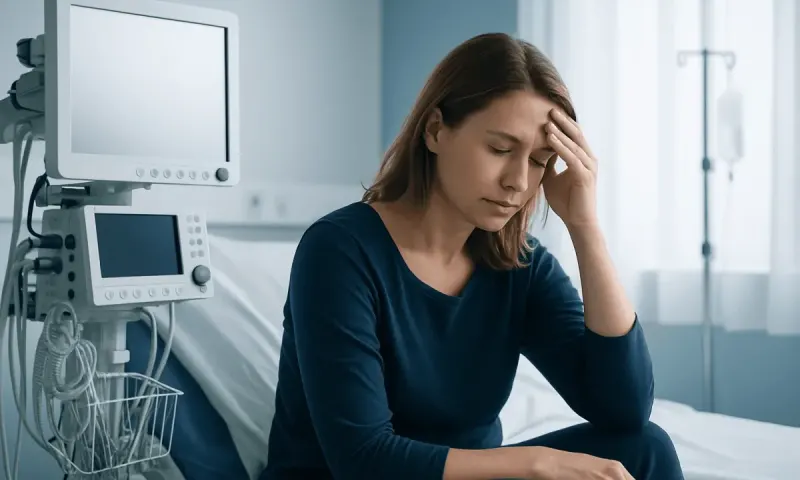
Do I Have Borderline Personality Disorder?
A free online borderline personality disorder (BPD) test or quiz may help a person recognize patterns worth discussing, but it cannot diagnose BPD. Diagnosis requires a careful assessment by a qualified mental health professional, who considers symptoms over time and rules out other possible explanations.
Do I Have Borderline Personality Disorder Free Test?
A do I have borderline personality disorder free test search may lead to online questionnaires that ask about emotions, relationships, impulsive actions, and self-image. These questionnaires can be a private first step for identifying concerns, but they cannot confirm whether someone has borderline personality disorder (BPD). A high score does not mean a person has BPD, and a low score does not rule it out.
There is no single laboratory test, scan, or online quiz that diagnoses BPD. A psychologist, psychiatrist, or other qualified mental health professional makes the diagnosis by talking with the person, learning about symptoms and life experiences over time, and considering whether another mental health or medical condition could better explain the difficulties.
It can be reassuring to know that seeking an assessment does not commit someone to a label or a particular treatment. It is an opportunity to understand what is happening, discuss practical support, and identify approaches that fit the individual’s needs.
How do I know if I have BPD free?
Someone wondering, “do I have borderline personality disorder free,” may use a reputable online screening questionnaire to organize their thoughts before speaking with a clinician. A useful screen asks about persistent patterns, rather than a difficult day or a single relationship. It should also explain clearly that its result is not a diagnosis.
Common areas explored in a BPD screen include intense fear of being left, rapidly changing or unstable relationships, strong shifts in mood, uncertainty about identity, impulsive behavior, anger, and feeling empty or disconnected. These experiences can also occur with anxiety, depression, trauma-related conditions, bipolar disorder, substance use, attention-deficit/hyperactivity disorder, or during periods of major stress.
Rather than relying on a do I have borderline personality disorder free quiz alone, it may help to write down examples of symptoms, when they began, what tends to trigger them, and how they affect work, education, relationships, and daily life. This information can make a professional conversation more productive and focused.
What does it feel like to have BPD?

BPD experiences vary considerably. Some people describe emotions that feel very intense, change quickly, or take a long time to settle after conflict, rejection, disappointment, or uncertainty. They may feel highly sensitive to signs that an important person is pulling away, even when this is not the other person’s intention.
Relationships may feel especially difficult because a person can strongly want closeness while also fearing abandonment, rejection, or being hurt. This can lead to arguments, reassurance-seeking, withdrawal, or sudden changes in how they view another person. These patterns are often distressing rather than deliberate, and they can create guilt, shame, or exhaustion afterward.
Some people also experience an unstable sense of self, chronic emptiness, intense anger, impulsive choices, or brief episodes of feeling unreal, suspicious, or disconnected under stress. Having some of these experiences does not automatically mean BPD is present. A clinician looks at the overall pattern, its persistence, severity, and impact.
What are the 9 criteria for BPD?
Mental health professionals commonly use diagnostic criteria from the Diagnostic and Statistical Manual of Mental Disorders (DSM-5-TR) as one part of an assessment. BPD is considered when there is a long-standing pattern of instability in relationships, self-image, and emotions, with marked impulsivity, beginning by early adulthood and occurring across settings. A qualified clinician determines whether the full clinical picture meets diagnostic requirements.
The nine criteria are:
- Strong efforts to avoid real or imagined abandonment.
- Unstable, intense relationships that may shift between idealizing and devaluing another person.
- Marked or persistent uncertainty about identity or sense of self.
- Impulsivity in areas that may be harmful, such as spending, sex, substance use, reckless driving, or binge eating.
- Repeated suicidal behavior, threats, self-harm, or self-injury.
- Rapid mood reactivity or intense, short-lived emotional shifts.
- Persistent feelings of emptiness.
- Intense anger or difficulty managing anger.
- Temporary stress-related suspiciousness or dissociation, such as feeling detached from oneself or surroundings.
Clinicians generally require at least five of these nine features, but counting symptoms independently is not enough for self-diagnosis. The symptoms must be understood in context, including trauma history, physical health, medication or substance effects, development, culture, and other mental health conditions.
Can you get tested for borderline personality disorder?
Yes, a person can be assessed for BPD, but the process is a clinical evaluation rather than a single test. A mental health professional may ask about present symptoms, relationships, mood, coping behaviors, childhood and adult experiences, physical health, family history, and previous treatment. With permission, information from medical records or a close family member may sometimes be helpful.
The clinician may use structured interview tools or validated questionnaires to support the assessment. However, these tools assist professional judgment rather than replacing it. Blood tests or other medical checks may be recommended when symptoms could be related to a physical condition, medication effect, substance use, sleep problems, or another concern.
People often ask, “how much does it cost to get tested for BPD?” Costs depend on the country, health system, insurance coverage, clinician type, and number of appointments needed. A local primary care service, mental health clinic, insurer, or community health organization may be able to explain referral options and likely out-of-pocket costs before an appointment is booked.
How is quiet BPD treated?
“Quiet BPD” is an informal term, not an official diagnosis. It is sometimes used to describe people who direct distress inward, such as through self-criticism, withdrawal, shame, hidden anger, or self-harm, rather than showing intense emotions openly. The assessment and treatment principles are the same: support should be tailored to the person’s symptoms, safety needs, goals, and any coexisting conditions.
Psychotherapy is the main treatment for BPD. Dialectical behavior therapy (DBT) is designed to help people build skills for managing emotions, tolerating distress, improving relationships, and reducing harmful behaviors. Other evidence-based options can include mentalization-based therapy, schema therapy, transference-focused psychotherapy, and structured general psychiatric care.
Medication does not treat BPD itself in the same way psychotherapy does, but a clinician may consider it for coexisting depression, anxiety, sleep difficulties, or other conditions when appropriate. If self-harm, suicidal thoughts, trauma symptoms, or substance use are present, treatment should address these directly with a personalized safety and support plan.
At Acıbadem Health Point, multidisciplinary specialists in JCI-accredited hospitals can assess and treat mental health concerns, including complex emotional and behavioral symptoms, for international patients.
Should I get tested for BPD?
It may be sensible to seek a professional assessment if emotional reactions, relationship patterns, impulsive behavior, self-harm urges, or a sense of emptiness are causing ongoing distress or interfering with daily life. An evaluation can be useful even if BPD is not diagnosed, because the person may still benefit from support for the symptoms they are experiencing.
A first step may be speaking with a primary care doctor, psychologist, psychiatrist, or licensed therapist. Preparing a brief symptom history can help: note important triggers, the duration and frequency of difficulties, changes in sleep or substance use, previous treatment, and any safety concerns. Bringing results from an online screening tool is acceptable, but it should be treated as discussion material rather than evidence of a diagnosis.
Supportive routines can complement professional care. These may include regular sleep and meals, limiting alcohol or recreational drug use, using grounding strategies during overwhelming moments, and identifying trusted people to contact when emotions escalate. Small, consistent steps are often more sustainable than trying to solve every difficulty at once.
When to seek medical care
Medical or mental health care should be sought promptly when symptoms are persistent, worsening, or affecting safety, relationships, education, work, or the ability to manage everyday responsibilities. A clinician can help distinguish BPD from other conditions and develop a plan that focuses on relief, skills, and long-term wellbeing.
Urgent help is needed if a person has thoughts of suicide or self-harm, has injured themselves, feels unable to stay safe, has made plans to die, or is experiencing severe agitation, confusion, or detachment from reality. They should contact local emergency services, go to the nearest emergency department, or call a crisis support service in their country. If possible, they should not remain alone and should tell a trusted person what is happening.
Recovery is possible, and many people find that symptoms become more manageable with appropriate therapy, practical support, and time. Reaching out early can reduce isolation and help a person develop safer, more effective ways of coping.
Frequently asked questions
01Is there a test for borderline personality disorder?
There is no single blood test, brain scan, or online questionnaire that can diagnose borderline personality disorder. Diagnosis is made through a detailed clinical assessment by a qualified mental health professional. Screening questionnaires may identify symptoms that are worth discussing, but they cannot provide a definitive answer.
02Can a free BPD quiz diagnose me?
No. A free BPD quiz can be a starting point for reflection, but it cannot account for personal history, symptom duration, other mental health conditions, physical health, or life circumstances. A professional assessment is needed to determine whether BPD or another condition is present.
03How long does a BPD assessment take?
The length of an assessment varies. Some clinicians can form an initial view in one appointment, while others need additional sessions to understand symptoms over time and rule out related conditions. A careful assessment is valuable because the right diagnosis helps guide appropriate support.
04Can BPD be confused with bipolar disorder?
Yes, some symptoms can overlap, particularly changes in mood and impulsive behavior. In BPD, emotional shifts are often closely connected to interpersonal stress and may change rapidly, while bipolar disorder involves distinct mood episodes that can last longer. Only a clinician can assess the pattern accurately.
05Do people with BPD get better?
Many people improve significantly with appropriate treatment, particularly structured psychotherapy and support for related concerns. Progress can take time and may not be linear, but people can develop more stable relationships, stronger coping skills, and better emotional regulation. Seeking help is a constructive first step.
06Should I tell my doctor about self-harm thoughts?
Yes. Telling a doctor or mental health professional about self-harm thoughts allows them to help assess safety and offer appropriate support without judgment. If there is immediate danger or a person feels unable to stay safe, emergency services or a crisis line should be contacted right away.
This article is for general information only and is not a substitute for professional medical advice. Please consult a qualified doctor about your individual situation.
Explore treatments in Turkey — costs, top hospitals & a free quote
JCI-accredited · board-certified surgeons · reply within 24h
Add us as a Preferred Source to see more of our trusted health content across Google Search, AI Overviews and Discover.