Dental Crown vs Dental Bridge: Which Option Is Right for You?

Dental crowns and dental bridges are both common ways to restore teeth, but they serve different purposes. A crown covers and strengthens a damaged tooth, while a bridge replaces one or more missing teeth by using nearby teeth or implants for support.
Overview: What Is the Difference?
When comparing a dental crown vs dental bridge, the main difference is simple: a crown restores a damaged tooth that remains in the mouth, while a bridge replaces a tooth that is missing. Both are fixed dental restorations, which means they are designed to stay in place rather than be removed by the patient.
A dental crown is a custom-made cap that covers a weak, broken, worn, or heavily filled tooth. It helps protect the tooth, improve its shape, and restore chewing function. Crowns can also be used after root canal treatment or to complete a dental implant restoration. Patients may learn more about dental crowns as part of restorative care.
A dental bridge, by contrast, fills the gap left by one or more missing teeth. A traditional bridge usually includes an artificial tooth supported by crowns placed on the neighboring teeth. In some cases, bridges may be supported by implants instead of natural teeth. The choice depends on oral health, available support, and the location of the missing tooth.
Both options can improve appearance, bite function, and comfort. The right choice depends less on which treatment is “better” overall and more on the specific dental problem being treated.
When a Crown May Be the Right Choice
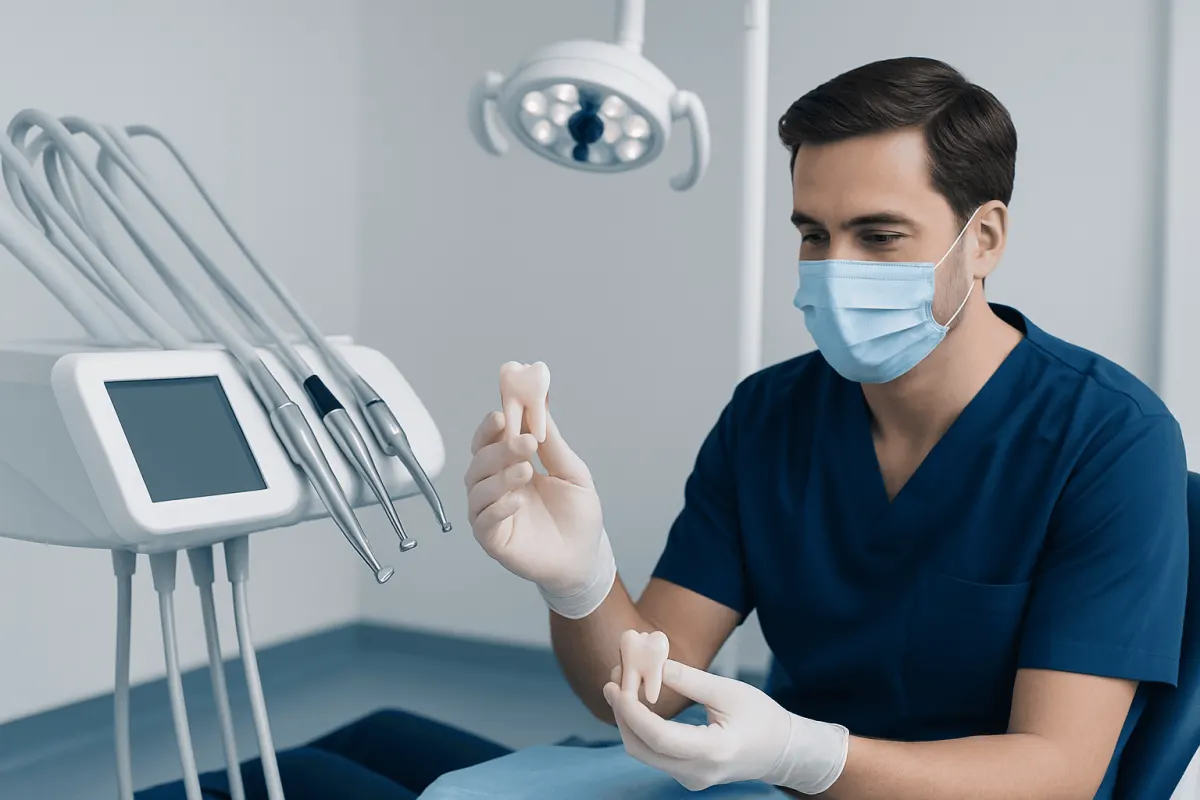
A dental crown is often recommended when a tooth is present but has been weakened or damaged. This may happen because of a large cavity, a fracture, repeated dental work, severe wear, or treatment such as a root canal. In these situations, a crown helps preserve the natural tooth instead of removing it.
Crowns are designed to restore strength and function. They can help a person chew more comfortably and may reduce the risk of further cracking in a weakened tooth. In visible areas of the mouth, crowns can also improve the color, contour, and overall appearance of a tooth.
A dentist may suggest a crown in situations such as:
- A tooth with a very large filling and limited healthy structure remaining
- A cracked or broken tooth that needs reinforcement
- A tooth that has had root canal treatment
- A worn-down tooth affecting bite or comfort
- A misshapen or discolored tooth needing full coverage restoration
Before placing a crown, the tooth is carefully examined to make sure it can be saved and has enough healthy support. If the tooth cannot be restored predictably, another option may be more suitable.
When a Bridge May Be the Better Option

A bridge is generally considered when a tooth is missing and the gap needs to be restored. Replacing a missing tooth is not only about appearance. A gap can affect chewing, speech, and the way neighboring teeth align over time. In some people, untreated tooth loss can also place extra stress on other teeth.
A traditional bridge uses the teeth on either side of the gap as anchors. These supporting teeth are prepared to hold crowns, and the replacement tooth in between is attached to them as one unit. In other cases, an implant-supported bridge may be considered, especially when more than one tooth is missing or when support from natural teeth is limited.
A bridge may be appropriate when:
- One or more teeth are missing in the same area
- The neighboring teeth are healthy enough to support the restoration
- The patient wants a fixed alternative to a removable partial denture
- An implant is not suitable, not preferred, or needs to be delayed
Bridges can restore the look of a complete smile and improve function. However, they require careful planning because the long-term success of a bridge depends on the health of the supporting teeth or implants, as well as the condition of the gums.
Pros and Limitations of Each Option
Both crowns and bridges offer important benefits, but each has limitations. A crown allows a person to keep a natural tooth, which is usually desirable when the tooth can still be saved. It covers and strengthens the tooth and can blend well with surrounding teeth. In many cases, preserving a natural tooth is a conservative and effective solution.
The limitation of a crown is that it only works when there is a tooth to restore. If the underlying tooth has severe decay below the gumline, major structural loss, or poor support, a crown may not be reliable. In such cases, a dentist may discuss other approaches, which can sometimes include endodontic treatment before restoration or replacement if the tooth cannot be preserved.
A bridge can replace a missing tooth without surgery, which is one reason some patients prefer it. It can restore chewing ability and appearance relatively quickly. However, a traditional bridge usually requires reshaping the adjacent teeth, even if those teeth are otherwise healthy. Bridges also need excellent cleaning around and beneath the false tooth to reduce the risk of plaque buildup and gum problems.
For some patients, a dental implant may be discussed as another alternative to a bridge because it can replace a missing tooth without depending on neighboring teeth. Patients exploring broader restorative options may also review dental implants and related general dentistry care with their dentist.
How Dentists Decide Between a Crown and a Bridge
The decision between a crown and a bridge starts with a dental examination and a clear understanding of the problem. If the tooth is present and restorable, a crown may be the most direct solution. If the tooth is missing, a bridge may be considered along with implants or removable options. The treatment plan is based on both current needs and long-term oral health.
Dentists usually assess several factors, including the amount of healthy tooth structure, the condition of surrounding teeth, gum health, bite alignment, and jawbone support. X-rays and digital scans are often used to evaluate hidden decay, root condition, and the strength of neighboring teeth. Modern digital dentistry tools can help improve planning and fit.
Patient preferences also matter. Some people prioritize preserving nearby teeth, while others prefer a non-surgical option or a shorter treatment timeline. Cost, maintenance, and aesthetic goals may also influence the decision. A dentist can explain the expected advantages and trade-offs of each approach in a way that suits the individual situation.
In more complex cases, other issues such as gum disease, tooth grinding, or untreated decay may need to be addressed first. For example, patients with supporting tissue problems may need assessment for conditions related to gum recession before a final restoration is placed.
Treatment Process, Recovery, and Longevity
The process for receiving a crown or bridge is usually completed over two or more visits, although some clinics may offer same-day solutions in selected cases. For a crown, the tooth is shaped, impressions or digital scans are taken, and a temporary crown may be placed until the final restoration is ready. For a bridge, the supporting teeth are prepared in a similar way, and the final bridge is made to fit the gap and bite.
Most patients return to normal daily activities soon after treatment. Mild sensitivity, pressure, or gum soreness can happen temporarily, especially after tooth preparation. These symptoms are often manageable and improve as the mouth adjusts. A dentist may recommend avoiding very hard or sticky foods until the final restoration is placed and feels comfortable.
Longevity varies from person to person. Crowns and bridges can last for many years when they are well made and properly maintained. Their lifespan depends on oral hygiene, bite forces, tooth grinding, diet, gum health, and the condition of supporting teeth. No restoration lasts forever, but good care can support long-term success.
Regular follow-up is important so the dentist can monitor fit, margins, wear, and the health of nearby tissues. Early attention to small problems may help prevent more extensive treatment later.
Caring for a Crown or Bridge
Daily care is essential for both crowns and bridges. Even though these restorations are artificial, the teeth and gums around them can still develop decay or gum disease. Brushing twice a day with fluoride toothpaste and cleaning between the teeth every day are basic steps that help protect the restoration and the surrounding tissues.
A bridge needs special attention underneath the replacement tooth, where food and plaque can collect. Dentists may recommend floss threaders, interdental brushes, or water flossing tools to help clean under the bridge. A crown should also be kept clean at the gumline, where plaque can build up around the edge of the restoration.
It is also helpful to reduce habits that can damage dental work, such as chewing ice, opening packages with the teeth, or clenching and grinding. If a person grinds their teeth during sleep, a dentist may suggest a protective night guard. Professional dental hygiene visits help remove hardened plaque and allow early detection of problems.
Patients should contact a dentist if a crown or bridge feels loose, uncomfortable, or suddenly different when biting. Prompt evaluation can often prevent more serious complications.
When to See a Dentist and Final Considerations
A person should see a dentist if they have a broken tooth, a large cavity, pain when chewing, a missing tooth, or a restoration that no longer feels secure. Delaying care can make treatment more complicated, especially if surrounding teeth shift or decay spreads. Early assessment often creates more options and may help preserve natural teeth whenever possible.
People are sometimes unsure whether a damaged tooth needs a filling, crown, or another restoration. In other cases, they may wonder whether a missing tooth should be replaced with a bridge or implant. These decisions are best made after a full examination, because what works well for one person may not be ideal for another. Some patients may first need care for related issues such as dental fillings or stabilization after trauma.
In summary, the answer to dental crown vs dental bridge depends on whether the tooth is damaged or missing, the condition of surrounding structures, and the patient’s goals. A crown is typically used to save and strengthen an existing tooth, while a bridge is used to replace a missing one. A qualified dentist can explain the options clearly and help the patient choose a restoration that supports both function and appearance.
For patients seeking care across borders, Acıbadem Health Point’s multidisciplinary dental specialists in JCI-accredited hospitals diagnose and treat restorative dental conditions for international patients, with treatment plans tailored to individual needs.
Frequently asked questions
01Is a crown better than a bridge?
Neither option is universally better. A crown is usually best when the tooth is still present and can be restored, while a bridge is used when a tooth is missing. The better choice depends on the specific dental problem and the condition of nearby teeth and gums.
02Can a bridge replace just one missing tooth?
Yes, a bridge can replace one missing tooth. A traditional bridge typically uses the teeth on either side of the gap for support. In some cases, an implant-supported option may also be considered.
03Does getting a crown or bridge hurt?
These procedures are usually done with local anesthesia, so the area is numbed during treatment. Some mild soreness or sensitivity can occur afterward, but it is often temporary. A dentist can advise on ways to stay comfortable during recovery.
04How long do crowns and bridges last?
Crowns and bridges can last for many years, but their lifespan varies. Oral hygiene, chewing habits, gum health, and regular dental checkups all affect durability. A dentist can monitor the restoration and recommend repairs or replacement if needed.
05Can a crown turn into a bridge later?
A crown itself does not become a bridge, but treatment plans can change if the tooth is later lost. If that happens, a dentist may discuss a bridge, implant, or another replacement option. The right next step depends on the health of the surrounding area.
06What is easier to clean, a crown or a bridge?
A crown is often simpler to clean because it covers a single tooth and can usually be brushed and flossed much like a natural tooth. A bridge needs more careful cleaning underneath the replacement tooth. Dentists may recommend special flossing tools or interdental brushes.
This article is for general information only and is not a substitute for professional medical advice. Please consult a qualified doctor about your individual situation.
Joint and spine care in Turkey — expert assessment & treatment
JCI-accredited · board-certified surgeons · reply within 24h
Add us as a Preferred Source to see more of our trusted health content across Google Search, AI Overviews and Discover.