Dental Caps vs Veneers: Key Differences Explained

Key Takeaways
- Dental caps and veneers are both tooth coverings, but crowns protect and restore more of the tooth than veneers do.
- Veneers are mainly used for cosmetic changes to the front teeth, while caps are often recommended for damaged, weak, or heavily restored teeth.
- The best option depends on tooth condition, bite, appearance goals, and how much natural tooth structure remains.
- Both treatments require careful planning, good oral hygiene, and routine dental follow-up to help results last.
- A dentist can confirm whether a tooth is better suited to a veneer, a cap, or another treatment such as bonding or orthodontics.
Dental caps versus veneers is a common comparison because both can improve how teeth look, but they solve different problems. A cap, or crown, covers the whole tooth for strength and protection, while a veneer covers only the front surface for cosmetic refinement.
Overview
When people search for dental caps versus veneers, they are usually trying to answer a practical question: which option improves a tooth’s appearance without overlooking its health? The short answer is that a dental cap, also called a crown, covers the entire visible tooth, while a veneer is a thin shell placed on the front surface only.
That difference changes everything about how each treatment is used. Veneers are often chosen for shape, color, and small alignment concerns in the front teeth. Caps are more often used when a tooth needs extra support after decay, cracking, root canal treatment, or significant wear.
For international patients considering dental care abroad, it helps to think beyond the smile photo and ask what the tooth actually needs. A well-planned treatment should restore function, protect remaining tooth structure, and still meet aesthetic goals in a way that fits the person’s bite and long-term oral health.
What Are Dental Caps and Veneers?
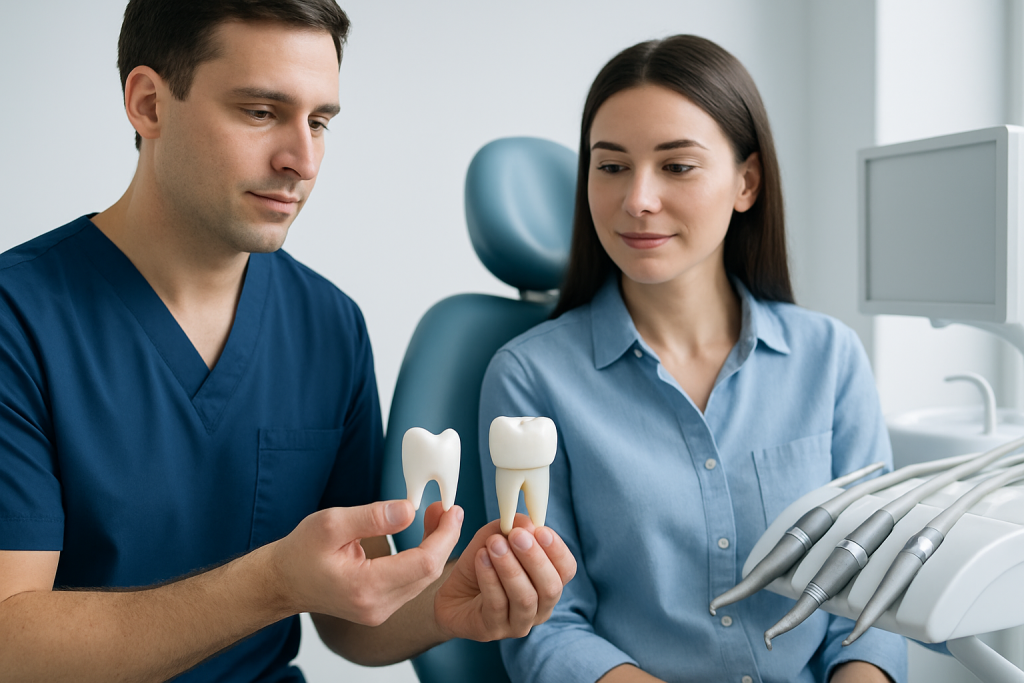
A dental cap, or crown, is a custom-made covering that fits over the entire tooth above the gumline. It is designed to rebuild a tooth that has lost strength, shape, or a large amount of structure. Crowns may be made from porcelain, ceramic, metal alloys, or a combination of materials depending on the tooth’s location and the patient’s needs.
A veneer is a much thinner restoration bonded to the front side of a tooth. It is mainly used to improve the visible surface of teeth, especially the upper front teeth. Veneers can help with discoloration, minor chips, small gaps, and subtle irregularities in tooth shape or length.
Both treatments are custom fabricated, but they are not interchangeable. A veneer is not meant to reinforce a tooth that is structurally compromised, and a crown is usually more coverage than a tooth needs if the concern is mainly cosmetic. The right choice depends on a clinical examination, not appearance alone.
Key Differences at a Glance

The simplest way to separate the two is to think about coverage and purpose. Veneers are conservative cosmetic restorations, while crowns are full-coverage restorations that also strengthen the tooth. That distinction affects how much tooth preparation is needed, how each treatment feels, and what problems it can address.
- Coverage: Veneers cover the front surface; crowns cover the whole tooth.
- Main purpose: Veneers improve appearance; crowns restore strength and protection as well as appearance.
- Tooth preparation: Veneers usually require less enamel removal than crowns.
- Best suited for: Veneers work well for cosmetic concerns; crowns suit teeth that are damaged, weakened, or heavily restored.
- Longevity considerations: Both can last for years with good care, but their durability depends on material choice, bite forces, and oral hygiene.
In real treatment planning, these differences matter because the most attractive option is not always the most appropriate one. A tooth that has large fillings or a crack may look acceptable on the surface but still need a crown for stability. By contrast, a healthy tooth with only aesthetic concerns may be better served by a veneer, preserving more natural tooth structure.
Symptoms and Signs That Guide the Choice
People rarely choose between a cap and a veneer based on a single symptom. Dentists look at the condition of the tooth, how it functions, and what the patient wants to improve. Still, certain signs often point more clearly toward one treatment than the other.
Veneers are commonly considered when the concern is visible rather than structural. This may include front teeth that are stained, slightly uneven, worn at the edges, or mildly spaced. Crowns are more likely when a tooth is cracked, has undergone root canal treatment, has extensive decay, or is too fragile to hold a simpler restoration.
Some common situations include:
- Front teeth with persistent discoloration that does not respond well to whitening
- Small chips or uneven edges that affect the smile line
- Teeth with large fillings or reduced enamel support
- Teeth that hurt when chewing or appear weakened after trauma
- Single teeth that need both cosmetic improvement and structural reinforcement
The key idea is that symptoms tell part of the story, but examination and imaging tell the rest. A tooth that feels “fine” may still need protection, while a tooth that only looks imperfect may not need a crown at all.
Causes and Risk Factors
The reasons a person may need a veneer or crown are usually tied to everyday dental wear, previous treatment, or injury. Tooth decay can leave behind weakened enamel and dentin. Grinding or clenching can flatten teeth and create cracks. Old fillings may break down over time, leaving a tooth less stable.
Other factors can increase the chance that a crown will be recommended instead of a veneer. These include a history of root canal treatment, significant enamel loss, fractures from biting hard foods or accidental trauma, and bite misalignment that places stress on one tooth. In some cases, gum recession and sensitivity also influence material choice and treatment design.
Cosmetic concerns can have causes too. Internal tooth discoloration, enamel irregularities, minor spacing issues, and asymmetry may make a veneer attractive. However, if the tooth also has weakness beneath the surface, the dentist may advise a cap to avoid building a beautiful restoration on an unstable foundation.
Diagnosis and Treatment Planning
Choosing between dental caps versus veneers begins with a detailed dental assessment. The dentist examines the teeth, gums, bite, and surrounding tissues, then may take X-rays or digital scans to look for decay, fractures, root problems, or bone and gum issues that are not visible from the outside.
Planning often includes discussing the patient’s priorities. Some people want the most conservative approach possible. Others want a fuller cosmetic change. International patients may also need to consider timing, whether treatment can be completed in one visit or over several appointments, and how follow-up care will be coordinated after returning home.
During planning, the dentist may also compare alternatives such as bonding, whitening, orthodontic treatment, or replacing an old restoration. The final recommendation should reflect both function and aesthetics. A good treatment plan explains why one option is more suitable than another, rather than presenting every tooth-covering as the same solution.
Treatment Options and What to Expect
Although the exact steps vary by case and material, both treatments usually start with preparation of the tooth, a scan or impression, and placement of a temporary restoration when needed. The final restoration is then fabricated and bonded or cemented in place.
For a veneer, the dentist typically reshapes a small amount of enamel from the front of the tooth so the thin shell sits naturally and does not look bulky. For a crown, more of the tooth is usually shaped because the restoration must fit over the whole tooth. This extra coverage is what allows a crown to reinforce a tooth that has lost more structure.
After placement, patients may need a short adjustment period as they get used to the feel of the restoration. Good function depends on proper bite balance, careful polishing, and healthy gums around the treated tooth. If a patient is traveling for care, the dental team should give clear instructions for eating, cleaning, and when to return for review.
In some cases, a crown may be preferred even on a front tooth if the aesthetic result also needs stronger support. In other cases, a veneer may offer a more natural-looking outcome with less tooth reduction. The right answer is usually case-specific rather than category-specific.
Prevention and Self-care
Neither crowns nor veneers replace the need to protect the rest of the mouth. Daily brushing with a fluoride toothpaste, cleaning between the teeth, and routine dental checkups help preserve the teeth supporting the restoration. Patients who grind their teeth may also be advised to use a night guard, especially if they have crowns or veneers on the front teeth.
Diet and habits matter as well. Biting hard objects, opening packages with the teeth, chewing ice, and frequent contact with very sticky foods can stress restorations. People who have cosmetic work done should be especially careful with front-tooth habits, because thin restorations and strong bite forces do not mix well.
For patients who receive treatment while abroad, self-care also includes planning continuity. It is helpful to keep a record of the materials used, the teeth treated, and the dentist’s recommendations for follow-up. That makes it easier for a local dentist at home to continue care if needed.
When to See a Doctor
A dentist should evaluate any tooth that is cracked, painful, loose, very worn, or sensitive when chewing. It is also wise to seek a professional opinion before choosing a veneer or crown for cosmetic reasons alone, since the wrong restoration can leave the underlying problem untreated.
Prompt assessment is especially important after injury, if an old filling breaks, or if a tooth changes color suddenly. These changes do not always mean there is an emergency, but they do mean the tooth deserves attention. The earlier the issue is evaluated, the more treatment options are usually available.
Patients considering care in another country should ask whether the clinic can provide a full diagnosis, explain alternatives clearly, and support follow-up planning after travel. Acibadem Health Point’s multidisciplinary specialists and JCI-accredited hospitals diagnose and treat dental conditions for international patients with a coordinated approach that emphasizes safety, communication, and continuity of care.
Frequently asked questions
01Are dental caps and veneers the same thing?
No. A dental cap, or crown, covers the whole tooth and is often used to restore strength, while a veneer covers only the front surface and is mainly used for cosmetic improvement. They may look similar from the outside, but they serve different purposes.
02Which lasts longer, a veneer or a crown?
Both can last many years, but longevity depends on the material, the tooth’s condition, bite forces, and oral hygiene. A crown may be more durable for a weak tooth because it offers more coverage, while a veneer may perform very well on a healthy front tooth.
03Do veneers require less tooth removal than crowns?
Usually yes. Veneers typically need less enamel removal because they are thin and cover only the front of the tooth, while crowns require more reshaping so the restoration can fit over the entire tooth.
04Can a crown be placed instead of a veneer for cosmetic reasons?
Sometimes, but only if the tooth also needs structural support or has enough damage to justify full coverage. If the tooth is healthy and the concern is mainly cosmetic, a veneer or another option may be more conservative.
05Are dental caps and veneers painful to get?
The procedure is usually performed with local anesthesia, so it should be manageable for most patients. Some temporary sensitivity or mild soreness can occur afterward, but this is typically short-lived and should be discussed with the dentist if it persists.
06How do I know which option is right for me?
The best choice depends on the tooth’s health, how much structure remains, your bite, and your cosmetic goals. A dentist can examine the tooth and explain whether a veneer, crown, bonding, or another treatment is the most appropriate match.
This article is for general information only and is not a substitute for professional medical advice. Please consult a qualified doctor about your individual situation.
Explore treatments in Turkey — costs, top hospitals & a free quote
JCI-accredited · board-certified surgeons · reply within 24h
Add us as a Preferred Source to see more of our trusted health content across Google Search, AI Overviews and Discover.