Deer Tick vs Dog Tick: Key Differences and How Doctors Tell Them Apart
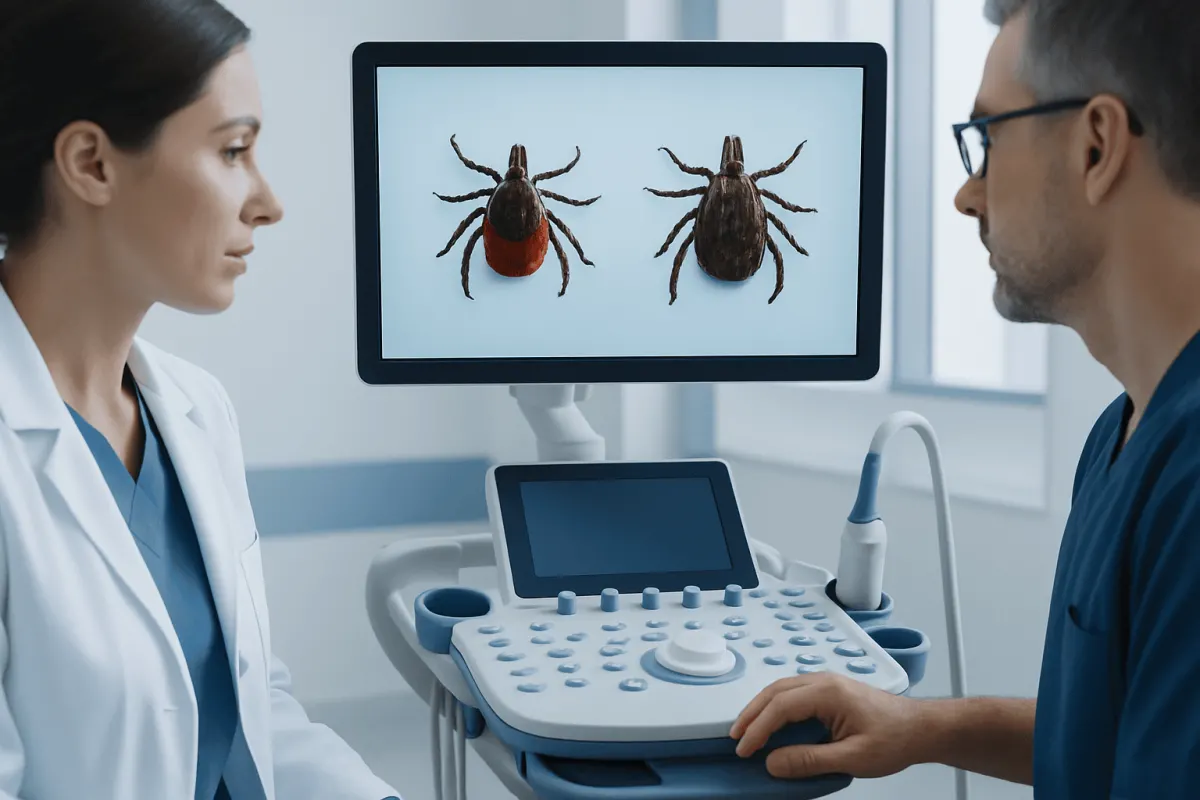
In a deer tick vs dog tick comparison, the main differences are size, body markings, feeding stage, and the infections each species is more likely to carry. Doctors do not rely on appearance alone—they also consider where the bite happened, how long the tick was attached, local disease patterns, and any symptoms that develop afterward.
Overview: deer tick vs dog tick at a glance
When comparing deer tick vs dog tick, the clearest first difference is size: deer ticks are typically much smaller, while dog ticks are larger and easier to spot on skin, clothing, or pets. The second major difference is medical relevance. Deer ticks, also called blacklegged ticks, are the best-known carriers of Lyme disease in the United States, while dog ticks are more commonly linked to other tick-borne infections depending on the region.
Clinicians do not usually diagnose illness from a tick bite by species alone. Instead, they combine the tick’s appearance with the bite location, whether the tick was swollen with blood, how long it may have been attached, and whether symptoms appear in the days or weeks afterward. This approach is often more reliable than trying to name the species from memory.
The table below offers a quick side-by-side comparison that patients can use as a starting point. Because tick appearance changes after feeding and can look different across life stages, a medical review may still be helpful if there is any uncertainty.
- Deer tick: smaller; nymphs can be poppy-seed sized; important vector for Lyme disease.
- Dog tick: larger; more visible; often has pale or silvery markings on the back.
- Both: can bite humans; both should be removed promptly with fine-tipped tweezers.
- Key medical point: symptoms after the bite matter more than the bite itself.
Side-by-side comparison
- Typical size: Deer tick is smaller; dog tick is larger.
- Color and markings: Deer tick often has a dark body with reddish-brown tones; dog tick often has patterned pale markings on its shield.
- Common concern: Deer tick is strongly associated with Lyme disease; dog tick is more often discussed in relation to Rocky Mountain spotted fever and other infections.
- Life stage bites: Tiny deer tick nymphs commonly go unnoticed; adult dog ticks are easier to see.
- Where found: Both may be found in grassy, brushy, or wooded areas, but regional patterns differ.
How doctors tell them apart
Healthcare professionals begin with simple visual clues. Deer ticks have a smaller, more compact appearance, and the immature nymph stage is especially tiny. Adult female deer ticks often show a darker front area with a reddish-brown body. Dog ticks tend to be broader and more obvious, and many have pale gray or whitish markings on the upper back that make them look patterned.
Life stage matters. A deer tick larva, nymph, and adult do not all look the same size, and a blood-fed tick of either species can appear much larger than before it attached. This is one reason clinicians may ask whether the tick was flat or swollen, how it was removed, and whether a photo was taken before disposal. If the tick is saved in a sealed container, it may help with discussion, though treatment decisions are still usually based on exposure risk and symptoms rather than laboratory testing of the tick.
Doctors also use context. A person who spent time in a wooded area in a Lyme-endemic region and then develops an expanding rash after a tiny tick bite raises more concern for deer tick exposure. A larger tick found after hiking or gardening in another region may point toward a dog tick or a different species altogether. Clinical history often gives stronger clues than appearance alone.
Finally, clinicians look for signs of tick-borne illness rather than focusing only on the insect. Fever, headache, fatigue, muscle aches, joint symptoms, Lymph Nodes: Symptoms, Causes and Treatment" class="ahp-ilk">swollen lymph nodes, or a changing rash can all guide next steps. If symptoms suggest a tick-borne infection such as Lyme disease, the medical evaluation centers on the patient’s condition, not just on confirming the exact tick species.
What deer ticks and dog ticks can transmit

Deer ticks are medically important because they can carry the bacteria that cause Lyme disease. In some areas, they may also transmit other infections such as anaplasmosis, babesiosis, or Powassan virus. Not every deer tick carries disease, and not every bite leads to infection, but this species gets close attention because its nymphs are small and often remain unnoticed long enough to feed.
Dog ticks are not the main vector for Lyme disease. However, they can still matter clinically because they are associated with certain other illnesses in specific geographic areas, including Rocky Mountain spotted fever and tularemia. Risk depends on where the exposure occurred, which tick species are common there, and how long the tick was attached.
One common misunderstanding is that a larger tick is always more dangerous. In reality, the medical concern depends less on size and more on species, region, attachment time, and whether the person later develops symptoms. A very small deer tick nymph may pose more Lyme disease concern than a larger dog tick in the same setting.
Because different tick species can carry different infections, clinicians may tailor advice to the exposure pattern. Someone with a suspicious deer tick bite may need monitoring for an expanding rash or flu-like illness, while someone with a dog tick exposure may be advised to watch for fever, headache, or a spotted rash. If symptoms develop, blood tests or imaging are not always needed immediately, but evaluation by an infectious diseases or general medicine clinician can help guide care.
What to do after each type of tick bite
The first step is the same for both deer ticks and dog ticks: remove the tick promptly with fine-tipped tweezers. Grasp it as close to the skin as possible and pull upward with steady, even pressure. After removal, clean the area and wash hands. Folk remedies such as petroleum jelly, nail polish, heat, or twisting are not recommended because they may delay removal or irritate the tick.
After a likely deer tick bite, clinicians may ask about attachment time and local Lyme disease risk. In some situations, a doctor may consider whether preventive treatment is appropriate, but this decision depends on several factors and should be individualized. People should monitor for an expanding red rash, fever, fatigue, body aches, or new joint symptoms over the following days to weeks. If concerns arise, a doctor may assess for infectious diseases care or general medical follow-up.
After a likely dog tick bite, the main advice is still observation for symptoms. Most bites heal with only mild local redness or itching. Medical review becomes more important if fever, worsening headache, nausea, unusual rash, or generalized illness develops after the bite, especially in regions where tick-borne infections are known to occur.
It can be useful to write down the date of the bite, where the exposure happened, and whether the tick seemed flat or engorged. A clear phone photo may help if questions come up later. Routine antibiotics are not needed for every tick bite, and self-treatment without medical advice may be unhelpful. If a rash is evolving or symptoms are getting worse, timely clinical care is the safer approach.
Symptoms that matter more than the tick’s appearance
Many tick bites cause no illness at all. A small red bump at the bite site can happen with either deer ticks or dog ticks and does not automatically mean infection. Mild itchiness or temporary irritation is common and often improves on its own. The signs that matter most are symptoms that extend beyond the bite area or continue to change over time.
For possible Lyme disease after a deer tick bite, one well-known sign is an expanding rash that gradually spreads over days. It does not always look like a classic bull’s-eye. Some people instead develop fatigue, fever, headache, muscle aches, neck stiffness, or later joint symptoms. A person can also have Lyme disease without noticing the tick bite itself.
For other tick-borne infections, symptoms may include fever, chills, headache, rash, nausea, or a general sense of feeling unwell. These symptoms can overlap with viral illnesses, which is why the history of outdoor exposure is important. Clinicians may also consider skin findings that suggest irritation, allergy, or an unrelated rash rather than a tick-borne disease.
If neurological symptoms, severe weakness, or persistent joint swelling occur, medical assessment should not be delayed. A doctor may recommend examination, selected blood tests, or referral depending on the symptoms and timing. In some cases, follow-up care may include a medical check-up and symptom monitoring rather than immediate extensive testing.
When to seek medical care
Medical care is recommended if the tick may have been attached for a prolonged period, if the species seems likely to be a deer tick in a Lyme-endemic area, or if the person cannot remove the tick completely. A doctor should also be contacted if the person is pregnant, immunocompromised, or has significant underlying health conditions and is unsure how to proceed.
Prompt evaluation is especially important if symptoms appear after the bite. Warning signs include an expanding rash, fever, severe headache, body aches, increasing fatigue, facial weakness, joint swelling, confusion, or new numbness or tingling. Children, older adults, and people with complex medical histories may benefit from earlier assessment because symptoms can be harder to interpret.
Emergency care may be needed for trouble breathing, fainting, severe allergic symptoms, or rapidly worsening illness. These situations are uncommon, but they should not be managed at home. Most people, however, simply need clear advice, symptom monitoring, and reassurance.
Near the end of the care pathway, some patients may need specialty input if symptoms persist or a tick-borne illness is suspected. Acıbadem Health Point’s multidisciplinary specialists in JCI-accredited hospitals evaluate and treat international patients with suspected infections and related complications, including support through internal medicine care when appropriate.
Prevention and self-care after outdoor exposure
Prevention is practical and usually effective. Wearing long sleeves, long pants, and closed shoes can reduce direct skin exposure in grassy, brushy, or wooded areas. Light-colored clothing may make ticks easier to see. Using an appropriate tick repellent and treating gear according to product instructions can further lower risk.
After spending time outdoors, a full-body tick check is one of the most useful steps. Ticks often attach in warm, less visible areas such as the scalp, behind the ears, under the arms, around the waist, behind the knees, and in the groin. Showering soon after outdoor activity may help remove unattached ticks and makes it easier to inspect the skin carefully.
Pets can bring ticks indoors, so regular veterinary prevention and checking pets after outdoor time are also important. Clothing can be placed in a hot dryer, according to fabric care guidance, to help kill ticks that may be clinging to garments. Outdoor maintenance such as trimming tall grass and clearing brush can reduce tick habitat around the home.
Self-care after a bite includes cleaning the skin, avoiding scratching, and watching for symptom changes over the next several weeks. A bite that stays small and settles down is usually reassuring. A bite that expands, becomes increasingly inflamed, or is followed by systemic symptoms deserves medical review.
Frequently asked questions
01How can someone tell a deer tick from a dog tick at home?
The simplest clue is size: deer ticks are usually smaller, especially as nymphs, while dog ticks are larger and easier to notice. Dog ticks often have pale or silvery markings on their back. If the tick was swollen with blood, identification becomes harder, so symptoms and exposure history are also important.
02Which is more likely to carry Lyme disease, a deer tick or a dog tick?
A deer tick is much more strongly associated with Lyme disease transmission in the United States. Dog ticks are not considered the main Lyme vector. Even so, not every deer tick carries infection, and a doctor considers location, attachment time, and symptoms before deciding on next steps.
03Should a person save the tick after removing it?
Saving the tick in a sealed container or taking a clear photo can sometimes help with discussion during a medical visit. However, treatment decisions are usually based more on symptoms and exposure risk than on testing the tick itself. If saving it causes delay, prompt removal matters more.
04Do all tick bites need antibiotics?
No. Most tick bites do not require antibiotics. Preventive treatment may be considered in certain higher-risk situations, but that decision should be made by a qualified clinician based on timing, geography, likely species, and individual health factors.
05What symptoms after a tick bite should not be ignored?
An expanding rash, fever, headache, body aches, fatigue, joint swelling, or facial weakness should be assessed by a doctor. These symptoms can appear days to weeks after the bite. Severe allergic symptoms or rapidly worsening illness need urgent medical attention.
06Can a dog tick still make a person sick?
Yes. Although dog ticks are not the main source of Lyme disease, they can still be associated with other tick-borne infections in some regions. A person who feels unwell after any tick bite should seek medical advice, regardless of the species.
This article is for general information only and is not a substitute for professional medical advice. Please consult a qualified doctor about your individual situation.
Explore treatments in Turkey — costs, top hospitals & a free quote
JCI-accredited · board-certified surgeons · reply within 24h
Add us as a Preferred Source to see more of our trusted health content across Google Search, AI Overviews and Discover.