Dead Bug Exercise: How to Do It and Benefits
Key Takeaways
- The dead bug exercise trains the core to stabilize the trunk while the arms and legs move.
- It is commonly used in rehabilitation because it is low impact and can be adapted for different ability levels.
- Proper form matters more than speed or the number of repetitions.
- People with back pain, pregnancy, or recent injury should ask a clinician or physiotherapist before starting new exercises.
- Progressions and regressions can make the exercise safer and more effective over time.
The dead bug exercise is a controlled core movement that helps train the abdominal muscles, deep trunk stabilizers, and coordination without putting excessive strain on the spine. It is often used in rehabilitation and general fitness programs to support posture, movement control, and back-friendly core training.
Overview
The dead bug exercise has a simple look, but its purpose is precise: it teaches the body to keep the spine steady while the arms and legs move. That skill matters in everyday life, from lifting a bag into an overhead compartment to getting out of a car without straining the lower back.
In rehabilitation settings, the movement is often chosen because it is controlled, adaptable, and generally gentle on the joints. Rather than chasing intensity, it asks for coordination, breathing, and attention to the position of the pelvis and ribs. For many people, that makes it a useful bridge between early recovery work and more demanding strengthening exercises.
The name can sound unfriendly, but the exercise itself is not meant to “crush” the core. It is designed to help the trunk resist unwanted motion. When done well, it encourages the deep abdominal muscles to work with the hips and shoulders in a way that supports better movement patterns.
How the Exercise Works
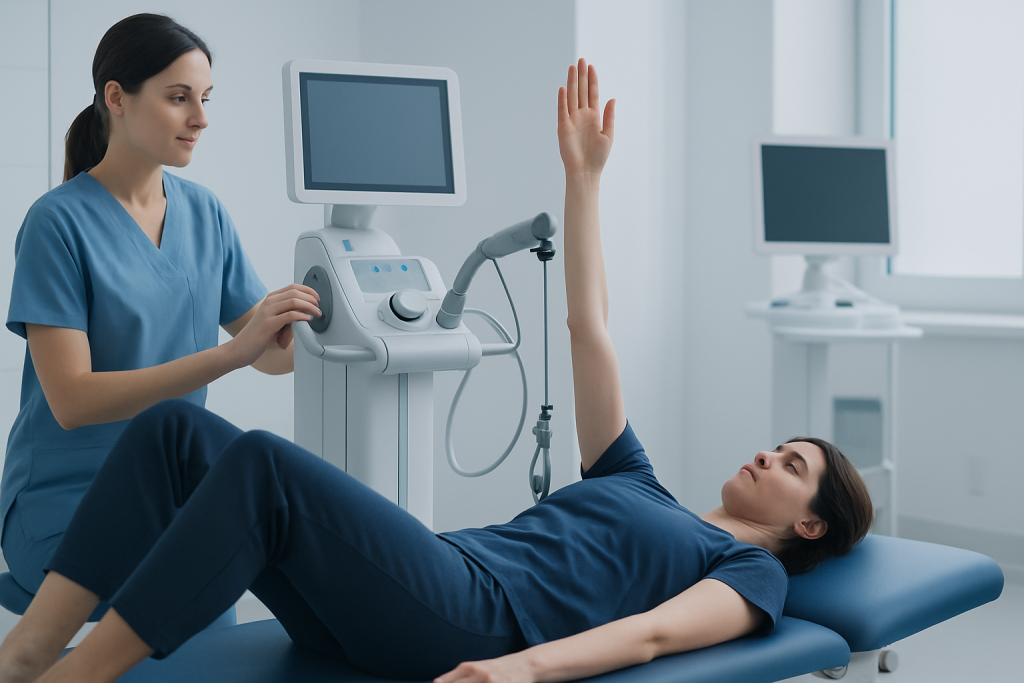
The dead bug exercise usually starts with a person lying on their back, knees bent, and arms raised toward the ceiling. From that stable starting point, one arm and the opposite leg extend away from the center while the torso stays quiet. The body then returns to the starting position and repeats on the other side.
That alternating pattern is important. It asks the core to prevent the lower back from arching and the pelvis from tipping as the limbs move. In other words, the exercise is less about how far the arm or leg reaches and more about how well the trunk stays controlled during that reach.
Because the movement is performed on the floor, it can be easier to learn than standing balance or loaded strength drills. It is also easy to modify, which is one reason physiotherapists and trainers often include it in programs for people rebuilding core control after pain, inactivity, or injury.
Benefits and Uses
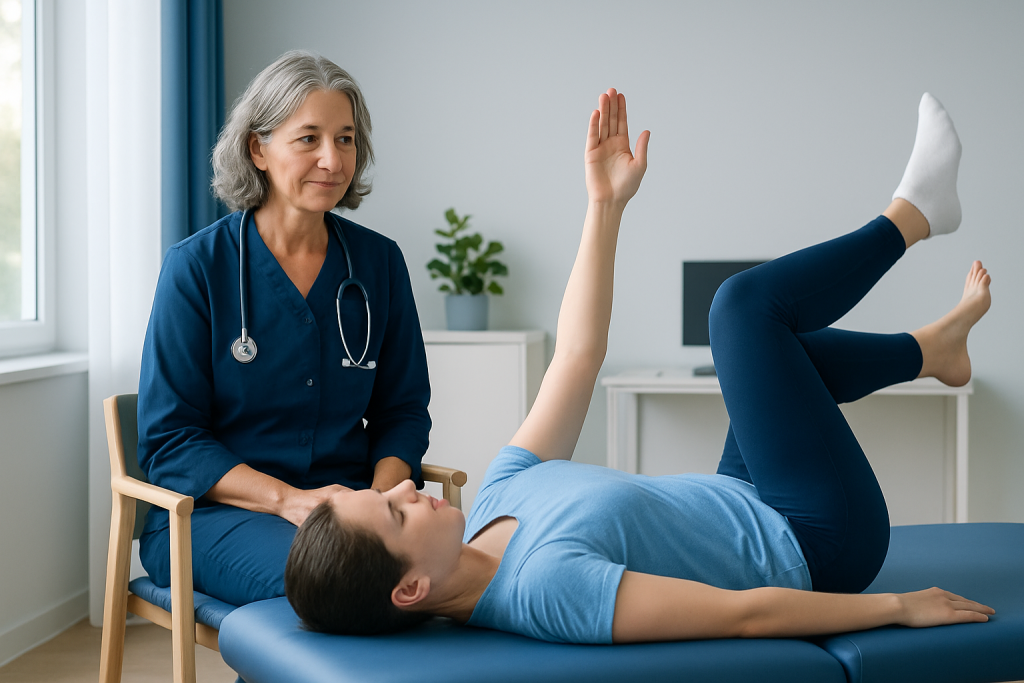
One of the main reasons people use the dead bug exercise is to improve core stability. The deep muscles around the abdomen and spine help create a solid base for movement, and this exercise gives those muscles a chance to practice that role without high impact.
It may also be helpful for people who want a back-friendly way to strengthen the trunk. Because the exercise is performed with the spine supported on the floor, it can feel more manageable than sit-ups or aggressive twisting movements. That said, comfort is individual, and the exercise should still be stopped if it causes pain.
In rehabilitation, the dead bug movement may be used to:
- Improve trunk control and body awareness
- Support pelvic stability during movement
- Build coordination between the core and limbs
- Prepare for more advanced strengthening or sport-specific training
It can also fit into general fitness routines for people who want to strengthen the center of the body without a lot of equipment. Since it relies on technique rather than load, it is often accessible in home settings, hotel rooms, or during travel, which can be useful for international patients continuing care away from their usual clinic.
Common Mistakes and How to Avoid Them
The dead bug exercise is most useful when the movement stays deliberate. A common mistake is letting the lower back arch off the floor as the arm and leg extend. If that happens, the core is losing control, and the range of motion may be too large for the current ability level.
Another frequent issue is rushing. Fast repetitions may look energetic, but they often turn the drill into a coordination challenge instead of a stabilizing one. Slow breathing and smooth transitions usually produce a better training effect.
Other mistakes include holding the breath, lowering the limb too far, or shrugging the shoulders. A helpful cue is to keep the ribs soft, the pelvis steady, and the movement small enough that the torso remains calm. If needed, the exercise can be made easier by reducing the range of motion or moving only one limb at a time.
Causes & Risk Factors: Who May Need Extra Caution
The dead bug exercise itself does not have “causes” in the medical sense, but certain conditions make safe form and professional guidance more important. People with recent back injury, spinal surgery, hip pain, abdominal surgery, or significant neck discomfort may need a tailored version rather than the standard movement.
Pregnancy, especially later stages, may also change how core exercises should be approached. Some people with osteoporosis, hernia concerns, or balance problems may need modifications to reduce strain or avoid positions that are not suitable for them. Individual factors matter more than the name of the exercise.
Risk is usually lower when the exercise is introduced gradually and matched to the person’s current ability. A physiotherapist can assess whether the movement is appropriate, what range is safe, and how it should fit alongside the rest of the rehabilitation plan.
Diagnosis and Professional Assessment
The dead bug exercise does not require a medical diagnosis to begin, but professional assessment can be valuable if it is being used for pain, recovery, or performance goals. A clinician or physiotherapist may look at posture, trunk control, breathing patterns, hip mobility, and any movement that reproduces symptoms.
For people with back pain or core weakness, the question is not only whether the exercise can be performed, but whether it is the right exercise at the right time. A careful assessment can identify whether the body needs more mobility, better motor control, or a different starting position before progressing.
When the exercise is part of a rehabilitation plan, follow-up is often just as important as the first visit. Someone who is recovering while traveling may need simple, clear home instructions, and the care team may recommend video follow-up or a scheduled reassessment to confirm that the movement remains appropriate.
Treatment Options and Exercise Variations
The dead bug exercise is usually not a stand-alone treatment. It is one tool within a broader program that may also include mobility work, back or hip strengthening, posture training, and education about safe movement habits. The best plan depends on the underlying concern and the person’s overall condition.
Variations allow the exercise to meet people where they are. Beginners may keep both knees bent and move only the arms, or only one leg at a time. More advanced versions may involve extending opposite arm and leg together, adding an unstable surface, or using light resistance only when control is already strong.
Useful variations can include:
- Heel taps instead of full leg extension
- One-arm movement with both feet planted
- One-leg lowers with arms fixed overhead
- Shorter lever positions to reduce strain
A physiotherapist may choose a specific version based on symptoms, flexibility, and control. The safest progression is usually the one that preserves technique, not the one that feels most difficult.
Prevention & Self-care
For people using the dead bug exercise as part of prevention, consistency matters more than complexity. A few controlled repetitions performed well are often more helpful than a long set done with poor form. Building the habit gradually can make the movement easier to keep in a regular routine.
Breathing is an important part of self-care during the exercise. Exhaling during the limb reach can help people avoid holding tension in the neck or belly. It may also help the trunk stay organized, especially for those who tend to brace too hard.
Simple self-care tips include:
- Use a mat or comfortable surface
- Stop if pain increases or symptoms spread
- Keep the movement slow and controlled
- Progress only when the current version feels steady
- Ask for guidance if there is uncertainty about technique
For international patients, it can help to leave the clinic with written or video instructions and a clear plan for follow-up. Acibadem Health Point’s multidisciplinary specialists and JCI-accredited hospitals support diagnosis and treatment for international patients who need coordinated rehabilitation care.
When to See a Doctor
Medical advice is sensible if the dead bug exercise causes back pain, numbness, weakness, dizziness, or a feeling that the spine is unstable. Pain that lingers after exercise, rather than settling with rest and modification, should also be checked.
It is also wise to seek professional guidance before starting if there is a history of spinal surgery, a recent injury, pregnancy-related concerns, a hernia, or any condition that affects the abdomen, pelvis, or back. A clinician can suggest whether the exercise is appropriate and how it should be adapted.
If the goal is rehabilitation after an injury or operation, supervision from a qualified doctor or physiotherapist can reduce guesswork and help the exercise fit safely into recovery. That is especially useful for people coordinating care across countries, where a clear home program and follow-up plan can make continuity smoother.
Frequently asked questions
01What muscles does the dead bug exercise work?
The exercise primarily trains the deep abdominal muscles, including the muscles that help stabilize the spine and pelvis. It also involves the hips and shoulders because the limbs move while the trunk stays steady. The goal is coordination and control rather than maximum strength alone.
02Is the dead bug exercise safe for people with low back pain?
It can be appropriate for some people with low back pain, especially when guided by a physiotherapist or other clinician. However, it is not suitable for everyone, and symptoms should not be forced through. If pain increases or the back arches excessively, the exercise should be modified or paused.
03How many repetitions should someone do?
There is no single correct number for everyone, because tolerance varies with fitness, recovery stage, and symptom history. A clinician may suggest a small number of controlled repetitions at first, then gradual progression as technique improves. Quality is usually more important than quantity.
04Can beginners do the dead bug exercise?
Yes, beginners can often start with easier versions, such as moving one arm at a time or keeping the legs in a smaller range. The exercise is designed to be adaptable. Starting conservatively helps the person learn control before adding challenge.
05Should the lower back stay flat on the floor?
The lower back should remain controlled and should not arch away from the floor during the movement. Many people use a gentle, natural contact with the floor as a guide, but the main aim is steady trunk control. If the back lifts or the ribs flare, the range may need to be reduced.
06Can the dead bug exercise help after travel or time spent sitting?
It can be a useful part of a routine for people who want to re-engage the core after long periods of sitting or travel. Because it is done on the floor and can be modified easily, it often fits into short home sessions. If there is pain or a recent medical issue, professional advice is still recommended.
This article is for general information only and is not a substitute for professional medical advice. Please consult a qualified doctor about your individual situation.
Joint and spine care in Turkey — expert assessment & treatment
JCI-accredited · board-certified surgeons · reply within 24h
Add us as a Preferred Source to see more of our trusted health content across Google Search, AI Overviews and Discover.