When a Curved Penis Is Normal and When to See a Urologist

Have you noticed your penis bends to one side when erect, and wondered if that’s a problem? For most men, it isn’t. A curved willy is often harmless if the bend has always been there and doesn’t cause pain or trouble with sex.
What matters is change. A curve that is new or getting worse — especially alongside pain, differences in your erections, or difficulty during intercourse — should be checked by a doctor, because it may be related to Peyronie’s disease or another urologic condition.
Overview: what a curved willy means
A curved willy usually means the penis bends to one side, upward, or downward, most noticeably during an erection. In many people, a slight curve is simply a normal anatomical variation and does not need treatment if it has always been present, is painless, and does not interfere with sexual activity or urination.
Sometimes, however, the curve is new, becomes more obvious over time, or is linked with pain, a lump, loss of length, or difficulty having sex. In these cases, the change may be caused by scar tissue inside the penis, most commonly Peyronie’s disease, or less often by injury or congenital curvature that becomes more noticeable later in life.
Plenty of men feel awkward bringing this up, but it is one of the most common reasons people see a urologist. Getting it looked at early tells you whether the curve is harmless or whether it is affecting your sexual health, confidence, or quality of life enough to be worth treating.
What is normal and what is not
No penis is perfectly straight, and some degree of curvature is normal. A bend that has been present since adolescence or early adulthood, stays stable, and does not cause pain is often part of normal body variation. This type of curvature may be called congenital penile curvature when it is more noticeable but still unrelated to scarring.
A curved willy is more likely to need medical review when the shape changes after a period of being straight or less curved. New curvature, increasing angulation, pain during erections, or a firm area under the skin may indicate a structural change within the erectile tissue.
Your doctor will care less about the bend itself than about what it does to your life. Expect questions like: are your erections painful? Has penetration become difficult? Does the penis seem shorter or narrower? And is this causing distress or making you avoid intimacy?
- Usually normal: mild, lifelong, stable, painless curvature
- Worth checking: new curve, worsening bend, pain, shortening, or erection difficulty
- Urgent review: sudden severe pain, swelling, bruising, or injury during sex
Symptoms that can occur with penile curvature
The main symptom is a bend in the penis during erection. The direction and degree of curvature vary. Some people also notice narrowing in one area, an hourglass shape, or a feeling that the penis is less rigid than before.
When Peyronie’s disease is present, additional symptoms may include a firm plaque or lump under the skin, pain with erections, and a reduction in penile length over time. In the early phase, pain may be more noticeable; later, the pain can improve while the curvature remains.
Sexual function may also be affected. A curved willy can make intercourse uncomfortable or difficult, and some men develop performance anxiety or erectile dysfunction because of concern about pain, appearance, or penetration. If erection problems are part of the picture, a doctor may also assess for related conditions such as erectile dysfunction.
Causes and risk factors
There are two broad reasons why a penis may be curved: congenital shape differences and acquired changes. Congenital curvature is present from early life and is not caused by scar tissue. It may become more noticeable when erections become stronger during puberty or adulthood, but it usually remains stable over time.
Acquired curvature often results from Peyronie’s disease, in which fibrous scar tissue forms within the tunica albuginea, the tough layer around the erectile bodies. This scarring can prevent the penis from expanding evenly during erection, leading to bending, indentation, or shortening. The exact reason Peyronie’s disease develops is not always clear, but repeated minor trauma during sex or physical activity is thought to play a role in some patients.
Risk factors for acquired curvature can include increasing age, diabetes, erectile dysfunction, connective tissue disorders, and a family history of similar scarring conditions. Injury to the penis, including a penile fracture, can also cause sudden curvature or deformity and should be assessed promptly. In some cases, the issue is linked to broader men’s health concerns that deserve evaluation in parallel.
How doctors diagnose a curved willy
Diagnosis starts with a detailed history. The doctor will ask when the curve began, whether it is getting worse, whether there is pain, and whether sexual activity or urination is affected. It is helpful for patients to describe the direction of the bend and any changes in length or erection quality.
A physical examination is usually the next step. The clinician may feel for scar tissue or plaques and examine the penis in the flaccid state. Because curvature is often clearer during erection, some doctors ask patients to bring a photograph of the erect penis taken at home in a safe, private setting, or they may perform an in-clinic assessment when necessary.
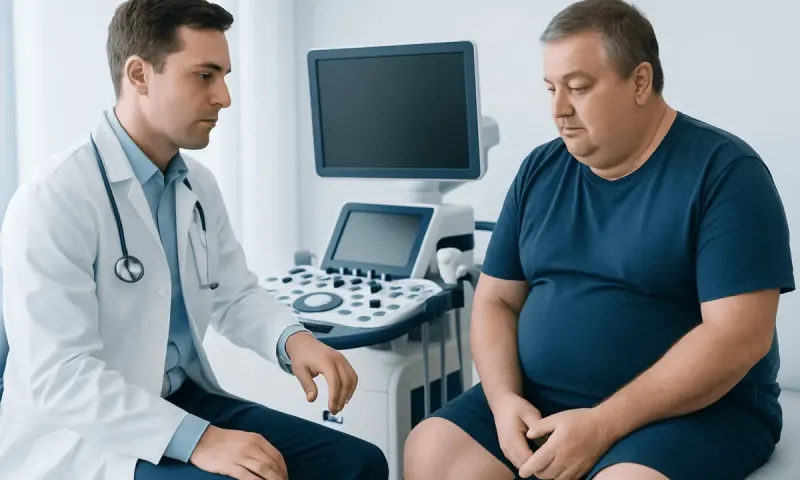
Imaging is not needed in every case, but penile ultrasound can be useful if the diagnosis is uncertain or if treatment is being planned. Ultrasound may help show plaques, calcification, or blood flow problems. If symptoms suggest a related urinary issue, further urologic evaluation may also be recommended.
Treatment options
Treatment depends on the cause, the degree of curvature, the presence of pain, and whether sexual function is affected. If the curve is mild, stable, and not troublesome, reassurance and monitoring may be all that is needed. Not every curved willy requires active treatment.
When Peyronie’s disease is suspected, management often depends on whether the condition is in an active phase or a stable phase. In the active phase, doctors may focus on observation, symptom control, and monitoring for change. In selected cases, medications injected into the plaque, traction therapy, or vacuum-based approaches may be discussed. If the curve is severe or prevents satisfactory intercourse, surgery may be considered. Depending on the situation, this may include procedures offered within urology care or reconstructive options such as penile prosthesis treatment when significant erectile dysfunction is also present.
Congenital curvature that causes functional or psychological distress may also be treated surgically. The goal is usually to straighten the penis enough to improve comfort and function rather than to create absolute symmetry. A specialist can explain the likely benefits, limitations, and recovery considerations of each option.
If a patient has both curvature and erection problems, treatment should address both issues. In some men, managing vascular risk factors, reviewing medications, or evaluating hormone and metabolic health can be part of a complete plan. For selected patients, support may involve coordination with specialists in andrology for sexual and reproductive health concerns.
Self-care, sexual wellbeing, and prevention
There is no guaranteed way to prevent all cases of penile curvature, especially when it is congenital. However, reducing the risk of penile injury is sensible. This includes taking care during sexual activity, avoiding forceful bending of an erect penis, and seeking urgent help if there is a sudden popping sensation, pain, bruising, or immediate loss of erection.
Patients with a curved willy often benefit from practical adjustments during intimacy. Open communication with a partner, slower pacing, and positions that avoid discomfort may help. Lubrication can also reduce friction and make sex more comfortable in some cases.
Your general health matters too. Keeping diabetes, blood pressure, and other vascular risk factors under control may support erectile health. And don’t push the emotional side aside: worries about appearance or performance are common, and talking them through with a doctor is a real part of the treatment.
When to seek medical care
Medical advice is recommended if a curved willy is new, getting worse, painful, or making sex difficult. Review is also important if there is a lump or hard area in the penis, a clear loss of length, or erectile dysfunction that appears around the same time as the curvature.
Urgent assessment is needed after trauma, especially if there is sudden pain, swelling, bruising, a popping sound, or rapid loss of erection. These can be signs of a penile fracture or other injury that should not be ignored.
Embarrassment keeps a lot of men waiting far longer than they need to. Urologists see this every week and will talk you through it plainly and respectfully. If you are travelling for care, Acıbadem Health Point’s multidisciplinary teams in JCI-accredited hospitals diagnose and treat penile curvature and related urologic conditions.
Frequently asked questions
01Is a curved willy normal?
A mild curve can be completely normal, especially if it has always been present and does not cause pain or problems with sex. It is more concerning when the bend is new, worsening, or linked with pain, a lump, or erection changes.
02What causes a curved willy later in life?
A new curve later in life is often related to Peyronie’s disease, where scar tissue forms inside the penis. Less commonly, injury or trauma can also lead to sudden or progressive curvature.
03Can a curved willy straighten on its own?
A normal lifelong curve usually does not need to straighten because it is simply part of natural anatomy. Curvature caused by Peyronie’s disease may stabilize, but it does not always fully resolve without treatment, especially if the bend is significant.
04When should someone worry about penile curvature?
A doctor should assess penile curvature if it is painful, new, getting worse, or interfering with intercourse. Urgent care is needed after an injury, especially if there is bruising, swelling, or a sudden snapping sensation.
05How is a curved willy treated?
Treatment depends on the cause and severity. Options can range from reassurance and monitoring to traction therapy, injections, or surgery when the curve is severe or affects sexual function.
06Can a curved willy cause erectile dysfunction?
Yes, it can. Some men develop erectile dysfunction because scar tissue affects rigidity, or because pain and anxiety make erections more difficult to maintain.
This article is for general information only and is not a substitute for professional medical advice. Please consult a qualified doctor about your individual situation.
Explore treatments in Turkey — costs, top hospitals & a free quote
JCI-accredited · board-certified surgeons · reply within 24h
Add us as a Preferred Source to see more of our trusted health content across Google Search, AI Overviews and Discover.