Concussion Recovery: Returning to Daily Activity
Concussion recovery usually involves a short period of relative rest followed by a gradual, symptom-guided return to school, work, exercise and daily life. Many people improve within a few weeks, but recovery can take longer, especially when symptoms are persistent or another injury occurs before healing is complete.
Concussion recovery: what to expect
Concussion recovery is the process of healing after a mild traumatic brain injury caused by a blow, bump or jolt to the head or body. It can also happen when a force makes the brain move rapidly inside the skull. A person does not need to lose consciousness to have a concussion, and symptoms may begin immediately or become clearer over the following hours or days.
Recovery is not identical for everyone. Many adults and children notice substantial improvement within days to a few weeks, while some have symptoms that last longer. The safest approach is early clinical assessment, 24 to 48 hours of relative rest, and a gradual return to physical, cognitive and social activities that does not significantly worsen symptoms.
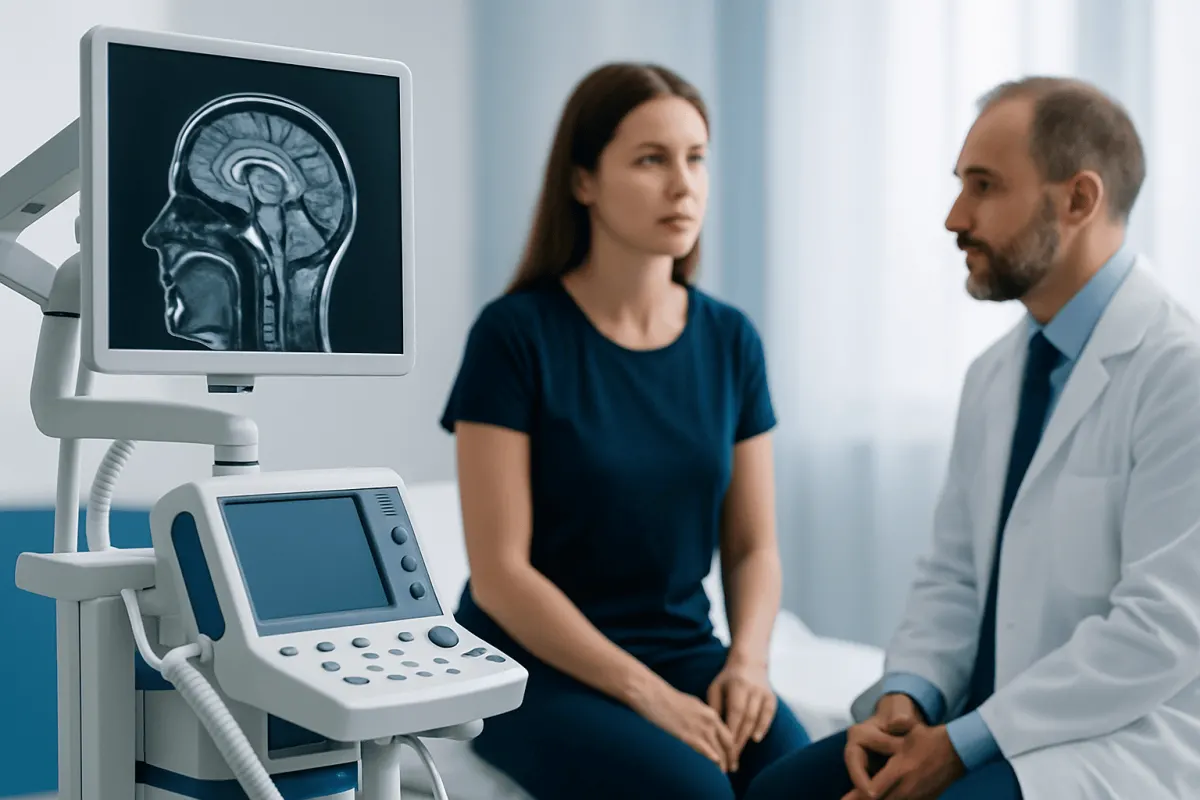
A concussion is generally diagnosed from the history of the injury and a neurological assessment rather than a routine brain scan. Imaging may be needed when a clinician is concerned about bleeding or another structural injury. The priority is to identify urgent problems, manage symptoms and avoid another head impact during recovery.
Symptoms and factors that affect recovery
Concussion symptoms can involve the body, thinking, mood and sleep. Common physical symptoms include headache, dizziness, nausea, sensitivity to light or sound, fatigue, blurred vision and balance difficulties. Some people describe feeling slowed down, foggy or unlike themselves.
Cognitive and emotional symptoms may include trouble concentrating, forgetfulness, slower processing of information, irritability, sadness, anxiety or increased emotional sensitivity. Sleep can also change, with difficulty falling asleep, sleeping more than usual or feeling unrefreshed. These symptoms are real and may fluctuate during the day.
Recovery may take longer after a previous concussion, severe early symptoms, migraine history, learning or attention differences, mood concerns, sleep problems, or a neck injury occurring at the same time. Age, the demands of school or work, and access to appropriate support can also influence the experience. Longer symptoms do not necessarily mean permanent injury, but they should be reviewed by a qualified clinician.
A practical week-by-week concussion recovery timeline

First 24 to 48 hours: Relative rest is recommended. This means avoiding activities that clearly worsen symptoms, including strenuous exercise, alcohol, driving if affected, high-risk sports and activities with a possibility of another head injury. Quiet, brief daily tasks and light movement around the home are often appropriate if tolerated. Complete isolation in a dark room for days is usually not recommended unless a clinician specifically advises it.
Days 3 to 7: Many people can gradually restart simple routines, such as short walks, regular meals, gentle household tasks and limited reading or screen use. A return to school or work may start with reduced hours, rest breaks, a quieter setting or fewer demanding tasks. Symptoms should remain mild and settle reasonably quickly after activity; if they become clearly worse or persist, the activity level should be stepped back.
Week 2: As symptoms improve, activity can become more structured. A clinician may recommend light aerobic exercise below the symptom threshold, followed by progressively more demanding physical and cognitive activity. School, work and social participation can increase gradually. Contact sports, collision activities and any activity with meaningful fall risk remain unsuitable until a healthcare professional clears return.
Weeks 3 to 4 and beyond: Many people have resumed their usual routine by this stage. Persistent headache, dizziness, visual symptoms, sleep disturbance, mood changes or concentration problems deserve follow-up. Individualized rehabilitation may include vestibular therapy for dizziness, neck assessment and treatment, vision-related care, headache management, sleep support or psychological support. Recovery plans should be adjusted to the person’s symptoms and daily demands rather than a fixed calendar alone.
How long does it take for the brain to fully heal after a concussion?
There is no single test or exact date that can confirm when every aspect of the brain has fully healed after a concussion. In practical terms, recovery is assessed through resolution of symptoms, a normal neurological evaluation when needed, and the ability to tolerate normal cognitive and physical activity without symptom recurrence.
Many people recover within a few weeks, but some need several weeks or longer. Children and teenagers may require a more cautious return to learning and sport, while adults may need temporary adjustments at work. A person should not return to contact sport, high-risk recreation or safety-sensitive duties simply because they feel mostly better; clearance should follow the advice of a clinician familiar with concussion care.
Persistent symptoms are sometimes called post-concussion symptoms. They can be influenced by several treatable issues, including migraine-like headache, neck pain, vestibular dysfunction, visual strain, poor sleep and stress. A detailed assessment can help identify these contributors and guide recovery.
What is the 7 day concussion protocol?
The term “7 day concussion protocol” is commonly used to describe a staged return-to-sport plan. It is not a universal guarantee that a person will recover in seven days. In many sports protocols, each stage takes at least 24 hours, so completion can take a minimum of about one week after symptoms have resolved and the person is ready to progress.
A typical progression begins with symptom-limited daily activity, then light aerobic exercise, sport-specific exercise without risk of head impact, non-contact training, full-contact practice only after medical clearance, and finally return to competition. The exact sequence and clearance requirements differ by age, sport, local rules and clinical guidance.
If symptoms significantly worsen during a stage, the individual should stop, rest until symptoms return to their prior level, and seek advice about restarting at an earlier stage. Young athletes should return fully to school and learning demands before returning to unrestricted sport. Anyone with suspected concussion should be removed from play immediately and should not return the same day.
What is the 20/20/20 rule for concussion?
The 20/20/20 rule is a simple eye-strain strategy that may help people who find screens or close visual work uncomfortable during concussion recovery. Every 20 minutes, the person looks at something about 20 feet away for 20 seconds. It is not a concussion treatment or a formal return-to-activity protocol, but it can encourage visual breaks.
Screen use does not need to be avoided completely for everyone. After the first day or two, brief, tolerable use may be gradually increased, with adjustments such as lower brightness, larger text, reduced notifications, breaks and a quieter environment. The goal is to prevent substantial symptom flare-ups while slowly rebuilding tolerance.
Persistent eye pain, double vision, significant reading difficulty, severe light sensitivity or ongoing dizziness should be assessed by a clinician. These symptoms may indicate a need for targeted vestibular, visual or neurological evaluation rather than simply more screen avoidance.
How to speed up concussion recovery
There is no safe shortcut that forces concussion recovery. The most effective approach is to support the brain and body while avoiding both extremes: pushing through substantial symptoms and prolonged, unnecessary inactivity. Following a personalized clinical plan helps people return to their usual lives as safely and efficiently as possible.
Helpful measures include maintaining regular sleep and wake times, drinking enough fluids, eating regular balanced meals, avoiding alcohol and recreational drugs, and using only medicines recommended by a clinician. Light physical activity, such as walking or stationary cycling, may be introduced after the initial rest period if it does not substantially worsen symptoms. A clinician can advise when exercise is appropriate.
It also helps to pace mental tasks. People may divide work or study into shorter blocks, take planned breaks, reduce multitasking and request temporary adjustments such as extra time, reduced workload or a quieter workspace. Headache, neck pain, dizziness, sleep problems and emotional symptoms should be treated rather than ignored, because each can slow return to normal function.
For people with persistent or complex symptoms, care may involve neurology, rehabilitation, physiotherapy, neuropsychology, ophthalmology or ear and balance specialists. Acıbadem Health Point’s multidisciplinary specialists and JCI-accredited hospitals assess and treat neurological conditions for international patients.
When to seek medical care
Anyone with a suspected concussion should be assessed by a healthcare professional, particularly after a sports injury, road traffic collision, fall, workplace injury or assault. Medical review is especially important for children, older adults, people taking blood-thinning medicines, and those with a history of neurological conditions or repeated concussions.
Emergency medical care is needed after a head injury if there is a worsening or severe headache, repeated vomiting, increasing drowsiness or difficulty waking, confusion that is getting worse, unusual behavior, seizure, slurred speech, weakness or numbness, poor coordination, unequal pupils, fluid or blood from the nose or ears, or loss of consciousness. These signs can suggest a more serious brain injury.
A follow-up appointment is advisable when symptoms are not improving over the expected early recovery period, interfere with school or work, return with activity, or create concerns about mood, sleep or safety. A clinician can determine whether further assessment, rehabilitation or a tailored return-to-sport plan is needed.
Frequently asked questions
01Should a person sleep after a concussion?
Sleep is generally important for recovery and a person does not need to be kept awake all night solely because of a concussion. However, a healthcare professional should assess the injury, especially if there was loss of consciousness, worsening symptoms or concern for a more serious head injury. A caregiver should follow the specific monitoring instructions provided by the treating team.
02Can a person exercise during concussion recovery?
After an initial period of relative rest, light aerobic activity may be helpful when introduced gradually and guided by symptoms. Exercise should not involve contact, collision, fall risk or a risk of another head impact until a clinician has provided clearance. Significant or prolonged symptom worsening means the activity was likely too demanding.
03Is it normal for concussion symptoms to come and go?
Yes. Symptoms can fluctuate with physical exertion, screen use, bright environments, poor sleep, stress and demanding mental activity. A symptom diary may help identify patterns and support a clinician in adjusting the recovery plan.
04Can a person return to work or school before all symptoms are gone?
Many people can return gradually before every symptom has completely resolved, provided appropriate adjustments are in place. Reduced hours, regular breaks, lighter workloads and quieter settings may make this more manageable. The return should be paced so symptoms are not substantially or persistently worsened.
05Why is a second concussion dangerous?
A second head injury before recovery is complete can lead to more severe symptoms and a longer recovery. It may also increase the risk of serious complications in rare circumstances. Avoiding sport, risky recreation and other situations where another head impact is possible is essential until medical clearance.
06Do all concussions need a CT scan or MRI?
No. Most concussions do not show changes on routine CT or MRI scans, and diagnosis is usually based on symptoms and examination. Imaging is used when clinicians suspect bleeding, skull fracture or another structural injury based on the mechanism of injury, examination findings or warning signs.
This article is for general information only and is not a substitute for professional medical advice. Please consult a qualified doctor about your individual situation.
Persistent digestive symptoms? Get evaluated in Turkey
JCI-accredited · board-certified surgeons · reply within 24h
Add us as a Preferred Source to see more of our trusted health content across Google Search, AI Overviews and Discover.