Composite Veneers Before and After: What You Need to Know

Key Takeaways
- Composite veneers can improve the appearance of chips, gaps, staining, and uneven tooth shape.
- Before-and-after results vary based on tooth position, enamel health, bite, and the amount of reshaping needed.
- Treatment is usually conservative and may be completed in one or a few visits, depending on the case.
- Good home care, regular checkups, and habits such as avoiding nail-biting and hard-object chewing help results last longer.
- A dentist should assess whether composite veneers, porcelain veneers, bonding, or another option is the safest fit.
Composite veneers before and after results can be subtle or striking, depending on the starting condition of the teeth, the dentist’s technique, and the patient’s goals. This guide explains what changes are realistic, how treatment is planned, and how to care for the result.
Overview
When people search for composite veneers before and after, they are usually trying to understand one practical question: how much difference can the treatment actually make? In many cases, composite veneers can refresh the look of front teeth by improving color, shape, symmetry, and small defects without major alteration to the natural tooth.
Composite veneers are tooth-colored resin restorations placed on the visible surfaces of teeth. They are often used to refine chipped edges, close small spaces, soften uneven lengths, or make a smile look more balanced. Compared with some other cosmetic treatments, the process is generally conservative and can be tailored carefully to the person’s starting point.
The “after” result is not a one-size-fits-all image. It depends on the health of the teeth and gums, the bite, the shade selected, and how much contouring is needed to create a natural appearance. For international patients considering treatment abroad, it is especially helpful to view composite veneers as a planning process rather than a simple photo comparison.
What composite veneers can change in a smile

Composite veneers are often chosen for specific cosmetic concerns rather than complete smile reconstruction. They may make front teeth look brighter, more even, and better aligned from a conversational distance. The improvement is often most noticeable in photos, in social settings, and when a patient feels more comfortable smiling naturally.
Common changes seen in before-and-after images include smoother tooth edges, smaller-looking gaps, more uniform length, and a more consistent tooth color. In some cases, composite material can also help mask minor surface imperfections such as localized staining or small enamel irregularities.
It is important to keep expectations grounded. Composite veneers do not replace orthodontic care when teeth are significantly crowded or rotated, and they cannot always correct deep discoloration, extensive wear, or major bite problems on their own. A dentist will usually explain whether the requested visual change is realistically achievable with resin alone or whether a combined plan would work better.
Who is a good candidate?
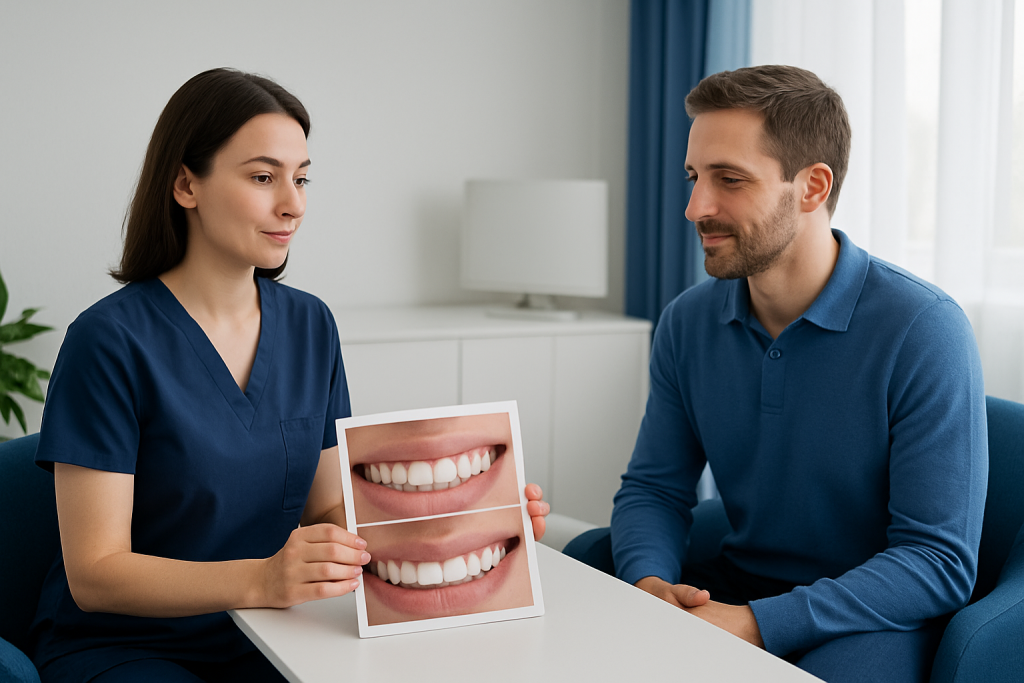
Composite veneers are often suitable for adults who want a cosmetic improvement with minimal removal of healthy tooth structure. They may be considered when the teeth are generally healthy, the gums are stable, and the patient understands that the material may need maintenance over time.
They can be a practical option for people who want to address one or a few visible teeth, or for those who prefer a reversible or less invasive approach than some ceramic restorations. Patients traveling from abroad may appreciate that treatment planning can often be adapted around limited visit time, provided the mouth is ready for cosmetic work.
Not everyone is a candidate. Active gum disease, untreated cavities, significant grinding, large structural damage, or severe bite mismatch may need to be addressed first. A careful consultation helps determine whether composite veneers are appropriate now, or whether another dental step should come first.
How the treatment is planned and placed
The “before” phase begins with an exam, photographs, and a discussion of the desired result. The dentist evaluates tooth shade, proportions, gum line, symmetry, existing fillings, and how the upper and lower teeth meet. This step matters because an attractive result is not only about brightness; it also depends on harmony with the surrounding teeth and facial features.
Once the plan is agreed, the tooth surface is cleaned and lightly prepared when needed. The composite resin is then applied in layers, shaped, and polished to create the final form. In many cases, treatment is completed chairside without laboratory fabrication, although complex cases may require more time and more than one appointment.
Because composite is sculpted directly on the tooth, the dentist can often make small adjustments during the visit. This allows the patient and clinician to review shape and length before finishing the surface. For people seeking care away from home, this flexibility can be helpful, but it is still wise to allow enough time for evaluation, treatment, and any follow-up visit before travel.
What before-and-after results can look like
Patients often notice that front teeth look smoother, more even, and less worn after treatment. Small chips can appear restored, edges may look straighter, and a smile may seem more cohesive when the teeth are viewed together rather than individually. In some cases, the result is subtle; in others, the visual change is more obvious.
Good before-and-after photos usually show natural improvements rather than an artificial “perfect” look. The best cosmetic results tend to respect tooth anatomy, translucency, and the slight variations that make a smile believable. Overly bulky or unnaturally bright restorations may look less harmonious, so skill and restraint are important.
It is also normal for the final appearance to settle in the days after treatment as the mouth adapts. Minor polishing refinements may be needed. Patients should be encouraged to review their results with the dentist and ask whether any adjustments are advisable once they have seen the smile in everyday light.
Benefits and limitations
One of the main advantages of composite veneers is their conservative nature. They can often improve appearance without removing as much enamel as some other cosmetic treatments, and they may be repaired more easily if a small chip or flaw develops later.
Composite also offers a more immediate cosmetic transformation for people who prefer not to wait long for laboratory-made restorations. This can be appealing for patients traveling internationally, particularly when their itinerary allows only a limited treatment window.
There are limitations to understand. Composite is not as resistant to staining or wear as some ceramic materials, and results may need periodic maintenance. Longevity varies widely according to oral habits, biting forces, diet, home care, and the quality of the initial design. A dentist can help patients compare the trade-offs between composite veneers, porcelain veneers, and other cosmetic options.
How to protect the result after treatment
Care after composite veneers is largely about protecting both the restorations and the natural teeth beneath them. Gentle daily brushing with a non-abrasive toothpaste, flossing, and routine dental visits help maintain the appearance and support oral health. Patients should also follow any advice given about wearing a night guard if they grind their teeth.
Several habits can shorten the life of the restorations. These include biting hard objects, opening packaging with the teeth, nail-biting, and frequent chewing on ice or very hard foods. Dark drinks and tobacco can contribute to staining, so moderation and good cleaning habits matter.
- Brush twice daily with a soft-bristled brush.
- Clean between teeth once a day with floss or interdental aids.
- Limit frequent exposure to staining foods and drinks.
- Use a protective appliance if recommended for clenching or grinding.
- Attend review appointments, especially after a cosmetic procedure completed abroad.
For international patients, continuity of care is part of the treatment plan. Keeping records, photos, and the dentist’s maintenance instructions can make it easier to follow up with a local dentist at home if needed.
When to see a dentist
A dental evaluation is advisable if a person is considering cosmetic changes and wants to know whether composite veneers are suitable. It is also important to seek review if a tooth is painful, sensitive, loose, or visibly damaged, because these signs can point to a problem that should be treated before any cosmetic work is done.
Patients should contact a dentist if a veneer chips, feels rough, changes color, or seems to affect the bite. Early attention can often preserve the restoration and prevent further wear on the natural tooth. This is especially relevant for people who have returned home after treatment and need a clear plan for follow-up care.
In a well-planned case, a cosmetic consultation should include honest discussion of what can be improved, what cannot be changed safely, and whether another option may suit the smile better. At Acibadem Health Point, multidisciplinary specialists and JCI-accredited hospitals diagnose and treat dental concerns for international patients with a coordinated approach that supports planning, treatment, and follow-up.
A realistic way to think about the decision
Composite veneers before and after images can be helpful, but they should be read as examples rather than promises. A person’s own teeth, bite, and oral health determine the final outcome far more than any general photo gallery.
The best decision comes from a consultation that balances aesthetics with function. When the smile goal is clear and the teeth are suitable, composite veneers can create a meaningful improvement with relatively little intervention. When other problems are present, the more appropriate first step may be gum treatment, whitening, orthodontics, or restorative care.
For patients planning treatment across borders, it is sensible to ask about the expected number of visits, maintenance needs, and the plan for future repairs. A thoughtful discussion before treatment usually leads to a more satisfying after result later on.
Frequently asked questions
01How long do composite veneers usually last?
Their lifespan varies because composite is more maintenance-dependent than some other materials. Good oral hygiene, bite protection, and regular dental care can help them last longer. A dentist can explain what maintenance is likely in an individual case.
02Do composite veneers look natural?
They can look very natural when shade, shape, and contour are planned carefully. The result depends heavily on the dentist’s skill and on how well the restoration matches the surrounding teeth. Over-polished or overly uniform veneers may look less lifelike.
03Can composite veneers fix gaps between teeth?
Small gaps can often be improved with composite veneers or bonding. Larger spacing or crowding may be better treated with orthodontics first. A dentist will assess whether closing the gap with resin is safe and aesthetically balanced.
04Is the procedure painful?
Many patients find the treatment comfortable, and some cases require little or no tooth reduction. If enamel preparation or sensitivity is a concern, the dental team can discuss ways to improve comfort during the procedure. Any persistent pain after treatment should be reviewed.
05What is the difference between composite veneers and porcelain veneers?
Composite veneers are made from resin placed directly on the tooth, while porcelain veneers are laboratory-made ceramic restorations. Composite is often quicker and more conservative, while porcelain may offer different wear and stain-resistance characteristics. The best choice depends on the teeth, goals, and budget considerations discussed with the dentist.
06Can I travel home right after getting composite veneers?
Many patients can travel soon after treatment, but it is wise to leave time for an examination, any adjustments, and a final polish if needed. If a long journey is planned, the dentist may recommend a short follow-up window before departure. Keeping treatment notes can help with future dental care at home.
This article is for general information only and is not a substitute for professional medical advice. Please consult a qualified doctor about your individual situation.
Explore treatments in Turkey — costs, top hospitals & a free quote
JCI-accredited · board-certified surgeons · reply within 24h
Add us as a Preferred Source to see more of our trusted health content across Google Search, AI Overviews and Discover.