Cholesterol Spots Under the Eyes: What You Need to Know

Key Takeaways
- Cholesterol spots under the eyes are commonly xanthelasma, soft yellowish plaques that form on or near the eyelids.
- They are not always caused by high cholesterol, but a lipid profile and general health review are often recommended.
- Treatment can improve appearance, yet spots may return if the underlying tendency is not addressed.
- Lifestyle measures that support heart health may also help reduce future risk, even when spots themselves do not disappear.
- A doctor should assess any new, changing, painful, or one-sided eyelid lesion to confirm the diagnosis.
Cholesterol spots under the eyes are often called xanthelasma. They are usually harmless, but they can sometimes signal an underlying lipid disorder or other health issue that deserves medical attention.
Overview
Cholesterol spots under the eyes are most often xanthelasma, which are soft, flat or slightly raised yellowish plaques that appear on the eyelids, especially near the inner corners. They are usually benign and painless, so many people notice them first because of how they look rather than because they cause symptoms.
Although the name suggests a direct link with high cholesterol, the relationship is more nuanced. Some people with xanthelasma have elevated blood lipids, while others have normal cholesterol levels. Even so, the finding is worth discussing with a clinician because it can be a visible clue that a broader cardiovascular risk check may be useful.
For international patients deciding whether to travel for evaluation, the key question is not only how the spots look, but whether they are truly xanthelasma and whether any hidden metabolic or heart-related issue should be checked at the same time. That combination of skin findings and preventive medicine is where a careful assessment matters most.
Symptoms and how they usually look
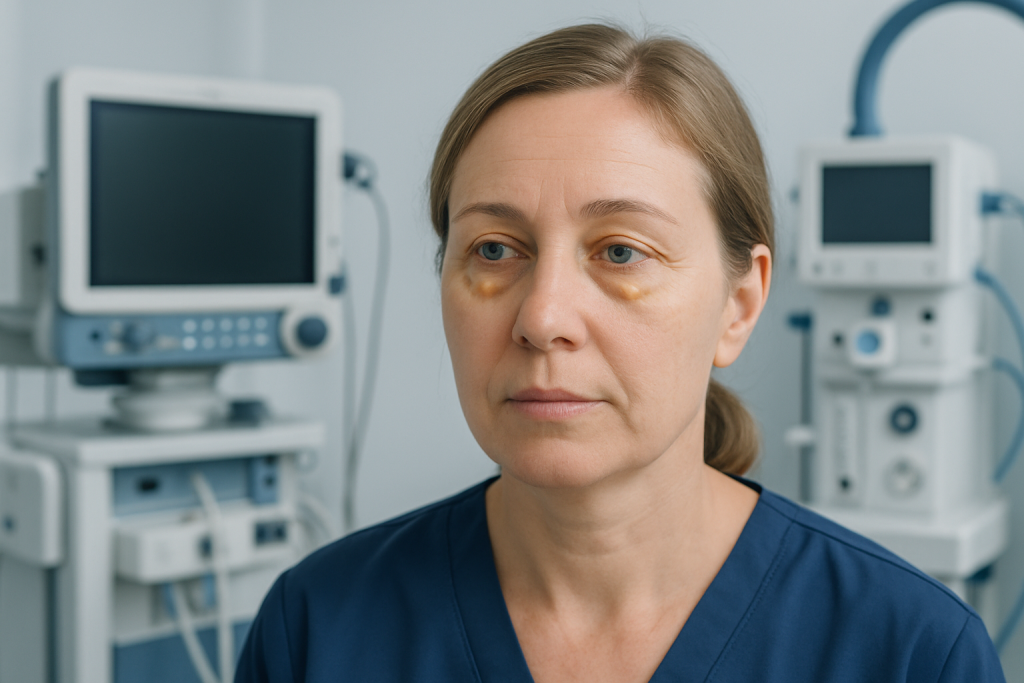
Xanthelasma typically presents as yellow, soft plaques on the upper or lower eyelids. They may be small or gradually become more noticeable over time, and they often appear on both sides, though one side can be more prominent.
These spots are usually not itchy, tender, or inflamed. They do not behave like an infection, and they do not usually affect vision. Their main impact is cosmetic, although the emotional effect can be significant if the change is visible in daily social or professional settings.
- Yellow to pale orange color
- Flat or slightly raised texture
- Commonly located near the inner eyelids
- Usually slow-growing and painless
Not every eyelid bump is xanthelasma. Styes, milia, cysts, warts, and other skin conditions can look similar at first glance, which is one reason a professional evaluation is important before any treatment is chosen.
Causes and risk factors

Xanthelasma forms when lipid-rich material accumulates in the skin. In some people, this happens alongside high LDL cholesterol, high triglycerides, low HDL cholesterol, or inherited lipid disorders. In others, the pattern appears despite a normal standard cholesterol test, which means the skin change is not a simple one-to-one sign of diet alone.
Risk is higher in people with conditions that affect lipid metabolism or vascular health. These can include diabetes, obesity, fatty liver disease, thyroid disorders, smoking, and a strong family history of early heart disease or abnormal cholesterol.
Age and genetics also play a role. The spots are more likely to appear in adulthood, and family patterns are common. In practice, xanthelasma is best viewed as a possible clue rather than a diagnosis by itself; it should prompt a broader conversation about cardiovascular risk factors, not assumptions.
Diagnosis
Diagnosis usually begins with a clinical examination. A doctor or dermatologist can often recognize xanthelasma by its appearance and location. If the lesions are atypical, rapidly changing, or one-sided in an unusual way, the clinician may consider other skin conditions and recommend closer evaluation.
Because xanthelasma can sometimes be associated with blood lipid abnormalities, blood tests are often part of the workup. These may include a fasting or non-fasting lipid panel, and depending on the person’s history, tests for diabetes, thyroid function, liver health, or other metabolic factors may also be appropriate.
The goal of diagnosis is twofold: confirm that the spots are harmless xanthelasma, and identify any treatable underlying issue. For patients traveling from abroad, it can be helpful to bring any previous cholesterol results, medication lists, and family history details to make the assessment more efficient.
Treatment options
Treatment is not always medically necessary. Because xanthelasma is benign, some people choose observation, especially if the spots are small and not causing distress. Others prefer treatment for cosmetic reasons or because the plaques are increasing in size.
When treatment is desired, several approaches may be considered. These include surgical removal, laser therapy, chemical cauterization, and other office-based procedures selected according to size, depth, location, and skin type. Each option has advantages and trade-offs, and eyelid skin requires careful handling to reduce the chance of scarring or pigment changes.
It is also important to address any underlying lipid abnormality or related health condition. Lifestyle changes and, when appropriate, doctor-prescribed medicines for cholesterol management may not remove existing spots quickly, but they can support overall cardiovascular health and may reduce the chance of new lesions forming.
Recurrence is possible even after successful removal, so patients benefit from understanding both the cosmetic and medical sides of treatment before making a decision. A specialist can explain what kind of result is realistic for a particular case.
Prevention and self-care
There is no guaranteed way to prevent cholesterol spots under the eyes, especially when genetics are involved. Still, heart-healthy habits remain the most practical long-term strategy because they support blood lipid control and overall vascular health.
Useful steps often include eating a balanced diet rich in vegetables, fruits, whole grains, legumes, and unsaturated fats; staying physically active in a way that suits the person’s ability; avoiding tobacco; and limiting habits that worsen cardiometabolic risk. If a person already has high cholesterol, diabetes, or thyroid disease, keeping those conditions well managed is especially important.
Self-care also includes avoiding attempts to squeeze, scrub, or apply harsh home remedies to the eyelids. The skin around the eyes is delicate, and irritation can make the area look worse. Any plan for appearance should be guided by a qualified clinician rather than online remedies that may not be safe.
When to see a doctor
A medical review is sensible when a new yellow plaque appears on the eyelid, when an existing lesion grows, or when the spot is only on one side and looks different from typical xanthelasma. It is also wise to seek evaluation if the area becomes painful, red, bleeds, or changes quickly.
Even if the lesion seems harmless, a doctor may recommend cholesterol and metabolic testing, especially if there is a family history of early heart disease or known lipid problems. The eyelid finding can be a useful reminder to look at the whole picture, not just the skin.
People who are considering treatment for cosmetic reasons may also benefit from a consultation, particularly if they are traveling internationally and want a coordinated plan for diagnosis, procedure, and follow-up. At Acibadem Health Point, multidisciplinary specialists in JCI-accredited hospitals diagnose and treat this condition for international patients, with attention to both medical safety and practical recovery planning.
Living with xanthelasma
For many people, the most difficult part of xanthelasma is its visibility. The spots are medically mild, but emotionally they can be hard to ignore. It helps to know that the condition is common, treatable in selected cases, and not a sign of poor hygiene or anything the person has done wrong.
Because recurrence can happen, long-term thinking is useful. A good plan usually combines an appearance-focused discussion with a health-focused one: confirm the diagnosis, review cardiovascular risk factors, and decide whether treatment makes sense now or later. That approach is often more satisfying than treating the skin finding in isolation.
For people arranging care from another country, continuity matters. Clear documentation of test results, procedure details, and follow-up recommendations can make the return home smoother and help the local doctor continue monitoring cholesterol and general health.
Frequently asked questions
01Are cholesterol spots under the eyes always caused by high cholesterol?
No. Xanthelasma can appear in people with normal cholesterol levels as well as those with lipid abnormalities. Because of that, a blood test is often recommended rather than assuming the cause from appearance alone.
02Do cholesterol spots under the eyes go away on their own?
They usually do not disappear spontaneously. Some may stay stable for long periods, while others gradually enlarge, which is why people sometimes choose treatment for cosmetic reasons.
03Can diet remove xanthelasma?
Diet cannot be relied on to remove existing spots. However, heart-healthy eating can help improve overall cholesterol management and support long-term cardiovascular health.
04Is xanthelasma dangerous?
The spots themselves are usually harmless and painless. Their importance is that they may signal a higher chance of underlying lipid or metabolic issues that should be checked.
05What is the best treatment for cholesterol spots under the eyes?
There is no single best option for everyone. The right choice depends on the size, location, skin type, and the person’s goals, and a specialist can explain the benefits and risks of each approach.
06Can the spots come back after treatment?
Yes, recurrence is possible after removal. Treating any underlying cholesterol or metabolic issue may help lower the chance of new spots forming, although it cannot guarantee they will not return.
This article is for general information only and is not a substitute for professional medical advice. Please consult a qualified doctor about your individual situation.
Heart care in Turkey — expert evaluation and treatment
JCI-accredited · board-certified surgeons · reply within 24h
Add us as a Preferred Source to see more of our trusted health content across Google Search, AI Overviews and Discover.