Chickenpox Virus Vaccine: Uses, Dosage and Side Effects

Key Takeaways
- The chickenpox virus vaccine helps prevent varicella infection and reduce the risk of complications.
- It is usually given as a two-dose series, but the timing can vary by age and medical history.
- People who are pregnant or severely immunocompromised may not be able to receive the live vaccine.
- Mild side effects such as soreness at the injection site or a low-grade fever can occur.
- A doctor can help determine whether vaccination, blood testing, or another plan is most appropriate.
The chickenpox virus vaccine helps protect against varicella, a contagious infection that can be more serious in babies, adults, and people with weaker immune systems. Understanding who should receive it, when it is used, and what to expect after vaccination can make planning care much easier.
Overview
The chickenpox virus vaccine is designed to protect against varicella, the infection commonly known as chickenpox. Before routine vaccination, chickenpox was a familiar childhood illness, but it could also lead to pneumonia, skin infections, dehydration, or inflammation of the brain in some people. Vaccination has changed that picture by giving the immune system a safe way to recognize the virus before an actual infection occurs.
The vaccine used for chickenpox is a live attenuated vaccine, which means it contains a weakened form of the virus that does not cause chickenpox in healthy people. It is often given in childhood, but adults who never had chickenpox and were never vaccinated may also be candidates. For international patients, this topic often comes up while reviewing childhood records, planning school or work requirements abroad, or preparing for pregnancy and travel.
Because vaccine schedules differ by country and medical history, a clinician may first confirm whether a person has already had varicella or received the vaccine. In some cases, blood testing or past records help guide the plan. The main goal is not only to avoid the rash and fever of chickenpox, but also to lower the chance of spreading infection to vulnerable family members, newborns, or medically fragile patients.
Symptoms
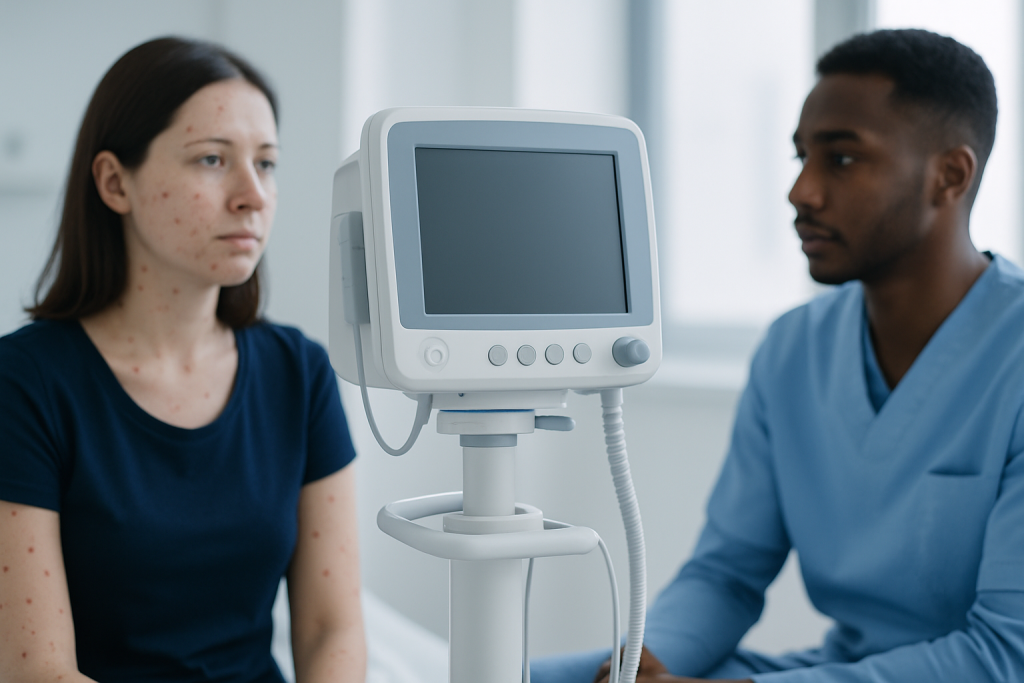
The vaccine itself does not cause chickenpox in healthy individuals, but understanding the illness it prevents can help explain why vaccination matters. Chickenpox usually begins with fever, tiredness, headache, and loss of appetite, followed by an itchy rash that turns into fluid-filled blisters and then crusts over. New spots can appear for several days, which is why the rash often seems to come in waves.
In children, chickenpox is often mild, but it can still disrupt school, sleep, and daily activities. In teenagers and adults, the illness may be more uncomfortable and may carry a higher risk of complications. People with weakened immune systems, pregnant people, and newborns are among those who may have a more serious course if exposed.
After vaccination, some people notice a sore arm, mild redness, or a low fever. Occasionally, a small number of vaccine recipients develop a few chickenpox-like spots, usually limited and short-lived. These reactions are generally much milder than natural infection and are reviewed by a doctor if they seem unusual or persistent.
Causes & Risk Factors

Chickenpox is caused by the varicella-zoster virus, which spreads easily through respiratory droplets and direct contact with the rash. Someone can pass it on before the rash is fully obvious, which is one reason outbreaks can move quickly through households, classrooms, and close-knit communities. The vaccine lowers the chance of infection and also reduces the severity if infection still occurs.
Risk factors for getting chickenpox are mostly related to lack of immunity. People who have never had the illness and have not been vaccinated are at greatest risk, especially if they spend time around infected children or travel to areas where vaccination coverage is uneven. Health care workers, caregivers, and family members living with someone at risk may also need careful review of their immunization status.
Some people cannot receive the vaccine or need special timing. This includes pregnant people, individuals with certain immune system disorders, and some patients taking immune-suppressing treatments. In these situations, a clinician may recommend a different approach, such as checking immune status, adjusting timing around treatment, or using post-exposure guidance if exposure has already happened.
Diagnosis
Before giving the chickenpox virus vaccine, a doctor may review vaccination records, medical history, and any remembered history of chickenpox. This is often straightforward when records are available, but it can be less clear for adults who grew up in a different country or moved frequently. In those situations, a careful history can be just as important as paperwork.
If immunity is uncertain, a blood test may be used to look for evidence of past infection or vaccination. This can help avoid unnecessary vaccination in some people and guide decisions for those planning pregnancy, international travel, or work in a higher-risk environment. The right test depends on the setting and the person’s overall health.
Diagnosis also matters after a known exposure to chickenpox. A clinician can determine whether the person already has immunity, whether the vaccine may still help, or whether another preventive option is more appropriate. This is especially relevant for families traveling between countries, where access to records and timing of care may be different.
Treatment Options
For prevention, the main option is vaccination. The chickenpox virus vaccine is commonly given as a two-dose series, with timing based on age and local immunization guidance. When both doses are received appropriately, protection is stronger and more durable than after a single dose.
Vaccination is not the same as treatment for active chickenpox, but it can still play a role after exposure in certain people if given within the recommended window. A doctor may also consider additional measures for high-risk individuals, such as immune globulin or antiviral medication in selected circumstances. These decisions depend on age, immune status, pregnancy, and the nature of the exposure.
If chickenpox does occur, treatment is usually focused on comfort and preventing complications. That can include rest, hydration, fever management, and care for itchy skin. People at higher risk of severe disease may need closer medical follow-up, and any breathing difficulty, confusion, severe dehydration, or rapidly worsening rash should be reviewed promptly.
Prevention & Self-care
Prevention starts with knowing whether immunity is already in place. Adults who are unsure about past chickenpox or vaccination history can ask a clinician to review records or order testing when appropriate. This is particularly helpful before pregnancy, before starting immune-suppressing medication, or before prolonged travel to a place where medical access may be limited.
For people who are eligible, staying current with vaccination is the most practical form of self-care. It helps protect the person receiving the vaccine and can also reduce the chance of bringing infection home to vulnerable family members. After vaccination, it is reasonable to watch for expected mild reactions such as soreness or a brief fever and to rest if needed.
- Keep a personal record of immunizations, especially if moving between countries.
- Ask about vaccination early if pregnancy is being planned.
- Review immune-related medicines with a doctor before scheduling a live vaccine.
- Seek advice promptly after a known exposure if immunity is uncertain.
For international patients, care often works best when vaccination plans are coordinated with upcoming flights, school starts, fertility care, or treatment schedules. That way, there is enough time to complete doses or arrange follow-up in a practical and safe way.
When to See a Doctor
A doctor should be consulted if a person is unsure whether they have ever had chickenpox, received the vaccine, or developed immunity after past infection. This is especially important for adults, pregnant people, and those with chronic illness or weakened immunity. A brief review now can prevent much more complicated decisions later.
Medical advice is also appropriate after close exposure to chickenpox, particularly if the person is a newborn, pregnant, immunocompromised, or has never been vaccinated. The timing after exposure can influence which preventive steps still make sense, so it is better not to wait for symptoms to appear. If symptoms do develop, prompt evaluation helps distinguish chickenpox from other rashes and guides safe care.
Acibadem Health Point’s multidisciplinary specialists and JCI-accredited hospitals diagnose and treat this condition for international patients, with care plans that can be coordinated around travel, testing, and follow-up needs. Even so, the final vaccine decision should always be made with a qualified clinician who knows the person’s full medical history.
Living With Uncertainty About Immunity
Many people are not sure whether they had chickenpox as children, especially if they grew up without access to complete medical records. That uncertainty is common and manageable. The question is usually not whether someone remembers being ill, but whether there is enough evidence of immunity to safely skip vaccination or to proceed with it.
In practice, a clinician may sort this out by checking records, asking about past illness, or ordering a blood test when needed. This can be reassuring for people preparing for pregnancy, university enrollment, overseas work, or family reunification across borders. A clear plan can reduce last-minute stress and make preventive care feel more organized.
When in doubt, a medical review is the safest starting point. It allows the vaccination schedule to be matched to age, health status, and life plans rather than guessed from memory alone.
Frequently asked questions
01What is the chickenpox virus vaccine used for?
It is used to help prevent varicella infection, which causes chickenpox. The vaccine also lowers the chance of severe disease and complications if exposure occurs later.
02Is the chickenpox vaccine the same as the shingles vaccine?
No. Chickenpox and shingles vaccines are related to the same virus, but they are used for different purposes and different age groups. A doctor can explain which one is appropriate based on age and medical history.
03Can an adult get the chickenpox vaccine?
Yes, many adults can receive it if they do not already have evidence of immunity and do not have a contraindication to a live vaccine. This is often considered when records are unclear or when a person is planning travel, pregnancy, or immune-related treatment.
04Are there side effects after vaccination?
Most side effects are mild, such as a sore arm, brief fever, or a small amount of redness at the injection site. These usually pass on their own, but a doctor should be contacted if symptoms seem severe or unusual.
05Who should not receive the vaccine?
People who are pregnant or severely immunocompromised may not be able to receive the live vaccine. Others with specific medical conditions may need individualized advice, so a clinician should review the full history first.
06What if someone was exposed to chickenpox before getting vaccinated?
A doctor can help decide whether vaccination may still help or whether another preventive step is better. The best choice depends on the person’s age, immune status, and how much time has passed since exposure.
This article is for general information only and is not a substitute for professional medical advice. Please consult a qualified doctor about your individual situation.
Explore treatments in Turkey — costs, top hospitals & a free quote
JCI-accredited · board-certified surgeons · reply within 24h
Add us as a Preferred Source to see more of our trusted health content across Google Search, AI Overviews and Discover.