

CHARGE Syndrome: Symptoms, Causes and Treatment
- 9 min read
- Published November 28, 2026
Key Takeaways
- CHARGE syndrome is a rare condition with a wide range of possible features and severity.
- Symptoms may involve the eyes, ears, heart, breathing, feeding, growth, and development.
- Diagnosis is based on clinical findings and may be supported by genetic testing.
- Treatment focuses on the child’s specific needs and often requires a team approach.
- Early, coordinated care can help support feeding, hearing, vision, mobility, and learning.
- Families benefit from clear follow-up planning, especially when care is sought internationally.
CHARGE syndrome is a rare genetic condition that can affect many parts of a child’s development, including the eyes, ears, heart, and growth. Because its features can vary widely, care is usually coordinated across several specialties with the family at the center of every decision.
Overview
CHARGE syndrome is a rare condition that begins before birth and can affect several organ systems at once. The name comes from a group of features first linked with the condition: coloboma, heart defects, atresia of the choanae, growth and development delay, genital differences, and ear abnormalities. Not every child has all of these features, and some have only a few.
Because CHARGE syndrome can touch many areas of health, it is often recognized through pattern-finding rather than one single symptom. A child may first come to medical attention because of feeding difficulty, hearing concerns, a heart murmur, or breathing problems in the newborn period. Later, vision, speech, balance, and learning needs may become more visible.
For families, the diagnosis can feel unfamiliar at first, especially when they are trying to understand what it means for daily life, school, and long-term care. The most helpful next step is usually a careful evaluation by specialists who can map the child’s needs one by one and build a practical plan around them.
Symptoms
The features of CHARGE syndrome can vary a great deal from one child to another. Some babies show signs shortly after birth, while others are diagnosed later when hearing, vision, or developmental differences become clearer. The condition does not follow a single predictable pattern, which is why children are assessed as individuals rather than by a checklist alone.
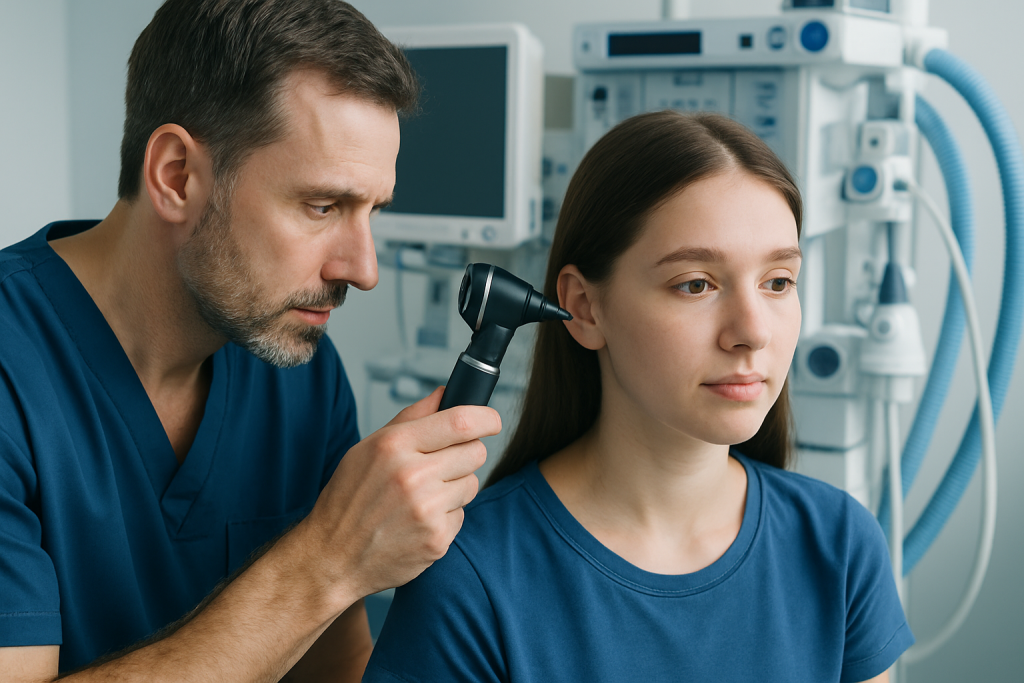
Common features may include eye findings such as coloboma, which is a gap in a structure of the eye; ear differences that affect hearing; and blockage or narrowing of the nasal passages, which can make breathing difficult in newborns. Some children also have heart defects, feeding challenges, swallowing problems, or slower growth. Balance difficulties are also common because the inner ear may be affected.
Other possible features can involve facial differences, genital development differences, delayed puberty later in childhood, and developmental delays in speech, motor skills, or learning. Many children also need support with hearing, vision, sleep, and behavior. The range is broad, so a diagnosis often becomes clearer over time as the child grows.
- Eye, ear, and nasal differences
- Heart or breathing concerns
- Feeding and growth problems
- Hearing loss and balance difficulties
- Speech, motor, or learning delays
Causes & Risk Factors

CHARGE syndrome is usually caused by changes in a gene involved in early development, most often the CHD7 gene. This gene helps guide how the body forms before birth, so a change in it can affect several organs and structures at the same time. In many cases, the gene change happens for the first time in the child and is not inherited from a parent.
It is important for families to know that nothing they did during pregnancy caused CHARGE syndrome. In most cases, the condition arises from a genetic change that occurs by chance. Parents may ask whether it could have been prevented; generally, the answer is no, and the focus shifts to understanding the child’s current needs.
Family history can matter in some situations, especially when genetic testing suggests a heritable change or when more than one family member shows related features. A genetics specialist may discuss recurrence risk, which is the chance of the condition happening again in a future pregnancy. That conversation is best handled with up-to-date genetic counseling tailored to the family’s test results.
Diagnosis
Diagnosis begins with a detailed clinical evaluation. Doctors look at the child’s physical findings, medical history, newborn course, feeding pattern, hearing and vision concerns, and developmental progress. Because CHARGE syndrome can overlap with other conditions, the diagnosis often depends on seeing several features together rather than relying on one sign alone.
Genetic testing may help confirm the diagnosis, especially when a change in the CHD7 gene is found. However, a child can still have CHARGE syndrome even if testing is not fully conclusive, particularly when the clinical picture is strong. For that reason, genetics, pediatrics, cardiology, ear-nose-throat evaluation, ophthalmology, and other specialties may all contribute to the assessment.
Tests may include hearing studies, eye examination, heart imaging, airway assessment, swallowing evaluation, and imaging if structural concerns are suspected. A good diagnostic plan is not only about naming the condition; it is also about identifying the parts of the body that need attention first so treatment can begin safely and in the right order.
Treatment Options
There is no single treatment that fits every child with CHARGE syndrome. Care is tailored to the findings each child has, and it often changes over time as the child grows. Many families work with a multidisciplinary team that may include pediatrics, genetics, ENT, cardiology, ophthalmology, audiology, speech therapy, nutrition, and rehabilitation specialists.
Treatment may include procedures to open blocked nasal passages, manage heart defects, address feeding and swallowing problems, or support hearing and vision. Some children need tubes or other feeding support for a period of time, while others benefit from therapy and adapted communication strategies. Assistive devices, such as hearing aids or vision support tools, may also be recommended.
Developmental care is equally important. Early intervention, speech and language therapy, physical therapy, occupational therapy, and educational support can help children build skills step by step. As the child gets older, follow-up may include puberty and hormone evaluation, orthopedic review, sleep assessment, and continued support for learning and behavior.
For international families, it can help to plan treatment in a center that can coordinate multiple specialties in one pathway, reducing repeated testing and unnecessary travel. Acibadem Health Point’s multidisciplinary specialists and JCI-accredited hospitals diagnose and treat CHARGE syndrome for international patients, with follow-up plans designed to be understandable after the family returns home.
Prevention & Self-care
CHARGE syndrome itself cannot usually be prevented, because it is typically linked to an early genetic change. Even so, families can take meaningful steps to support the child’s health, comfort, and development once the condition is known. Good day-to-day care often matters as much as medical procedures.
Feeding safety is a common priority, especially in infants and young children. Families may be taught how to recognize signs of swallowing difficulty, maintain upright positioning during feeds, and seek review if coughing, choking, or poor weight gain appears. Hearing and vision support should also be followed closely, since these senses strongly influence speech and learning.
Practical self-care for parents and caregivers includes keeping medical records organized, bringing all test results to appointments, and asking for written instructions before traveling home after treatment. If care is being coordinated across countries, families should clarify who will review new symptoms, how therapy will continue locally, and which follow-up tests are most important. This kind of planning can make long-distance care much easier to manage.
When to See a Doctor
Medical review is important if a baby has breathing trouble, poor feeding, repeated choking, blue spells, or seems unable to gain weight. In a child already diagnosed with CHARGE syndrome, new changes in hearing, vision, swallowing, balance, or development should also prompt reassessment. These issues do not always signal an emergency, but they do deserve timely attention.
Families should seek urgent care if there is significant difficulty breathing, signs of dehydration, severe lethargy, or a sudden decline in feeding. Heart-related symptoms, frequent aspiration, or recurring chest infections may also need prompt evaluation. If a child has recently traveled for treatment, the discharge plan should specify which symptoms require urgent contact with the medical team.
Regular follow-up is useful even when things seem stable, because CHARGE syndrome can reveal new needs as the child grows. A coordinated review can help parents understand what is changing, what is expected, and what should be checked next.
Living with CHARGE Syndrome
Families often do best when they have a clear picture of the child’s priorities for the next few months, not just the next diagnosis label. In CHARGE syndrome, those priorities may include feeding, airway safety, hearing support, vision assessment, and developmental therapy. Small gains can matter greatly in daily life, especially when they are supported consistently.
School planning may involve extra help with communication, mobility, or learning pace. Some children use a combination of spoken language, sign language, visual supports, and assistive technology. Over time, the team may adjust goals as the child’s abilities become clearer and new needs emerge.
Emotional support matters too. Parents may feel relief at finally having an explanation, but also uncertainty about the future. Access to counseling, parent networks, and clear specialty follow-up can help families feel more prepared and less alone as they learn how to care for their child over the long term.
Frequently asked questions
01What is CHARGE syndrome in simple terms?
CHARGE syndrome is a rare genetic condition that can affect several parts of the body, especially the eyes, ears, heart, breathing, feeding, and development. Its features vary widely, so children may have different combinations of symptoms.
02Is CHARGE syndrome always inherited?
No. In many cases, it is caused by a new gene change that happens for the first time in the child and is not inherited from a parent. A genetics specialist can explain whether family testing is needed.
03How is CHARGE syndrome diagnosed?
Doctors diagnose it by combining the child’s physical findings, medical history, and test results. Genetic testing may support the diagnosis, but a child can still be diagnosed based on the overall clinical picture.
04Can children with CHARGE syndrome go to school?
Yes, many children attend school and benefit from individualized support. They may need help with hearing, vision, communication, mobility, or learning, depending on their specific needs.
05What specialists are usually involved in care?
Care often includes pediatrics, genetics, ENT, cardiology, ophthalmology, audiology, speech therapy, nutrition, and rehabilitation. The exact team depends on the child’s symptoms and test results.
06Does CHARGE syndrome get better with treatment?
Treatment cannot remove the genetic cause, but it can address the medical and developmental issues that come with it. With coordinated care, many children make meaningful progress in feeding, communication, and daily function.
This article is for general information only and is not a substitute for professional medical advice. Please consult a qualified doctor about your individual situation.
Explore treatments in Turkey — costs, top hospitals & a free quote
JCI-accredited · board-certified surgeons · reply within 24h
Add us as a Preferred Source to see more of our trusted health content across Google Search, AI Overviews and Discover.


How can we help you today?
Meet an Acibadem specialist by secure video, before you travel.
Book a video visit