Cardiac PFO: Understanding the Heart Opening
Cardiac PFO, or patent foramen ovale, is a flap-like opening between the upper chambers of the heart that remains open after birth. It usually causes no symptoms and does not require treatment, although it may be evaluated in selected people with an unexplained stroke or certain other medical concerns.
Cardiac PFO: meaning and why it matters
Cardiac PFO means a patent foramen ovale, a small flap-like opening between the heart’s two upper chambers, called the atria. The PFO cardiac medical abbreviation and the pfo cardiology medical abbreviation both refer to the same finding. It develops when a normal fetal opening, the foramen ovale, does not seal fully after birth.
Before birth, this opening helps blood bypass the lungs, which are not yet used for breathing. After birth, pressure changes in the heart usually press the flap closed. In some people, the flap does not fuse completely. A PFO is not a hole caused by injury, and it is different from an atrial septal defect, which is a structural opening that may allow more continuous blood flow between the atria.
For most people, a PFO does not affect heart function, exercise ability, or life expectancy. It is often found by chance when imaging is performed for another reason. Its main clinical relevance is that, under specific conditions, it can provide a route for a clot to move into the arterial circulation and potentially reach the brain.
Cardiac PFO symptoms and possible associations
Most people do not have cardiac PFO symptoms. Because the opening is typically covered by a flap and does not usually create a major abnormal blood flow, it commonly remains unnoticed throughout life.
When a PFO is assessed, it is often because a person has had a stroke or transient ischemic attack (TIA) without an obvious cause. A PFO may also be considered in selected people with unexplained low oxygen levels, or in rare situations where symptoms occur with upright posture and improve while lying down.
A PFO itself does not usually cause chest pain, palpitations, tiredness, or shortness of breath. These symptoms have many possible causes and should be assessed on their own merits rather than automatically attributed to a PFO.
- Sudden facial drooping, arm weakness, speech difficulty, or vision loss may indicate stroke and require emergency care.
- Brief, stroke-like symptoms that resolve can still be a TIA and should be evaluated urgently.
- New severe breathlessness, fainting, or chest discomfort should also receive prompt medical attention.
How likely is a PFO to cause a stroke?

A PFO is common, while most people who have one never have a stroke because of it. Therefore, finding a PFO does not prove that it caused a stroke. Clinicians carefully look for other, often more likely, explanations such as atrial fibrillation, narrowing of the arteries, high blood pressure, diabetes, smoking, blood-clotting disorders, or disease of the small blood vessels in the brain.
In certain circumstances, a clot in the veins can travel to the right side of the heart and pass through a PFO to the left side, where it can enter the brain circulation. This is called paradoxical embolism. It may be more plausible when there is evidence of a blood clot in the legs or lungs, a large right-to-left shunt, or particular PFO features seen on imaging.
The relationship is most relevant after a cryptogenic stroke, meaning a stroke that remains unexplained after a thorough assessment. Age, vascular risk factors, imaging findings, heart rhythm monitoring, and the PFO’s anatomy all help the care team decide whether the PFO is likely to be important. A neurologist and cardiologist may work together to guide this evaluation.
Diagnosis and assessment of a PFO
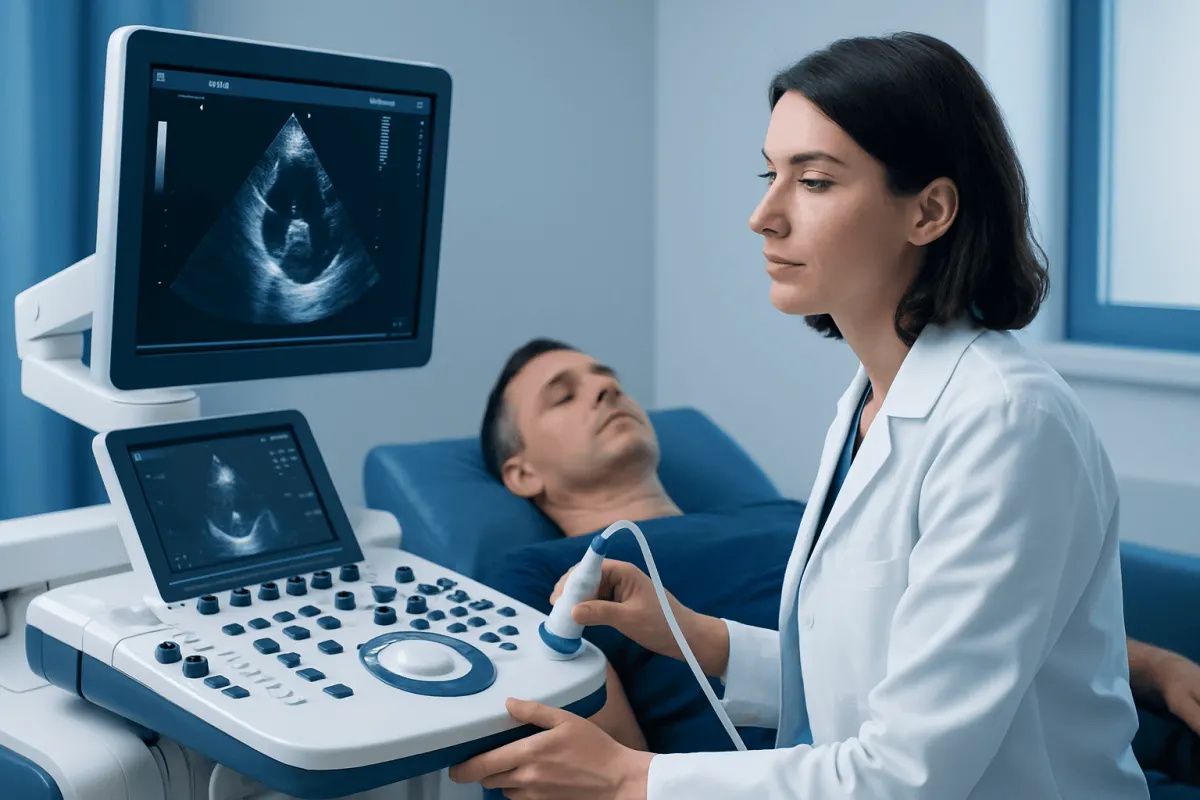
A PFO may be identified with an echocardiogram, an ultrasound examination of the heart. A transthoracic echocardiogram is performed from the chest wall. If more detail is needed, a transesophageal echocardiogram may be used; this test provides close views of the atrial septum through the esophagus while the person is sedated.
A bubble study is often part of the assessment. During the test, agitated saline containing tiny harmless bubbles is injected into a vein. If bubbles appear in the left side of the heart, this can show that blood is passing from right to left through a PFO or another connection.
Transcranial Doppler ultrasound may also detect a right-to-left shunt by monitoring blood flow in brain arteries during a bubble study. If stroke is a concern, testing may additionally include brain imaging, heart rhythm monitoring, blood tests, and evaluation for blood clots in the veins. The purpose is to understand the whole clinical picture, not simply to identify a PFO.
How to fix PFO in heart?
Most PFOs do not need to be fixed. Treatment is considered when a PFO is thought to be clinically relevant, especially in carefully selected adults who have had an otherwise unexplained ischemic stroke. The best approach depends on the person’s age, stroke evaluation, PFO anatomy, medical history, and the balance of potential benefits and risks.
Some people are treated with medicines that reduce the risk of clot formation, such as antiplatelet medication. Anticoagulant medicines may be appropriate for people with another reason to use them, such as a confirmed venous clot or a heart rhythm condition, but the choice should be made by the treating clinician.
A cardiac PFO procedure usually refers to transcatheter PFO closure. Through a blood vessel, typically in the groin, an interventional cardiologist guides a closure device to the heart and positions it across the PFO. The device supports sealing over time without open-heart surgery. After the procedure, follow-up imaging and a temporary course of prescribed antiplatelet treatment are commonly needed.
Closure is not suitable for everyone and does not eliminate all future stroke risk, since strokes can have other causes. Potential complications include irregular heart rhythm, bleeding or vascular injury, device-related issues, and rare serious events. A detailed discussion with a structural heart specialist and stroke team is important before proceeding.
What to avoid if you have a PFO?
Having a PFO alone usually does not require broad lifestyle restrictions. Most people can exercise, travel, work, and take part in everyday activities normally. A clinician may give specific advice when there has been a stroke, a blood clot, low oxygen levels, or another condition that changes individual risk.
It is sensible to reduce preventable clot and stroke risks. This includes avoiding smoking, managing blood pressure and diabetes when present, staying physically active within personal medical advice, maintaining a balanced diet, and following prescribed treatment. During long travel or periods of limited mobility, regular movement and hydration may help lower venous clot risk; people with a history of clots should ask their doctor for individualized travel guidance.
Scuba diving deserves individual discussion. Changes in pressure and the possibility of gas bubbles in the bloodstream can be relevant for some divers with a PFO, particularly after decompression illness or neurological symptoms. A diving medicine specialist can advise on personal risk and whether changes to diving practices or further evaluation are appropriate.
Can you live a long life with a PFO?
Yes. In the great majority of cases, a person can live a long, active life with a PFO. Many people never know they have one, and it does not usually weaken the heart or develop into heart failure.
The outlook depends more on whether the person has had a related event, such as an unexplained stroke, and on other health factors such as blood pressure, cholesterol, diabetes, smoking, atrial fibrillation, and a history of blood clots. Addressing these factors is often more important than the PFO itself.
People who undergo PFO closure typically need planned follow-up to confirm that the device is well positioned and to review medicines. Those managed without closure may also benefit from regular care for their cardiovascular health and prompt review of new neurological symptoms.
When to seek medical care
Emergency medical care is needed for possible stroke symptoms: sudden weakness or numbness on one side of the body, facial drooping, trouble speaking or understanding speech, sudden severe dizziness, loss of balance, or a sudden change in vision. Even if symptoms improve within minutes, urgent assessment is important because this may be a TIA.
A non-urgent appointment is appropriate if a PFO was found on testing and the person wants to understand its significance, especially if there is a personal or family history of clotting, a previous unexplained neurological event, or planned scuba diving. A clinician can explain whether further imaging, rhythm monitoring, or referral is needed.
Acıbadem Health Point’s multidisciplinary cardiology and neurology specialists in JCI-accredited hospitals can assess PFO-related concerns and discuss appropriate diagnostic and treatment options for international patients.
Frequently asked questions
01What is cardiac PFO?
Cardiac PFO is another name for a patent foramen ovale, a flap-like opening between the upper chambers of the heart. It is a remnant of normal fetal circulation that remains incompletely closed after birth. Most PFOs do not cause symptoms or require treatment.
02Is a PFO the same as a hole in the heart?
A PFO is often described as a hole in the heart, but it is more accurately a flap-like tunnel that did not fully seal after birth. It differs from an atrial septal defect, which is a true structural opening in the wall between the atria. A clinician can distinguish these conditions with heart imaging.
03Can a PFO cause palpitations or shortness of breath?
A PFO alone does not usually cause palpitations or shortness of breath. These symptoms can occur for many other heart, lung, hormonal, or anxiety-related reasons. Persistent or concerning symptoms should be assessed by a qualified clinician.
04How is a PFO closure performed?
PFO closure is usually performed with a catheter inserted through a blood vessel in the groin. A small device is guided into the heart and placed across the opening to support closure over time. It is generally considered only for selected patients after a detailed evaluation.
05Does everyone with a PFO need blood thinners?
No. Many people with an incidental PFO do not need blood-thinning medication. Medicines may be recommended after a stroke, TIA, venous clot, or for another medical reason, depending on the individual situation. The choice should be made with the treating doctor.
06Can a PFO close on its own in adulthood?
A PFO that persists into adulthood generally does not fully fuse on its own. However, it may remain functionally closed much of the time because the flap is pressed shut by normal pressure inside the heart. If closure is needed for medical reasons, a catheter-based device procedure may be considered.
This article is for general information only and is not a substitute for professional medical advice. Please consult a qualified doctor about your individual situation.
Joint and spine care in Turkey — expert assessment & treatment
JCI-accredited · board-certified surgeons · reply within 24h
Add us as a Preferred Source to see more of our trusted health content across Google Search, AI Overviews and Discover.