Capsular Contracture: Symptoms and Treatment After Breast Implants

Capsular contracture is a breast implant complication in which the natural scar tissue capsule around an implant tightens and may change the breast’s feel, shape or comfort. With careful assessment, treatment can be tailored from monitoring to revision surgery when needed.
Overview
Capsular contracture is one of the better-known complications that can occur after breast augmentation or breast reconstruction with implants. When any implant is placed in the body, the immune system naturally forms a thin layer of scar tissue around it. In the breast, this layer is called the capsule. In most people, the capsule remains soft, flexible and not noticeable.
Capsular contracture develops when the capsule becomes thicker, tighter or shorter than expected. As it tightens, it can squeeze the implant and make the breast feel firm, look misshapen or become uncomfortable. The condition can affect one breast or both breasts, and it may appear months or years after implant surgery.
It is important for patients to know that not every firm feeling after surgery is capsular contracture. Early swelling, normal healing and implant settling can temporarily change the way the breast feels. A qualified plastic surgeon can distinguish normal recovery from a developing complication and recommend the safest next step.
Symptoms and Severity

Capsular contracture symptoms can be mild or more noticeable. Some patients first describe a breast that feels firmer than the other side or an implant that seems to sit higher on the chest. Others notice a rounded, tight or distorted breast shape, visible asymmetry, or discomfort when lying on the stomach, exercising or wearing certain bras.
Doctors often describe severity using the Baker grading system. Grade I means the breast looks and feels soft and natural. Grade II means the breast feels slightly firm but still looks normal. Grade III means the breast is firm and looks abnormal. Grade IV means the breast is hard, painful or significantly distorted. This grading helps guide treatment decisions, although each patient’s symptoms and goals are also considered.
Possible signs of capsular contracture include:
- Increasing firmness or tightness in one or both breasts
- Changes in breast shape, position or symmetry
- An implant that appears higher, rounder or displaced
- Pain, tenderness or a pulling sensation
- Reduced softness or movement of the breast
Any new swelling, a sudden change in breast size, persistent pain or a lump should be assessed by a doctor. These symptoms may have other causes, including fluid collection, implant rupture, infection or rare implant-associated conditions, and should not be self-diagnosed.
Causes and Risk Factors
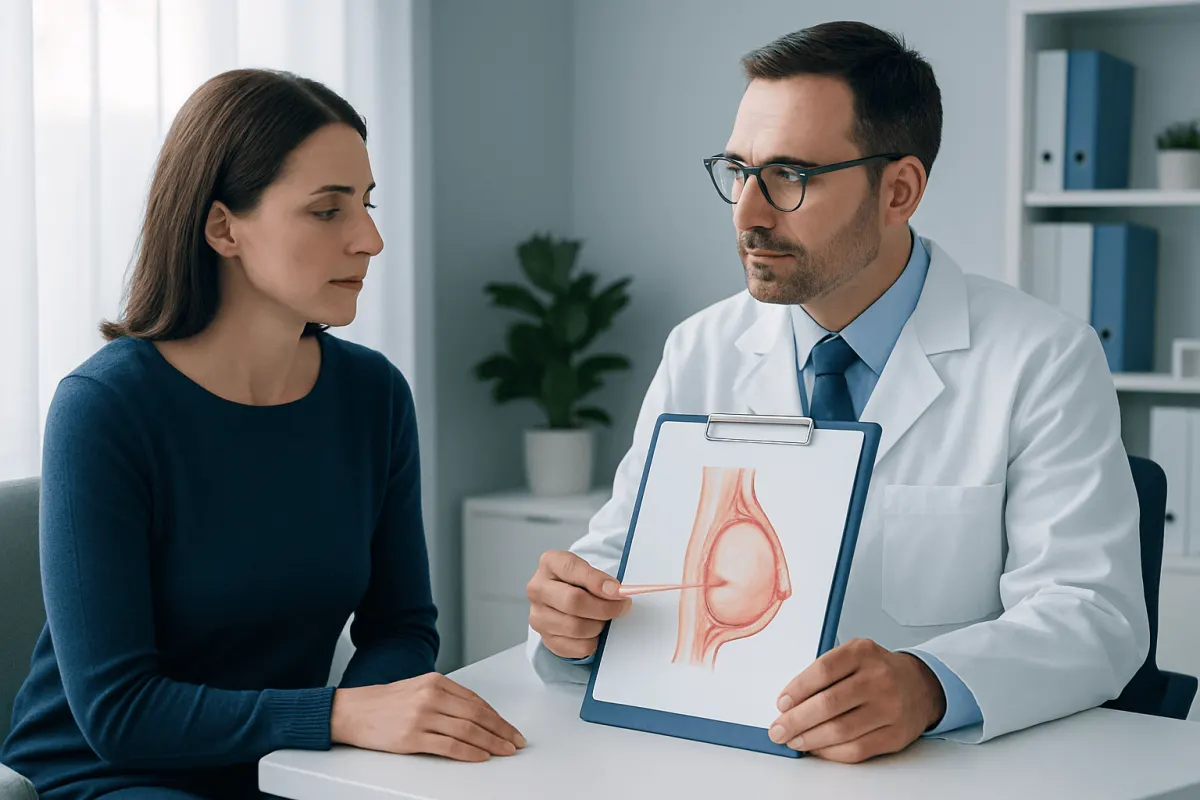
The exact cause of capsular contracture is not always clear, and it is usually considered multifactorial. In many cases, more than one factor may contribute to an exaggerated scar response around the implant. The capsule is part of normal healing, but inflammation, bleeding, contamination or tissue irritation can increase the chance that it becomes tight.
Potential contributing factors include low-grade bacterial contamination or biofilm on the implant surface, bleeding around the implant known as hematoma, fluid accumulation known as seroma, implant rupture, previous radiation therapy, and a history of breast surgery. Individual healing patterns also matter; some people naturally form thicker scar tissue than others.
Risk may also be influenced by surgical and implant-related factors, such as implant placement, incision choice, implant surface, implant age and postoperative complications. Smoking, poorly controlled diabetes and conditions that impair wound healing may also affect recovery after surgery. However, many patients who develop capsular contracture have no obvious risk factor.
Because causes are complex, prevention is not always possible. Still, careful planning, sterile surgical technique, appropriate implant selection and attentive follow-up can help reduce avoidable risks and support early recognition if changes develop.
Diagnosis
Diagnosis usually begins with a detailed medical history and physical examination by a plastic surgeon or breast specialist. The doctor will ask when the implant surgery was performed, whether symptoms developed gradually or suddenly, and whether there is pain, swelling, fever, redness, trauma or changes in the breast skin. The examination checks breast softness, symmetry, implant position and areas of tenderness or thickening.
Imaging may be recommended when the diagnosis is uncertain or when another implant-related issue needs to be ruled out. Ultrasound can help evaluate fluid collections, masses and some implant changes. MRI is often used when a silicone implant rupture is suspected or when a more detailed view of the implant and surrounding tissues is needed. Mammography may still be part of routine breast screening depending on age and risk factors, but special implant views are usually required.
A doctor may also consider other conditions that can mimic capsular contracture. These include normal postoperative swelling, implant malposition, animation deformity, infection, seroma, fat necrosis, breast cysts or tumors, and implant rupture. In patients with late-onset swelling around an implant, fluid testing may be needed to evaluate for rare conditions such as breast implant-associated anaplastic large cell lymphoma.
Accurate diagnosis is important because treatment differs depending on the cause of the symptoms. For example, a mild stable contracture may only need monitoring, while pain with fluid collection or suspected rupture may require further tests and a different treatment plan.
Treatment Options
Capsular contracture treatment depends on the severity of symptoms, the appearance of the breast, implant type, implant age, and the patient’s preferences. Mild cases that are not painful and do not cause visible deformity may be observed with regular follow-up. The doctor may recommend supportive bras, comfort measures and monitoring for changes rather than immediate surgery.
Non-surgical options are limited and should be discussed carefully with a specialist. Some medications, such as leukotriene inhibitors, have been studied, but their use for capsular contracture is off-label in many settings and evidence is not definitive. External massage or compression techniques may be recommended by some surgeons in selected situations, especially during early recovery, but they are not appropriate for every implant type or every patient.
When contracture is painful, progressive or cosmetically significant, surgery is often the most effective option. Procedures may include capsulotomy, which releases the capsule; partial or total capsulectomy, which removes some or all of the capsule; implant exchange; change of implant pocket position; or removal of implants without replacement. In selected revision cases, surgeons may use supportive materials such as acellular dermal matrix to help reinforce tissues and reduce recurrence risk.
The term en bloc capsulectomy is sometimes used online, but it has a specific surgical meaning and is not necessary or advisable for every patient. It may be considered in particular medical situations, such as suspected malignancy, but routine complete capsule removal must be balanced against risks such as bleeding, chest wall injury and longer recovery. A personalized surgical plan is the safest approach.
Recovery and Aftercare
Recovery after capsular contracture treatment varies depending on the procedure performed. Minor revision surgery may involve a shorter recovery, while implant exchange with capsulectomy or pocket change can require more time for swelling and tissue healing. Patients are typically advised to follow activity restrictions, wear recommended support garments and attend scheduled follow-up visits.
After surgery, temporary swelling, bruising, tightness and changes in sensation may occur. These usually improve gradually, but the timeline differs from person to person. Patients should avoid starting massage, exercise, scar treatments or supplements unless the surgeon has approved them, because aftercare instructions depend on the surgical technique and implant position.
Good aftercare supports healing and helps identify early concerns. Patients should keep incisions clean as instructed, avoid smoking, maintain stable nutrition and contact their surgical team if they notice increasing pain, redness, fever, drainage, sudden swelling or a major change in breast shape. Clear communication with the care team is especially important for international patients who may need coordinated follow-up after returning home.
Prevention and Self-Care
Capsular contracture cannot be completely prevented, but certain measures may reduce risk. Prevention begins with choosing a qualified plastic surgeon, discussing medical history honestly and understanding the benefits and limitations of different implant options. Surgical planning may include implant placement, incision location and techniques designed to minimize contamination and bleeding.
Patients can support recovery by following postoperative instructions closely. This includes taking prescribed medicines as directed, avoiding strenuous activity until cleared, attending follow-up visits and reporting unusual symptoms early. Smoking cessation before and after surgery is important because nicotine can reduce blood flow and impair wound healing.
Long-term self-care includes becoming familiar with the normal look and feel of the breasts after healing. Routine breast screening should continue according to age, personal risk and national guidance. Patients with silicone implants may also be advised to have periodic imaging to check implant integrity, depending on local recommendations and the implant manufacturer’s information.
Breast implants are not lifetime devices, and revision may be needed for reasons other than capsular contracture, such as implant rupture, size preference, aging tissues or changes after pregnancy and weight fluctuation. Regular medical follow-up helps patients make informed decisions before problems become more complex.
When to See a Doctor
A patient with breast implants should seek medical evaluation if one breast becomes progressively firmer, painful, distorted or higher than before. It is also important to see a doctor for sudden swelling, redness, fever, nipple discharge, a new lump, skin dimpling, or any major change in breast size or shape. These symptoms do not always mean a serious problem, but they deserve timely assessment.
Patients should not try to diagnose capsular contracture based only on appearance or online images. A specialist examination can identify whether the issue is contracture, implant displacement, fluid collection, rupture, infection or another breast condition. Early assessment often allows more options and a clearer treatment plan.
For patients seeking care abroad, Acıbadem Health Point provides evaluation and treatment for breast implant complications through multidisciplinary specialists in JCI-accredited hospitals. Care planning may include plastic surgery consultation, breast imaging and coordinated follow-up recommendations for international patients.
Frequently asked questions
01Is capsular contracture the same as normal scar tissue after breast implants?
No. A thin capsule of scar tissue around a breast implant is a normal part of healing. Capsular contracture occurs when that capsule becomes unusually tight, thick or firm and begins to affect comfort, shape or implant position.
02Can capsular contracture happen years after breast implant surgery?
Yes. It can develop within months, but it may also appear many years after augmentation or reconstruction. Any new firmness, distortion, pain or swelling around an implant should be assessed by a qualified doctor.
03Does capsular contracture always need surgery?
Not always. Mild cases that are stable and not painful may be monitored, especially if the breast appearance is acceptable to the patient. Surgery is more often considered when contracture causes pain, progressive tightness, significant asymmetry or visible deformity.
04Can capsular contracture come back after treatment?
Yes, recurrence is possible even after revision surgery. The risk depends on factors such as tissue quality, prior complications, implant characteristics, surgical technique and individual healing response. A surgeon can discuss strategies to reduce risk, but no method can guarantee prevention.
05How is capsular contracture different from implant rupture?
Capsular contracture is tightening of the scar capsule around the implant, while implant rupture means the implant shell has failed. The two can sometimes occur together, and symptoms may overlap. Imaging such as ultrasound or MRI may be used when rupture is suspected.
06Is breast pain after implants always a sign of capsular contracture?
No. Breast pain can come from normal healing, muscle strain, nerve sensitivity, infection, fluid collection, implant position changes or unrelated breast conditions. Persistent, worsening or one-sided pain should be evaluated rather than assumed to be capsular contracture.
This article is for general information only and is not a substitute for professional medical advice. Please consult a qualified doctor about your individual situation.
Persistent digestive symptoms? Get evaluated in Turkey
JCI-accredited · board-certified surgeons · reply within 24h
Add us as a Preferred Source to see more of our trusted health content across Google Search, AI Overviews and Discover.