Caps vs Veneers: Key Differences Explained

Key Takeaways
- Caps (crowns) cover the whole tooth and are usually chosen for strength and protection.
- Veneers cover the front of the tooth and are mainly used for cosmetic improvement.
- The best option depends on tooth damage, bite forces, enamel condition, and smile goals.
- Both treatments can be durable, but they require good oral hygiene and regular dental follow-up.
- A dentist should examine the tooth before deciding, because not every tooth is suitable for veneers.
Caps and veneers are both used to improve a tooth’s look and function, but they serve different purposes. A cap, or crown, covers the entire tooth, while a veneer covers only the front surface, so the right choice depends on how much support and reshaping the tooth needs.
Overview
When people compare caps vs veneers, they are usually trying to decide between two common ways of restoring or improving a tooth. A cap, more commonly called a dental crown, covers the entire visible part of the tooth. A veneer is a thin layer placed on the front surface only, mainly to improve appearance.
The simplest way to think about it is this: a crown is often chosen when a tooth needs more protection or rebuilding, while a veneer is usually chosen when the tooth is healthy enough to keep most of its structure and the main goal is cosmetic refinement. Both can look natural, but they do not solve the same problems.
For international patients planning dental treatment, this distinction matters early. It affects how much tooth preparation is needed, how many visits may be required, and what kind of follow-up care will be necessary after returning home. A dentist’s exam, imaging, and bite assessment usually determine which option is appropriate.
What Are Caps and Veneers?

A dental cap, or crown, is a custom-made restoration that fits over a tooth like a protective shell. Dentists may recommend it after a large filling, root canal treatment, fracture, severe wear, or when a tooth needs extra support to function properly. Crowns can be made from ceramic, porcelain-fused-to-metal, metal alloys, or other materials, depending on the clinical situation.
A veneer is a thin cover, usually made of porcelain or composite resin, bonded to the front of the tooth. It is designed to change the visible shape, color, size, or minor alignment of teeth in the smile zone. Because veneers rely on the remaining enamel for strong bonding, they are best suited to teeth that are otherwise stable and healthy.
Both treatments are customized. The dentist considers tooth position, bite, gum health, existing restorations, and the patient’s expectations. In some cases, a tooth that appears to need a “cosmetic” solution actually needs a crown for structural reasons. In other cases, a veneer may achieve the desired result with less tooth reduction.
Key Differences: Strength, Coverage, and Purpose
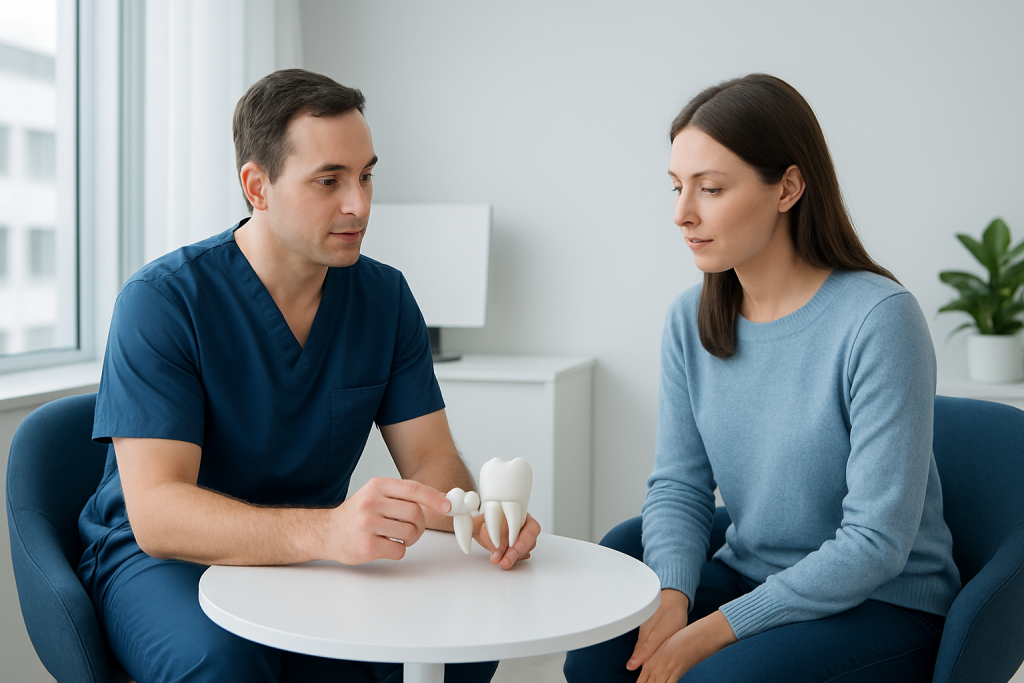
The biggest difference between caps and veneers is coverage. A crown wraps around the entire tooth, which makes it more suitable for teeth that are weakened, cracked, heavily restored, or at risk of breaking. A veneer covers only the front and is therefore less invasive, but it does not provide the same level of reinforcement.
Purpose is another major distinction. Crowns are often both functional and aesthetic, restoring chewing ability while improving appearance. Veneers are primarily cosmetic, although they can also protect the front surface of a tooth in some situations. If a tooth has significant damage or decay, a veneer alone usually is not enough.
Tooth preparation also differs. Veneers typically require removal of a smaller amount of enamel, while crowns usually need more reshaping because the entire tooth must be covered. This does not automatically make one better than the other; it simply reflects the different jobs they are designed to do.
- Coverage: Crown = entire tooth; veneer = front surface only.
- Main goal: Crown = protection and restoration; veneer = cosmetic enhancement.
- Tooth reduction: Veneers usually require less; crowns usually require more.
- Strength: Crowns generally provide more structural support.
When a Crown Is Usually the Better Choice
A crown is often recommended when a tooth has lost too much natural structure to function safely on its own. This may happen after extensive decay, a large filling, a root canal procedure, a fracture, or significant wear from grinding. In these situations, the goal is not only to improve appearance, but also to protect the tooth from further damage.
Teeth that sit under strong chewing pressure, such as molars, often benefit from crowns when they are compromised. A crown can distribute force more evenly and reduce the chance of the tooth splitting. It may also be chosen for a tooth that needs to anchor a dental bridge or support a restoration with specific strength requirements.
Patients sometimes ask whether a crown will still look natural. Modern ceramics can be very aesthetic, and many crowns blend well with surrounding teeth. The final result depends on tooth color, gum contour, bite position, and the skill of the dental laboratory and clinician working together.
When Veneers Make More Sense
Veneers are often chosen for teeth that are structurally sound but need a more polished appearance. They can help with discoloration that does not respond well to whitening, slight chips, small gaps, uneven edges, or minor shape irregularities. For many patients, the appeal of veneers is that they can create a noticeable cosmetic change while preserving more of the original tooth.
Because veneers are bonded to enamel, they tend to work best when there is enough healthy enamel remaining. Dentists are often careful about recommending them for teeth with large fillings, cracks, heavy grinding, or weak enamel, since those factors can reduce the predictability of bonding and longevity. In such cases, a crown may be safer.
Veneers can be a thoughtful option for patients who want to refine a smile without making every tooth look identical. A careful dentist will aim for natural proportions, translucency, and color harmony rather than an overly uniform result. That is especially important when treatment is planned from another country, because the patient may need a design that remains comfortable and easy to maintain after travel.
How Dentists Decide Between Them
Choosing between caps and veneers is not simply a cosmetic decision. Dentists usually start by examining the tooth structure, gum health, alignment, bite forces, and the amount of enamel available for bonding. X-rays or other diagnostic images may be needed to check for decay, infection, or hidden cracks.
The patient’s habits also matter. Tooth grinding, nail biting, ice chewing, or clenching during sleep can influence which restoration will last better. A crown may be preferred when the tooth needs full coverage and strength, while a veneer may be suitable when the tooth is stable and the objective is mainly aesthetic.
For international patients, timing and follow-up are part of the decision. Some treatments can be completed over one short trip, while others require multiple visits or a longer stay. A dentist should explain not only what will look best today, but also what will be realistic to monitor and maintain once the patient is back home.
Treatment Process, Recovery, and Maintenance
Although the exact process varies, crowns and veneers usually begin with consultation, examination, and planning. The tooth is prepared, impressions or digital scans are taken, and a custom restoration is made. A temporary restoration may be placed while the final one is fabricated. At the fitting appointment, the dentist checks the shape, shade, and bite before bonding or cementing the restoration in place.
Recovery is usually straightforward. Some sensitivity after preparation is common, especially with temperature changes, but it often settles as the tooth adjusts. Patients should avoid very hard or sticky foods until the dentist confirms that the restoration is stable. Good brushing, flossing, and routine dental visits remain essential, because the restored tooth still depends on healthy gums and surrounding teeth.
To help restorations last, dentists often advise patients to use a non-abrasive toothpaste, maintain regular cleanings, and address grinding if it is present. A night guard may be recommended for some patients. For those traveling internationally, it is wise to leave the clinic with written aftercare instructions and a clear plan for follow-up in case adjustments are needed later.
When to See a Dentist
A dental evaluation is important if a tooth is cracked, painful, heavily worn, discolored, or affected by a large filling that keeps breaking down. It is also a good idea to seek an assessment if a person is considering changing their smile and wants to know whether veneers are appropriate or whether a crown would be safer.
Professional input is especially valuable when a patient has biting problems, tooth grinding, gum recession, or previous dental work that may limit treatment choices. These factors can change the long-term success of a restoration, even if the tooth looks simple from the outside.
Acibadem Health Point’s multidisciplinary specialists and JCI-accredited hospitals diagnose and treat dental conditions for international patients, with planning that can support both treatment and follow-up needs. If a tooth is causing discomfort, if a restoration is failing, or if the best cosmetic option is unclear, a qualified dentist should assess the situation before any decision is made.
Prevention & Self-care
Good daily oral care can reduce the chance that a tooth will need major restoration in the first place. Brushing twice a day, cleaning between teeth, and attending regular dental checkups help detect problems early, when less extensive treatment may still be possible.
If a patient already has a crown or veneer, the surrounding teeth and gums deserve the same attention as the restored tooth. Gum inflammation, untreated decay, and repeated grinding can shorten the life of a restoration. Patients should also avoid using teeth as tools and should be cautious with very hard foods, especially if a dentist has advised protection.
For people considering treatment abroad, it helps to ask in advance how the restoration will be maintained over time. A good plan includes local follow-up, a record of the materials used, and an understanding of what symptoms would merit a return visit or reassessment.
Frequently asked questions
01Are caps and veneers the same thing?
No. A cap, or crown, covers the entire tooth, while a veneer covers only the front surface. They can both improve appearance, but they are used for different dental needs.
02Which lasts longer: a crown or a veneer?
Durability depends on material, tooth location, bite forces, and home care. Crowns often last longer on damaged or heavily used teeth because they provide more coverage and support, but both restorations can be long-lasting with good maintenance.
03Do veneers damage teeth more than crowns?
Veneers usually require less tooth reduction than crowns, but they are only suitable when the tooth is already healthy enough to support them. A crown may remove more tooth structure, yet it may be the safer option when a tooth is weakened.
04Can every tooth get a veneer?
No. Teeth with large fillings, cracks, severe wear, or weak enamel may not be good candidates. A dentist has to examine the tooth and bite before recommending a veneer.
05Is a crown always better for back teeth?
Not always, but back teeth often face stronger chewing forces, so crowns are commonly chosen when those teeth need protection or rebuilding. The right choice still depends on the individual tooth and the treatment goal.
06What should a patient ask before traveling for treatment?
It helps to ask how many visits are needed, whether a crown or veneer is more suitable, what aftercare will be required, and how follow-up will be handled after returning home. Clear planning is especially important for international patients.
This article is for general information only and is not a substitute for professional medical advice. Please consult a qualified doctor about your individual situation.
Joint and spine care in Turkey — expert assessment & treatment
JCI-accredited · board-certified surgeons · reply within 24h
Add us as a Preferred Source to see more of our trusted health content across Google Search, AI Overviews and Discover.