Can a Sperm Count Test at Home Be Accurate?
A sperm count test at home is a convenient screening tool that may estimate sperm concentration or detect whether it is above or below a set threshold. It cannot fully assess male fertility, so concerning, repeated, or unexpected results should be discussed with a qualified clinician and confirmed by laboratory semen analysis.
Overview: What a Home Sperm Count Test Can Tell You
A sperm count test at home is a self-testing kit designed to give an initial indication of sperm concentration in semen. Depending on the product, the result may be reported as a numerical estimate, a range, or a result above or below a threshold. It can be a private and convenient way to begin exploring male fertility, particularly for people planning a pregnancy.
However, sperm concentration is only one part of reproductive health. Fertility also depends on sperm movement (motility), shape (morphology), semen volume, the health of the reproductive tract, timing of intercourse, and factors affecting a partner’s fertility. For this reason, an at-home result should be viewed as screening information rather than a diagnosis.
Sperm production and semen quality naturally vary over time. Fever, recent illness, stress, changes in medication, alcohol use, heat exposure, and the interval since the last ejaculation can all influence a result. A clinician may recommend repeat testing or a formal laboratory semen analysis if a home test is low, unclear, or inconsistent with a couple’s pregnancy experience.
How Home Sperm Tests Work
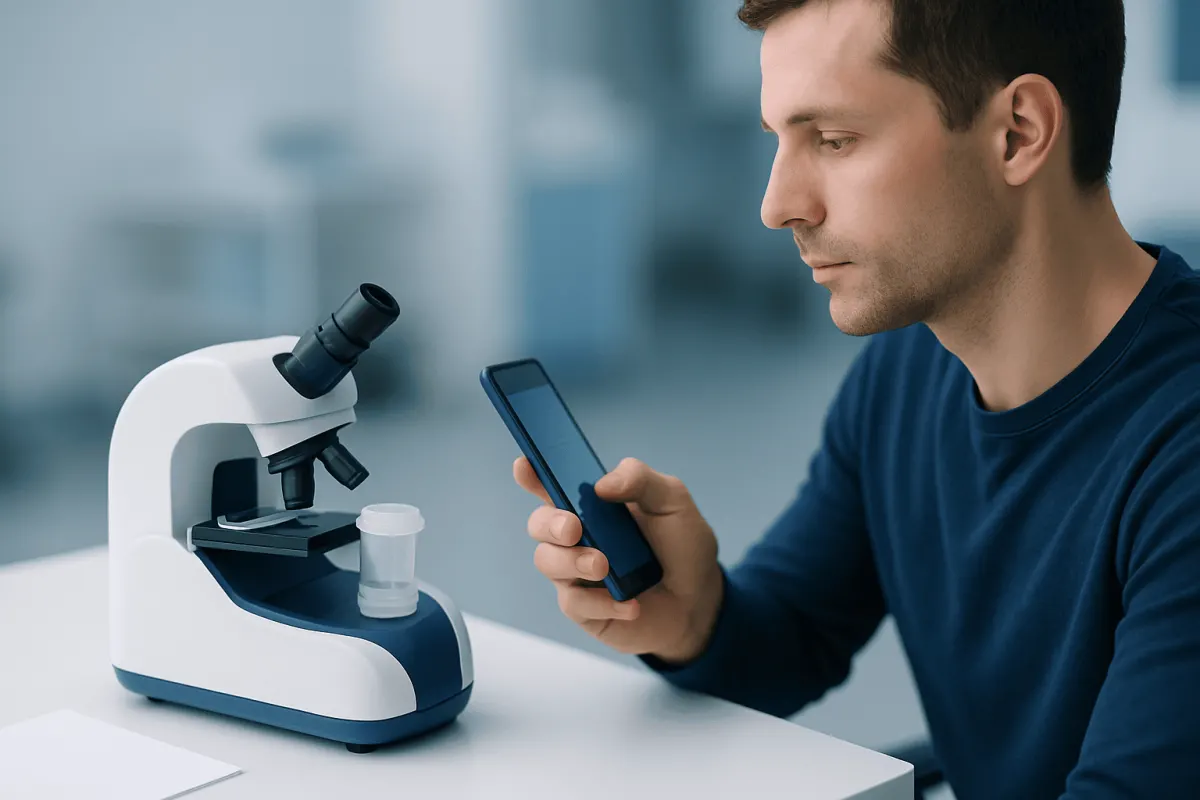
Home sperm tests generally use a semen sample collected into a clean, dry container. The sample is mixed with a supplied solution or placed into a testing device. Chemical reactions, color changes, or smartphone-based image analysis are then used to estimate sperm concentration. Some products also provide a limited assessment of sperm motility.
Each kit has its own instructions, including how long to wait before reading the result. Following these instructions closely matters because collection errors, incorrect timing, or using an unsuitable container can affect accuracy. A test should not be interpreted beyond the manufacturer’s stated purpose; for example, a kit that checks concentration cannot determine sperm shape or identify a specific medical cause of low counts.
Some tests are performed entirely at home, while others involve collecting a sample at home and mailing it to a laboratory. Mail-in options may provide more detailed measurements, but their quality still depends on proper collection, packaging, and transport. A clinical laboratory semen analysis remains the standard assessment when infertility is being investigated.
Preparing for a Sperm Count Test at Home

Preparation helps make a result more representative. Most test instructions advise avoiding ejaculation for a short period before collection, often two to seven days. Abstaining for too little or too long can change semen characteristics, so the interval recommended by the specific kit should be followed.
Before testing, it is helpful to check the kit’s expiry date and read all instructions before collecting the sample. Hands should be washed and dried, and the sample should be collected by masturbation directly into the provided or recommended sterile container. Lubricants, condoms, saliva, and ordinary household containers may interfere with testing or contaminate the sample unless the kit specifically permits their use.
It may be sensible to postpone testing after a high fever, significant illness, or a recent injury affecting the genital area, as these can temporarily affect sperm production. People taking prescription medicines, testosterone, anabolic steroids, or fertility-related supplements should not stop treatment on their own, but should mention these to a clinician if they seek further assessment.
- Choose a private time when the sample can be tested promptly.
- Collect the entire ejaculate whenever possible, as the first portion often contains a higher concentration of sperm.
- Keep the sample at the temperature and for the time specified by the kit.
- Record relevant factors, such as recent illness or the abstinence interval, for future medical discussion.
Procedure and What Recovery Involves
The procedure is non-invasive and usually takes place in private at home. After collection, semen is commonly left to liquefy for the period stated in the instructions, then a measured amount is placed into the test device or combined with the supplied reagent. Results may be available within minutes, while mail-in tests take longer because of laboratory processing.
There is no physical recovery period after a home sperm test. Most people can return to normal activities immediately. Emotional responses can be important, however: fertility testing may bring uncertainty, disappointment, or anxiety. It can help to remember that one result is not a final answer and that many factors affecting fertility can be assessed and managed with professional care.
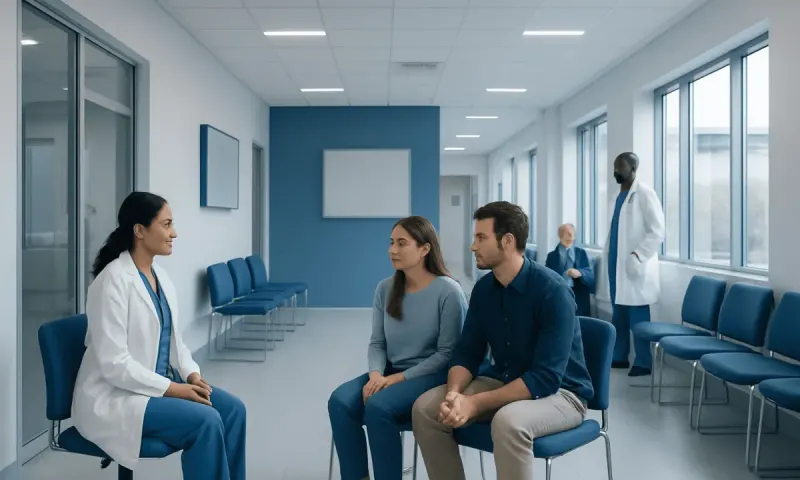
If collecting a sample is difficult because of pain, erectile difficulties, inability to ejaculate, anxiety, or religious or personal concerns, a doctor or fertility clinic can discuss alternatives and supportive options. The testing process should not be painful; pelvic, testicular, or ejaculation-related pain warrants medical advice rather than repeated home testing.
Understanding Home Test Results
A result described as low, below threshold, or below the kit’s reference range means that the test detected sperm concentration below its stated cutoff. This may be temporary or persistent, and it does not by itself establish infertility. Pregnancy may still be possible, especially because concentration is only one element of semen quality.
A normal, high, or above-threshold result is also not a guarantee of fertility. It may not evaluate sperm motility, morphology, semen volume, DNA integrity, hormone-related causes, or conditions affecting sperm delivery. If pregnancy is not happening despite regular unprotected intercourse, a normal home test should not delay a medical fertility evaluation for both partners.
Results that are invalid or hard to read can occur when there is too little sample, a test is read at the wrong time, or the device has not been stored correctly. In that situation, repeating the test according to the instructions may be reasonable. Persistently low or unclear results are best followed by a laboratory semen analysis, which examines multiple parameters under standardized conditions.
Low sperm concentration is sometimes called oligozoospermia. It can occur for many reasons, including temporary lifestyle or illness-related factors, hormonal changes, infection, obstruction, genetic factors, or enlarged scrotal veins known as varicocele. A clinical evaluation can help identify whether there is an underlying, treatable cause.
What Happens After an Abnormal Result
After a low home-test result, a clinician may recommend repeating a formal semen analysis because semen values can vary from sample to sample. The assessment is usually performed after an appropriate abstinence interval and may be repeated on a separate occasion. This helps distinguish a temporary fluctuation from an ongoing pattern.
Depending on the findings and medical history, further evaluation may include a physical examination, review of medicines and lifestyle factors, hormone blood tests, infection testing, genetic testing, or imaging of the scrotum. A doctor may also ask about prior surgery, undescended testes, mumps after puberty, injury, chemotherapy, radiation exposure, or testosterone and anabolic steroid use.
Treatment is based on the cause and the couple’s goals. It may involve addressing a varicocele, treating an infection when appropriate, adjusting medicines under medical supervision, improving general health, or considering fertility treatment. For people who need specialist assessment, in vitro fertilization (IVF) treatment and related assisted reproductive approaches may be discussed when clinically appropriate.
Male fertility concerns should be assessed as a shared issue when a couple is trying to conceive. Evaluation of both partners can avoid unnecessary delays and provide a clearer understanding of the available options.
Supporting Reproductive Health
Healthy habits support overall wellbeing and may also support reproductive health. Maintaining a weight that is appropriate for the individual, eating a balanced diet, being physically active, sleeping adequately, and managing long-term conditions such as diabetes can all be helpful. These changes may take time to influence sperm because sperm development occurs over several weeks.
Avoiding tobacco, recreational drugs, anabolic steroids, and excessive alcohol is advisable. Testosterone therapy can suppress sperm production, so people who want future fertility should discuss alternatives with the prescribing clinician before starting or continuing it. It is not safe to discontinue prescribed hormones or other medicines without medical advice.
Frequent high heat exposure to the testes, such as repeated hot tubs or saunas, may temporarily affect semen parameters in some people. Reducing avoidable heat exposure may be sensible when trying to conceive. Commercial supplements are widely promoted, but evidence and product quality vary; a doctor can advise whether any supplement is appropriate for an individual situation.
For people who have been trying to conceive, intercourse every two to three days throughout the cycle can help provide regular exposure to sperm without relying solely on prediction methods. Tracking ovulation may also be useful for some couples, although it should not become a source of pressure or blame.
When to Seek Medical Care
Medical advice is recommended if a home sperm test is repeatedly low, the result is invalid more than once, or there are concerns about fertility. Couples are commonly advised to seek assessment after 12 months of regular unprotected intercourse without pregnancy, or after 6 months when the partner who will carry the pregnancy is age 35 or older. Earlier evaluation may be appropriate when there are known fertility risks.
A person should also seek care sooner for testicular pain or swelling, a lump, blood in semen, changes in testicle size, a history of undescended testes, prior testicular surgery, chemotherapy, pelvic radiation, or problems with erections or ejaculation. Sudden severe testicular pain requires urgent medical assessment.
A urologist, andrologist, reproductive endocrinologist, or fertility specialist can interpret semen testing in the context of the person’s health and reproductive plans. Acıbadem Health Point’s multidisciplinary specialists and JCI-accredited hospitals can assess and treat fertility concerns for international patients, with care tailored to clinical findings.
Frequently asked questions
01Are sperm count tests at home accurate?
Home tests may provide a useful estimate of sperm concentration when instructions are followed carefully. Their accuracy and the measurements they provide vary by product, and they do not replace a laboratory semen analysis. A low, invalid, or unexpected result should be confirmed with a clinician.
02Can a normal home sperm test mean a person is fertile?
No. A normal result generally means the tested parameter was within the kit’s stated range, not that fertility is guaranteed. Sperm movement, shape, semen volume, reproductive anatomy, timing, and a partner’s fertility can all affect the chance of pregnancy.
03How long should someone abstain before a home sperm count test?
The correct abstinence period depends on the kit, but many instructions recommend a few days without ejaculation before collection. It is important to follow the product directions exactly. For laboratory testing, clinicians commonly use a defined abstinence interval to make results easier to interpret.
04What can cause a low sperm count on a home test?
A low result can be linked to temporary factors such as recent fever, illness, heat exposure, stress, or differences in the abstinence period. It may also reflect medical causes involving hormones, varicocele, infection, genetic factors, obstruction, medicines, or use of testosterone or anabolic steroids. Further assessment is needed to identify the cause.
05Should a home sperm test be repeated?
Repeating a test may be helpful if the result was invalid, if collection instructions were not followed, or if there was a temporary factor such as recent illness. Semen quality varies naturally, so clinicians often use more than one sample when assessing fertility. A formal semen analysis is more informative than repeated home testing when concerns continue.
06Does a home sperm test check sperm motility?
Some products provide a limited assessment of motility, while many only assess sperm concentration or a concentration threshold. The packaging and instructions should state exactly what the test measures. A laboratory semen analysis is needed for a more complete assessment of motility and other semen characteristics.
This article is for general information only and is not a substitute for professional medical advice. Please consult a qualified doctor about your individual situation.
IVF & fertility treatment in Turkey — success rates and costs
JCI-accredited · board-certified surgeons · reply within 24h
Add us as a Preferred Source to see more of our trusted health content across Google Search, AI Overviews and Discover.