Can a Home Test Detect Prostate Cancer?
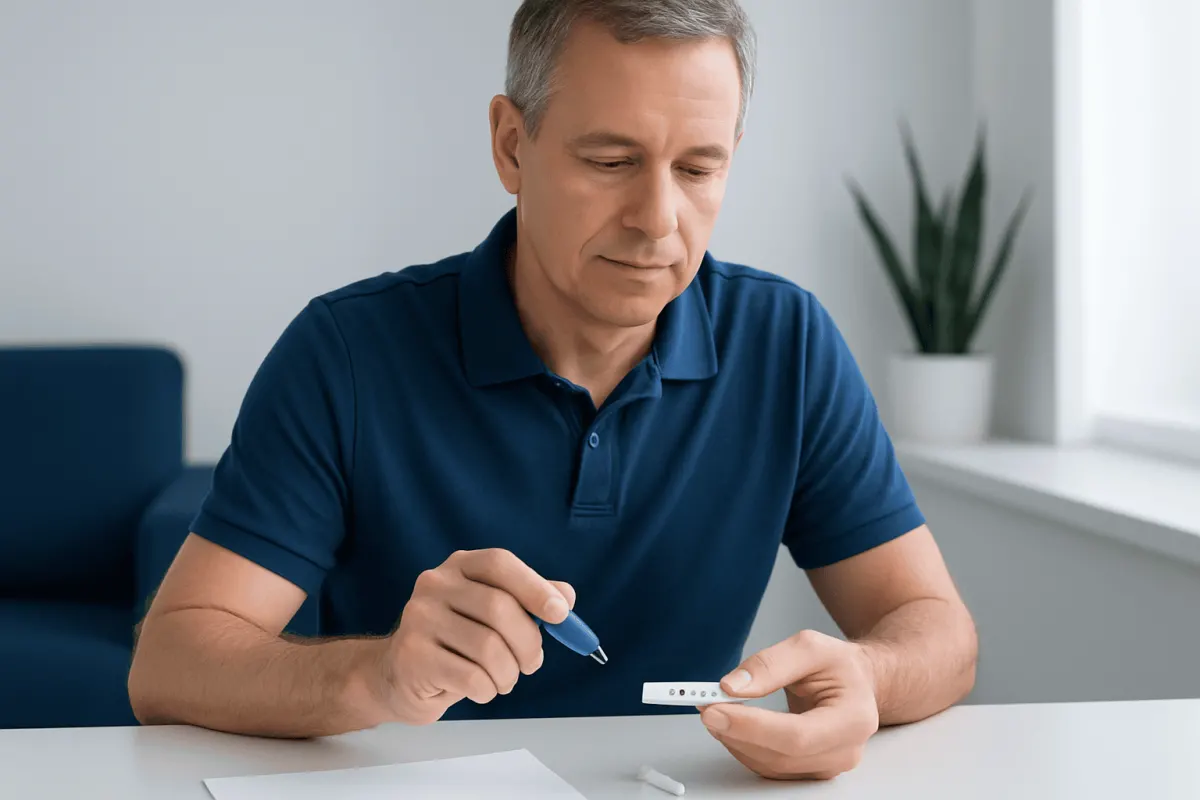
A home test for prostate cancer generally checks prostate-specific antigen (PSA) using a finger-prick blood sample mailed to a laboratory. It may support screening discussions, but it cannot confirm or rule out prostate cancer; results should be interpreted by a qualified clinician alongside personal risk factors and, if needed, further testing.
What Is a Home Test for Prostate Cancer?
A home test for prostate cancer is usually an at-home PSA test. PSA, or prostate-specific antigen, is a protein produced by the prostate gland. The person collects a small finger-prick blood sample according to the kit instructions and sends it to a laboratory, where the PSA level is measured.
These tests are designed to provide information that may help start a conversation about prostate health. They do not diagnose prostate cancer. PSA can rise for many reasons, including benign prostate enlargement, inflammation, urinary infection, recent ejaculation, cycling, some procedures and cancer. Conversely, some people with prostate cancer have PSA levels that are not clearly raised.
A laboratory-tested home kit may be more informative than an unvalidated consumer device, but it still has limitations. It is important to check whether the test is processed by an appropriately accredited laboratory, whether professional result interpretation is included, and how abnormal or unclear results will be followed up. A clinician can place a PSA result in the context of age, family history, symptoms, medicines and previous PSA values.
How to Use an At-Home PSA Test and Understand Results
Instructions vary between kits, so the collection guide supplied with the specific test should be followed carefully. Many kits use a lancet to obtain drops of blood from a clean fingertip. The sample may be placed in a collection tube or on a card, labeled, packaged and returned promptly to the designated laboratory.
Before testing, it is sensible to ask a clinician whether PSA testing is appropriate and whether any temporary factors could affect the result. For example, urinary infections or inflammation may raise PSA. The clinical team may recommend delaying testing after certain activities or procedures, depending on the situation. A person should not stop prescribed medicines unless their doctor advises it.
PSA is not interpreted with one universal cut-off. Clinicians consider the absolute value, changes over time, prostate size, age and overall risk. An abnormal result may lead to repeating the test under standardized conditions, additional blood or urine tests, a digital rectal examination, or prostate magnetic resonance imaging (MRI). If concern remains, a prostate biopsy may be discussed to determine whether cancer is present.
- A result in the expected range does not guarantee that cancer is absent.
- A higher-than-expected result does not mean that cancer is definitely present.
- A result that is delayed, rejected or inconclusive should be repeated through an appropriate healthcare service.
Who May Benefit From Prostate Cancer Screening?

PSA screening is a personal decision best made after an informed discussion with a doctor. Potential benefits include finding some prostate cancers before symptoms develop. Potential downsides include false-positive findings, unnecessary worry, follow-up tests and detecting slow-growing cancers that may never cause harm but could lead to treatment decisions.
Age, family history and ancestry may influence the discussion. People with a father, brother or son diagnosed with prostate cancer, especially at a younger age, may have a higher risk. Some population groups also experience a higher burden of prostate cancer. A clinician can advise when screening discussions should begin based on individual circumstances.
Symptoms such as difficulty passing urine, a weaker stream, frequent urination or waking at night to urinate are common and are often caused by non-cancerous prostate conditions. However, they should be assessed rather than self-diagnosed. More information about the condition is available in prostate cancer information.
When to Seek Medical Care
Medical advice is recommended after an abnormal, borderline or unexpected home PSA result, even when there are no symptoms. The clinician may review the testing method, repeat the PSA through a clinical laboratory and decide whether further assessment is needed. A person should also seek advice if they have a strong family history of prostate cancer and are considering screening.
Prompt medical assessment is important for blood in the urine, inability to pass urine, fever or chills with urinary symptoms, new persistent bone pain, unexplained weight loss, or worsening urinary symptoms. These symptoms do not by themselves indicate prostate cancer, but they need timely evaluation to identify the cause and provide appropriate care.
Emergency care may be needed for sudden inability to urinate, severe pain, heavy bleeding in the urine, or fever with significant urinary discomfort. A home test should never delay urgent assessment for concerning symptoms.
How long does it take to recover at home after prostate surgery?
Recovery after prostate cancer surgery, commonly radical prostatectomy, differs between individuals and depends on the surgical approach, general health, complications and the type of work or activity a person plans to return to. Many people go home within a few days or sooner after minimally invasive surgery, but full recovery at home takes weeks rather than days.
A urinary catheter is often needed for a short period after surgery. The care team will explain how to manage the catheter, monitor urine drainage and arrange its removal. Gentle walking is usually encouraged early to support circulation and bowel function, while heavy lifting, strenuous exercise and driving are restricted until the surgeon confirms that these are safe.
Energy levels may improve gradually over several weeks. Urinary leakage is common after catheter removal and often improves over months, particularly with pelvic floor rehabilitation. Erectile function can take longer to recover and depends on preoperative function, age, nerve preservation and other health factors. Follow-up appointments and PSA monitoring remain an important part of recovery.
What to wear after prostate surgery?
Comfortable, loose-fitting clothing is usually most practical after prostate surgery. Soft-waisted trousers, loose underwear and easy-to-put-on tops can reduce pressure around abdominal incision sites and make dressing more manageable while mobility is limited. Clothing should not pull tightly across wounds or catheter tubing.
While a catheter is in place, trousers or shorts with a relaxed leg opening can make it easier to position the drainage bag discreetly and avoid kinking the tubing. Some people find that a leg-bag strap or purpose-designed catheter support is helpful, but the surgical team should advise on correct use. The drainage bag should remain below bladder level unless the care team provides different instructions.
After catheter removal, absorbent pads or protective underwear may be useful for temporary urinary leakage. Choosing breathable fabrics and changing pads regularly can help maintain comfort and protect skin. The care team should be contacted if there is increasing redness, drainage, swelling or pain around the incision sites.
What are some tips for recovery after prostate surgery?
Recovery plans should follow the surgeon’s specific instructions. In general, patients are encouraged to take short, frequent walks, rest when tired, drink fluids as advised and eat a balanced diet with enough fibre to reduce constipation. Straining during bowel movements can be uncomfortable after pelvic surgery, so the team may recommend practical bowel-care measures.
Pelvic floor muscle exercises can help improve bladder control after the catheter is removed. These exercises are most effective when taught correctly by a clinician or pelvic health physiotherapist. It is important not to start or intensify exercises without guidance if the surgical team has advised otherwise.
Incisions should be kept clean and monitored according to discharge instructions. Pain medicines should be taken only as directed, and prescribed blood-thinning injections, antibiotics or other medicines should not be changed without medical advice. Support from a partner, family member, nurse, physiotherapist or counselor can also be valuable during physical and emotional recovery.
For people exploring care options, Cancer Treatment: Options for Every Stage" class="ahp-ilk">prostate cancer treatment planning may include surgery, radiation therapy, active surveillance or systemic treatments depending on the cancer’s features and the person’s preferences.
What is life like after prostate cancer surgery?
Life after prostate cancer surgery can involve an adjustment period, but many people return to everyday activities, work, exercise and relationships. Follow-up care usually includes PSA blood tests, because PSA should become very low after the prostate has been removed. The schedule and meaning of results should be discussed with the treating urologist or oncology team.
Urinary control may improve steadily, although the pace varies. Pelvic floor therapy, continence products and individualized clinical support can help during recovery. Sexual changes, including difficulty obtaining or maintaining erections, are also common after radical prostatectomy. Treatments such as rehabilitation strategies, oral medicines, devices or injections may be considered by an experienced clinician when appropriate.
Emotional wellbeing matters as much as physical healing. It is common to feel uncertainty about follow-up results, body changes, intimacy or the future. Speaking openly with the healthcare team and trusted supporters can help. Acıbadem Health Point’s multidisciplinary specialists and JCI-accredited hospitals diagnose and treat prostate conditions for international patients, with care plans tailored to clinical needs.
Frequently asked questions
01Can a home test diagnose prostate cancer?
No. Most home tests measure PSA, which can be affected by several non-cancerous conditions as well as prostate cancer. A diagnosis requires clinical assessment and may involve repeat testing, imaging and sometimes biopsy.
02Is a high PSA result always prostate cancer?
No. Benign prostate enlargement, prostate inflammation, urinary infection and recent prostate stimulation can raise PSA. A doctor may repeat the test or arrange further evaluation before drawing conclusions.
03Can a normal home PSA test rule out prostate cancer?
No. PSA testing can miss some prostate cancers, particularly when interpreted without other clinical information. Persistent symptoms, strong family history or other concerns should still be discussed with a clinician.
04When can someone return to work after prostate surgery?
The timing depends on the operation, recovery progress and job demands. Desk-based work may be possible sooner than physically demanding work, but the surgeon should provide individualized advice about work, driving and lifting.
05How long does urinary leakage last after prostate surgery?
Leakage is common after catheter removal and often improves over the following months. Recovery varies, and pelvic floor physiotherapy may help. Ongoing or troublesome leakage should be reviewed by the surgical team.
06Will erectile function return after prostate cancer surgery?
Erectile function may recover gradually, but the outcome varies widely. It is influenced by age, erectile function before surgery, other health conditions and whether nerve-sparing surgery was possible. A urologist can discuss rehabilitation and treatment options.
This article is for general information only and is not a substitute for professional medical advice. Please consult a qualified doctor about your individual situation.
Oncology care in Turkey — second opinion and treatment plan
JCI-accredited · board-certified surgeons · reply within 24h
Add us as a Preferred Source to see more of our trusted health content across Google Search, AI Overviews and Discover.