Can a Back Brace Improve Your Posture?
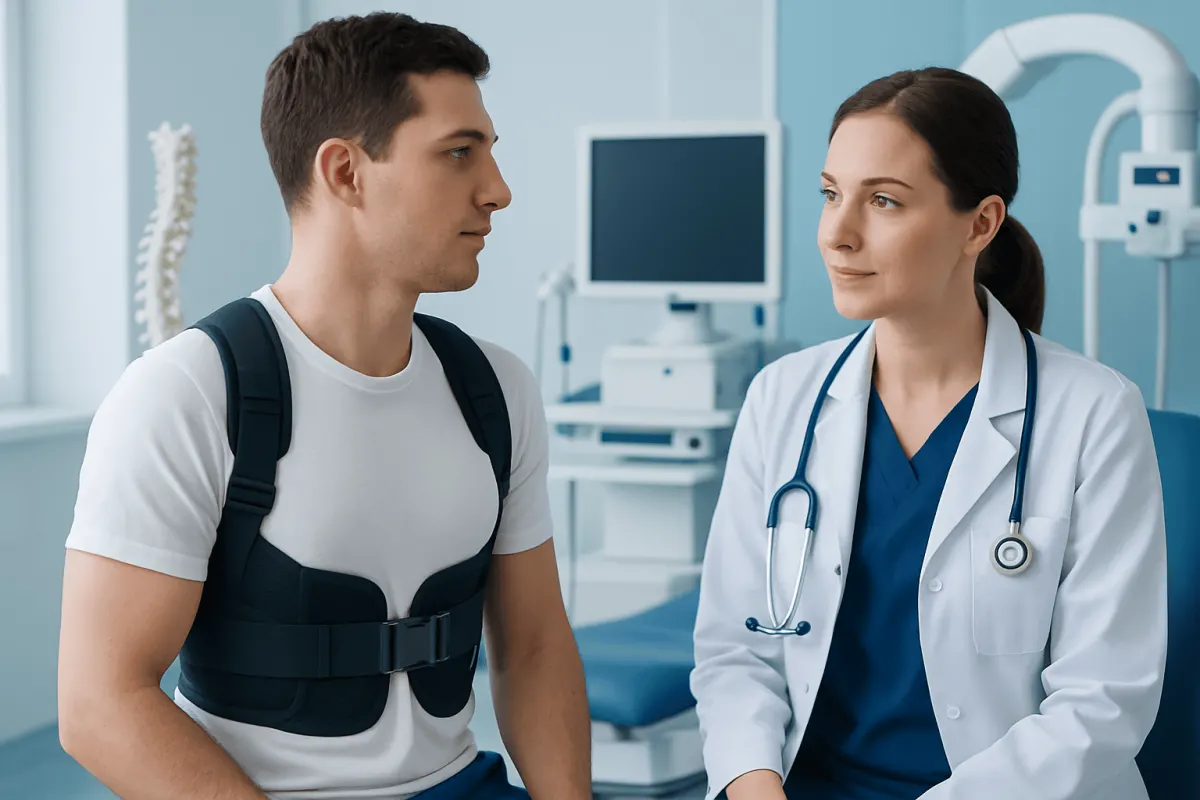
A back brace for posture may temporarily remind a person to sit or stand more upright and can sometimes reduce discomfort during specific activities. However, it is not a permanent posture correction tool and works best, when appropriate, alongside exercise, ergonomic changes, and guidance from a healthcare professional.
Do back braces and posture correctors really work?
A back brace for posture can work as a short-term reminder to avoid slumping and to position the shoulders and upper back more comfortably. Some people find that a soft posture corrector reduces fatigue or mild discomfort during desk work, standing tasks, or recovery from a minor strain. Its main effect is usually external support and increased body awareness rather than a lasting correction of posture.
Braces do not retrain muscles automatically, permanently straighten the spine, or treat the underlying cause of chronic pain. Evidence for posture correctors is limited, and results vary according to the type of brace, the reason it is used, the fit, and the person’s overall activity and health. A balanced plan that includes regular movement, strengthening, flexibility work, and ergonomic adjustments is generally more useful for lasting change.
For people with diagnosed spine conditions, the decision to use a brace should be individualized. A clinician may recommend a specific medical brace for selected fractures, after certain procedures, or for particular spinal deformities; this is different from using an over-the-counter posture strap for everyday slouching.
How posture braces work
Most consumer posture correctors are soft straps that loop around the shoulders and upper torso. When the wearer rounds the shoulders or bends forward, the straps create a gentle pull or resistance. This sensation can prompt the person to reset their position, sit taller, or take a movement break. Other back supports wrap around the lower back and abdomen, providing compression and a feeling of stability.
A brace does not hold the body in an ideal position at all times, nor should it force the shoulders sharply backward. Healthy posture is not one rigid pose. It involves changing positions comfortably, using the body efficiently, and having enough strength and mobility for daily activities. Remaining still in any position for a long time can contribute to stiffness and discomfort.
Medical spinal braces are designed differently. They may limit movement or support a specific spinal region during healing. These devices should be prescribed and fitted by appropriately trained clinicians, because the correct design, degree of support, and wearing schedule depend on the diagnosis.
- Soft posture correctors: mainly provide tactile feedback and light upper-back support.
- Lumbar supports: may offer short-term comfort or a sense of stability for some lower-back symptoms.
- Medical orthoses: are condition-specific devices used under professional supervision.
Who may benefit and who should be cautious

A posture corrector may be reasonable for an adult with mild, intermittent upper-back fatigue or habitual slouching who wants a temporary cue while improving workplace habits and exercise routines. It may also help a person become more aware of positions that trigger discomfort. The device should feel comfortable, allow normal breathing, and be used as one part of a broader self-care plan.
People with persistent pain, a visible spinal curve, osteoporosis, recent trauma, prior spinal surgery, inflammatory arthritis, neurological symptoms, or a known spinal condition should seek clinical advice before choosing a brace. For example, scoliosis management depends on age, curve pattern, skeletal maturity, and symptoms; an ordinary posture corrector is not a substitute for assessment or structured scoliosis care.
Extra caution is appropriate for people with fragile skin, reduced sensation, circulation problems, breathing disorders, or conditions that make compression uncomfortable. Children and adolescents should not use posture products to manage a suspected spinal problem without assessment by a pediatric or orthopedic specialist.
Using a back brace for posture: a practical step-by-step approach
If a healthcare professional agrees that a soft brace is appropriate, it should be selected according to the manufacturer’s sizing guidance and tried over a thin layer of clothing if needed for comfort. The straps should be snug enough to give gentle feedback but not so tight that they dig into the skin, restrict breathing, cause tingling, or pull the shoulders into an unnatural position.
At first, it is sensible to use the brace for short, planned periods, such as during a desk task that commonly leads to slouching. The wearer can use the sensation of the straps as a prompt to relax the shoulders, lengthen through the upper body, adjust the screen or chair, and then move regularly. Long, continuous wear is usually not necessary for a simple posture reminder unless a clinician gives different instructions for a medical brace.
Each use should be followed by a brief skin check for redness, rubbing, rash, or pressure marks. It is also helpful to note whether pain, stiffness, or function actually improves. If symptoms worsen, the device should be stopped and discussed with a clinician or physiotherapist. A professional assessment may identify whether physical therapy and rehabilitation would better address strength, mobility, movement patterns, or pain.
Benefits, limits, and possible risks
The potential benefits of a posture brace are modest but meaningful for some people. It can create an immediate reminder to change position, provide a sense of support during a limited activity, and encourage awareness of habits such as leaning toward a screen or rounding the shoulders when tired. For temporary symptoms, this may make daily tasks more comfortable.
The main limitation is that the brace does not address every factor that shapes posture and pain. These factors can include muscle endurance, joint mobility, stress, sleep, vision, workstation design, work demands, and an underlying musculoskeletal or neurological condition. Relying on a brace alone may delay more effective measures, especially when pain is ongoing.
Possible problems include skin irritation, pressure discomfort, restricted breathing, increased stiffness from staying in one position, and false reassurance that a medical problem is being treated. Wearing a tight support for long periods may also lead some people to become less active. A brace should not be used to push through significant pain, heavy lifting, or activities that require medical clearance.
A qualified clinician can help distinguish common mechanical back discomfort from conditions that need more targeted care, including situations where spine surgery may be considered after careful evaluation and when non-surgical options are not sufficient.
Building better posture without depending on a brace
Long-term posture improvement is usually less about holding the body rigidly and more about improving tolerance for everyday movement. Regular physical activity supports muscle endurance, circulation, joint mobility, and overall health. Strengthening programs often focus on the upper back, trunk, hips, and legs, while flexibility work may address areas that feel tight or restricted.
Workstation changes can also reduce strain. A screen at a comfortable height, a chair that supports the body, feet supported on the floor or a footrest, and a keyboard positioned to avoid reaching may all help. Rather than seeking a perfect seated posture, it is useful to alternate sitting, standing, walking, and gentle stretching throughout the day.
Short movement breaks are often more valuable than prolonged bracing. A person might stand up, roll the shoulders, walk briefly, or change tasks when they notice fatigue. A physiotherapist can create an individualized program when pain, injury, reduced mobility, or repeated symptoms interfere with work, exercise, or sleep.
Acıbadem Health Point’s multidisciplinary specialists and JCI-accredited hospitals assess spine and musculoskeletal concerns for international patients and can advise when rehabilitation, bracing, imaging, or other care is appropriate.
When to seek medical care
Medical assessment is advisable when back or neck pain lasts more than a few weeks, repeatedly returns, limits daily activities, disrupts sleep, or does not improve with simple measures. It is also important to seek advice before using a brace for a known spinal condition, after an injury, or when a person is unsure why their posture has changed.
Urgent medical care is needed for back pain with new or worsening leg weakness, numbness around the groin or buttocks, difficulty walking, loss of bladder or bowel control, fever, unexplained weight loss, or pain after a significant fall or accident. These symptoms are uncommon, but they may indicate a condition requiring prompt evaluation.
A clinician may review symptoms, medical history, posture, strength, sensation, movement, and daily activities. Imaging is not always needed for uncomplicated back pain, but it may be considered when findings suggest injury, nerve involvement, infection, inflammatory disease, or another specific cause.
Frequently asked questions
01Can a back brace permanently fix poor posture?
No. A back brace may provide a temporary reminder to change position, but it does not permanently strengthen muscles or correct the many factors that influence posture. Lasting improvement usually depends on regular movement, strengthening, ergonomic adjustments, and treatment of any underlying condition.
02How long should a posture corrector be worn each day?
For a non-prescription posture corrector, short periods are generally preferable to all-day use. The exact schedule depends on comfort, symptoms, and the product, while prescribed medical braces should be worn exactly as directed by the treating clinician.
03Can wearing a posture brace weaken back muscles?
Brief, occasional use is unlikely to weaken muscles by itself. However, depending on a brace instead of staying active and doing appropriate strengthening exercises may reduce opportunities to build endurance and confidence in movement.
04Are posture correctors safe for back pain?
They may be safe for some people with mild, short-term discomfort if they fit properly and do not cause pressure, numbness, skin irritation, or breathing difficulty. Persistent, severe, or unexplained pain should be assessed rather than managed only with a brace.
05Should a child or teenager use a posture corrector?
A child or teenager with slouching, back pain, uneven shoulders, or a possible spinal curve should be evaluated by a healthcare professional. Consumer posture correctors are not a treatment for scoliosis or other developing spine conditions.
06What is more effective than a posture brace?
For many people, a combination of regular movement, targeted exercise, activity pacing, and workstation changes is more helpful over time. A physiotherapist or physician can tailor these strategies to the person’s symptoms, work demands, injuries, and health history.
This article is for general information only and is not a substitute for professional medical advice. Please consult a qualified doctor about your individual situation.
Joint and spine care in Turkey — expert assessment & treatment
JCI-accredited · board-certified surgeons · reply within 24h
Add us as a Preferred Source to see more of our trusted health content across Google Search, AI Overviews and Discover.