Calf Strain Symptoms: Possible Causes and When to Seek Care
You push off to sprint for the ball, and something in the back of your lower leg suddenly pulls. Sharp pain. Maybe it even felt like a snap. Within minutes the calf feels tight and tender, and every step — especially the moment your heel lifts — reminds you it’s there. That’s the classic picture of a calf strain.
Your calf is made up mainly of two muscles: the gastrocnemius and the soleus. A strain means some of those muscle fibers have been overstretched or torn. How it feels depends on how much damage there is. A mild strain may be no more than soreness and stiffness. A bigger tear can bring swelling, bruising, and clear weakness.
Many people describe a pulling, stabbing, or snapping sensation as they run, jump, turn quickly, or accelerate. It’s common in sport, but it also happens in ordinary life — particularly if you’re deconditioned, tired, or jumping back into exercise too fast.
Mild strains often settle with rest and a gradual return to activity. But marked swelling, bruising, weakness, or trouble putting weight on the leg can point to something more serious that needs a proper look. And because calf pain has several possible causes, it helps to know the usual pattern of symptoms — and when it’s worth getting medical advice.
Overview: What calf strain symptoms usually feel like
Calf strain symptoms most often start with a sudden pain in the back of the lower leg during activity. Many people describe a pulling, stabbing, or snapping sensation when they push off to run, jump, turn quickly, or accelerate. The area may become tight and tender soon afterward, and walking can feel uncomfortable, especially when the heel lifts off the ground.
The calf is made up mainly of two muscles: the gastrocnemius and the soleus. A strain means that some of the muscle fibers have been overstretched or torn. The symptoms depend on how severe the injury is. A mild strain may feel like soreness and stiffness, while a more significant tear can cause swelling, bruising, and noticeable weakness.
Because pain in the calf has several possible causes, knowing the usual pattern of symptoms helps you judge when medical advice is appropriate.
Common symptoms and how severity can vary
The most common calf strain symptoms are pain, tightness, and tenderness in the back of the leg between the knee and ankle. The pain may appear suddenly during movement or build over several hours after exercise. Some people can continue walking but feel discomfort with climbing stairs, running, or standing on tiptoes.
Symptoms often vary by injury grade. A mild strain may cause soreness without major weakness. A moderate strain may cause sharper pain, swelling, limping, and pain when stretching the calf or pushing off the foot. A severe strain can make it hard to walk and may lead to visible bruising or a feeling that the muscle has “given way.”
- Sudden sharp or pulling pain in the calf
- Tightness or cramping sensation
- Tenderness when pressing the muscle
- Swelling or a feeling of fullness
- Bruising that appears later
- Pain with walking, running, or heel raises
- Reduced strength or difficulty pushing off
Symptoms can differ depending on which muscle is affected. Gastrocnemius strains often hurt higher in the calf and are more likely during explosive movement. Soleus strains may feel deeper, lower, or more gradual and can become more noticeable during sustained running or uphill walking.
What can cause a calf strain and who is at risk
A calf strain usually happens when the muscle is loaded suddenly or beyond its current capacity. This can occur during sprinting, jumping, lunging, tennis, football, basketball, or any movement that combines knee extension with ankle push-off. It may also happen during simple activities such as stepping off a curb awkwardly or starting exercise without proper warm-up.
Several factors can increase risk. Tight calf muscles, fatigue, weak lower-leg muscles, poor conditioning, and limited ankle mobility may all contribute. Previous calf injury also raises the chance of another strain, especially if the person returns to activity before strength and flexibility have fully recovered.
Age can play a role as well. Middle-aged and older adults may be more prone to gastrocnemius injury because muscles and tendons gradually lose elasticity. Training errors, such as increasing speed, distance, or intensity too quickly, are another common trigger. People with altered walking mechanics, poorly fitting footwear, or inadequate recovery between workouts may also be more vulnerable.
Conditions that can look similar
Not all calf pain is a muscle strain. A cramp can cause sudden tightness and pain, but it usually settles more quickly and may be linked to dehydration, fatigue, or prolonged exercise. An Achilles tendon rupture can also cause sudden pain in the lower calf or heel area, often with weakness and difficulty pushing off the foot.
A few other causes matter because they need very different treatment. Deep vein thrombosis can cause calf pain, swelling, warmth, and tenderness, sometimes without any clear injury. This is one reason new calf pain should not automatically be assumed to be a strain, especially if there is redness, one-sided swelling, recent immobility, recent surgery, or a history of clotting problems.
Less commonly, pain may come from a Baker cyst, referred pain from the back, tendon problems, or other sports injuries affecting the lower leg. A doctor can help distinguish these possibilities if symptoms are severe, unusual, or not improving as expected.
How doctors assess calf strain symptoms
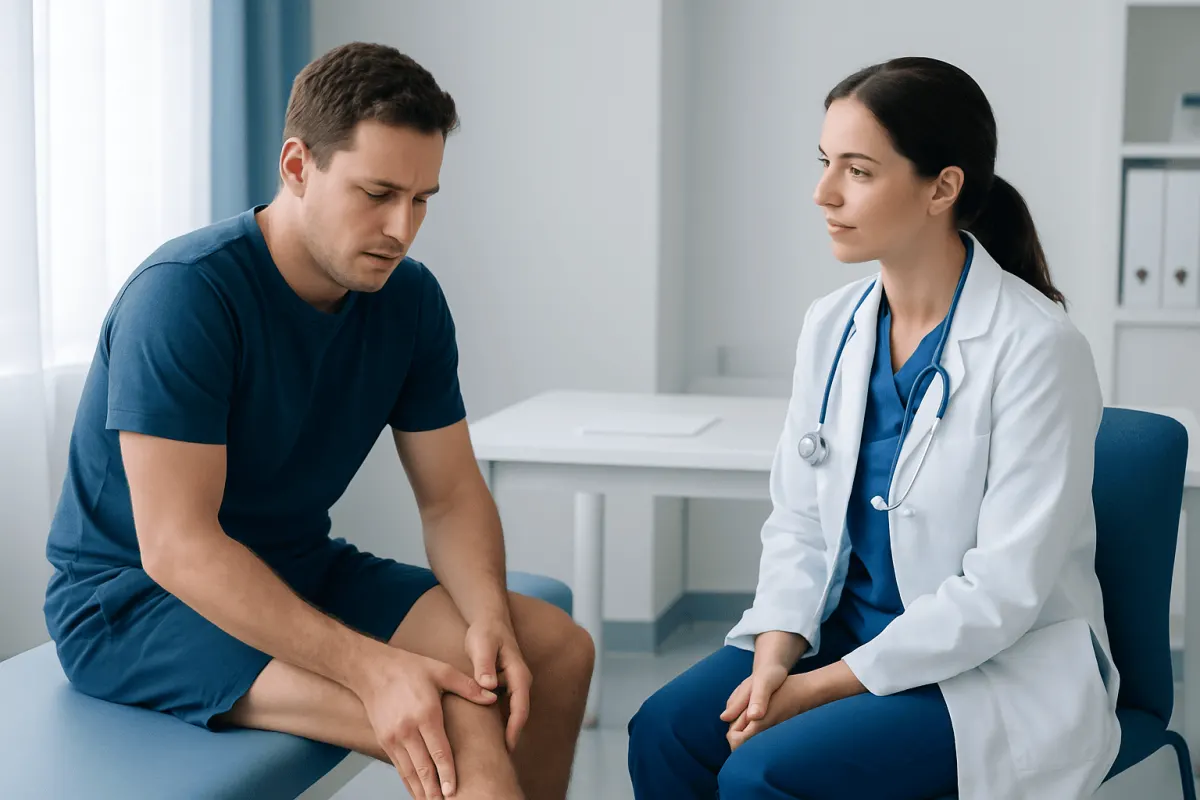
Diagnosis begins with the history of the injury and a physical examination. A doctor will ask when the pain started, whether there was a sudden pop or pull, what movements make symptoms worse, and whether the person can bear weight. The location of pain, presence of bruising, and degree of weakness all help estimate the severity of the strain.
During the examination, the calf may be checked for swelling, tenderness, range of motion, and muscle strength. Walking, standing on tiptoes, or gently stretching the calf can provide useful clues. The doctor may also compare both legs to look for differences in swelling or contour.
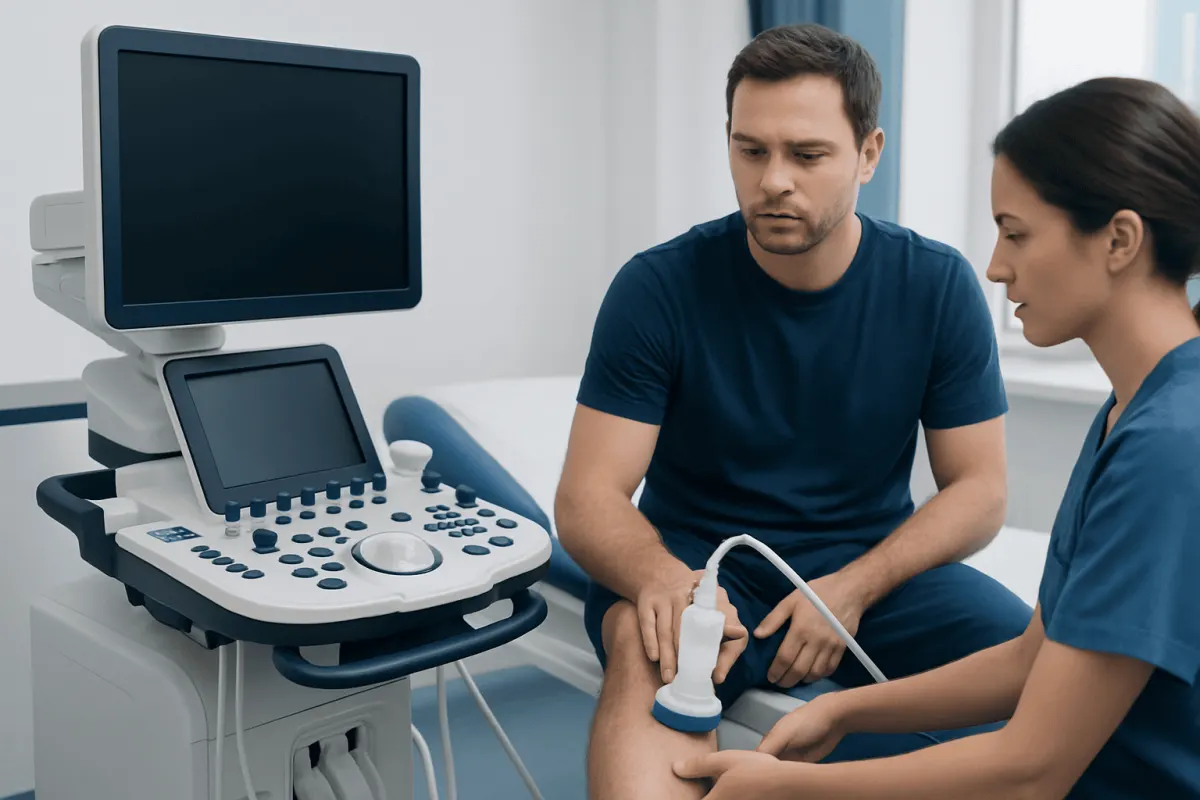
Imaging is not always necessary for mild, typical cases, but it may be recommended if the diagnosis is uncertain or symptoms are severe. Ultrasound or MRI scan can help show the extent of muscle injury. If there is concern for a blood clot or another vascular problem, a doctor may order Doppler ultrasound or other tests to guide safe treatment.
Treatment and recovery
Early treatment usually focuses on protecting the muscle and reducing pain. Rest from aggravating activity is important, but complete inactivity for long periods is usually not necessary unless walking is very painful. Ice, compression, and elevation may help with swelling during the first phase of recovery. Over-the-counter pain relief may be appropriate for some people, but it is best used according to medical advice, especially in those with stomach, kidney, or bleeding concerns.
As pain begins to settle, gradual movement and guided rehabilitation become the main focus. Gentle stretching is sometimes introduced carefully, followed by progressive strengthening. Calf raises, balance work, and return-to-walk or return-to-run programs are often used to rebuild function. Rehabilitation helps lower the risk of repeat injury, which is common when activity resumes too soon.
More significant strains may require formal physical therapy and rehabilitation to restore strength, flexibility, and confidence with movement. If a doctor suspects a complete tear, tendon injury, or another structural problem, further orthopedic evaluation may be needed. In some cases, a consultation in orthopedic rehabilitation can support a safe return to sport or work. Acıbadem Health Point’s multidisciplinary specialists, working in JCI-accredited hospitals, also assess and treat calf injuries for international patients when advanced evaluation or rehabilitation is needed.
Prevention and self-care after a strain
Good self-care can support healing and help prevent another strain. Returning to full activity should be gradual rather than based only on the calendar. The calf should feel comfortable with walking, heel raises, and light loading before higher-impact exercise is resumed. Pain that worsens during or after activity can be a sign that the muscle is being stressed too soon.
Helpful prevention steps include warming up before exercise, building training intensity progressively, and including calf strengthening in a broader conditioning plan. Flexibility may help some people, especially when tightness contributes to altered movement, but overstretching an injured muscle too early can aggravate symptoms.
- Warm up before sport or brisk exercise
- Increase speed, distance, or intensity gradually
- Strengthen the calf, ankle, and hip muscles
- Use supportive, activity-appropriate footwear
- Allow enough recovery after hard training sessions
- Address previous injuries before returning to full effort
Hydration, sleep, and general conditioning matter too. None of this prevents every injury, but it can take load off the calf and improve how you move overall.
When to seek medical care
Many mild calf strains improve with conservative care, but some symptoms should be assessed promptly. A doctor should evaluate severe pain, inability to bear weight, marked swelling, significant bruising, or a clear loss of strength. Medical review is also important if there was a popping sensation or if the pain is located closer to the Achilles tendon or behind the knee.
Urgent medical attention is recommended for calf pain with redness, warmth, one-sided swelling, shortness of breath, chest pain, fever, numbness, or a cold or pale foot. These symptoms are not typical of a simple strain and may point to a circulation problem, clot, infection, or nerve issue. Persistent symptoms that do not improve over several days, or repeated strains in the same area, also deserve professional assessment.
Getting a diagnosis early tells you whether you are dealing with a straightforward muscle injury or something else that needs different treatment. If you are unsure what is causing your calf pain — particularly after a significant injury, or if you have risk factors for clotting — speak to a qualified doctor. That is the safest next step.
Frequently asked questions
01How do calf strain symptoms usually start?
They often begin suddenly during running, jumping, or pushing off the foot. Many people notice a sharp pull or pain in the back of the lower leg, followed by tightness and tenderness.
02Can a calf strain cause bruising?
Yes. Bruising can appear when there is a moderate or more significant tear in the muscle fibers, although it may not show up immediately. Mild strains may cause pain and stiffness without visible bruising.
03How can someone tell the difference between a calf strain and a cramp?
A cramp usually causes a sudden, intense tightening that often improves more quickly, especially with gentle movement or stretching. A calf strain tends to leave ongoing tenderness, pain with walking or heel raises, and sometimes swelling or bruising.
04Is it safe to walk with a calf strain?
Some people with a mild strain can walk, although it may be uncomfortable. If walking causes severe pain, limping, or a feeling that the leg cannot support weight, a doctor should assess the injury.
05How long do calf strain symptoms last?
<a href="https://www.acibademhealthpoint.com/blog/how-long-is-neck-surgery-recovery-time/" title="How Long Is Neck Surgery Recovery Time?" class="ahp-ilk">Recovery time depends on severity. Mild strains may improve over days to a few weeks, while moderate or severe injuries can take longer and often benefit from structured rehabilitation.
06When should calf pain be treated as urgent?
Urgent care is important if calf pain comes with major swelling, redness, warmth, numbness, a cold foot, chest pain, or shortness of breath. These symptoms can suggest a problem other than a simple muscle strain.
This article is for general information only and is not a substitute for professional medical advice. Please consult a qualified doctor about your individual situation.
Explore treatments in Turkey — costs, top hospitals & a free quote
JCI-accredited · board-certified surgeons · reply within 24h
Add us as a Preferred Source to see more of our trusted health content across Google Search, AI Overviews and Discover.