Brain Parasites: Symptoms, Diagnosis, and Treatment
Brain parasites are uncommon infections in which certain parasites affect the brain, its surrounding tissues, or the nervous system. They can cause symptoms such as seizures, headaches, confusion, or weakness, but many symptoms have other causes, so proper medical evaluation is essential.
Overview: What Are Brain Parasites?
Brain parasites is a general term for parasitic infections that involve the brain, spinal cord, or tissues surrounding the brain. A parasite is an organism that lives in or on another host and depends on it for survival. Most parasites do not infect the brain, and brain involvement is uncommon in many countries, but it can occur after exposure through contaminated food or water, undercooked meat, soil, animal feces, or insect bites.
Different parasites can affect the nervous system in different ways. Some form cysts or small lesions in brain tissue, while others cause inflammation of the brain or its coverings. The effects can range from no symptoms to seizures, headaches, changes in thinking, or focal neurological symptoms. Early, careful assessment helps distinguish a parasitic infection from other conditions with similar symptoms.
One well-known example is neurocysticercosis, an infection caused by the larval stage of the pork tapeworm Taenia solium. Other examples include toxoplasmosis, which may be more serious in people with significantly weakened immune systems, and rare free-living amoeba infections. The specific organism matters because investigations and treatment differ substantially.
How Brain Parasites Affect the Nervous System
Symptoms do not result only from the parasite itself. They can also arise from the immune system’s response to the infection. Inflammation around a cyst or lesion may irritate nearby brain tissue and trigger seizures. Swelling, blocked fluid pathways, bleeding, or raised pressure within the skull can also occur in selected infections.
Some infections remain inactive for a long time and are found incidentally during imaging performed for another reason. Others become symptomatic when a parasite dies or changes, causing inflammation around it. For this reason, the timing and pattern of symptoms can vary widely, even among people with the same infection.
Location is important. A lesion near areas controlling movement, speech, vision, balance, or sensation may produce related symptoms. Lesions that block the normal circulation of cerebrospinal fluid can cause hydrocephalus, a buildup of fluid in the brain. These complications are not present in every case, but they explain why specialist review is needed when a parasitic nervous system infection is suspected.
Possible Symptoms and Warning Signs

The symptoms of brain parasites depend on the organism, the number and location of lesions, and the degree of inflammation. Seizures are a common presentation of neurocysticercosis in regions where the condition is more prevalent. A seizure can involve shaking movements, loss of awareness, staring episodes, unusual sensations, or temporary confusion afterward.
Other possible symptoms include persistent or worsening headache, nausea or vomiting, weakness or numbness on one side of the body, difficulties with balance, changes in vision, confusion, behavior changes, or problems with memory and concentration. Fever or neck stiffness may occur with some infections, particularly when the tissues around the brain are inflamed.
These symptoms are not specific to parasites. They can also be caused by migraine, epilepsy, stroke, tumors, autoimmune conditions, medication effects, and many other disorders. A person should not assume they have a brain parasite based on symptoms alone. Medical history, examination, imaging, and laboratory testing are needed to establish the cause.
- New seizure or repeated seizures
- Severe or progressively worsening headache
- New weakness, speech difficulty, or vision changes
- Confusion, unusual drowsiness, or a marked change in behavior
- Headache with fever, vomiting, neck stiffness, or a rash
Causes and Risk Factors
Exposure routes differ by parasite. Neurocysticercosis occurs when a person swallows microscopic Taenia solium eggs, usually through food, water, hands, or surfaces contaminated with feces from a person carrying an intestinal tapeworm. It is not acquired simply by eating pork; eating undercooked pork can lead to an intestinal tapeworm, which can then contribute to transmission where sanitation and hand hygiene are inadequate.
Toxoplasmosis is caused by Toxoplasma gondii. People can be exposed through undercooked meat, contaminated soil, unwashed produce, or contact with cat feces. Most healthy people with prior exposure do not develop brain disease. However, reactivation can cause serious illness in people with advanced immune suppression, including some people living with untreated HIV or those receiving certain immune-suppressing treatments.
Travel or residence in areas where particular parasites are more common can be relevant, but infection is not limited to travel. Risk can also increase with unsafe drinking water, poor sanitation, inadequate handwashing, raw or undercooked food, contact with contaminated soil, and exposure to insects that transmit parasites in certain parts of the world. A clinician may ask about travel, food, work, household contacts, immune health, and animal exposures.
How Doctors Diagnose a Parasitic Brain Infection
Diagnosis begins with a detailed clinical assessment. Doctors consider the symptoms, their timing, a person’s medical conditions and medicines, immune status, travel and exposure history, and findings on neurological examination. Because symptoms may overlap with many more common conditions, diagnosis should be based on evidence rather than exposure history alone.
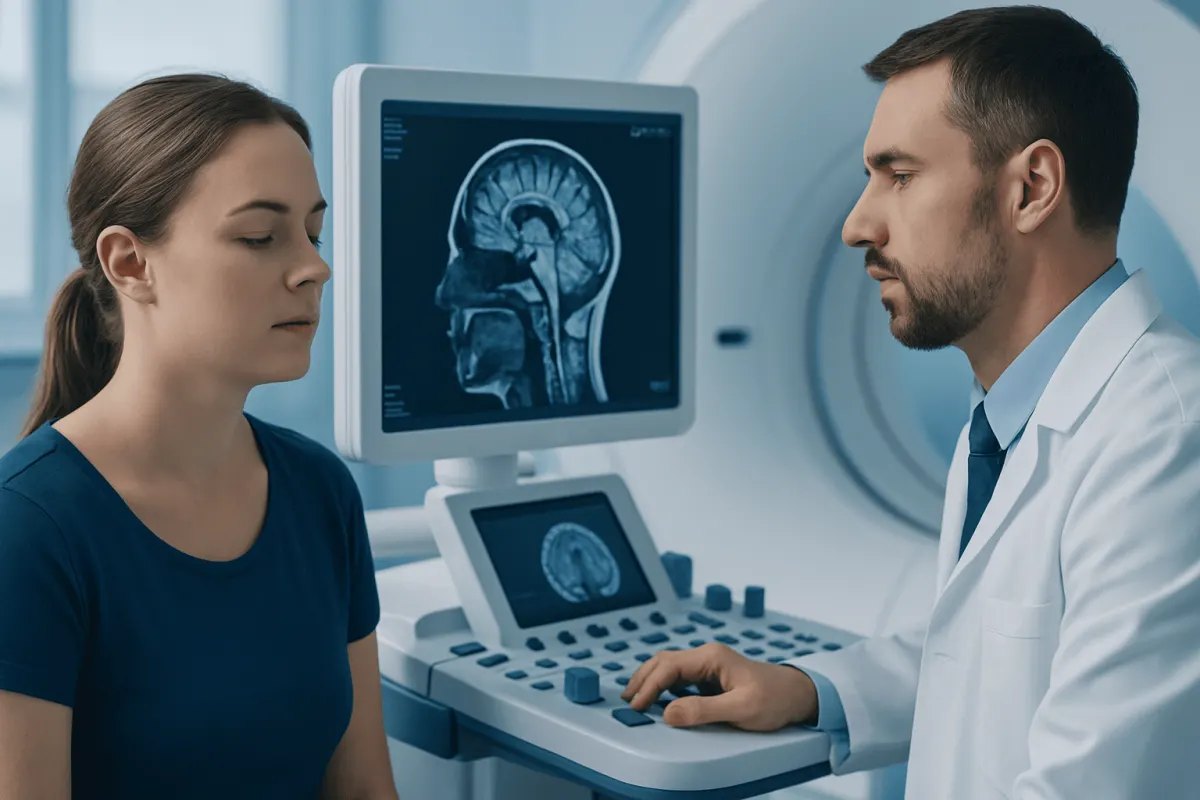
Brain imaging is often central to assessment. Magnetic resonance imaging (MRI) provides detailed pictures of brain tissue, while computed tomography (CT) can be particularly useful for identifying calcified lesions. The appearance, location, number, and stage of lesions may help narrow the possible causes, although imaging findings must be interpreted in the full clinical context.
Laboratory tests may include blood tests for parasite-specific antibodies or antigens, general blood tests, and tests for other infections. In selected cases, clinicians may test cerebrospinal fluid obtained through a lumbar puncture. Stool testing can be appropriate when an intestinal parasite is suspected. Biopsy or surgery is uncommon but may occasionally be needed when the diagnosis remains uncertain or when a lesion creates a complication.
People with a suspected central nervous system infection may be assessed by neurologists, infectious disease specialists, radiologists, ophthalmologists, and neurosurgeons when appropriate. This coordinated approach helps ensure that both the infection and its neurological effects are addressed safely.
Treatment Options and Ongoing Care
Treatment is tailored to the parasite, the stage of infection, the person’s symptoms, and imaging findings. Not every brain lesion requires immediate antiparasitic treatment. For example, inactive calcified lesions from prior neurocysticercosis may not contain living parasites, and treatment may focus on controlling seizures or other symptoms rather than using antiparasitic medicines.
When antiparasitic medicine is appropriate, doctors may prescribe medicines designed for the identified organism. These treatments can trigger or increase inflammation as parasites are damaged, so corticosteroids or other anti-inflammatory treatment may be used in carefully selected situations. Antiseizure medicines may be needed after a seizure, and the length of treatment is individualized by a neurologist.
Surgery or minimally invasive procedures are considered only in certain circumstances, such as obstructed cerebrospinal fluid flow, hydrocephalus, pressure effects, or lesions in locations where medication alone is not sufficient. Procedures may include treatment to relieve fluid pressure or removal of a problematic lesion. Neurosurgical evaluation can help determine whether an intervention is necessary.
Follow-up is important because symptoms, inflammation, seizure risk, and imaging changes can evolve over time. Repeat scans and review of medicines may be recommended. Acıbadem Health Point’s multidisciplinary specialists and JCI-accredited hospitals assess and treat neurological and infectious conditions for international patients when specialist care is needed.
Prevention and Practical Self-Care
Prevention depends on the infection risk in a person’s location and circumstances. Regular handwashing with soap and safe water, especially after using the toilet and before preparing food, helps reduce fecal-oral spread of parasites. Drinking treated water and washing fruits and vegetables with safe water are also important where sanitation may be uncertain.
Meat should be cooked thoroughly, and kitchen surfaces and utensils should be cleaned after handling raw meat. People should avoid consuming raw or undercooked pork and other meats. Safe food practices are especially important during travel, although the exact advice may vary by destination and local public health guidance.
People who have contact with soil should wear gloves when gardening and wash hands afterward. Those at risk of toxoplasmosis may be advised to avoid handling cat litter where possible, use gloves if handling it cannot be avoided, and keep cats from hunting or eating raw meat. Pregnant people and people with weakened immune systems should seek individualized advice from a healthcare professional.
Self-care should not replace medical treatment for neurological symptoms. A person prescribed antiseizure or antiparasitic medicine should take it exactly as directed and should not stop treatment suddenly without medical advice. It can also be helpful to avoid driving, swimming alone, climbing heights, or operating hazardous machinery until a clinician has assessed seizure risk.
When to Seek Medical Care
Urgent medical care is needed for a first seizure, a seizure lasting more than a few minutes, repeated seizures without full recovery, sudden severe headache, fainting, new weakness or numbness, trouble speaking, severe confusion, or loss of consciousness. These symptoms can have many causes and should be assessed promptly, whether or not a parasite is suspected.
A person should arrange a timely medical appointment for persistent headaches, unexplained seizures, ongoing vomiting, new balance difficulties, changes in vision, memory concerns, or neurological symptoms after relevant travel or exposure. People with weakened immune systems should seek medical advice promptly if they develop new headaches, fever, confusion, seizures, or focal neurological symptoms.
It is useful to bring information about recent travel, foods eaten, water exposures, medications, existing health conditions, and any similar illness in household members. This information can help clinicians select appropriate tests. Most suspected cases require assessment rather than self-diagnosis, and effective management is available once the underlying cause is identified.
Frequently asked questions
01Can parasites really live in the brain?
Yes, although these infections are uncommon in many settings. Several parasites can affect the brain or nervous system, often by forming cysts, causing inflammation, or affecting fluid flow around the brain. The exact infection must be identified because causes and treatments differ.
02What is the most common brain parasite infection?
Neurocysticercosis is a leading parasitic infection of the nervous system worldwide and an important cause of acquired seizures in endemic areas. It is caused by ingestion of eggs from the pork tapeworm, not by the presence of a worm directly traveling from eaten pork to the brain. Diagnosis requires medical assessment and imaging.
03Can brain parasites cause seizures?
Yes. Inflammation or lesions in brain tissue can irritate the brain and trigger seizures, particularly with neurocysticercosis. However, seizures have many possible causes, so anyone with a first seizure should receive urgent medical evaluation.
04How are brain parasites tested for?
Doctors commonly use MRI or CT scans along with a medical history, neurological examination, and targeted laboratory tests. Blood, stool, or cerebrospinal fluid tests may be useful in selected cases. No single test is suitable for every parasite or every clinical situation.
05Are brain parasites curable?
Many parasitic brain infections can be treated or effectively managed, especially when the specific cause is identified. Treatment may include antiparasitic medicine, anti-inflammatory treatment, seizure medicines, or occasionally a procedure. Outcomes depend on the organism, location of infection, complications, and overall health.
06Can a person prevent brain parasite infections?
Risk can be reduced through hand hygiene, safe drinking water, sanitation, thorough cooking of meat, and careful food preparation. Avoiding exposure to contaminated soil or animal feces and following destination-specific travel health advice can also help. Prevention measures should be adapted to individual risks and local public health guidance.
This article is for general information only and is not a substitute for professional medical advice. Please consult a qualified doctor about your individual situation.
Joint and spine care in Turkey — expert assessment & treatment
JCI-accredited · board-certified surgeons · reply within 24h
Add us as a Preferred Source to see more of our trusted health content across Google Search, AI Overviews and Discover.