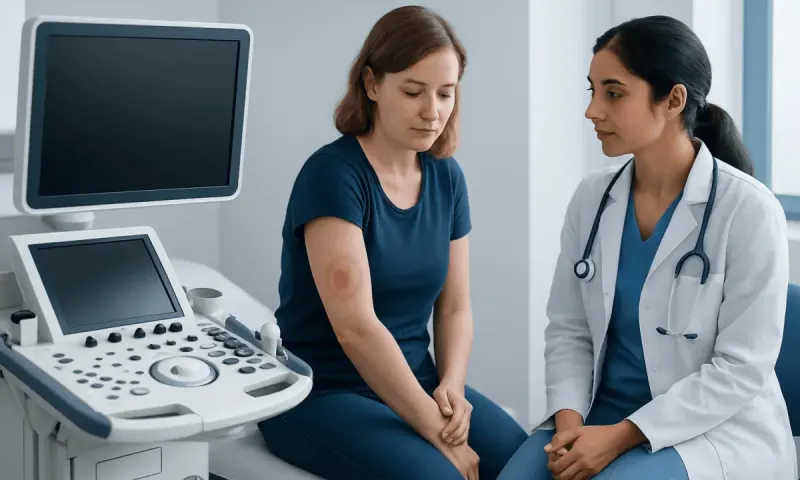
Burn Blisters: Why They Form and How to Care for Them

You touch a hot pan handle, pull your hand back fast — and an hour later there’s a puffy, fluid-filled bubble where the skin was red. That’s a burn blister, and it usually forms when heat damages the outer skin layer and fluid collects underneath, most often in superficial partial-thickness burns.
Many small burns heal well with careful first aid at home. But larger burns, burns on sensitive areas, or any sign of infection should be looked at by a qualified clinician.
Overview: What Burn Blisters Mean
Blisters in burns are fluid-filled pockets that develop when heat injures the skin and causes the upper layers to separate. The fluid helps protect the damaged tissue underneath while the skin begins to repair itself. In many cases, blistering suggests a partial-thickness burn, often called a second-degree burn.
Not every burn forms a blister right away. Some blisters appear within hours, while others become more noticeable over the first day. Their size and number can vary depending on how long the skin was exposed to heat, how hot the source was, and which part of the body was affected.
Here is what matters most: a blister is not just a surface change. It tells you something about how deep the burn goes and what the skin needs to heal. A small blister from a minor kitchen burn will often settle with home care. A larger or more painful one deserves a proper look, so we can be sure the deeper tissue is safe and infection stays away.
Why Blisters Form After a Burn
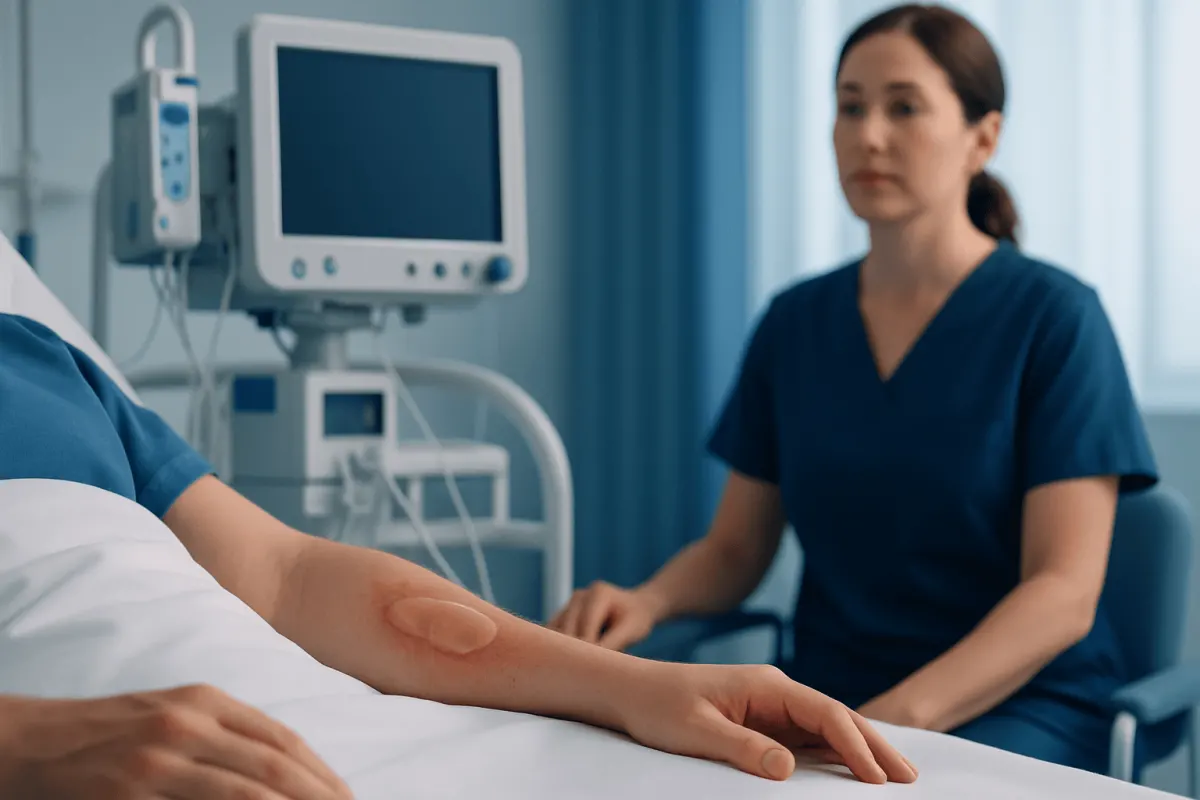
When skin is exposed to heat, chemicals, electricity, or friction, cells in the outer layer can be damaged. If the injury extends beyond the top layer of skin but does not destroy the full thickness, inflammation leads to fluid leakage from tiny blood vessels. This fluid collects between skin layers and creates a blister.
So the blister is really your body doing its job. That thin roof of skin shields the delicate tissue underneath from friction, dirt, and bacteria. It is why we usually tell you to leave a small, intact burn blister alone, unless a healthcare professional advises otherwise for a specific reason.
Blistering is most often seen in superficial partial-thickness burns. These burns may be very painful, look pink or red, and blanch when pressed. Deeper burns may blister too, but they can also appear pale, waxy, leathery, or less painful if nerve endings are more severely injured. Because appearance can overlap, a clinician may be needed to judge the burn accurately.
Symptoms and Signs to Watch For
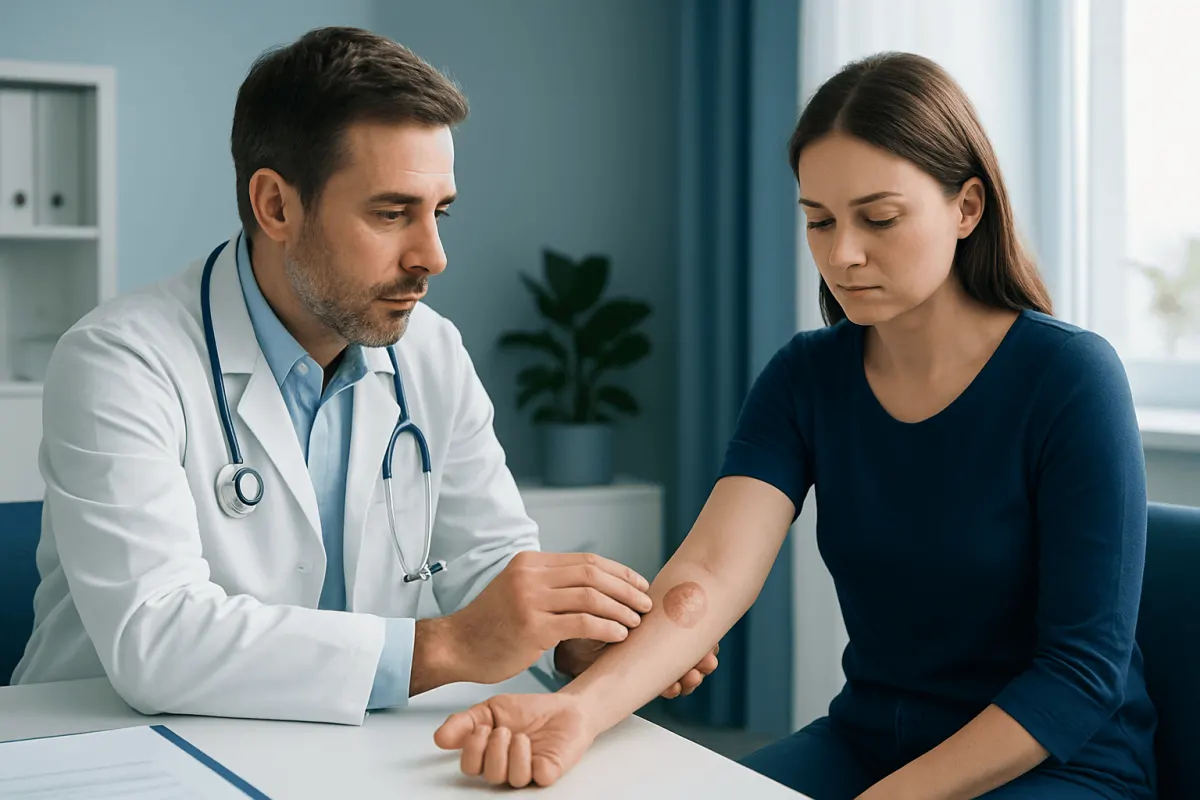
Burn blisters can appear alone or with other symptoms. Common features include pain, tenderness, redness, swelling, and clear or pale yellow fluid under the skin. The area may be sensitive to air, touch, or movement, especially if the burn is on the hand, arm, or another frequently used body part.
Some symptoms suggest that the burn may be more serious than it first appears. Increasing swelling, severe pain that does not settle, numbness, skin that looks white, brown, or charred, or blisters covering a wide area can all signal a deeper or more extensive injury. If clothing or jewelry becomes tight because of swelling, they should be removed early if possible and if they are not stuck to the skin.
Patients should also watch for infection as the burn heals. Warning signs can include:
- Redness spreading beyond the burn edge
- Warmth that is worsening rather than improving
- Pus or cloudy drainage
- Bad odor
- Fever or feeling unwell
- Pain that increases after initially getting better
If you notice any of these, get the burn checked. Burn wounds change over time, and something that looked mild on day one can turn more troublesome by day four.
Immediate First Aid and Safe Home Care
The first priority is to stop the burning process. Move away from the heat source, remove hot or smoldering clothing, and take off rings, watches, or tight items before swelling develops. If clothing is stuck to the skin, it should not be pulled away; this can tear the wound.
Cool the burn under gently running cool water for about 20 minutes as soon as possible. This may reduce tissue damage and ease pain. Ice, iced water, butter, toothpaste, oils, or other home remedies should be avoided because they can worsen skin injury or increase infection risk.
After cooling, the area can be covered loosely with a clean, non-stick dressing or clean plastic wrap placed lightly over the skin. The blister should generally be left intact. A simple over-the-counter pain reliever may help if appropriate for the patient, but anyone with chronic illness, pregnancy, allergies, or medication concerns should follow advice from a healthcare professional.
At home, the burn should be kept clean and protected from rubbing. If a blister breaks on its own, the skin should not be peeled off. Gentle washing with clean water and redressing may help until a clinician gives further advice. Patients with more extensive skin injuries or concerns about healing may need specialist support, including care for burns and advanced wound care.
Should a Burn Blister Be Popped?
In most cases, patients should not pop a burn blister at home. An intact blister acts as a natural dressing. Once the blister roof is broken, the tissue underneath is more exposed to bacteria, friction, and drying, all of which can slow healing or raise the chance of infection.
There are situations in which a clinician may decide to drain or remove part of a blister. This can happen if the blister is very large, very tense, likely to rupture, located over a joint where movement is difficult, or if the doctor needs to assess burn depth more accurately. This is usually done using clean technique and with a plan for dressing the wound afterward.
If a blister bursts accidentally, patients should avoid cutting away loose skin on their own. The area can be cleaned gently and covered with a non-stick dressing until medical advice is obtained. Ongoing pain, redness, or discharge are reasons to seek review rather than continue self-treatment.
Diagnosis and Treatment Options
Diagnosis is based mainly on a clinician’s examination. They assess the cause of the burn, the depth, the size of the affected area, blistering, pain level, and whether sensitive locations such as the face, hands, feet, genitals, or major joints are involved. In some cases, the burn can evolve over the first 24 to 72 hours, so reassessment may be needed even if the initial injury seemed limited.
Treatment depends on burn severity. Minor burns may need cooling, dressings, pain relief, and follow-up to make sure healing stays on track. More significant burns may require professional cleaning, special dressings, tetanus review, and regular wound checks. If deeper tissue is involved, doctors may discuss hospital-based burn management and, in selected cases, skin grafting to help wound closure.
Chemical and electrical burns deserve medical evaluation even if the surface blistering looks small. These injuries can damage deeper tissues out of proportion to the skin appearance. In some situations, imaging or blood tests are used to look for hidden injury or complications, especially after electrical exposure.
For patients who need coordinated care, Acıbadem Health Point’s multidisciplinary specialists in JCI-accredited hospitals diagnose and treat burn injuries, including advanced dressings, reconstructive assessment, and rehabilitation planning for international patients.
Healing, Prevention, and Scar Reduction
Healing time depends on depth, size, location, and whether infection occurs. Superficial partial-thickness burns often heal over days to a few weeks, while deeper burns can take longer and may leave more noticeable color change or scarring. During healing, the skin may itch, feel tight, or become more sensitive to sunlight.
Patients can support recovery by changing dressings as advised, avoiding friction, staying hydrated, and eating a balanced diet with enough protein. Once the skin has closed, gentle moisturizing may improve comfort. Sun protection is especially important because newly healed skin can darken or discolor easily when exposed to ultraviolet light.
Of course, the best burn is the one that never happens. Simple habits help: keeping hot drinks away from children, turning pot handles inward, checking bath water temperature, using oven gloves, storing chemicals safely, and taking caution with irons, heaters, and campfires. Workplaces should follow burn-prevention protocols and use protective equipment where needed.
If a burn heals slowly, limits movement, or leaves thickened or tight scar tissue, follow-up may include rehabilitation or reconstructive advice. In selected cases, clinicians may consider plastic and reconstructive surgery to improve function or appearance after more severe burns.
When to Seek Medical Care
Many small burns can be managed safely at home, but some situations call for prompt medical attention. A patient should seek medical care if the burn is larger than the palm of the person’s hand, if blistering is extensive, or if the injury involves the face, eyes, ears, hands, feet, genitals, buttocks, or a major joint. Burns that wrap around a limb or chest also need evaluation.
Medical review is also important for chemical burns, electrical burns, inhalation exposure from smoke or steam, and burns in infants, older adults, or people with diabetes, poor circulation, or weakened immunity. Any difficulty breathing, hoarseness, confusion, severe swelling, or signs of shock should be treated as urgent.
Come in too if the burn is not improving, the pain is getting worse, or you see signs of infection. And if you are simply unsure how deep the burn is or how to dress it, that alone is reason enough to ask a doctor instead of guessing.
Frequently asked questions
01Are blisters in burns a sign of a second-degree burn?
Often, yes. Burn blisters commonly appear in partial-thickness burns, which are often called second-degree burns. However, burn depth is not always easy to judge at home, so a clinician may be needed if the area is large, very painful, or in a sensitive location.
02How long do burn blisters take to heal?
Healing time depends on the depth and size of the burn and whether the blister stays intact. Smaller superficial partial-thickness burns may improve within days to a few weeks. If healing is slow or the wound worsens, medical review is important.
03Can a burn blister get infected?
Yes. The risk is higher if the blister breaks, the skin is rubbed repeatedly, or the wound is not kept clean and protected. Increasing redness, pus, bad odor, fever, or worsening pain can suggest infection and should be assessed by a doctor.
04Should ice be used on a burn with blisters?
No. Ice and very cold water can further damage injured skin and may worsen pain after a short period of numbness. Cool running water is the preferred first-aid measure for most minor thermal burns.
05What should be put on a burn blister?
After cooling the burn, the safest general step is to cover it loosely with a clean, non-stick dressing. Heavy ointments, butter, toothpaste, and other home remedies are best avoided unless a clinician has recommended a specific product. If the blister breaks or the burn is large, professional advice is helpful.
06When should a child with a burn blister see a doctor?
Children should be assessed more readily than adults because even smaller burns can matter more in a small body. Medical care is especially important if the burn is on the face, hands, feet, genitals, or over a joint, if blistering is significant, or if the child seems unusually sleepy, distressed, or unwell.
This article is for general information only and is not a substitute for professional medical advice. Please consult a qualified doctor about your individual situation.
Explore treatments in Turkey — costs, top hospitals & a free quote
JCI-accredited · board-certified surgeons · reply within 24h
Add us as a Preferred Source to see more of our trusted health content across Google Search, AI Overviews and Discover.