Best Solo Exercises at Home: Safe Techniques That Actually Help

Key Takeaways
- The best solo exercises at home are simple, repeatable, and gentle on joints when performed with correct form.
- A well-rounded home routine should include warm-up, strengthening, mobility, balance, and cool-down work.
- Good technique matters more than speed, repetition count, or intensity when exercising alone.
- People with pain, dizziness, chest symptoms, or recent injury should seek medical advice before starting or changing an exercise plan.
- Small, regular sessions are often easier to maintain than ambitious workouts that are difficult to repeat.
The best solo exercises at home are the ones that can be done safely, consistently, and with good form using only body weight or minimal equipment. A balanced routine usually includes mobility, strength, balance, and light cardio to support everyday health.
Overview
When people search for the best solo exercises at home, they are usually looking for movements that are practical, safe, and effective without needing a gym or a partner. The best place to start is with exercises that use body weight, require little space, and can be adjusted to match different fitness levels.
A good home routine does not need to feel complicated to be worthwhile. Squats to a chair, wall push-ups, marching in place, glute bridges, standing balance drills, and gentle stretching can support strength, stability, and mobility in everyday life. For many people, the real benefit comes from choosing exercises that are easy to repeat week after week.
Solo exercise at home also has a planning advantage: the person can move at their own pace, pause when needed, and build confidence gradually. That matters for beginners, older adults, people returning after illness or injury, and anyone who prefers a private setting to start building an exercise habit.
Why solo home exercise works so well
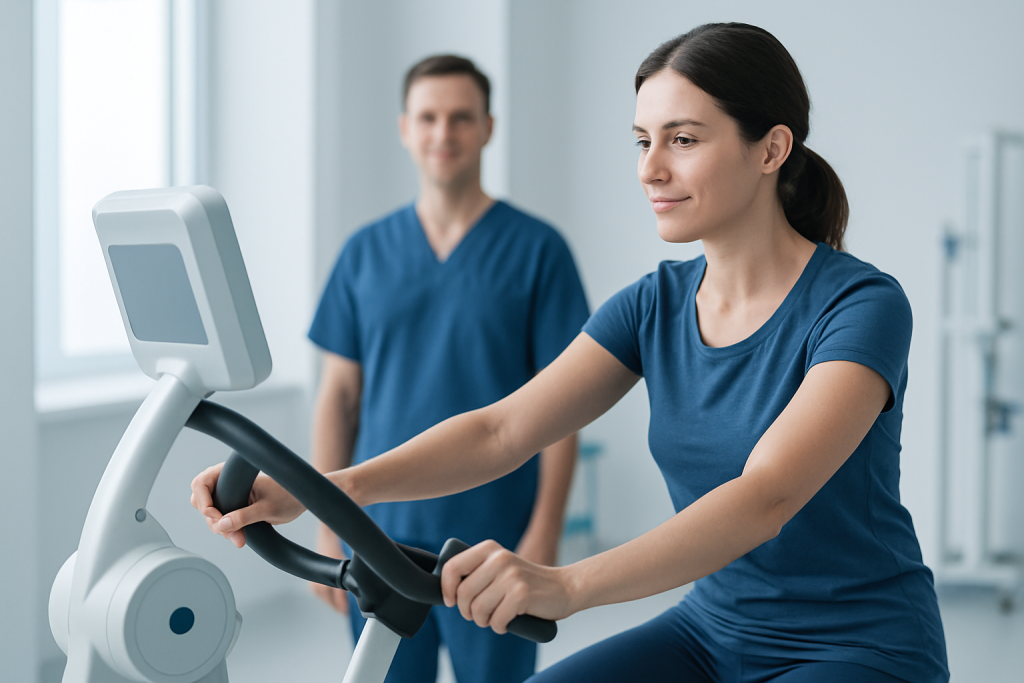
Exercising alone at home removes several common barriers. There is no commute, no waiting for equipment, and no need to match another person’s schedule. That convenience often makes it easier to stay active on busy days, especially when time is limited or motivation is uneven.
Home workouts can also be highly adaptable. A person can shorten a session on a hectic morning, slow down for better form, or choose gentler movements during recovery. This flexibility makes solo exercise useful for building consistency, which is usually more important than occasional intense sessions.
Another advantage is that home exercise can be tailored to the person’s current ability. A beginner may start with chair-based squats and wall push-ups, while someone with more experience may progress to single-leg balance work, step-ups, or longer bodyweight circuits. The key is not finding the hardest routine, but the one that can be done safely and steadily.
Best solo exercises at home

The best solo exercises at home usually train more than one body function at a time. A balanced list includes lower-body strength, upper-body pushing, core stability, hip mobility, and balance. This helps support posture, walking, lifting, climbing stairs, and other everyday tasks.
Useful exercises to consider:
- Chair squats: Sit back toward a chair and stand up again, keeping the movement controlled. This is a practical way to build leg strength and confidence with squatting mechanics.
- Wall push-ups: Place the hands on a wall and bend the elbows to bring the chest closer. This lowers the load on the shoulders and wrists compared with floor push-ups.
- Glute bridges: Lie on the back with knees bent and lift the hips slowly. This can help strengthen the glutes and support hip stability.
- Marching in place: A simple way to raise the heart rate and warm the body without needing much room.
- Bird dog: From hands and knees, extend one arm and the opposite leg. This supports core control and body awareness.
- Calf raises: Rise onto the balls of the feet and lower with control. This can help ankle strength and balance.
- Side leg raises or standing hip abductions: Useful for hip strength and stability.
- Single-leg balance holds: Standing near a sturdy surface, hold one leg up briefly to challenge balance in a safe way.
These exercises can be combined into a short circuit or practiced individually. For many people, doing a few quality movements well is more effective than trying to do too many exercises with poor form.
How to do them safely
Safety starts with pace. A good home workout should leave room for controlled breathing and clean movement. If the body is swinging, holding breath, or losing alignment, the exercise is probably too fast or too difficult for the current level.
Using a mirror, a phone camera, or clear positioning cues can help with technique when no trainer is present. For example, during a squat, the knees should generally track in line with the toes, and the weight should stay balanced through the feet. During a push-up variation, the body should move as one unit rather than sagging through the lower back.
It is also wise to prepare the environment. A non-slip floor, stable chair, enough open space, and comfortable shoes can reduce the chance of a misstep. People who feel unsteady should keep a sturdy wall, countertop, or chair nearby for support. If pain appears sharp, worsening, or unusual, the session should stop and the cause should be checked.
A simple home routine for beginners
Beginners often do best with short sessions that feel achievable. A simple routine may begin with 3 to 5 minutes of marching in place, shoulder circles, ankle rolls, or gentle trunk rotations. The goal is to wake up the joints and muscles before strength work begins.
After warming up, a person might choose four to six exercises and complete them slowly. For example: chair squats, wall push-ups, glute bridges, bird dog, calf raises, and a balance hold. Each movement can be done for a small number of comfortable repetitions, followed by a brief rest.
Ending with easy stretching or relaxed breathing can help the body shift out of the workout. A beginner routine does not need to be long to be useful. What matters most is that it feels repeatable enough to do again next time.
Common mistakes to avoid
One of the most common mistakes is choosing movements that are too advanced too soon. If a squat is too deep, a push-up is too demanding, or a balance drill feels unstable, the exercise can become discouraging rather than helpful. A safer choice is to make the movement easier and build up gradually.
Another mistake is skipping the warm-up or rushing through repetitions. Cold muscles and fast, uncontrolled motions increase the risk of strain. It is also important not to treat pain as a sign of progress; discomfort from effort is different from joint pain, sharp pain, numbness, or dizziness.
People sometimes focus only on one type of exercise, such as core work or stretching, while ignoring the rest. A healthier routine is usually more balanced. Strength, mobility, and balance all have a place, especially for adults who want to move well in daily life.
How to progress without overdoing it
Progress should be gradual and specific. A person may begin by improving form, then add a few repetitions, then increase the number of sets, and only later choose a harder variation. This step-by-step approach is often more sustainable than dramatic changes.
Increasing challenge can also happen without adding impact. A slower squat, a longer balance hold, or a slightly lower wall push-up angle may be enough to stimulate improvement. For many home exercisers, better control is a more meaningful goal than chasing exhaustion.
Recovery is part of progress. Rest days, hydration, sleep, and light movement all support adaptation. If the body feels unusually sore or tired for several days, it may be a sign that the last session was more demanding than intended.
When to see a doctor
Anyone with chest pain, fainting, severe shortness of breath, new palpitations, or sudden dizziness during exercise should seek medical attention promptly. Exercise should also be discussed with a doctor if there is a recent fracture, joint surgery, uncontrolled blood pressure, balance problems, or a medical condition that affects safe movement.
Medical advice is especially helpful if pain is persistent, if a person is unsure which exercises are appropriate after injury, or if exercise symptoms seem out of proportion to the effort. A doctor, physiotherapist, or rehabilitation specialist can help tailor movement to the person’s needs and limits.
For international patients who need coordinated assessment and follow-up, Acibadem Health Point’s multidisciplinary specialists and JCI-accredited hospitals can diagnose and treat many movement-related conditions with a patient-centered approach. The goal is to help people stay active safely, whether they are starting from scratch or returning to exercise after a health setback.
Frequently asked questions
01What are the best solo exercises at home for beginners?
Beginners often do well with chair squats, wall push-ups, marching in place, glute bridges, calf raises, and gentle balance drills. These exercises are simple to learn and can be adjusted to fit different fitness levels. The best choice is usually the one that feels safe enough to repeat consistently.
02How long should a home workout be?
A home workout can be effective even when it is short. Many people start with 10 to 20 minutes, especially if they are building the habit or returning after a break. Consistency matters more than making every session long.
03Is it safe to exercise alone without equipment?
Yes, many bodyweight exercises are safe when done with good form and an appropriate pace. It helps to use a stable chair or wall for support and to keep the exercise area clear. If balance, pain, or dizziness is a concern, a doctor should be asked for guidance first.
04How can someone know if they are using the right form?
Simple cues, mirrors, and slow repetitions can improve awareness of form. The movement should feel controlled, and the person should be able to breathe normally while exercising. If the body is twisting, collapsing, or straining, the exercise may need to be modified.
05Can solo exercise help with weight management?
Regular exercise can support overall energy use, muscle health, and daily activity levels. It is usually most effective when combined with balanced eating and other healthy habits. A sustainable routine is more useful than an intense plan that cannot be maintained.
06What should someone do if exercise causes pain?
Mild muscle effort is different from pain that is sharp, sudden, or worsening. If pain appears, the exercise should stop and the movement should be reassessed. Persistent pain or pain in a joint, chest, or back should be checked by a qualified clinician.
This article is for general information only and is not a substitute for professional medical advice. Please consult a qualified doctor about your individual situation.
Explore treatments in Turkey — costs, top hospitals & a free quote
JCI-accredited · board-certified surgeons · reply within 24h
Add us as a Preferred Source to see more of our trusted health content across Google Search, AI Overviews and Discover.