Beard Transplant Before and After: Procedure, Benefits, Risks and Recovery
Key Takeaways
- A beard transplant uses hair follicles, usually from the scalp, to build fuller facial hair in selected areas.
- Visible results appear gradually because transplanted hairs shed first and then regrow over several months.
- Good candidates are generally healthy adults with stable hair growth and realistic expectations.
- Temporary swelling, redness, and scabbing are common during early recovery.
- The final look depends on donor hair quality, facial anatomy, graft placement, and aftercare.
- A specialist evaluation helps confirm whether the cause of beard thinning is suitable for transplant or needs another treatment.
Beard transplant before and after results usually show a gradual shift from sparse or patchy facial hair to fuller, more defined growth. The best outcomes come from careful planning, realistic expectations, and proper aftercare guided by an experienced specialist.
Overview
A beard transplant is a hair restoration procedure that places healthy hair follicles into areas of the face where beard growth is thin, uneven, or absent. People often search for beard transplant before and after examples because the change is not immediate; the early appearance is only part of the story, and the fuller result develops over time as transplanted follicles settle in and begin a new growth cycle.
The procedure is usually planned for men who want to create a more even beard line, fill patchy areas, or reconstruct facial hair after scarring, burns, surgery, or longstanding hair loss. A specialist maps the beard design carefully so the result suits the face rather than looking overly dense or artificial.
For international patients, it is helpful to think of beard restoration as a staged journey. It starts with consultation and planning, continues through the procedure and recovery period, and ends with months of gradual growth, trimming, and follow-up. The most satisfying outcomes usually come from choosing a clinic that explains each stage clearly and sets realistic expectations from the outset.
What Beard Transplant Before and After Results Usually Look Like
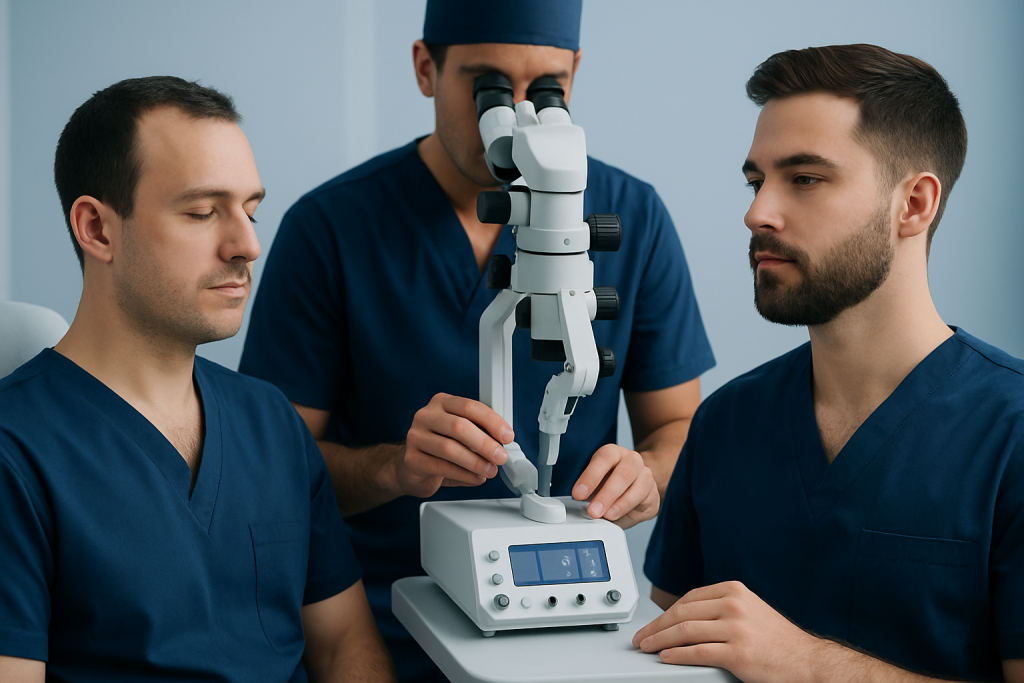
In the first days after surgery, the face typically looks more noticeable than the final outcome. Mild redness, swelling, and small scabs around the grafts are common. This early stage can look uneven, but that does not reflect the final result. The transplanted hairs often shed during the first few weeks, which is a normal part of the process and not a sign that the procedure failed.
During the following months, new growth gradually appears. The beard may look patchy at first, then increasingly even as more follicles enter active growth. Many patients begin to notice meaningful change around the third to sixth month, with refinement continuing beyond that. Texture and direction of growth also matter, because facial hair should blend naturally with existing beard hair and the patient’s grooming style.
Before-and-after photos are helpful, but they should be interpreted carefully. Lighting, grooming, camera angle, and the time since surgery can all affect how results appear. A more reliable comparison is a detailed review of similar cases, including the healing timeline, donor area appearance, and how the beard looked once growth had matured.
How the Procedure Is Performed
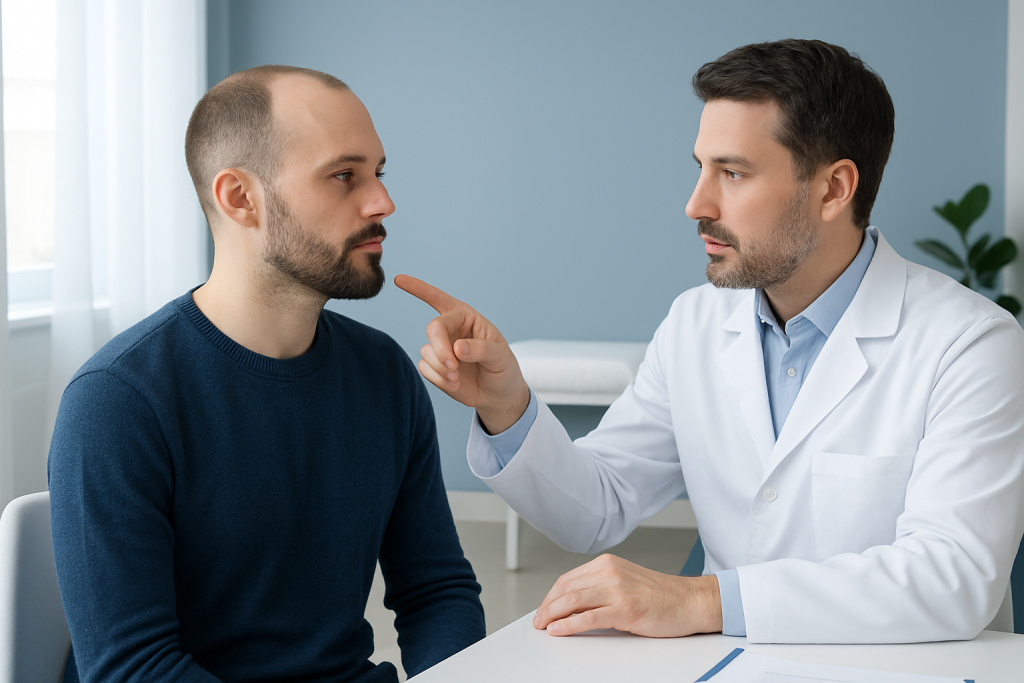
Most beard transplants use follicular unit extraction, often called FUE. In this approach, individual hair follicles are harvested from a donor area, usually the back or sides of the scalp, and then placed into the beard area one by one. This method allows the surgeon to control density, direction, and angle more precisely, which is especially important in the face where natural hair patterns are visually obvious.
Before the procedure, the surgeon examines the beard pattern, donor hair quality, skin characteristics, and the patient’s goals. The design phase is essential. It is not only about adding hair, but also about creating shape: the cheek line, mustache connection, chin coverage, and jawline density all affect the final appearance.
The procedure is usually done under local anesthesia. After the follicles are collected, tiny recipient sites are created in the beard area. The grafts are then inserted carefully so the new hair grows in a natural direction. The process may take several hours depending on the number of grafts needed. Some patients with scarred skin or extensive facial hair reconstruction may require a more individualized plan.
Benefits and Good Candidates
The main benefit of a beard transplant is a longer-lasting, natural-looking way to improve facial hair coverage. Unlike temporary cosmetic solutions, transplanted follicles are intended to grow hair in the beard region over time. This can help soften the appearance of patchiness, improve symmetry, and allow a patient to shape facial hair more confidently.
Some men seek treatment because they have always had sparse growth, while others want to repair visible gaps after injury, acne scarring, infection, or previous procedures. The treatment can also help people who want a specific beard style that their natural growth pattern does not support on its own. When planned well, the result should complement the face rather than overpower it.
Good candidates are usually adults with stable donor hair, healthy skin, and a clear understanding of the timeline. A specialist will also consider whether hair loss is related to an active condition, such as a dermatologic disorder or autoimmune disease, because that may change the treatment plan.
Risks and Possible Complications
Like any procedure that involves skin healing, beard transplantation has possible risks. Most are temporary and manageable when the procedure is performed by an experienced surgical team and aftercare instructions are followed closely. Common early effects include redness, swelling, itching, tenderness, and crusting around the grafts.
Less commonly, patients may experience infection, prolonged swelling, ingrown hairs, uneven growth, or visible scarring in the donor or recipient area. Some people also notice that the beard density does not match the original plan exactly, which is why preoperative design and honest discussion about achievable coverage are so important.
There is also a risk that the donor hair may not perfectly match facial hair in thickness or curl pattern. A skilled clinician chooses grafts and places them with this in mind, but the natural characteristics of the donor hair still influence the end result. That is one reason why careful consultation matters more than any single before-and-after image.
Recovery Timeline and Aftercare
Recovery after a beard transplant is usually straightforward, but it requires patience. In the first few days, patients are generally advised to protect the area from rubbing, pressure, heavy sweating, and direct trauma. Small crusts around the grafts are expected, and they should be allowed to heal naturally rather than being picked or scrubbed away.
Over the next couple of weeks, the transplanted hairs may shed. This can surprise patients who expected to see immediate density, but it is a normal phase of follicle cycling. The skin continues to settle while new growth begins beneath the surface. During this period, gentle cleansing and any specific instructions from the surgical team are important.
As the beard fills in, grooming is introduced gradually. The timing of shaving, trimming, and skin care should be confirmed with the treating clinician, especially for patients traveling home soon after the procedure. International patients should also plan for follow-up, whether in person or through remote review, so healing and growth can be assessed after they return to their home country.
- Avoid picking at scabs or crusts.
- Keep the area clean according to the surgeon’s instructions.
- Protect the face from friction, sun, and excessive sweating early on.
- Attend follow-up checks if advised.
- Report increasing redness, pain, or discharge promptly.
Prevention, Maintenance, and Realistic Expectations
A beard transplant is not something a person “prevents” in the usual sense, but there are ways to protect the result and support healthy growth. The most important step is choosing the right candidate in the first place. That means confirming the cause of beard thinning, reviewing the donor area, and understanding whether the goal is modest filling-in or a more dramatic change.
After surgery, the patient’s role is mainly protective. Good sleep, sensible skin care, and adherence to follow-up guidance support healing. Long-term maintenance may include routine grooming, occasional trimming, and attention to general hair and skin health. If a person has an underlying medical condition that affects hair growth, treating that condition may also matter for the overall appearance.
It is wise to view the “after” result as a natural evolution rather than an instant makeover. Hair grows in cycles, and the face changes as swelling settles and density matures. Clinics that discuss these stages clearly tend to help patients feel more prepared and more satisfied with the process.
When to See a Doctor
A consultation is appropriate before deciding on a beard transplant, especially if the cause of patchy facial hair is unclear. A doctor can check whether the issue is related to genetics, scarring, hormone-related concerns, autoimmune disease, skin inflammation, or another factor that may require different management.
Medical review is also important if the beard area has active redness, scaling, itching, or sudden hair loss. Those features can point to a condition that should be treated before cosmetic restoration is considered. Patients should also seek assessment if they have a history of poor wound healing, keloid scarring, uncontrolled medical illness, or medications that may affect recovery.
After the procedure, increasing pain, spreading redness, pus, fever, or unexpected skin changes should be evaluated promptly. For patients traveling internationally, it is sensible to have a clear follow-up plan before leaving the treating country. Acibadem Health Point’s multidisciplinary specialists and JCI-accredited hospitals diagnose and treat beard transplant cases for international patients with coordinated care from consultation through follow-up.
Frequently asked questions
01How long does it take to see beard transplant before and after results?
Early healing is visible within days, but the final appearance takes time. Many patients see new growth over several months, with the beard continuing to mature after that. The exact timeline depends on the individual’s healing and hair growth cycle.
02Does transplanted beard hair look natural?
It can look very natural when the hairline, angle, density, and direction are planned carefully. The surgeon’s technique and the quality of donor hair are major factors. Natural-looking results usually develop gradually rather than all at once.
03Will the transplanted beard hair keep growing?
The transplanted follicles are intended to continue growing in the beard area after they establish themselves. Because the donor hair usually comes from the scalp, regular trimming may still be needed. A clinician can explain what grooming to expect long term.
04Is beard transplant recovery painful?
Most patients describe the recovery as manageable rather than severe. There may be tenderness, tightness, or itching during the early period, but these effects usually improve as healing progresses. Any worsening pain should be discussed with a doctor.
05Who is not a good candidate for a beard transplant?
People with active skin disease in the beard area, uncontrolled medical problems, or insufficient donor hair may not be ideal candidates. A specialist also needs to rule out causes of hair loss that should be treated first. A proper consultation helps determine whether the procedure is suitable.
06Can a beard transplant fix scars or old injury sites?
Yes, in some cases it can help hair grow in scarred facial areas if the tissue is healthy enough to support grafts. Scar tissue can be more challenging than normal skin, so the plan may need to be individualized. A surgeon will assess whether the scar is ready for treatment.
This article is for general information only and is not a substitute for professional medical advice. Please consult a qualified doctor about your individual situation.
Hair transplant in Turkey — costs, graft counts & a free assessment
JCI-accredited · board-certified surgeons · reply within 24h
Add us as a Preferred Source to see more of our trusted health content across Google Search, AI Overviews and Discover.