Balance Board Exercises: Safe Techniques That Actually Help
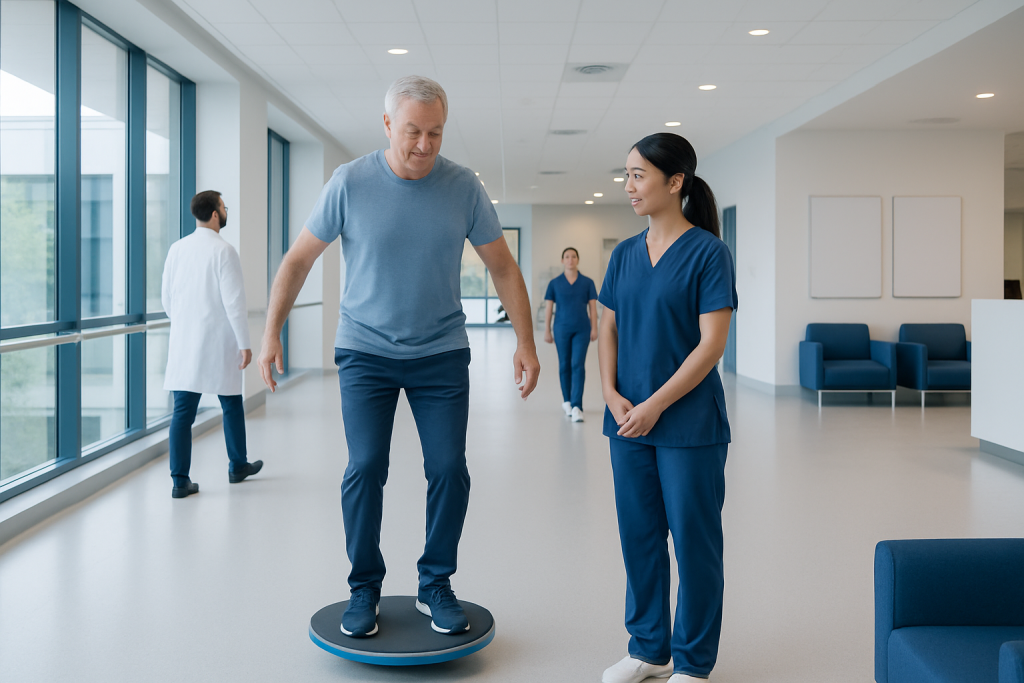
Key Takeaways
- Balance board exercises can help improve balance, coordination, and stability when practiced consistently and safely.
- Good posture, a clear practice area, and gradual progression matter more than doing difficult moves too soon.
- People recovering from ankle, knee, or neurological problems may benefit from professional guidance before starting.
- Pain, repeated giving-way, dizziness, or recent injury are signs to pause and ask a doctor or therapist.
- Balance work is often most effective as part of a broader rehabilitation or wellness plan, not as a stand-alone fix.
Balance board exercises are a practical way to train balance, ankle control, and body awareness when they are introduced gradually and performed with good technique. This article explains how they work, who may benefit, how to do them safely, and when medical guidance is important.
Overview
Balance board exercises are controlled movements performed on a wobble board, rocker board, or other unstable surface to challenge the body’s ability to stay centered. They are commonly used in rehabilitation, athletic training, and general wellness because they ask the feet, ankles, legs, hips, and core to work together in real time.
For many people, the appeal is simple: balance is not just about standing still. It is a skill that supports walking on uneven ground, climbing stairs, changing direction, and recovering from a small slip before it becomes a fall. When done correctly, balance board work can help the nervous system learn to respond more efficiently to shifting weight.
These exercises are not meant to feel dramatic or exhausting at first. In fact, the safest and most effective approach is usually slow, well-controlled practice with a stable surface nearby for support. That is especially true for anyone returning from an injury, surgery, or a period of reduced activity.
Symptoms and signs that balance training may help

People often consider balance board exercises after noticing subtle changes in how they move. A person may feel unsteady when stepping off a curb, turning quickly, or standing on one foot. Others notice frequent ankle sprains, lingering weakness after an injury, or a sense that one leg feels less reliable than the other.
In rehabilitation settings, balance training may also be recommended after an ankle sprain, knee injury, or certain neurological conditions, because these problems can affect body control and confidence with movement. Some people use balance work as part of fall-prevention strategies, especially when everyday tasks begin to feel less secure.
Balance concerns can show up in different ways:
- Wobbling or needing extra support when standing still
- Difficulty walking on uneven ground
- Repeated ankle rolling or sprains
- Feeling less steady after an injury or surgery
- Loss of confidence during sports or daily activities
Because balance problems may have many causes, it is helpful not to self-diagnose. A clinician or physical therapist can determine whether balance training is appropriate and whether another issue needs attention first.
Causes and risk factors

Balance is influenced by multiple systems working together: the inner ear, vision, joint position sense, muscle strength, and the brain’s coordination of movement. When one of these systems is affected, a person may notice reduced steadiness. This is why balance board exercises can be useful; they gently challenge the systems responsible for keeping the body upright.
Risk factors for balance problems may include recent lower-limb injury, muscle weakness, reduced ankle mobility, aging, certain neurological disorders, medication side effects, vision problems, or inner ear conditions. Recovery after surgery or prolonged bed rest can also reduce confidence and control during movement.
Not everyone should begin balance board training immediately. A person with severe dizziness, a new neurologic symptom, significant pain, an unstable joint, or a fresh fracture should be medically assessed first. In those situations, the safest plan is to identify and treat the underlying issue before adding instability-based exercises.
How balance board exercises are evaluated and introduced
Before starting, a health professional may assess posture, walking pattern, joint mobility, leg strength, and how well a person can maintain single-leg stance. In rehabilitation, the goal is not to impress; it is to choose the right level of challenge so the body can learn without becoming overwhelmed.
The type of board matters too. A rocker board typically tilts in one direction, while a wobble board moves more freely and may be more challenging. A therapist may begin with a firm surface, then move to a supported stance, and only later introduce the board itself.
Useful questions to guide the start of training include:
- Can the person stand safely with both feet on the board?
- Is there pain, dizziness, or fear of falling?
- Does the person need a nearby wall, rail, or therapist for support?
- Can the exercise be stopped immediately if symptoms appear?
For international patients seeking structured rehabilitation, this kind of assessment is often especially valuable because it creates a clear plan before travel, after arrival, and during follow-up care back home.
Treatment options and safe techniques
Balance board exercises work best when they are straightforward and controlled. A safe session usually begins with the board on a flat, non-slip surface and with supportive footwear if recommended by the clinician. The person should stand near a wall, countertop, or rail, and keep the knees softly bent rather than locked.
Common starter techniques include shifting weight gently from side to side, holding a stable stance for short periods, or making small forward-and-back adjustments. As control improves, a therapist may add head turns, reaching movements, or single-leg practice. The key is progression, not speed.
Helpful safety principles include:
- Start with short sessions and stop before fatigue makes form sloppy
- Keep the eyes focused forward unless instructed otherwise
- Use support until balance is reliable
- Avoid sudden jumps to advanced tricks or fast movements
- Choose a clear area free of clutter, slippery rugs, or sharp furniture edges
People recovering from injury may also combine balance work with strength exercises, gait training, stretching, or sport-specific drills. In a well-designed program, the board is one tool among several, not the entire treatment.
Prevention and self-care
Balance board exercises can be part of prevention, especially for people who want stronger ankle control or better movement confidence. Still, the best prevention plan is broader than the board itself. Strong legs, mobile joints, good footwear, and regular activity all contribute to steadier movement.
Self-care also means respecting the body’s signals. Mild muscle effort is expected, but sharp pain, spinning sensations, repeated loss of control, or new swelling are not normal training goals. If the exercise feels too difficult, the solution is usually to simplify it, not to push harder.
Practical habits that support safe practice include:
- Warm up briefly before balance work
- Train on a predictable schedule rather than only when symptoms flare
- Combine balance work with lower-body strengthening
- Review technique periodically with a therapist if the person has an injury history
- Return gradually after illness, surgery, or time away from exercise
For travelers receiving care abroad, it can help to ask for a written home-exercise plan before leaving the hospital or clinic so balance training continues safely after returning home.
When to see a doctor
Medical evaluation is appropriate if balance problems appear suddenly, worsen over time, or interfere with daily life. It is also important to seek care if balance issues come with numbness, weakness, fainting, chest discomfort, severe headache, new hearing changes, or vision changes.
Anyone who falls repeatedly, has persistent dizziness, or cannot bear weight comfortably after an injury should be assessed before starting board exercises. A doctor or physical therapist can help determine whether the issue is musculoskeletal, neurological, vestibular, medication-related, or something else entirely.
Balance board exercises are usually safest when they are part of a guided plan. For patients who need coordinated evaluation and rehabilitation, Acibadem Health Point’s multidisciplinary specialists and JCI-accredited hospitals can diagnose and treat balance-related conditions for international patients in a structured care pathway.
What results to expect over time
Progress with balance board training is usually gradual. At first, the main gains may be better awareness of weight shifting, improved confidence, and less wobbling during simple tasks. Later, a person may notice steadier walking, better control during sports, or less hesitation on stairs and uneven surfaces.
Results depend on the reason balance training was started, how often it is practiced, and whether other issues such as weakness or pain are also addressed. Someone recovering from a sprain may progress differently from someone training for general fitness or someone managing a chronic neurologic condition.
The most useful mindset is patient and practical: small, measurable improvements are meaningful. Balance is a skill the body can relearn, but it usually improves best through safe repetition, not intensity.
Frequently asked questions
01Are balance board exercises good for beginners?
Yes, beginners can use balance board exercises if they start with simple movements and enough support. A stable surface, a nearby wall or rail, and short practice sessions make the activity safer and more effective. People with recent injury, dizziness, or significant pain should ask a clinician first.
02How often should someone do balance board exercises?
That depends on the person’s goal, current ability, and medical history. Many programs use brief, regular practice rather than long sessions, because balance improves through consistent repetition. A physical therapist can suggest a schedule that fits recovery or fitness needs.
03Can balance board exercises help after an ankle sprain?
They can be helpful, especially later in recovery when pain and swelling are controlled. Balance work may support ankle stability and help reduce the feeling of instability during walking or sports. The timing should be guided by a healthcare professional to avoid aggravating the injury.
04What is the safest way to use a balance board at home?
Use it in a clear space, wear appropriate footwear if advised, and keep support within reach. Start with both feet on the board and small movements before trying harder variations. If the person feels unsteady, the exercise should be simplified immediately.
05Who should not do balance board exercises without medical advice?
People with recent fractures, severe dizziness, uncontrolled pain, new neurologic symptoms, or a history of frequent falls should be evaluated first. Balance boards can be useful, but they are not the right starting point for every condition. Medical guidance helps match the exercise to the person’s safety needs.
06Do balance board exercises replace physical therapy?
No, they are only one part of a larger rehabilitation plan. Depending on the problem, a person may also need strengthening, mobility work, gait training, or vestibular therapy. A qualified therapist can decide whether the board is appropriate and how it should fit into treatment.
This article is for general information only and is not a substitute for professional medical advice. Please consult a qualified doctor about your individual situation.
Joint and spine care in Turkey — expert assessment & treatment
JCI-accredited · board-certified surgeons · reply within 24h
Add us as a Preferred Source to see more of our trusted health content across Google Search, AI Overviews and Discover.