Back Extensions: Benefits and How to Do Them

Key Takeaways
- Back extensions are not only for athletes; they can also be used in rehabilitation and general conditioning.
- Proper form matters more than how high the torso is lifted or how many repetitions are completed.
- People with certain spine, nerve, or joint conditions should ask a clinician before starting this exercise.
- Back extensions work best as part of a broader plan that includes mobility, core control, and hip strength.
- Pain that is sharp, worsening, or travels into the leg is a reason to stop and seek medical advice.
Back extensions are strengthening movements that target the muscles along the spine, especially the lower back, glutes, and hamstrings. When performed with good technique and the right level of effort, they may support posture, spinal endurance, and everyday movement.
Overview
Back extensions are exercises that ask the body to hinge or lift through the trunk while the spine is kept under control. Depending on the version, they may be done on the floor, on a stability ball, on a Roman chair, or with guidance from a rehabilitation professional. Their main purpose is to train the muscles that help support the back during standing, lifting, walking, and many daily tasks.
In simple terms, the movement is about endurance and control rather than force. The muscles along the back of the trunk, together with the glutes and hamstrings, help the body stay upright and protect the spine from repeated strain. For some people, this makes back extensions a useful part of recovery after back pain has settled; for others, they are part of a general strength routine.
Back extensions are not a universal solution, and they are not meant to push through pain. A well-chosen program usually depends on the person’s symptoms, posture, flexibility, and activity goals. That is why the safest starting point is often a conversation with a physiotherapist, rehabilitation specialist, or physician who understands the full picture.
Symptoms and What the Exercise Feels Like
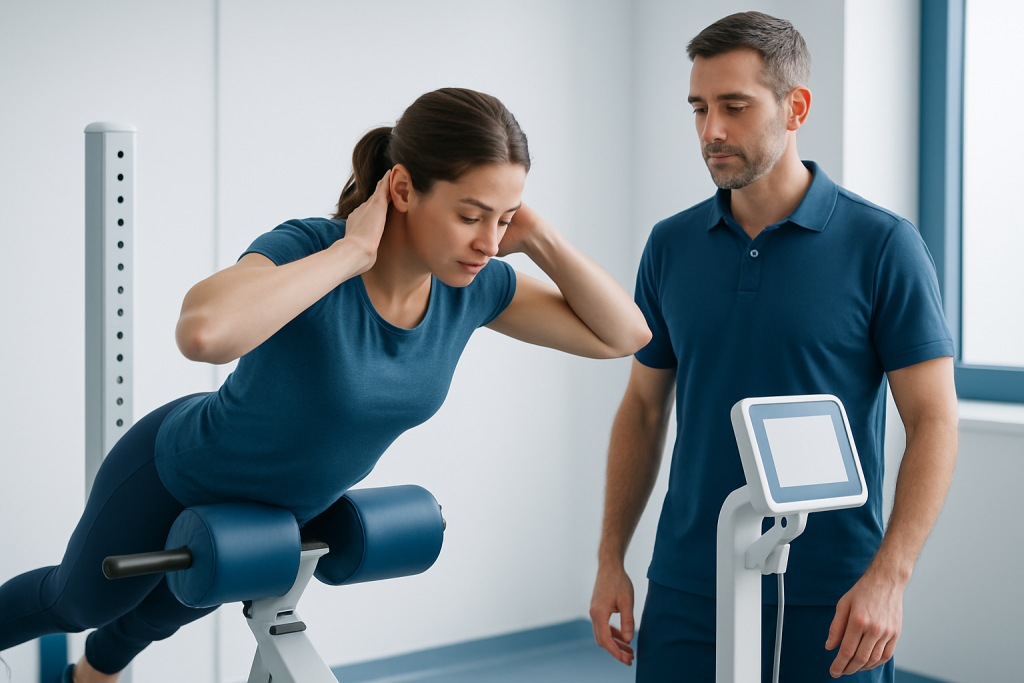
When back extensions are performed well, the effort is usually felt in the lower back, buttocks, and back of the thighs. The movement may create a sense of muscular work or mild fatigue, especially toward the end of a set. Breathing should remain steady, and the neck and shoulders should not feel tense.
What should not happen is a sharp pinch, a sudden catch in the spine, numbness, tingling, or pain that shoots into the leg. Those symptoms suggest that the exercise may be too difficult, too aggressive, or unsuitable for the current condition. Discomfort that lingers after the workout, rather than fading with rest, also deserves attention.
People sometimes mistake a large range of motion for a better exercise. In reality, a smaller, controlled lift is often more appropriate, especially for beginners or those returning after back pain. The goal is to build tolerance and coordination, not to force the body into an exaggerated arch.
Causes and Risk Factors
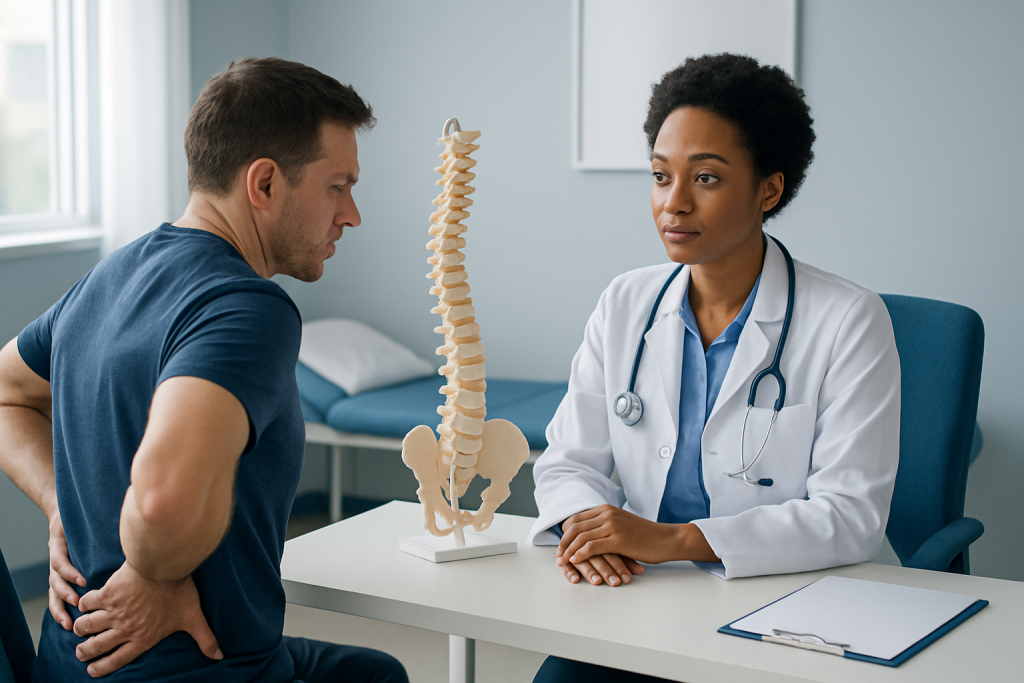
Back extensions are usually introduced because the muscles that support the spine need more endurance, balance, or coordination. Weakness in the posterior chain, prolonged sitting, deconditioning, or a history of back strain can all make this area feel less resilient. In rehabilitation, the exercise may be selected to help restore a safer pattern for bending and lifting.
Certain factors increase the chance that the exercise may need modification. These include recent disc-related symptoms, spinal stenosis, spondylolisthesis, osteoporosis, acute injury, or significant pain with extension-based movements. Hip stiffness, poor abdominal control, and limited hamstring flexibility can also make the exercise feel harder than expected.
Risk is not only about diagnosis; it is also about timing and technique. A person recovering after surgery, traveling for care, or restarting exercise after a long break may need a slower progression than someone who is already active. In such situations, a supervised plan is especially helpful because it can be adjusted to the person’s current tolerance and follow-up schedule.
Diagnosis and Evaluation Before Exercise
Back extensions themselves do not require a diagnosis, but the reason someone is considering them often does. A clinician may review symptoms, posture, movement patterns, and the history of any back injury before recommending the exercise. The assessment may also include questions about leg pain, weakness, bladder or bowel changes, and whether certain positions make symptoms better or worse.
In some cases, imaging or further testing may be considered, especially if there are warning signs, severe pain, or persistent symptoms that do not improve as expected. For many people, however, a careful physical examination and movement assessment provide enough information to decide whether back extensions are appropriate. The aim is to match the exercise to the problem, not to use it automatically.
International patients often benefit from having the assessment documented clearly, because exercise plans need to continue after travel and may be shared with a local provider at home. A simple written plan describing the recommended movement, range, and precautions can make follow-up easier and reduce confusion across appointments.
Treatment Options and How Back Extensions Fit In
Back extensions are one tool within a broader rehabilitation or fitness program. Depending on the person, treatment may also include activity modification, manual therapy, education on lifting mechanics, core stabilization, glute strengthening, and exercises for hip mobility. When back pain is present, the best plan usually addresses more than one piece of the movement chain.
There are several ways to perform the exercise. Floor-based versions are often gentler and easier to control, while supported bench or machine versions may be used later in training when strength and tolerance improve. Some programs use isometric holds, small controlled lifts, or alternating arm-and-leg patterns before advancing to fuller movements.
Helpful form cues usually include keeping the neck long, moving slowly, and stopping before the lower back feels compressed or pinched. The hips should contribute to the movement, and the exercise should look smooth rather than rushed. If symptoms increase, the range can be reduced, resistance removed, or the exercise replaced with a simpler variation until the body is ready.
- Start with a version that feels manageable and controlled.
- Keep the movement pain-free or within the limits advised by a clinician.
- Pair the exercise with core and hip work, not as a stand-alone fix.
- Progress gradually rather than chasing depth or repetition counts.
Prevention and Self-care
For people who use back extensions as part of prevention, consistency matters more than intensity. Regular movement breaks, walking, hip mobility work, and balanced strengthening can help the spine tolerate daily demands. It is also useful to vary positions during the day, especially for those who sit for long periods.
Self-care also means paying attention to how the exercise fits into the rest of life. Sleep, stress, and long travel can all affect back comfort, so a routine that feels easy at home may need adjustment during a busy period or while recovering abroad. Warm-up exercises, a neutral spine, and steady breathing can make the movement feel safer and more predictable.
When in doubt, less is often more. A few well-controlled repetitions done correctly are usually more valuable than a large set performed with poor mechanics. People who are unsure about technique can ask a physiotherapist to watch the movement in person or through a planned follow-up visit after treatment.
When to See a Doctor
Medical advice is important if back pain begins after an injury, if it is severe, or if it does not improve with rest and basic care. It is also wise to seek evaluation if the exercise causes pain that travels below the knee, numbness, tingling, weakness, or a feeling that the leg may give way. These symptoms may suggest nerve involvement and should not be ignored.
A doctor should also be contacted if back extension movements are followed by worsening pain over several days, if there is a history of osteoporosis or spinal surgery, or if the person is unsure whether the exercise is safe for their diagnosis. In such cases, the safest choice is a clinician-guided plan rather than self-directed progression.
For international patients, it can be helpful to arrange follow-up before travel ends so that progress, restrictions, and next steps are clear. Acibadem Health Point’s multidisciplinary specialists and JCI-accredited hospitals can diagnose and treat back-related conditions for international patients, with care plans that are easier to continue after returning home.
Frequently asked questions
01Are back extensions good for lower back pain?
They can be helpful for some people, especially when weakness or poor endurance is part of the problem. They are not appropriate for every back condition, so the exercise should be chosen based on the person’s symptoms and diagnosis.
02Can back extensions make pain worse?
Yes, if the movement is too aggressive or not suited to the underlying issue, pain can flare. Sharp pain, leg symptoms, or pain that lasts after the workout are signs to stop and get advice.
03What muscles do back extensions work?
They mainly work the muscles along the spine, along with the glutes and hamstrings. The exact emphasis depends on the version of the exercise and how it is performed.
04How often should someone do back extensions?
Frequency should be guided by tolerance and the overall exercise plan. Some people use them a few times per week, but others need slower progress or different exercises first.
05Are back extensions safe after a back injury?
Sometimes, but only after a proper assessment and usually with a modified version at first. The timing depends on the type of injury, current symptoms, and how the back responds to movement.
06What is the biggest form mistake with back extensions?
A common mistake is lifting too high and arching the lower back instead of moving with control. A smaller, smoother range is often safer and more effective.
This article is for general information only and is not a substitute for professional medical advice. Please consult a qualified doctor about your individual situation.
Joint and spine care in Turkey — expert assessment & treatment
JCI-accredited · board-certified surgeons · reply within 24h
Add us as a Preferred Source to see more of our trusted health content across Google Search, AI Overviews and Discover.