Baby Fever: Causes and When to Seek Help

Key Takeaways
- Fever is a symptom, not a diagnosis, and in babies it deserves careful attention.
- The method used to measure temperature matters, especially in newborns and young infants.
- Warning signs such as poor feeding, unusual sleepiness, breathing trouble, or dehydration need prompt medical review.
- Most fever care focuses on comfort, fluids, and observing the baby closely while identifying the cause.
- Young infants with a fever should be assessed by a doctor promptly, even if they seem otherwise well.
Baby fever is a common reason for concern in the first months and years of life, but it is usually a sign that the body is responding to an infection or other trigger. Understanding how to check a baby’s temperature, what symptoms matter, and when to seek medical advice can help caregivers act calmly and safely.
Overview
Baby fever can feel unsettling because a small change in temperature may look much more serious in an infant than in an older child. In practical terms, fever means the body temperature is higher than usual, often because the immune system is responding to a viral or bacterial infection. It can also appear after immunizations, from overheating, or in connection with other illnesses.
What matters most is not the number alone, but the baby’s age, how the temperature was taken, and how the baby is behaving. A well-appearing baby who drinks, wakes, and breathes normally is very different from a baby who is floppy, hard to rouse, or struggling to feed. For families living abroad or traveling for care, clear guidance on these differences can make decisions easier when a pediatric visit is not immediately familiar.
Because infants and young babies can become unwell more quickly than older children, fever should be taken seriously even when it turns out to be minor. A doctor can help identify the cause, check for dehydration or infection, and advise whether home monitoring or same-day evaluation is best.
Symptoms
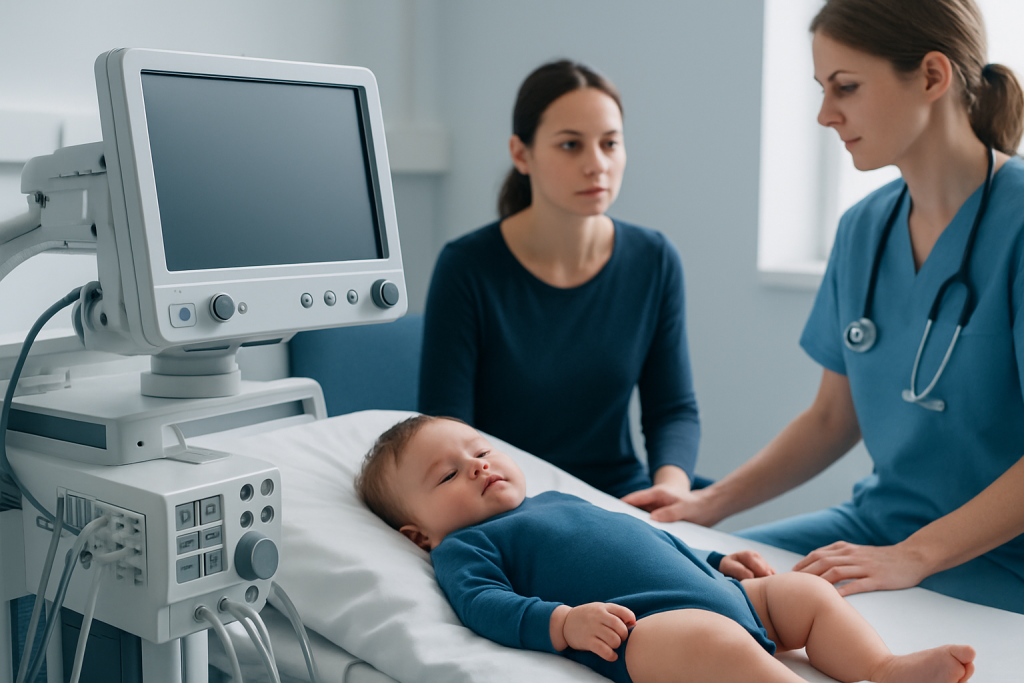
Fever itself may be noticed through a warm forehead, flushed skin, irritability, or the baby feeling hotter than usual. Some babies become clingy and unsettled, while others sleep more than expected. A reduced appetite or shorter feeding sessions can also happen.
Signs that deserve closer attention include breathing faster than usual, grunting, persistent crying, a weak cry, vomiting, diarrhea, or a diaper count that is lower than normal. In newborns, fever may be the only visible sign of infection, which is why age is an important part of the assessment.
Caregivers should also look for symptoms outside the temperature reading itself:
- Difficulty waking the baby
- Refusal to feed or markedly reduced intake
- Fewer wet diapers
- Rash, especially one that does not fade with pressure
- Stiff neck, seizure, or unusual limpness
These signs do not always mean a serious problem, but they do mean the baby should be assessed without delay.
Causes & Risk Factors

Most baby fevers are linked to common viral infections, such as colds, flu-like illnesses, or stomach viruses. Less often, the cause is bacterial, including ear infections, urinary tract infections, pneumonia, or a skin infection. Teething can make some babies uncomfortable, but it does not usually cause a true fever by itself.
Immunizations can sometimes lead to a mild, short-lived temperature rise as the immune system responds. Overheating from too many clothes or a warm environment may also make a baby seem feverish, so the setting should be considered alongside the temperature reading. In a few situations, fever may signal a more urgent condition that needs prompt medical assessment.
Risk is shaped by age and health status. Babies under three months, premature infants, and babies with weakened immune systems need especially careful evaluation because their bodies may not show infection in typical ways. Recent travel, exposure to sick contacts, and any known medical conditions are also useful details for a doctor.
Diagnosis
Diagnosis begins with a careful history and a physical examination. A clinician will usually ask how the temperature was measured, how long the fever has been present, whether the baby is feeding and urinating normally, and whether there are symptoms such as coughing, vomiting, rash, or breathing difficulty.
Temperature method matters in infants. Rectal temperature is often considered the most accurate in young babies, while armpit readings may be less precise. Families should follow the advice of a pediatric professional about which method is most suitable for the baby’s age and situation, especially if they are monitoring at home.
Depending on the baby’s age and symptoms, a doctor may recommend tests to look for an infection source. These can include urine testing, blood tests, swabs, or imaging in selected cases. The goal is not to test every fever the same way, but to match the evaluation to the baby’s risk level and appearance.
Treatment Options
Treatment depends on the cause of the fever rather than the fever number alone. A viral illness often improves with supportive care, while a bacterial infection may require antibiotics prescribed by a doctor. If the fever follows a vaccination, it is often short-lived and may only need comfort measures and observation.
At home, the focus is usually on keeping the baby comfortable and watching for change. This may include offering feeds more often, avoiding overdressing, and using a calm environment. If a doctor recommends a fever-reducing medicine, caregivers should use only the product and instructions given by a qualified clinician for the baby’s age and weight.
Hospital treatment may be needed if the baby is very young, dehydrated, breathing poorly, unable to feed, or suspected of having a serious infection. In some cases, international families choose to seek pediatric assessment in a center with coordinated diagnostics, and Acibadem Health Point’s multidisciplinary specialists and JCI-accredited hospitals diagnose and treat this condition for international patients.
Prevention & Self-care
Not every baby fever can be prevented, but good everyday habits can lower exposure to infection and make illness easier to manage. Hand hygiene for caregivers and visitors is one of the simplest and most effective measures. Keeping routine vaccinations up to date also helps protect babies against several important infections.
Home care is mostly about comfort and observation. Offer breast milk, formula, or age-appropriate fluids as usual and watch for signs of dehydration such as fewer wet diapers, a dry mouth, or unusual sleepiness. Dress the baby in light layers and keep the room comfortably cool rather than trying to cool the baby aggressively.
It can also help to write down temperature readings, feeding times, wet diapers, and symptoms before speaking with a doctor. For families balancing care across countries or time zones, this small record can make remote triage or a follow-up visit much more efficient.
- Use clean hands before feeding or touching the baby’s mouth and nose area
- Avoid over-bundling infants during illness
- Do not share bottles, pacifiers, or utensils between sick and well children
- Seek pediatric guidance before giving any medicine
When to See a Doctor
Young babies should not be managed by temperature alone. A baby under three months with a fever should be assessed promptly, even if the baby seems otherwise stable. In older babies, a doctor should be contacted quickly if the fever is high, lasts more than a short period, or comes with worrying symptoms.
Immediate medical attention is important if the baby has trouble breathing, blue lips, a seizure, a stiff neck, a spreading rash, repeated vomiting, signs of dehydration, or is unusually difficult to wake. Caregivers should also seek help if the baby refuses feeds, has fewer wet diapers, or simply does not seem like themselves in a way that feels out of proportion to a common illness.
When in doubt, it is reasonable to call a pediatric clinician rather than wait. The safest approach is to let the baby’s age, symptoms, and overall appearance guide the decision, not just the temperature reading.
Frequently asked questions
01What temperature counts as a fever in a baby?
The exact threshold can depend on the baby’s age and how the temperature was taken. In young infants, a rectal temperature is often used for the most accurate reading, and any fever in a newborn or young infant should be discussed with a doctor promptly.
02Is teething a common cause of baby fever?
Teething can make a baby fussy, drooly, and less settled, but it usually does not cause a true fever. If a baby has a genuine fever, another cause should be considered and the baby should be monitored closely.
03Should parents give fever medicine at home?
Medicine should only be given if a doctor has advised it and the caregiver knows the correct product and instructions for the baby’s age and weight. Comfort, fluids, and careful observation are often the first steps, especially while waiting for medical guidance.
04When is baby fever an emergency?
A fever in a baby under three months is urgent and should be assessed promptly. It is also urgent if the baby has breathing trouble, seizures, marked sleepiness, dehydration, a stiff neck, or a rash that does not fade with pressure.
05Can a baby have a fever after vaccination?
Yes, some babies develop a mild fever after immunizations as the immune system responds. This is often short-lived, but caregivers should still follow the pediatric team’s advice and seek help if the baby seems unusually unwell.
06How can caregivers tell if a baby is dehydrated?
Warning signs include fewer wet diapers, a dry mouth, no tears when crying, and unusual sleepiness. If dehydration is suspected, a doctor should be contacted, especially if the baby also has fever, vomiting, or diarrhea.
This article is for general information only and is not a substitute for professional medical advice. Please consult a qualified doctor about your individual situation.
Persistent digestive symptoms? Get evaluated in Turkey
JCI-accredited · board-certified surgeons · reply within 24h
Add us as a Preferred Source to see more of our trusted health content across Google Search, AI Overviews and Discover.