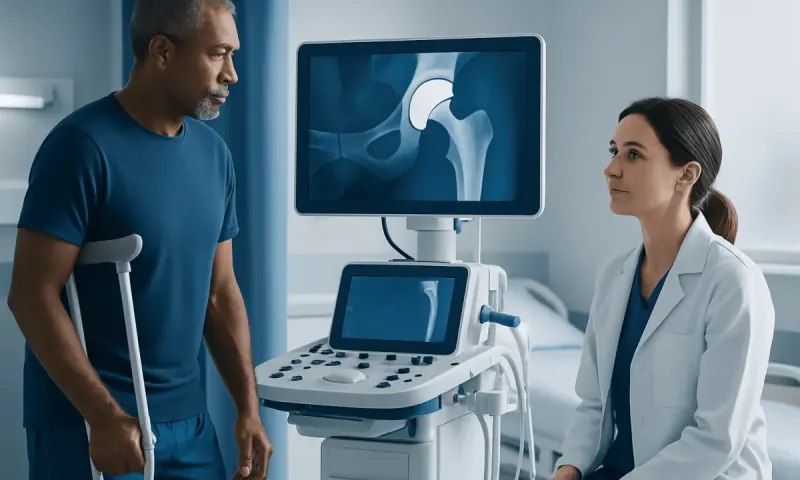
Ankle Fusion vs. Replacement for Arthritis Pain
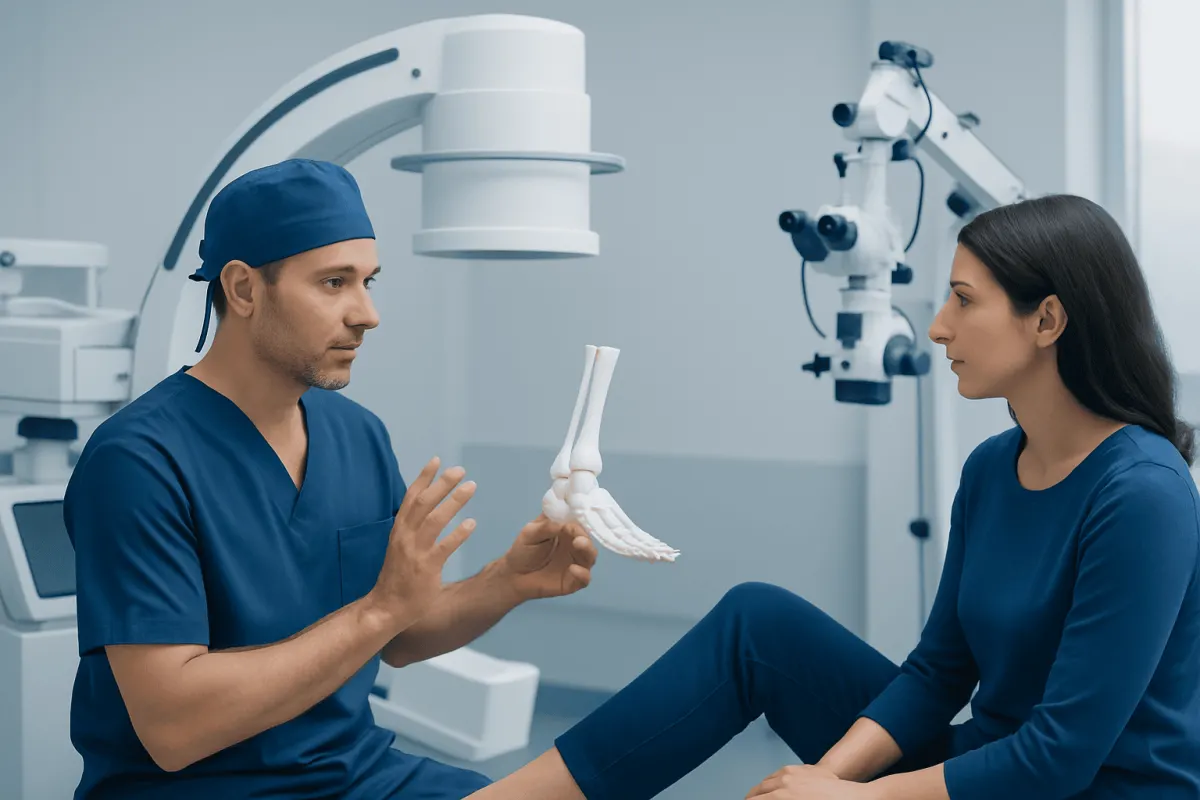
Ankle fusion and ankle replacement are established surgical options for severe ankle arthritis when non-surgical care no longer provides adequate relief. Fusion reliably relieves pain by permanently joining the ankle bones, while replacement aims to preserve ankle motion using an artificial joint; the best choice is individual.
Ankle Fusion vs Replacement: A Side-by-Side Comparison
Ankle fusion vs replacement is a decision between two ways of treating end-stage ankle arthritis. Ankle fusion, also called arthrodesis, removes remaining joint cartilage and holds the bones together until they heal as one. Total ankle replacement, also called total ankle arthroplasty, replaces damaged joint surfaces with metal and plastic components designed to reduce pain while retaining some ankle movement.
| Feature | Ankle fusion | Ankle replacement |
|---|---|---|
| Main aim | Eliminate painful ankle-joint motion | Relieve pain while preserving some motion |
| Joint movement afterward | The ankle joint no longer moves; nearby joints compensate | Some up-and-down ankle movement may remain |
| Typical strengths | Durable option for major deformity, instability or poor bone conditions | May support a more natural walking pattern and reduce stress on nearby joints |
| Typical limitations | May increase demand on foot joints over time | Implants can loosen, wear or require revision in the future |
| Recovery focus | Bone healing at the fusion site | Wound healing, implant positioning and gradual motion recovery |
Neither procedure is automatically better. Both can provide meaningful pain relief when selected carefully, and both require a period of limited weight-bearing, rehabilitation and long-term follow-up. The most useful comparison is not simply motion versus no motion, but which procedure offers the safest, most durable function for the individual ankle.
Why Surgery May Be Considered
The ankle can develop arthritis after a fracture, repeated sprains, inflammatory arthritis, infection, altered alignment or gradual cartilage wear. Compared with hip and knee arthritis, ankle arthritis is more often linked to a past injury. Symptoms may include pain with standing or walking, stiffness, swelling, reduced movement, a sense of instability and difficulty managing uneven ground or stairs.
Surgery is usually considered after non-surgical measures have been tried appropriately. Depending on the cause and severity of symptoms, these may include activity adjustments, supportive footwear, an ankle brace, physiotherapy, weight management where relevant, pain-relieving medicines advised by a clinician and selected injections. A clinician may also assess and treat related conditions such as ankle arthritis or tendon problems that affect joint stability.
The goal of surgery is not to create a “perfect” ankle. It is to reduce pain, improve safe daily movement and support realistic activities. Before recommending an operation, the surgeon considers whether pain truly comes from the ankle joint and whether a less invasive option could still help.
How a Clinician Tells Which Operation May Fit

Choosing between fusion and replacement begins with a detailed assessment rather than an X-ray alone. The surgeon asks about pain location, previous injuries and surgeries, work and activity needs, medical conditions, smoking or nicotine use, medicines and expectations. A physical examination assesses walking, ankle range of motion, skin condition, pulses, sensation, tendon function, alignment and ligament stability.
Standing X-rays show how the joint carries weight and can reveal narrowing, bone changes and deformity. CT scans may clarify bone loss, prior fusion, cysts or complex anatomy. In selected situations, MRI, blood tests, vascular testing or nerve assessment may be useful. Imaging is also used to examine the subtalar and midfoot joints, because arthritis in these nearby joints can influence the preferred operation.
Replacement generally needs enough healthy bone, a stable and correctable alignment, adequate circulation and a soft-tissue envelope that can heal safely. Fusion can sometimes accommodate more severe deformity or bone damage, but it also requires sufficient healing potential. Uncontrolled diabetes, active infection, severe circulation problems and ongoing nicotine exposure can increase complications with either procedure and may need to be addressed first.
Which Is Best, Ankle Fusion or Ankle Replacement?
The best operation is the one that matches the person’s ankle structure, health and priorities. Ankle replacement may be an appropriate option for someone who has advanced arthritis, manageable deformity, stable ligaments, adequate bone quality and a wish to retain ankle movement for everyday walking. It may be especially helpful when preserving movement could reduce strain on already affected neighboring joints.
Ankle fusion may be favored when there is substantial deformity, marked instability, extensive bone loss, poor-quality soft tissues, an active or previous difficult infection, or a level of physical demand likely to place high stress on an implant. It is also a common salvage option after a failed ankle replacement. A successful fusion can produce a stable, less painful limb, although the foot may feel different on slopes or uneven surfaces.
Outcomes vary with the cause of arthritis, surgical technique, rehabilitation and personal health factors. A surgeon should discuss expected benefits, complications, future surgery possibilities and the chance that nearby foot joints may become symptomatic over time. A shared decision is more informative than choosing based on age or activity alone.
What I Wish I Knew Before Ankle Surgery
Before ankle surgery, it is helpful to know that recovery is gradual. Pain may improve before strength, balance, endurance and confidence fully return. The person will commonly need crutches, a walker, knee scooter or other mobility support for a period, and practical planning for stairs, bathing, driving, work, caregiving and transport is important before the operation.
Fusion requires the bones to unite, and not every fusion heals as expected. Replacement retains motion but involves an implant that needs monitoring and may eventually need further surgery. Both procedures carry possible risks, including infection, wound problems, blood clots, nerve irritation, ongoing pain, stiffness and problems with bone or implant healing. The individual surgeon can explain the risks that are most relevant in that case.
Rehabilitation is part of the treatment, not an optional extra. Following weight-bearing instructions, attending follow-up visits, protecting the incision and reporting new symptoms promptly all support recovery. It is also sensible to ask how the planned procedure may affect footwear, driving, sport, work duties and future procedures.
- Ask what pain relief and mobility are realistically expected.
- Ask how long weight-bearing restrictions may last.
- Discuss nicotine cessation, blood sugar management and nutrition before surgery if relevant.
- Clarify who to contact for wound concerns, fever, calf pain or sudden worsening symptoms.
What Is the Best Age for Ankle Replacement?
There is no single best age for ankle replacement. Age matters because younger, highly active people may place more cumulative stress on an implant over many years, potentially increasing the likelihood of later revision. However, chronological age alone does not determine suitability.
Many candidates are middle-aged or older adults with end-stage arthritis whose activity goals are mainly low impact, such as comfortable household walking, community mobility, cycling, swimming or golf. A healthy older adult may be an appropriate candidate, while a younger adult with favorable anatomy and realistic expectations may also be considered after careful discussion.
The more important questions are whether the ankle has sufficient bone and soft-tissue support, whether alignment can be corrected, whether infection and major nerve or blood-flow problems are absent, and whether the person can follow the rehabilitation plan. The surgeon also considers whether other joints in the foot are affected and whether preserving motion is likely to offer a meaningful functional benefit.
Who Is Not a Good Candidate for Ankle Fusion?
Ankle fusion is not ideal for everyone. It may be less suitable when nearby foot joints already have substantial arthritis, because those joints must compensate for the lost ankle motion and may become more painful. It may also be a less attractive option for a person who needs maximum ankle movement for particular occupational, sporting or functional goals, although some limitations can be managed with footwear and rehabilitation.
Fusion can also be unsafe or less likely to heal when there is active infection, severely reduced blood flow, significant nerve-related joint destruction, uncontrolled medical illness or inadequate skin and soft-tissue coverage. Poor bone healing risk is higher in people who use nicotine or have certain medical conditions. These issues do not always rule out surgery, but they may require treatment and optimization first.
Severe arthritis in both ankles or in multiple nearby joints requires individualized planning. In some cases, preserving movement with replacement may be worth discussing; in others, staged surgery, bracing or a different reconstructive procedure may be safer. A foot-and-ankle specialist can explain why fusion is or is not appropriate for the specific pattern of disease.
When to Seek Medical Care
Medical assessment is appropriate when ankle pain persists despite rest and supportive shoes, limits daily activities, causes repeated instability or steadily reduces walking distance. A clinician should also assess a visibly changing ankle shape, persistent swelling, pain after an injury that does not settle, numbness or new difficulty bearing weight.
Urgent medical care is needed for an ankle that is severely painful and deformed after trauma, a cold or pale foot, rapidly increasing redness or swelling, fever with a hot painful joint, or a new wound or drainage near the ankle. These symptoms can have causes that need prompt evaluation.
For people considering surgery, a consultation with an orthopedic foot-and-ankle specialist allows a structured discussion of imaging, non-surgical care and ankle Hip Replacement Surgery?" class="ahp-ilk">replacement surgery or fusion when indicated. Acıbadem Health Point’s multidisciplinary specialists and JCI-accredited hospitals assess and treat foot and ankle conditions for international patients.
Frequently asked questions
01Is ankle fusion more painful than ankle replacement?
Pain after either procedure varies between individuals and is managed with a planned recovery regimen. Fusion involves bone healing, while replacement involves healing around an implant and gradual restoration of movement. The surgical team can explain the expected early recovery course and safe pain-management options.
02Can a person walk normally after ankle fusion?
Many people walk comfortably after a successful ankle fusion, especially on level ground. The ankle itself no longer moves, so nearby foot joints provide compensation. Walking on uneven surfaces, slopes and stairs may feel different, and suitable footwear and rehabilitation can help.
03How long does recovery take after ankle replacement?
Recovery occurs in stages and commonly takes several months. The exact timing for weight-bearing, driving, work and higher-level activities depends on wound healing, X-rays, strength and the surgeon’s protocol. Some improvement in comfort and function can continue for a year or longer.
04Can ankle replacement fail?
Like other joint implants, ankle replacements can develop wear, loosening, infection, instability or bone-related problems. Regular follow-up helps clinicians monitor the implant and address concerns early. If an implant fails, revision surgery or fusion may sometimes be considered.
05Can an ankle fusion be reversed?
A fusion is intended to be permanent because the bones heal together. In highly selected cases, conversion to ankle replacement may be technically possible, but it is complex and not suitable for everyone. This should be discussed as a long-term consideration before fusion surgery.
06What should a person do if ankle arthritis symptoms are getting worse?
They should arrange an assessment with a qualified clinician or foot-and-ankle orthopedic specialist. The evaluation can confirm the source of pain, assess alignment and joint damage, and review non-surgical and surgical options. Sudden severe pain, fever, major swelling or inability to bear weight needs more prompt medical attention.
This article is for general information only and is not a substitute for professional medical advice. Please consult a qualified doctor about your individual situation.
Joint and spine care in Turkey — expert assessment & treatment
JCI-accredited · board-certified surgeons · reply within 24h
Add us as a Preferred Source to see more of our trusted health content across Google Search, AI Overviews and Discover.