Allergic Skin Eruptions Range From Hives to Contact Dermatitis

An itchy rash after trying a new cream. Welts that show up out of nowhere after lunch. If this sounds familiar, you may be dealing with an allergic skin eruption — a rash caused by your immune system reacting to something like a product, medicine, food, insect sting, or environmental allergen.
The good news? Most of these rashes improve once you avoid the trigger and get the right treatment. But some do need a medical assessment to confirm the cause and rule out infection or other skin conditions.
Overview
An allergic skin eruption happens when your immune system reacts to something it sees as harmful. You might notice itching, redness, swelling, or raised bumps. Sometimes the rash appears suddenly; sometimes it builds over several days. Often the trigger is something that touched your skin, or something you ate, inhaled, were injected with, or took as a medicine.
This is a broad term rather than one single diagnosis. It can include hives, allergic contact dermatitis, drug-related rashes, and allergy-related flares of chronic skin conditions such as eczema. Because several non-allergic skin problems can look similar, the main clinical task is to identify whether the rash is truly allergic and what may be triggering it.
Most of these rashes are uncomfortable rather than dangerous, and many settle once you avoid the trigger and treat the symptoms. That said, don’t skip a careful assessment — severe allergy, skin infection, autoimmune disease, and medication reactions can all start with a rash that looks like a simple allergy.
How allergic skin eruptions may look and feel

The appearance depends on the type of reaction. Some people develop hives: raised, itchy welts that can move from one area of the body to another and may come and go within hours. Others develop allergic contact dermatitis, which often causes red, dry, itchy skin with scaling, swelling, or small blisters in the area that touched the trigger.
A rash may be localized, such as under a watch strap, on the hands after using a cleaning product, or on the face after applying a cosmetic. It may also be widespread, especially when linked to medications, foods, or generalized allergic reactions. The skin can feel warm, tight, sore, or intensely itchy, and scratching may lead to broken skin and secondary infection.
Symptoms range from mildly annoying to genuinely disruptive. Common ones include:
- Redness or pink patches
- Itching, stinging, or burning
- Raised welts or plaques
- Dry, flaky, or cracked skin
- Swelling of the eyelids, lips, or surrounding skin
- Blisters, oozing, or crusting in more inflamed reactions
Timing tells us a lot. Hives usually show up quickly after a trigger, while contact dermatitis may take hours or even days to become obvious. Expect your doctor to ask whether the rash keeps coming back in the same place, gets worse after certain products, or improves when you stop the exposure.
Common triggers and risk factors

Triggers vary widely. Products that directly touch the skin are common causes, including fragrances, preservatives, soaps, shampoos, hair dyes, sunscreens, cosmetics, topical antibiotics, adhesives, latex, and metals such as nickel. Plant exposures, especially from gardening or outdoor activity, can also provoke allergic skin reactions.
Internal exposures are another possibility. Foods, medications, supplements, insect stings, and less commonly inhaled allergens may lead to hives or more generalized allergic eruptions. Medication-related rashes are especially important to review carefully because some can be mild while others require prompt medical attention.
Certain factors make allergic skin eruptions more likely or more persistent:
- A personal or family history of allergies, asthma, or atopic eczema
- Repeated occupational exposure, such as healthcare, hairdressing, cleaning, construction, or food handling
- Frequent handwashing or wet work that weakens the skin barrier
- Sensitive or already inflamed skin
- Using multiple new skincare or cosmetic products at once
Keep in mind that not every itchy rash is an allergy. Irritant reactions, infections, heat rash, psoriasis, scabies, and autoimmune conditions can all look similar. That’s why the story of what you’ve been exposed to — and the pattern of the rash — matters so much for diagnosis.
How doctors diagnose the cause
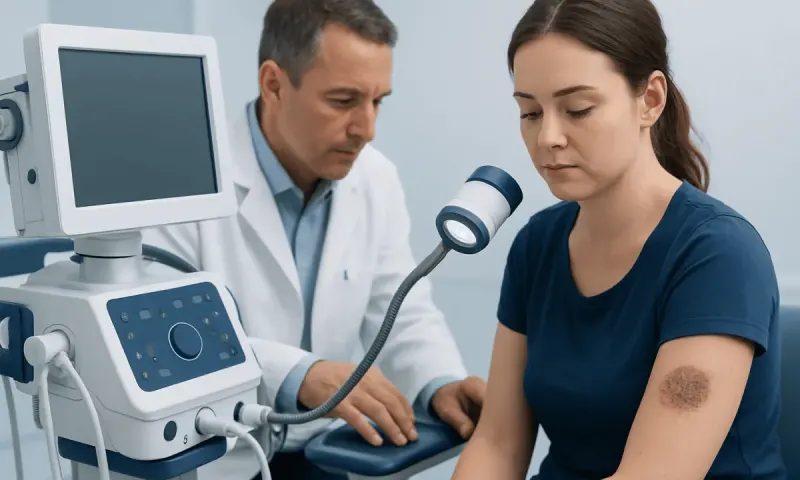
Diagnosis usually begins with a detailed history and skin examination. A doctor will ask when the rash started, whether it is itchy or painful, what products or medicines were used recently, and whether there were possible exposures at work, home, or outdoors. Photos of the rash at its worst can sometimes help if the eruption comes and goes.
The distribution of the rash often gives important clues. For example, a reaction limited to the earlobes may suggest metal exposure, while a rash on the hands may point to soaps, gloves, or cleaning agents. Welts that appear and fade quickly may suggest hives, whereas persistent itchy patches in areas of contact may suggest allergic contact dermatitis.
Testing is not always necessary, but it can be helpful when the cause is unclear or the rash keeps returning. A specialist may recommend patch testing for suspected contact allergens, or other allergy evaluation based on the history. In selected cases, blood tests or a skin biopsy may be used to rule out other conditions rather than to confirm allergy itself.
One thing we always ask about: your medicines. Don’t restart or stop any prescription medicine on your own — but do tell your doctor about anything new, including over-the-counter products, herbal supplements, and topical creams.
Treatment options and symptom relief
Treatment depends on the type and severity of the eruption. The first step is to avoid the suspected trigger whenever possible. If the reaction is caused by a skincare product, cosmetic, detergent, jewelry item, glove material, or topical medicine, stopping exposure may significantly improve symptoms. For some patients, treatment focuses on repairing the skin barrier with gentle moisturizers and fragrance-free care.
Doctors may recommend medicines to reduce inflammation and itching. These can include antihistamines for hives and itch, or anti-inflammatory creams for localized dermatitis. More extensive or severe reactions may sometimes need short-term prescription treatment under medical supervision. If the diagnosis is uncertain or symptoms are recurrent, a dermatologist or allergy specialist may help tailor treatment and identify triggers through allergy testing.
When chronic eczema is part of the picture, treatment may overlap with broader eczema treatment approaches such as barrier repair, trigger control, and prescription anti-inflammatory therapy. If hives are frequent or persistent, evaluation for dermatology care may help distinguish allergy-related hives from other causes and guide longer-term management.
Please don’t spend too long self-treating a severe or rapidly spreading rash. Some eruptions that look allergic are actually infected, caused by a medicine, or part of another inflammatory skin disorder — and each of these needs a different treatment.
Daily skin care, prevention, and self-care
Prevention starts with protecting the skin barrier and reducing contact with likely triggers. Fragrance-free cleansers, lukewarm rather than hot showers, and regular use of plain moisturizers can help the skin stay less reactive. New skincare or cosmetic products are often better introduced one at a time so that any reaction is easier to trace.
People with known contact allergies may need to read labels carefully and avoid specific ingredients or materials. Protective gloves may help with cleaning or wet work, but the glove material itself should be suitable, especially for anyone sensitive to latex or rubber additives. Jewelry, watches, phone cases, and clothing fasteners can also be hidden sources of metal exposure.
Useful self-care steps include:
- Stopping suspected new products until the skin settles
- Using bland, fragrance-free moisturizers regularly
- Avoiding scratching, which can worsen inflammation and break the skin
- Keeping nails short and using cool compresses for itch relief
- Tracking flares in a symptom diary, including foods, medicines, activities, and products
If the rash recurs, a written list of ingredient names or tested allergies can be very helpful. Near the end of the care journey, some patients benefit from specialist follow-up to review ongoing triggers. Acıbadem Health Point’s multidisciplinary specialists in JCI-accredited hospitals diagnose and treat allergic and inflammatory skin conditions for international patients when more detailed evaluation is needed.
When to seek medical care
Medical care is appropriate if an allergic skin eruption is severe, keeps coming back, lasts more than a short time, or interferes with sleep and daily activities. Evaluation is also important when the cause is unclear, the rash follows a new medicine, or the skin becomes painful, swollen, or infected-looking.
Urgent medical attention is needed if the rash occurs with trouble breathing, wheezing, dizziness, faintness, swelling of the lips or tongue, or a feeling that the throat is closing. The same is true for widespread blistering, involvement of the eyes or mouth, high fever, or a rapidly worsening rash. These features can suggest a severe allergic reaction or another serious condition rather than a simple skin allergy.
If your baby or child has a significant rash, get medical advice — especially if there’s fever, poor feeding, unusual sleepiness, or the rash covers a large area. A prompt check-up makes sure the treatment is right and that we don’t miss a non-allergic cause that matters.
Frequently asked questions
01Are allergic skin eruptions the same as eczema?
No. Allergic skin eruptions are a broad group of rashes caused by immune reactions, while eczema is a specific inflammatory skin condition that can be influenced by allergies in some people. A person may have eczema, allergic contact dermatitis, hives, or more than one of these at the same time.
02How long do allergic skin eruptions last?
The duration depends on the trigger and the type of reaction. Hives may fade within hours to days, while contact dermatitis can take days to weeks to fully settle, especially if exposure continues. Persistent or recurrent rashes should be medically assessed.
03Can stress cause allergic skin eruptions?
Stress does not usually create a true allergy by itself, but it can make itching and inflammation feel worse and may trigger flares in conditions such as eczema or hives. Because stress can overlap with other triggers, it is best considered one part of the overall picture rather than the only cause.
04Should a patient stop all skincare products if a rash appears?
It is often sensible to stop newly introduced or suspected products and switch temporarily to simple, fragrance-free skin care. However, prescribed treatments should not be stopped without medical advice, especially if the rash might be related to an important medicine. A clinician can help identify what is safe to continue.
05Do allergic skin eruptions always need allergy testing?
No. Many cases can be managed based on the history, appearance of the rash, and response to avoiding likely triggers. Testing is more useful when the rash keeps returning, the trigger is not clear, or allergic contact dermatitis is suspected.
06When is a skin rash an emergency?
A rash needs urgent attention if it happens with breathing difficulty, lip or tongue swelling, dizziness, fainting, or throat tightness. Emergency care is also important for widespread blistering, severe pain, fever, or rash involving the eyes or inside the mouth.
This article is for general information only and is not a substitute for professional medical advice. Please consult a qualified doctor about your individual situation.
Explore treatments in Turkey — costs, top hospitals & a free quote
JCI-accredited · board-certified surgeons · reply within 24h
Add us as a Preferred Source to see more of our trusted health content across Google Search, AI Overviews and Discover.