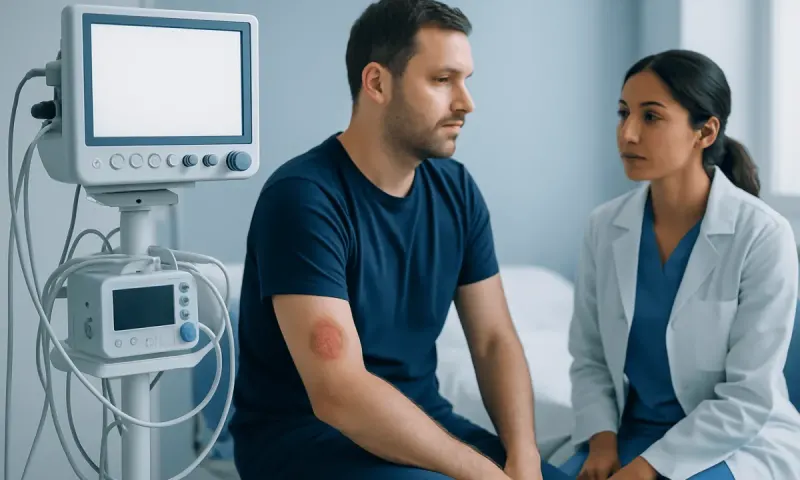
Skin and Mouth Lesions in Advanced HIV and Their Causes

You notice a white patch inside your cheek that won’t rub away, or a purple spot on your leg that keeps getting bigger. When HIV has significantly weakened the immune system, changes like these can appear on the skin, inside the mouth, or on the genitals.
They are not one single disease. They are a signal — a sign that infections, inflammation, or certain cancers may need prompt medical evaluation and treatment.
Overview: What AIDS Lesions Mean
AIDS lesions are visible or painful changes in the skin or mucous membranes that occur in the setting of advanced HIV infection. They may look like dark patches, red or purple bumps, ulcers, blisters, white patches in the mouth, or sores that do not heal as expected. In many cases, these lesions develop because the immune system is no longer able to fully control infections or abnormal cell growth.
There is no single diagnosis behind the term. It covers fungal, viral, and bacterial infections; inflammatory skin disorders; medication-related eruptions; and cancers such as Kaposi sarcoma. That is why two people with HIV can have lesions that look nothing alike and need completely different treatments.
Modern HIV treatment has made severe HIV-related skin and mouth disease much less common in many parts of the world. Even so, a lesion can be an important clue that HIV is not yet diagnosed, is not fully controlled, or that something else is going on. A careful examination is what tells us the cause and points to the right treatment.
How AIDS Lesions Can Look and Feel
AIDS lesions can appear almost anywhere on the body. Common sites include the face, arms, legs, chest, back, scalp, mouth, lips, tongue, genitals, and around the anus. Some are painless and mainly noticeable because of their color or shape, while others may itch, burn, bleed, crack, or cause significant pain with eating, swallowing, or sexual activity.
Different causes create different patterns. Kaposi sarcoma often appears as purple, brown, red, or dark blue spots, plaques, or nodules. Oral thrush usually causes creamy white patches inside the mouth that may leave a sore red surface when wiped. Herpes simplex may lead to painful blisters or shallow ulcers, while shingles can cause grouped blisters and burning pain along one side of the body.
Other lesions are quieter. Persistent mouth ulcers, genital ulcers, widespread itching with bumps, severe seborrheic dermatitis, warts, or sores that simply will not heal can all occur in people with advanced HIV. And they take a toll beyond the skin — on sleep, eating, speaking, confidence. That alone is reason enough to have them looked at.
- Flat or raised dark, red, or purple patches
- White patches or soreness in the mouth
- Painful blisters or ulcers
- Itchy rashes or scaly plaques
- Warts or growths around the mouth or genitals
- Sores that enlarge, recur, or fail to heal
Common Causes and Risk Factors

The main reason AIDS lesions develop is immune suppression caused by uncontrolled or advanced HIV infection. When the body’s CD4 cells are severely reduced, common organisms that are usually controlled more easily can cause more extensive disease. This is why the same virus, fungus, or bacterium may lead to more severe or persistent lesions in a person with advanced HIV than in someone with a healthy immune system.
Infections are among the most common causes. These include fungal conditions such as oral candidiasis, viral infections such as herpes simplex, herpes zoster, human papillomavirus, and molluscum contagiosum, and bacterial skin infections. Some lesions are due to inflammatory skin disease, including eczema-like eruptions or psoriasis that becomes more severe with HIV. Others can be linked to medication reactions, especially when new treatment has recently started.
Certain cancers are especially important to consider. Kaposi sarcoma is strongly associated with immune suppression and may affect not only the skin but also the mouth, lymph nodes, lungs, or digestive tract. Sometimes what someone is worried about turns out to be Kaposi sarcoma. Conditions such as oral hairy leukoplakia and chronic ulcers can also point to significant immune weakness.
Risk factors include not knowing one has HIV, delayed HIV treatment, interruption of antiretroviral therapy, poor viral control, and other infections. Smoking, poor nutrition, stress, and chronic friction or skin injury may worsen some lesions, but they are usually not the root cause on their own.
How Doctors Diagnose the Cause
Diagnosis starts with a detailed history and physical examination. A doctor will ask when the lesions began, whether they are painful or itchy, whether they are growing or spreading, and whether there are other symptoms such as fever, weight loss, diarrhea, cough, or difficulty swallowing. Information about HIV status, current medications, previous infections, and recent sexual or skin exposures also helps narrow the cause.
The appearance of a lesion can offer clues, but visual inspection alone is often not enough. Doctors may recommend blood tests, HIV testing if status is unknown, viral load and CD4 testing, swabs for viral or fungal infection, or a skin scraping. Mouth lesions may be examined by a specialist, and genital or anal lesions may need focused assessment depending on the symptoms.
If cancer or an unusual infection is suspected, a biopsy may be needed. This means taking a small sample of tissue to examine under a microscope. Biopsy is especially useful when lesions are dark, raised, bleeding, non-healing, or involve the mouth or internal organs. In some cases, imaging or endoscopy is used if there are symptoms suggesting deeper involvement.
Symptoms overlap a great deal with other HIV/AIDS complications, so more than one specialty is usually involved. Depending on where the lesion is and what we suspect, that may mean dermatology, infectious diseases, oral medicine, gastroenterology, oncology, or surgery.
Treatment Options for AIDS Lesions
Treatment depends on the underlying diagnosis, not just on how the lesion looks. A fungal infection may improve with antifungal medicine, bacterial skin infection may need antibiotics, and herpes-related lesions may require antiviral treatment. If a medication reaction is suspected, the care team may review and adjust the treatment plan carefully rather than stopping medicines without guidance.
One of the most important parts of care is controlling HIV itself. Effective antiretroviral therapy helps the immune system recover and can reduce the frequency and severity of many HIV-related lesions over time. For some people, restoring immune function is the key step that allows stubborn skin or mouth problems to improve more fully.
When lesions are linked to cancer or extensive tissue involvement, more specialized treatment may be needed. For example, Kaposi sarcoma may be managed with local procedures, systemic therapy, or medical oncology care depending on the extent of disease. In selected situations, doctors may also consider biopsy, lesion removal, or supportive procedures through services such as dermatology or infectious diseases.
Comfort matters too. Pain control, mouth rinses your clinician recommends, gentle skin care, hydration, and nutritional support can make your days easier while the main cause is being treated. Try not to keep treating a persistent lesion with over-the-counter products for weeks on your own — especially if the area is getting worse.
Self-Care, Prevention, and Daily Management
The most effective way to reduce the risk of AIDS lesions is to keep HIV well controlled with consistent medical care and prescribed antiretroviral therapy. Regular follow-up allows doctors to monitor viral load, immune status, medication tolerance, and any early warning signs of infection or cancer. Missing treatment or stopping it without advice can increase the likelihood of immune decline and related complications.
Day-to-day care of your skin and mouth makes a real difference. Use mild cleansers, keep skin dry but moisturized, protect your lips and mouth from irritation, and resist picking or scratching — that lowers both discomfort and the risk of a second infection on top. If mouth sores or thrush make eating hard, softer foods and plenty of fluids can carry you until treatment starts.
Safer sex practices, avoiding sharing needles, and timely testing for sexually transmitted infections are part of broader HIV-related prevention and health maintenance. Vaccinations and treatment of coexisting infections should be discussed with a clinician, since preventive care can lower the burden on the immune system.
For international patients who need coordinated evaluation, Acıbadem Health Point’s multidisciplinary specialists and JCI-accredited hospitals diagnose and treat complex HIV-related skin, oral, and oncologic conditions. Supportive care is individualized, and referral to the most appropriate specialist depends on the cause of the lesion.
When to Seek Medical Care
Medical advice should be sought promptly for any new lesion in a person known to have advanced or uncontrolled HIV, especially if it is painful, rapidly spreading, bleeding, or not healing. Evaluation is also important when lesions appear together with fever, trouble swallowing, weight loss, shortness of breath, severe diarrhea, or generalized weakness, since these symptoms may suggest a deeper infection or more widespread illness.
Urgent assessment is warranted if a lesion affects the eyes, breathing, or ability to eat and drink, or if severe pain is present. Mouth or throat lesions that make swallowing difficult can lead to dehydration and poor nutrition. Dark or purple lesions that grow, multiply, or involve the mouth should also be examined to rule out Kaposi sarcoma or another serious cause.
Anyone who has lesions suggestive of HIV-related disease but does not know their HIV status should arrange testing and medical assessment without delay. Early diagnosis allows treatment to begin sooner and may prevent further complications. Even when the cause turns out to be treatable and not dangerous, it is safer to have persistent or unusual lesions checked by a qualified doctor.
Frequently asked questions
01Are AIDS lesions the same as HIV rash?
No. HIV rash is a broad term that can describe several skin changes related to HIV, medications, or infections. AIDS lesions usually refers more specifically to visible sores, patches, growths, or mouth changes seen when HIV is advanced or when related conditions develop.
02Do AIDS lesions mean a person definitely has cancer?
No. Many AIDS lesions are caused by infections such as thrush or herpes rather than cancer. However, some lesions, especially dark purple or non-healing growths, do need evaluation because cancers such as Kaposi sarcoma can occur in advanced HIV.
03Can AIDS lesions go away with HIV treatment?
Some can improve significantly once antiretroviral therapy controls HIV and the immune system begins to recover. Still, many lesions also need direct treatment, such as antifungal, antiviral, or cancer-specific therapy. A doctor can determine which approach is needed.
04Are mouth lesions common in advanced HIV?
Yes. Oral thrush, ulcers, and other mouth changes are relatively common when immune function is weakened. Because they can affect eating, swallowing, and nutrition, they should be assessed rather than ignored.
05Can someone have AIDS lesions before being diagnosed with HIV?
Yes. In some people, persistent skin or mouth lesions are one of the first signs that lead to HIV testing. This is why unusual, recurrent, or non-healing lesions should be medically reviewed, especially when other symptoms are present.
06Should painful or spreading lesions be treated at home first?
Home care may provide comfort, but it should not replace medical evaluation if lesions are painful, spreading, or not healing. The appearance alone cannot confirm the cause, and delay can allow infection or another condition to worsen.
This article is for general information only and is not a substitute for professional medical advice. Please consult a qualified doctor about your individual situation.
Hair transplant in Turkey — costs, graft counts & a free assessment
JCI-accredited · board-certified surgeons · reply within 24h
Add us as a Preferred Source to see more of our trusted health content across Google Search, AI Overviews and Discover.