ADHD Assessment: When Neuropsychological Testing May Help

An ADHD assessment is a careful clinical process that looks at attention, behavior, learning, and daily functioning. Neuropsychological testing is not needed for everyone, but it can be helpful when symptoms are complex, overlapping, or difficult to explain.
Overview: What an ADHD Assessment Involves
An ADHD assessment is a structured evaluation used to understand whether a person’s difficulties with attention, impulsivity, hyperactivity, organization, or follow-through are consistent with attention-deficit/hyperactivity disorder. It is usually based on a detailed clinical history, current symptoms, how long these symptoms have been present, and how much they affect daily life at school, work, home, or in relationships.
ADHD cannot be confirmed by a blood test, brain scan, or one short office test. Instead, diagnosis depends on gathering information from several sources. A clinician may review developmental history, school performance, family observations, mental health symptoms, sleep patterns, and medical issues that could affect attention or behavior.
Neuropsychological testing is one possible part of this process. It is not required for every person with suspected ADHD. However, it may be useful when symptoms are unclear, when more than one condition may be present, or when a person has learning, memory, language, or emotional concerns alongside attention difficulties.
Signs That May Lead to an ADHD Evaluation
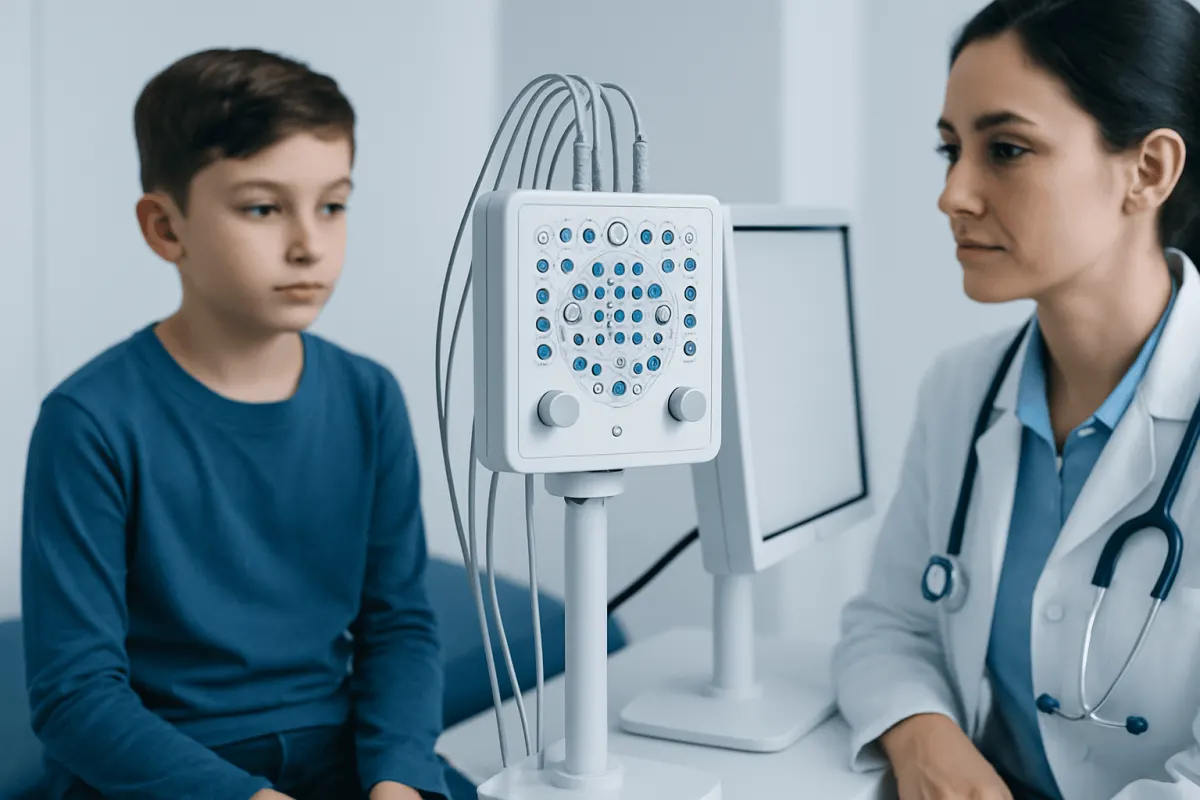
People seek an ADHD assessment for many reasons. Some children have trouble sitting still, following instructions, finishing schoolwork, or controlling impulses. Others are not especially hyperactive but seem easily distracted, forgetful, disorganized, or slow to complete tasks. In adolescents and adults, common concerns include poor time management, missed deadlines, restlessness, difficulty prioritizing, and inconsistent performance despite effort.
Symptoms alone do not always mean ADHD. Similar problems can happen with anxiety, depression, sleep deprivation, stress, learning disorders, hearing or vision problems, and some medical conditions. For this reason, a careful assessment looks not only at what symptoms are present, but also when they started, where they occur, and what else might explain them.
A clinician may recommend further evaluation when difficulties interfere with learning, work, family life, or emotional well-being. An assessment can also help when a person has already been treated for ADHD but continues to struggle, raising the question of whether another issue is contributing.
- Frequent distractibility or daydreaming
- Impulsivity or acting before thinking
- Restlessness or difficulty staying seated
- Forgetfulness and losing items often
- Poor planning, organization, or task completion
- Academic or work performance that does not match ability
When Neuropsychological Testing May Help

Neuropsychological testing is most helpful when the clinical picture is complicated. It may be considered if symptoms overlap with a learning disorder, developmental condition, mood disorder, anxiety disorder, sleep problem, or history of concussion or neurological illness. Testing can also be useful when a child or adult appears bright and capable but is still underperforming, and the reasons are not clear from history alone.
These tests look at thinking skills such as attention, working memory, processing speed, language, visual-spatial skills, problem-solving, and executive functions like planning and self-monitoring. The goal is not simply to label a person, but to understand the pattern of strengths and weaknesses that may be affecting daily functioning. This can help distinguish ADHD from other causes of concentration problems, or show that more than one condition is present.
Neuropsychological testing may also support practical decisions. For example, it can help guide school accommodations, identify the need for learning support, or clarify what kinds of strategies may be most useful at work or home. In some cases, the assessment may point toward related concerns such as learning disabilities or symptoms of depression, which may also need attention.
At the same time, it is important to know that normal or mixed test results do not automatically rule out ADHD. Many people with ADHD can perform well in a quiet testing room, especially for short periods. For that reason, test findings are interpreted alongside interviews, rating scales, and real-world functioning.
What Happens During the Evaluation
A comprehensive ADHD assessment usually begins with a detailed interview. The clinician asks about current symptoms, childhood behavior, school or work performance, family history, medical conditions, medications, sleep, emotional health, and any previous evaluations. For children, parents and teachers often complete behavior rating scales. For adults, input from a partner, parent, or someone who knows the person well may also be useful.
If neuropsychological testing is recommended, it is usually done by a psychologist or neuropsychologist. The person completes a series of tasks designed to measure specific cognitive abilities. Some tasks may involve listening, speaking, remembering information, solving problems, reading, writing, or responding under time pressure. The testing is structured, but it is not a pass-or-fail exam.
The evaluation may also include screening for related conditions. Depending on the person’s symptoms, a clinician may look for learning disorders, language difficulties, anxiety, depression, autism spectrum traits, sleep problems, or other neurological concerns. In some cases, a broader neurological check-up or mental health evaluation may be appropriate to make sure symptoms are understood in context.
After the assessment, results are reviewed and explained in clear terms. The final report may describe whether findings support ADHD, what other factors are present, and what supports or treatments may be helpful. Many families and adults find this step valuable because it turns a confusing set of struggles into a more understandable plan.
How ADHD Is Diagnosed and What Testing Can Show
ADHD is diagnosed using established clinical criteria, usually based on symptoms of inattention and/or hyperactivity-impulsivity that began in childhood and affect more than one setting. The clinician considers whether symptoms are persistent, developmentally inappropriate, and causing meaningful impairment. A diagnosis also requires considering whether another condition better explains the symptoms.
Neuropsychological testing does not diagnose ADHD by itself, but it can add important detail. For example, testing may show reduced sustained attention, weaker working memory, slower processing speed, or problems with cognitive flexibility and inhibition. These findings may support the clinical impression and help explain why a person struggles with note-taking, reading efficiency, test-taking, multitasking, or completing long assignments.
Testing can also reveal abilities that are relatively strong. A person may have excellent verbal reasoning but weaker organization and time management, or strong visual thinking with slower written output. This profile matters because treatment is not only about reducing symptoms. It is also about building on strengths and matching supports to the individual’s needs.
In some cases, testing shows that attention problems are better explained by another issue, such as significant anxiety, poor sleep, or a specific learning difficulty. That is one reason a thoughtful ADHD assessment can be so helpful: it aims for accuracy, not speed.
Treatment Options After Assessment
Treatment depends on the person’s age, symptom pattern, daily challenges, and whether other conditions are present. Many people benefit from a combination of approaches rather than one solution alone. These may include education about ADHD, behavioral strategies, school accommodations, organizational coaching, psychotherapy, and medication when appropriate.
Children may need classroom supports such as preferential seating, task breakdown, extra time, movement breaks, or help with planning assignments. Adults may benefit from calendar systems, reminder tools, environmental changes to reduce distraction, and strategies for prioritizing and completing tasks. If emotional distress, sleep problems, or learning issues are also present, these should be treated as part of the overall plan.
Medication is one option for some patients and is usually considered after a proper medical and psychological evaluation. Follow-up is important to monitor benefit, side effects, and functional improvement. Depending on the situation, care may involve child psychiatry, adult psychiatry, pediatrics, psychology, or neurology, including child neurology or neurology input when symptoms overlap with other developmental or neurological concerns.
For international patients seeking coordinated assessment and care, Acıbadem Health Point’s multidisciplinary specialists and JCI-accredited hospitals provide evaluation and treatment planning tailored to individual needs.
Self-care, School Support, and Family Strategies
While self-care does not replace professional diagnosis or treatment, healthy routines can make symptoms easier to manage. Regular sleep, physical activity, balanced meals, and predictable daily structure can all support attention and emotional regulation. Reducing digital distractions, using timers, and breaking tasks into smaller steps may also help.
Families, teachers, and employers play an important role. Supportive communication works better than criticism or blame. Clear expectations, simple routines, written reminders, and positive reinforcement often improve follow-through more than repeated verbal corrections. For children, home-school collaboration can be especially valuable.
It also helps to focus on strengths. Many people with ADHD are creative, energetic, curious, and able to think in original ways. A good assessment should identify not only difficulties, but also areas of resilience that can be used in learning, work, and relationships.
- Keep a consistent sleep and wake schedule
- Use planners, visual schedules, or reminder apps
- Break large tasks into short, manageable steps
- Create a quiet workspace with fewer distractions
- Ask about school or workplace accommodations when needed
When to Seek Professional Help
It is reasonable to seek an ADHD assessment when attention, impulsivity, restlessness, or disorganization are interfering with daily life. Early evaluation can be especially helpful when a child is struggling at school, when an adolescent’s self-esteem is falling, or when an adult repeatedly has problems with performance, finances, relationships, or emotional burnout.
Professional assessment is also important if symptoms have changed suddenly, seem much worse than before, or are accompanied by memory decline, severe mood changes, sleep problems, headaches, seizures, or other neurological symptoms. In those situations, a doctor may need to look beyond ADHD and consider broader medical or brain-related causes.
A well-conducted assessment is not about judging character or effort. It is about understanding how the brain functions in real life and identifying practical next steps. When questions remain after an initial evaluation, neuropsychological testing can be a useful tool for gaining clarity.
Frequently asked questions
01Is neuropsychological testing required to diagnose ADHD?
No. ADHD is usually diagnosed through a clinical assessment that includes history, symptom review, and rating scales. Neuropsychological testing is optional and is mainly used when the picture is complex or when other conditions may be involved.
02What is the difference between an ADHD assessment and neuropsychological testing?
An ADHD assessment is the overall evaluation process used to determine whether someone meets criteria for ADHD. Neuropsychological testing is one part of that process that measures thinking skills such as attention, memory, processing speed, and executive function.
03Can neuropsychological testing rule out ADHD?
Not by itself. Some people with ADHD perform well on structured tests, especially in quiet one-to-one settings. Clinicians interpret test results together with history, symptoms, and day-to-day functioning.
04How long does an ADHD evaluation take?
It varies. A basic clinical evaluation may take one or more visits, while neuropsychological testing can take several hours and may be completed in one session or across multiple appointments. Timing depends on age, symptoms, and how broad the assessment needs to be.
05Can adults have an ADHD assessment even if they were never diagnosed as children?
Yes. Many adults are assessed later in life after years of difficulty with organization, focus, time management, or emotional regulation. The evaluation usually includes questions about childhood symptoms because ADHD begins in childhood, even if it was not recognized at the time.
06What other conditions can look like ADHD?
Several conditions can cause attention or concentration problems, including anxiety, depression, sleep disorders, learning disorders, substance use, and some medical or neurological conditions. That is why a careful assessment looks beyond symptoms alone.
This article is for general information only and is not a substitute for professional medical advice. Please consult a qualified doctor about your individual situation.
Explore treatments in Turkey — costs, top hospitals & a free quote
JCI-accredited · board-certified surgeons · reply within 24h
Add us as a Preferred Source to see more of our trusted health content across Google Search, AI Overviews and Discover.