Abscess in Breast Pictures: Signs to Recognize
Abscess in breast pictures can help people recognize visible changes such as a red, swollen, tender area or drainage from the skin, but photographs alone cannot diagnose a breast abscess. Prompt medical assessment is important because drainage, antibiotics, or imaging may be needed to clear the infection and exclude other causes of breast changes.
What abscess in breast pictures can and cannot show
Abscess in breast pictures may show a patch of redness, swelling, shiny or stretched-looking skin, and a visibly raised or tender area. Some images show a yellow-white point, an open area, or pus-like drainage when the abscess is close to the skin surface. In people with darker skin tones, redness may be less obvious and may instead appear as deepening skin color, purple-brown discoloration, warmth, swelling, or tenderness.
A breast abscess is a collection of pus within breast tissue. It usually develops when inflammation or infection is not fully resolved and fluid becomes trapped in a cavity. Pictures can be useful for understanding why a change deserves attention, but they cannot reliably distinguish an abscess from mastitis, a cyst, an inflamed skin condition, or, less commonly, another breast disorder.
Not every abscess looks dramatic on the outside. A deeper abscess may cause pain, a firm lump, fever, or a feeling of pressure with little visible skin change. For this reason, a person should not try to diagnose a breast condition by comparing it with online images; an in-person examination and, often, ultrasound provide a more reliable answer.
Common signs and symptoms
Symptoms often begin in one area of one breast and can worsen over hours to days. The affected area may feel painful, warm, swollen, and hard or unusually firm. There may be a lump that is tender to touch, and the overlying skin can become red or change color. Pain may make feeding, wearing a bra, moving the arm, or sleeping uncomfortable.
Some people develop general symptoms of infection, including fever, chills, fatigue, body aches, or feeling unwell. If an abscess has moved toward the skin, it may form a soft, fluctuant swelling that feels as though fluid is beneath the surface. It can sometimes rupture and drain pus or blood-stained fluid.
During breastfeeding, breast pain and inflammation may begin as mastitis. A person may notice a tender wedge-shaped area, breast fullness, or flu-like symptoms. When appropriate treatment does not lead to improvement, or when a distinct painful lump develops, an abscess should be considered. Nipple discharge, particularly if it is bloody, persistent, or occurs without breastfeeding, also warrants clinical assessment.
Why breast abscesses develop

Most breast abscesses result from bacteria entering or growing within breast tissue. In lactational abscesses, milk stasis and inflammation can contribute. Bacteria may enter through tiny cracks or irritation around the nipple, especially when feeding is painful or milk removal is incomplete. However, breastfeeding should not be assumed to be the only cause of breast redness or a lump.
Abscesses can also occur in people who are not breastfeeding. Risk factors may include smoking, diabetes, obesity, immune system suppression, previous breast surgery or piercing, and chronic inflammatory conditions affecting the skin. Inflammation around the ducts beneath the nipple, sometimes called periductal mastitis, can lead to recurrent infection or abscess formation in some people.
Occasionally, a blocked duct, cyst, or other underlying breast change becomes infected. Recurrent abscesses require a more detailed assessment because the healthcare team may need to look for a persistent duct problem, skin condition, smoking-related disease, or another contributing factor. A breast abscess is not contagious through casual contact, but infection-control advice may be individualized if there is draining fluid.
How a breast abscess is diagnosed
A clinician will ask about the timing of symptoms, breastfeeding status, recent injuries or procedures, medical conditions, medications, and previous breast infections. They will examine both breasts and nearby lymph nodes. This examination helps identify tenderness, a mass, skin changes, nipple changes, and signs that infection may be spreading.
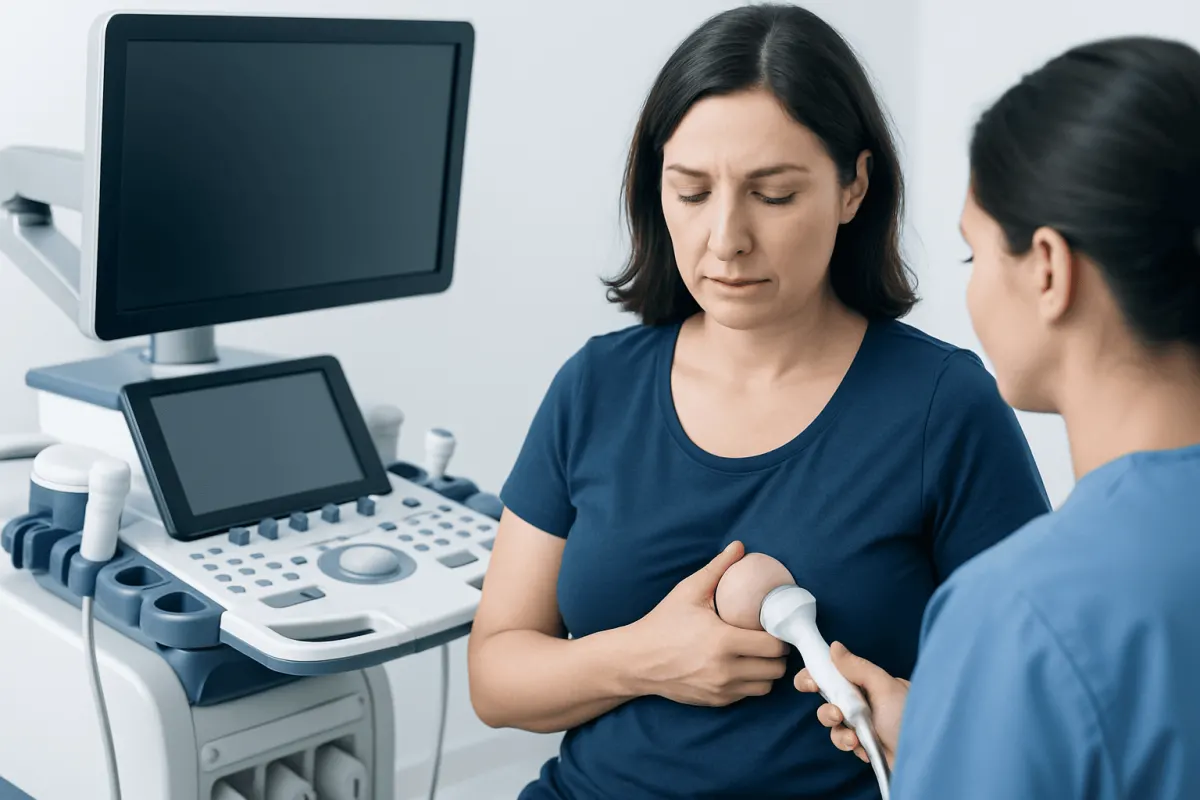
Breast ultrasound is commonly used when an abscess is suspected. It can show whether there is a fluid collection, estimate its size and location, and help distinguish a collection of pus from inflamed tissue alone. Ultrasound can also guide a needle during aspiration, allowing fluid to be removed accurately and safely.
If fluid or pus is collected, it may be sent to a laboratory to identify the bacteria and determine which antibiotics are likely to work. Additional imaging or a biopsy may be recommended if a lump remains after treatment, symptoms recur, or the appearance is unusual. This is a precautionary step that helps exclude conditions that can resemble infection, including inflammatory breast cancer, which is uncommon but needs timely evaluation.
Management and treatment options
Breast abscess treatment aims to control infection, remove trapped pus, relieve symptoms, and address contributing factors. Antibiotics may be prescribed when bacterial infection is suspected or confirmed. The medicine selected depends on factors such as allergy history, whether the person is breastfeeding, local resistance patterns, and culture results when available.
Most confirmed abscesses need drainage in addition to antibiotics. For many people, ultrasound-guided needle aspiration is used to remove fluid through a small needle; more than one aspiration may sometimes be needed. A larger abscess, one with thick material, or one that does not respond to aspiration may require a small incision and drainage procedure.
For people who are breastfeeding, continued milk removal is often encouraged when it is comfortable and clinically appropriate, as abrupt stopping can worsen engorgement. A lactation professional or doctor can advise on positioning, pumping, and whether feeding from the affected breast is suitable in the individual situation. Pain relief, rest, fluids, and cool compresses may help alongside medical treatment.
It is important not to squeeze, puncture, massage forcefully, or attempt to drain a suspected abscess at home. These actions can damage tissue, spread infection, and delay effective care. The treatment plan should be reviewed if symptoms are not improving as expected or if they return after initially settling.
Self-care and lowering the chance of recurrence
Self-care does not replace drainage or prescribed treatment, but it can support comfort and recovery. A supportive bra that does not compress the painful area may help. Cool packs wrapped in a cloth can reduce discomfort and swelling for short periods. Over-the-counter pain medicines may be appropriate for some people, but choices should be checked with a pharmacist or clinician during pregnancy, breastfeeding, or when there are other health conditions.
During breastfeeding, frequent comfortable feeding or pumping can help prevent prolonged milk stasis. Attention to latch, positioning, nipple care, and avoiding unnecessary pressure from tight clothing may reduce irritation. A lactation consultant can provide practical support when pain, oversupply, recurrent blocked areas, or feeding difficulties are contributing.
People with diabetes should work with their healthcare team to keep blood glucose as well managed as possible, since high glucose can make infections harder to control. Stopping smoking is also particularly relevant for recurrent non-lactational infections around the nipple. Follow-up matters: even when pain and redness improve, a clinician may wish to confirm that the fluid collection and lump have resolved.
When to seek medical care
A person should seek same-day medical advice for a painful breast lump with redness, warmth, fever, chills, or pus-like drainage. Prompt assessment is especially important if symptoms are worsening, the redness is spreading, pain is severe, or the person feels significantly unwell. Babies and breastfeeding parents may also benefit from early feeding support while treatment is arranged.
Urgent evaluation is appropriate for confusion, fainting, trouble breathing, a very high fever, rapidly spreading skin changes, or signs of severe illness. These symptoms are uncommon but can indicate a serious infection that needs immediate care. Anyone with a weakened immune system, poorly controlled diabetes, or recent breast surgery should have a low threshold for seeking medical advice.
A non-breastfeeding person with breast inflammation, a new lump, nipple changes, or recurrent infection should arrange a timely breast assessment even if symptoms are mild. Medical evaluation is also needed when antibiotics have not improved symptoms within the timeframe advised, or a lump persists after the infection settles. Acıbadem Health Point’s multidisciplinary specialists and JCI-accredited hospitals can assess and treat breast infections and related breast concerns for Myomectomy Recovery for International Patients: The Usual Travel Timeline" class="ahp-ilk">international patients.
Frequently asked questions
01What does a breast abscess look like?
A breast abscess may look like a red or darkened swollen area with a painful lump beneath the skin. Some abscesses cause a visible soft swelling, a pale or yellow point, or drainage. Deep abscesses may have few visible signs, so appearance alone cannot confirm the diagnosis.
02Can a breast abscess go away without drainage?
A small area of breast inflammation may improve with appropriate treatment, but a confirmed pocket of pus often requires drainage. Antibiotics may be used as well, particularly when bacterial infection is suspected. A clinician can determine the best approach with an examination and ultrasound if needed.
03Can someone breastfeed with a breast abscess?
Many people can continue breastfeeding or expressing milk during treatment, and regular milk removal may support recovery. The safest plan depends on the abscess location, drainage method, medicines used, and the person's comfort. A doctor or lactation professional can provide individualized advice.
04Is a breast abscess a sign of cancer?
Most breast abscesses are caused by infection and are not cancer. However, some breast cancers and other conditions can cause redness, swelling, or a lump that resembles infection. Persistent, recurrent, or unusual symptoms should be reassessed after treatment.
05How quickly should a breast abscess improve with treatment?
Pain, fever, and redness often begin to improve after effective treatment starts, but complete resolution can take longer, especially after a larger abscess. The clinician should provide clear expectations for follow-up. Symptoms that worsen or fail to improve as advised need prompt review.
06Should a person pop or squeeze a breast abscess?
No. Trying to pop, squeeze, or pierce a breast abscess can spread infection, injure breast tissue, and make professional drainage more difficult. It is safer to seek medical care for assessment and treatment.
This article is for general information only and is not a substitute for professional medical advice. Please consult a qualified doctor about your individual situation.
Explore treatments in Turkey — costs, top hospitals & a free quote
JCI-accredited · board-certified surgeons · reply within 24h
Add us as a Preferred Source to see more of our trusted health content across Google Search, AI Overviews and Discover.