24 Hour Cardiac Monitoring: How Holter Tests Work
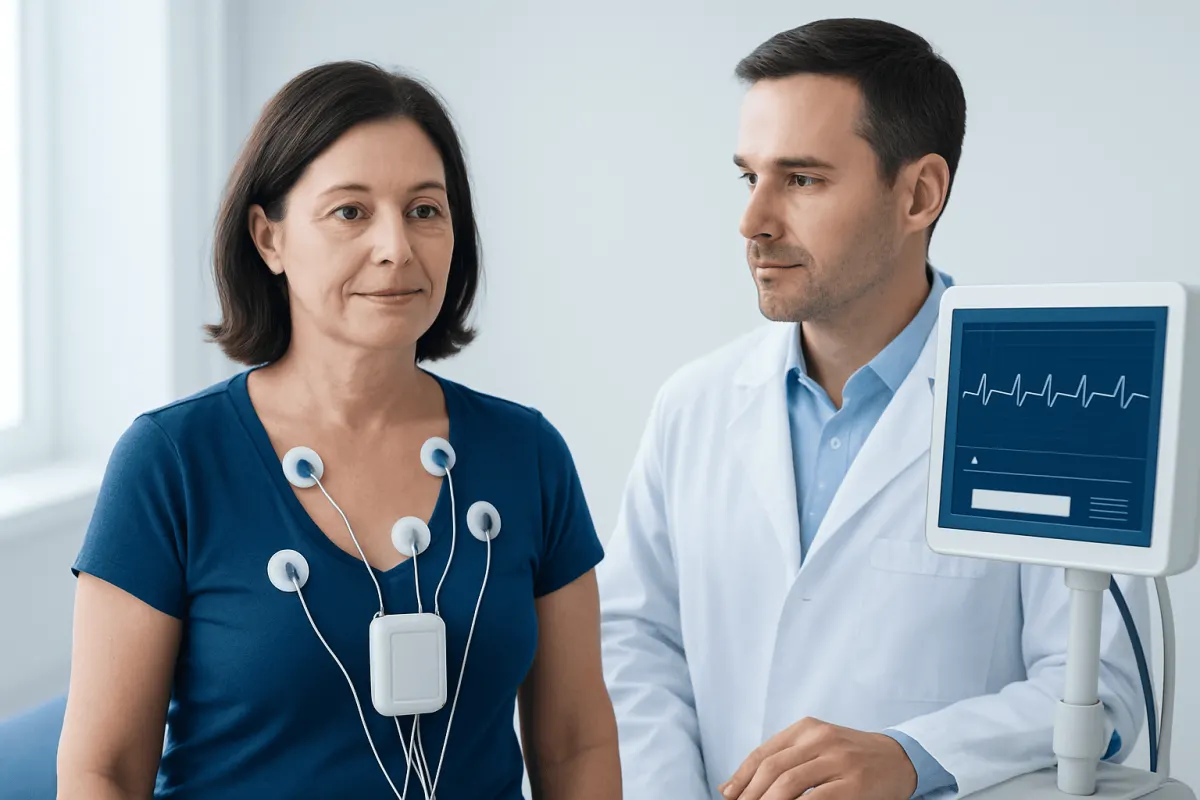
24 hour cardiac monitoring, commonly called Holter monitoring, is a portable ECG test that continuously records the heart’s electrical activity over a day or longer. It can help a clinician detect rhythm changes that may not occur during a short ECG performed in the clinic.
What is 24 hour cardiac monitoring?
24 hour cardiac monitoring is a noninvasive test that records the heart’s electrical activity continuously while a person goes about usual daily activities. It is most often performed with a small portable electrocardiogram (ECG) device called a Holter monitor. Adhesive electrodes placed on the chest connect to a lightweight recorder worn on a belt, strap, or pouch.
A standard ECG provides a brief snapshot of the heart rhythm, usually lasting only seconds. In contrast, a Holter monitor can capture intermittent rhythm changes that occur during work, exercise, meals, rest, or sleep. Although the name refers to 24 hours, monitoring may sometimes continue for 48 hours or longer, depending on the symptoms and the clinician’s question.
The test does not send electrical current into the body and is generally painless. Its main purpose is to document the rhythm at the time symptoms occur and to assess whether there are rhythm abnormalities even when a person does not notice symptoms.
Why would a doctor order a 24-hour heart monitor?
A doctor may order a 24-hour heart monitor when symptoms suggest a possible intermittent heart rhythm problem but a clinic ECG is normal or does not capture an episode. Common reasons include a fluttering, pounding, racing, skipping, or irregular heartbeat; dizziness; near-fainting; fainting; unexplained tiredness; or episodes of breathlessness.
The recording may help identify patterns such as unusually fast or slow rhythms, extra beats, pauses, or certain types of arrhythmia. It can also be used to evaluate whether treatments for a known rhythm condition appear to be controlling the heart rate or rhythm. A clinician interprets the results alongside symptoms, medical history, examination findings, medicines, and other tests.
Not every palpitation indicates heart disease. Stress, caffeine, alcohol, poor sleep, fever, thyroid conditions, anemia, and some medicines can contribute to noticeable heartbeats. However, monitoring can provide useful information when symptoms are recurrent, concerning, or difficult to explain. Related conditions may include arrhythmias, which can require further assessment based on the specific rhythm detected.
How the Holter monitor is fitted and used
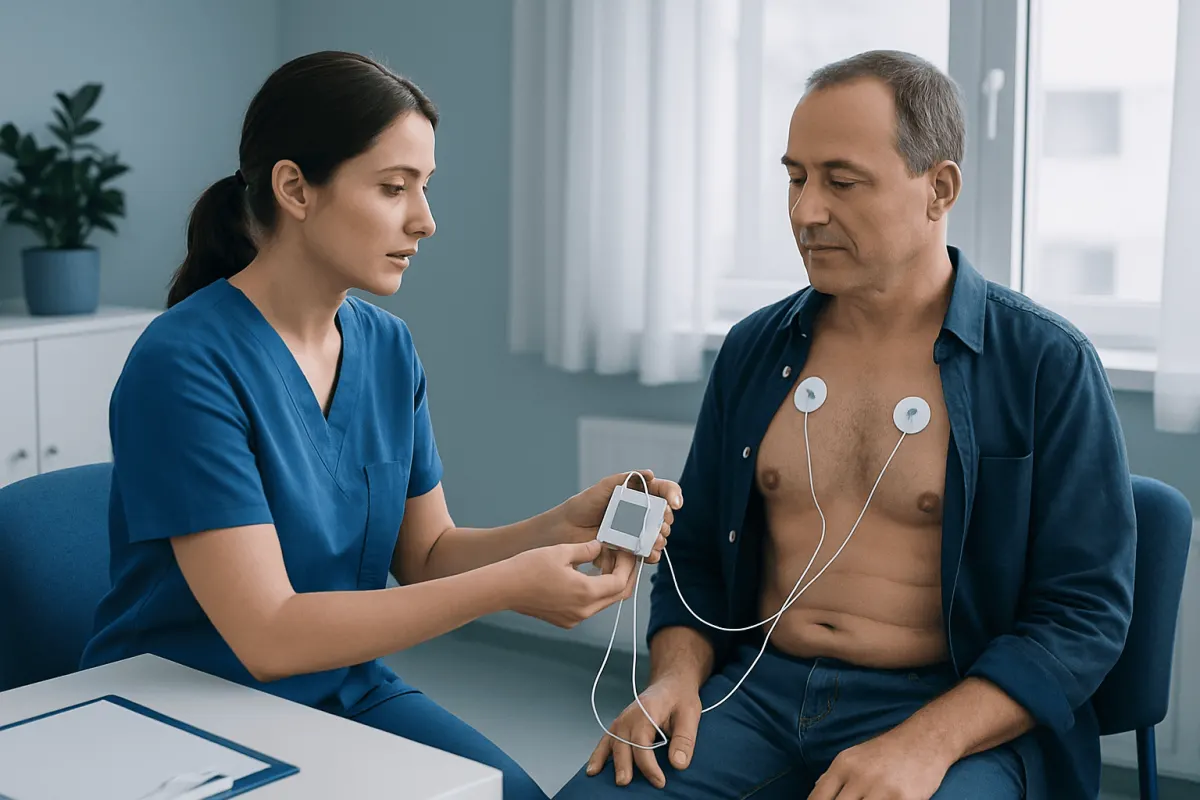
A trained healthcare professional cleans small areas of the chest and attaches several adhesive electrodes. In some cases, chest hair may need to be trimmed so the pads adhere well. Wires connect the electrodes to the recording device, although some newer monitors use a compact patch-style system with fewer visible wires.
The wearer is usually asked to follow a normal routine unless the clinician gives different instructions. Continuing typical activities may make it more likely that symptoms or triggers are captured. The device should be worn continuously for the prescribed period and returned as instructed so that the recording can be downloaded and reviewed.
People are commonly given a diary, paper form, or app in which to note symptoms, the time they occurred, activities, meals, exercise, sleep, emotional stress, and medicines taken. If the device has an event button, the person may be asked to press it when symptoms develop. This information helps match a reported sensation with the ECG tracing.
Electrodes can occasionally loosen, particularly with sweating or movement. The monitoring team should provide instructions on what to do if this happens. It is important not to remove, reposition, or disconnect the equipment unless specifically instructed.
What can you not do while wearing a Holter monitor?
Instructions vary by device, so the monitoring team’s guidance should always take priority. In many cases, the most important restriction is avoiding water. Standard Holter monitors and their electrodes should not be exposed to showers, baths, swimming pools, or saunas, because moisture can damage the recorder or loosen the adhesive pads. Waterproof monitors may have different instructions.
It is also best to avoid contact sports or activities likely to dislodge the device, pull on the wires, or heavily soak the electrodes with sweat unless the clinician has specifically said the activity is appropriate. Strong magnets and certain electrical equipment may interfere with some devices, although ordinary household appliances are usually not a problem. The monitoring service can clarify any concern about a workplace, exercise machine, or medical procedure.
Do not remove the monitor simply because it feels inconvenient, and do not apply lotions, oils, or powders near the electrodes, as these may reduce adhesion. People should avoid altering their usual medicines, caffeine intake, exercise habits, or diet unless a clinician has advised otherwise; the goal is commonly to record the heart rhythm under normal conditions.
- Keep the recorder dry unless it is confirmed to be waterproof.
- Do not disconnect wires or remove electrodes without instructions.
- Record symptoms and activities promptly and as accurately as possible.
- Ask the monitoring team before scheduling imaging or other procedures during the test period.
How to sleep with a 24 hour Holter
Most people can sleep normally while wearing a 24-hour Holter monitor. The recorder can usually be secured in its pouch, on a belt, or beside the body in a position recommended by the monitoring team. Loose, comfortable sleepwear may reduce pulling on the wires and help keep the device in place.
Sleeping on the back or side is generally acceptable if it is comfortable. People should try not to lie directly on the recorder or trap the wires under their body, as this can be uncomfortable and may loosen an electrode. If a wire catches or an electrode becomes loose, the person should follow the fitting instructions or contact the monitoring service if unsure.
Sleep is an important part of the recording because heart rate and rhythm naturally change across waking and sleeping hours. The person should note when they go to bed, wake up, experience nighttime symptoms, or wake due to palpitations, chest discomfort, shortness of breath, or dizziness. A night of somewhat disrupted sleep does not usually invalidate the test.
Can you wear a bra with a 24 hour heart monitor?
In most cases, a person can wear a bra with a 24-hour heart monitor. A soft, comfortable bra without underwires may be the easiest option, especially if electrodes or wires are positioned near the bra band or straps. A loose top can also help prevent friction and make the equipment less noticeable.
When the monitor is fitted, it is helpful to tell the healthcare professional about usual clothing preferences. They can try to place electrodes and route wires in a way that is secure and as comfortable as possible. The person should avoid bras or tight clothing that rub directly against electrodes, pull on wires, or cause the pads to lift.
If skin becomes very sore, itchy, blistered, or develops a spreading rash beneath an electrode, the monitoring provider should be contacted for advice. Mild temporary redness after removing adhesive pads can occur, but persistent or significant skin reactions should be assessed.
Understanding results and possible next steps
After the monitor is returned, trained staff process the recording and a clinician reviews it. The report may describe the average heart rate, the range of rates observed, extra beats, rhythm episodes, pauses, and whether any reported symptoms occurred at the same time as a rhythm change. Results are often available after the recording has been analyzed, though timing varies between services.
A normal result can be reassuring, but it does not necessarily exclude an intermittent problem that did not happen during the monitoring period. If symptoms occur only every few weeks or months, a doctor may recommend longer monitoring with an event recorder or another wearable device. Further assessment can also include blood tests, an echocardiogram, exercise testing, or specialist review, depending on the individual situation.
When an abnormal rhythm is identified, the next steps depend on the type of rhythm, its duration, symptoms, underlying heart health, and other medical conditions. Management may range from observation and lifestyle adjustments to medication or other care. Evaluation of heart rhythm concerns may be part of broader cardiology care when clinically appropriate.
When to seek medical care
A person should contact a doctor promptly for new, recurring, or worsening palpitations, especially when they are associated with dizziness, near-fainting, breathlessness, reduced exercise tolerance, or chest discomfort. They should not wait for a planned monitor appointment if symptoms are severe or rapidly worsening.
Emergency medical care is needed for severe or persistent chest pain or pressure, sudden major shortness of breath, fainting, a sustained very rapid heartbeat with feeling unwell, or possible stroke symptoms such as facial drooping, arm weakness, speech difficulty, sudden confusion, or sudden loss of balance. These symptoms need urgent assessment regardless of whether a monitor is being worn.
For international patients, Acıbadem Health Point’s multidisciplinary specialists and JCI-accredited hospitals can assess heart rhythm symptoms and arrange appropriate diagnostic and treatment planning. A qualified clinician can explain which form of monitoring is most suitable for the person’s symptoms and medical history.
Frequently asked questions
01Is 24 hour cardiac monitoring painful?
No. Holter monitoring is noninvasive and does not deliver electricity into the body. Some people notice mild skin irritation, itching, or temporary redness where the adhesive electrodes are attached.
02Should normal activities be continued during a Holter test?
Usually, yes. A clinician often wants to see how the heart rhythm behaves during ordinary activities, including work, walking, meals, and sleep. However, the person should follow any specific restrictions provided by the monitoring team, particularly about water exposure and exercise.
03Can a Holter monitor detect a heart attack?
A Holter monitor is mainly designed to assess heart rhythm over time. It may show electrical changes that need medical attention, but it is not a substitute for urgent evaluation of possible heart attack symptoms. Anyone with severe or persistent chest pain, sweating, nausea, or breathlessness should seek emergency care immediately.
04What happens if no symptoms occur during the 24-hour recording?
The recording can still provide useful information about the underlying heart rhythm, including silent rhythm changes. If symptoms are infrequent and do not occur during the test, the doctor may consider a longer monitoring period or a different type of event monitor.
05Can phones or household appliances affect a Holter monitor?
Normal household appliances and mobile phones generally do not cause problems when used normally. Still, it is sensible to keep the phone from resting directly on the recorder and to follow the monitoring service’s instructions about magnets, workplace equipment, or other possible sources of interference.
06Can I exercise while wearing a 24 hour heart monitor?
Light or usual exercise may be encouraged if it is part of the person’s typical routine and has not been medically restricted. The device should be protected from sweat and impact, and activities that could dislodge electrodes should be avoided. The person should record the type and timing of exercise in the diary.
This article is for general information only and is not a substitute for professional medical advice. Please consult a qualified doctor about your individual situation.
Heart care in Turkey — expert evaluation and treatment
JCI-accredited · board-certified surgeons · reply within 24h
Add us as a Preferred Source to see more of our trusted health content across Google Search, AI Overviews and Discover.