Sleep Apnea Testing: Home Test or Lab Study—Which Fits Your Situation?

Key Takeaways
- Home sleep apnea tests can be convenient for selected adults with likely obstructive sleep apnea.
- In-lab sleep studies provide the most complete view of sleep and breathing patterns.
- The right test depends on symptoms, medical history, and the possibility of other sleep disorders.
- A normal home test does not always rule out sleep apnea if symptoms continue.
- Good preparation and follow-up help patients, including international travelers, move from testing to treatment efficiently.
Sleep apnea testing is designed to answer a practical question: how well is breathing during sleep? Some people are good candidates for an at-home test, while others need the more detailed picture offered by an in-lab sleep study.
Overview
Sleep apnea testing is less about choosing the newest technology and more about choosing the right question to answer. For some people, a simplified home sleep apnea test is enough to confirm a strong suspicion of obstructive sleep apnea. For others, especially when the clinical picture is more complicated, an overnight laboratory sleep study gives a fuller and more reliable view.
Sleep apnea is a condition in which breathing repeatedly slows or stops during sleep. Those pauses can fragment rest, lower oxygen levels, and leave a person feeling unrefreshed even after a full night in bed. Because the symptoms can overlap with snoring, insomnia, fatigue, reflux, or mood concerns, testing is often the step that turns uncertainty into a clear plan.
For people traveling from another country to seek care, the testing decision matters even more. Time, logistics, and follow-up all need to fit into a realistic pathway. A good sleep medicine team can help decide whether the most efficient first step is a home test or an overnight lab study, and whether the result will be enough to guide treatment or if a second test is likely needed.
Symptoms That Lead to Testing
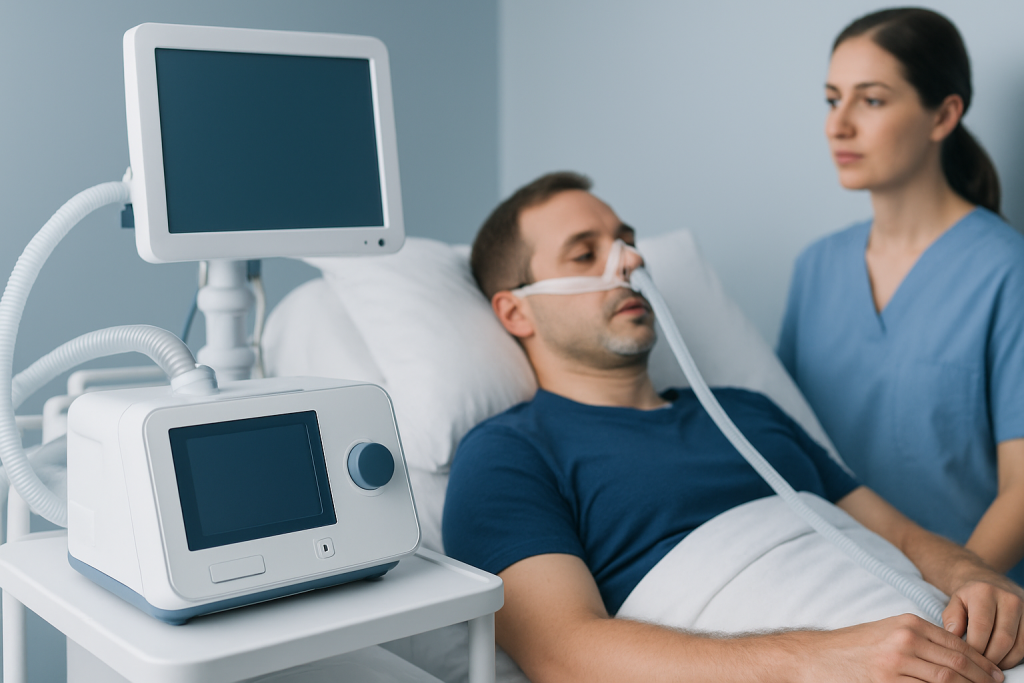
There are also clues that may suggest a sleep disorder other than obstructive sleep apnea. Insomnia, unusual movements during sleep, nightmares, sleepwalking, or sudden muscle weakness with emotions can point toward different conditions. In those situations, a basic home test may miss the true cause, which is why the symptom pattern matters as much as the test itself.
A thoughtful sleep evaluation starts with the person’s description of sleep, not just a device. That history helps a clinician match the testing approach to the problem rather than relying on a one-size-fits-all approach.
Causes & Risk Factors

Travel and lifestyle can play a supporting role. Irregular sleep timing, shift work, and sleeping in unfamiliar environments may not cause sleep apnea, but they can make symptoms more noticeable and can complicate interpretation. For this reason, clinicians often ask about the person’s usual sleep routine, not just the last few nights before testing.
Risk factors guide suspicion, but they do not replace testing. The goal is to identify who needs a simple confirmation and who needs a more complete sleep map.
Home Sleep Apnea Test vs In-Lab Sleep Study
It is worth remembering that a home test cannot stage sleep and may not capture all abnormalities. If the recording is poor, if the device falls off, or if symptoms remain convincing despite a negative result, a clinician may recommend repeating testing or moving to a full overnight study.
For many patients, the answer is not either/or forever. A home test may open the door, and a lab study may be the next step if more detail is needed.
How Diagnosis Is Made
Results are interpreted alongside the person’s symptoms. A test that shows many breathing interruptions may confirm sleep apnea, but the severity and pattern matter when planning treatment. A result that is borderline or negative does not always settle the question, especially if symptoms are persistent and the study was done under less-than-ideal conditions.
Diagnosis is therefore a conversation, not just a number. Good sleep medicine practice links the test report to the real-life story: what the person feels, what a bed partner has observed, and whether there are other health concerns that could be affected by sleep-disordered breathing.
Treatment Options After Testing
Testing is only the beginning. The goal is not just to label the condition but to reduce symptoms, protect daytime function, and lower strain on the heart and metabolism over time.
When treatment fits the patient’s life, adherence tends to improve. That is why a clear diagnosis and a realistic care plan matter just as much as the test itself.
Prevention & Self-care
International patients may benefit from planning ahead for sleep medicine care the same way they would for any other diagnostic journey. Bringing previous records, noting current medications, and describing typical sleep patterns from home can help the clinical team interpret the results more accurately.
A few practical habits can also make the test day smoother: follow device instructions carefully, keep the sleep environment as normal as possible, and share any difficulties rather than guessing. The more accurately the test reflects a usual night, the more useful the result will be.
When to See a Doctor
A medical evaluation is appropriate if snoring is loud and frequent, breathing pauses are observed, or daytime sleepiness is affecting work, driving, mood, or safety. It is also wise to seek evaluation if morning headaches, high blood pressure, or unrefreshing sleep continue despite adequate time in bed.
People with heart disease, stroke history, diabetes, significant obesity, or symptoms that suggest a more complex sleep disorder should not assume a home test is enough. In those cases, a clinician may recommend direct in-lab testing so that the answer is more complete from the beginning.
If a home sleep apnea test is negative but symptoms persist, follow-up still matters. A negative home result does not automatically end the conversation, and the next step may be a lab study or a broader sleep evaluation.
Acibadem Health Point can help international patients access multidisciplinary specialists and JCI-accredited hospitals for diagnosis and treatment planning, when sleep apnea care needs to be coordinated across borders. The important step is not choosing the test in isolation, but choosing the path that best fits the person’s symptoms, medical history, and follow-up needs.
Frequently asked questions
01How does a home sleep apnea test differ from a sleep study in a lab?
A home test measures a limited set of breathing-related signals while the person sleeps at home. An in-lab sleep study records more information, including sleep stages and other movements, so it can evaluate a wider range of sleep disorders.
02Who is usually a good candidate for a home sleep apnea test?
Adults with a strong suspicion of uncomplicated obstructive sleep apnea are often good candidates. It is less suitable when there are major heart, lung, or neurologic problems, or when another sleep disorder may be present.
03Can a home test miss sleep apnea?
Yes. Home testing can miss sleep apnea if the device is not worn correctly, if the recording is incomplete, or if the sleep problem is more complex than obstructive sleep apnea. Persistent symptoms after a normal home test should be reviewed by a clinician.
04Is an in-lab sleep study uncomfortable?
Most people find the setup unusual at first, but the environment is designed to be safe and supervised. The study may feel less natural than sleeping at home, yet it provides detailed information that can be very helpful for diagnosis.
05Why might a doctor recommend the lab study first?
A lab study is often preferred when the symptoms are complicated, when central sleep apnea is possible, or when other sleep disorders need to be checked at the same time. It is also useful if a home test is likely to be inconclusive.
06What should international patients bring to a sleep evaluation?
It helps to bring previous test results, a medication list, and a clear description of usual sleep patterns and symptoms. That information makes it easier for the care team to choose the most suitable test and plan follow-up efficiently.
This article is for general information only and is not a substitute for professional medical advice. Please consult a qualified doctor about your individual situation.
Persistent digestive symptoms? Get evaluated in Turkey
JCI-accredited · board-certified surgeons · reply within 24h
Add us as a Preferred Source to see more of our trusted health content across Google Search, AI Overviews and Discover.