Sleep Apnea Testing: Home Test or Lab Study—Which Fits Your Situation?

Key Takeaways
- Home sleep apnea tests are often used when obstructive sleep apnea is suspected in otherwise uncomplicated adults.
- In-lab sleep studies provide a broader picture of sleep and breathing, including other sleep disorders and movement-related issues.
- The choice of test depends on symptoms, other health conditions, medications, and how complex the sleep problem appears.
- A test result is only one part of the diagnosis; a clinician interprets the findings alongside the person’s history and exam.
- Good preparation and clear follow-up make either testing path more useful, especially when care is coordinated across countries.
Sleep apnea testing helps identify breathing pauses during sleep so the right treatment can be chosen. The best test depends on symptoms, medical history, and whether a more detailed overnight evaluation is needed.
Overview
Sleep apnea is a common but often underrecognized condition in which breathing repeatedly slows or stops during sleep. Because the body is briefly forced to wake up to restart breathing, sleep can become fragmented even when the person does not fully remember waking. Over time, this can affect daytime alertness, mood, concentration, and overall health.
Testing is the step that turns suspicion into a clearer diagnosis. For some people, a home sleep apnea test is enough to confirm likely obstructive sleep apnea. For others, an overnight study in a sleep lab is the better choice because it records more signals and can help uncover different causes of poor sleep.
From an international-patient point of view, the question is not only “which test is more advanced?” but “which test answers the right question with the least burden?” A person traveling for care may value convenience, while someone with complicated symptoms may benefit more from the broader detail of a supervised overnight study.
Symptoms that usually prompt testing
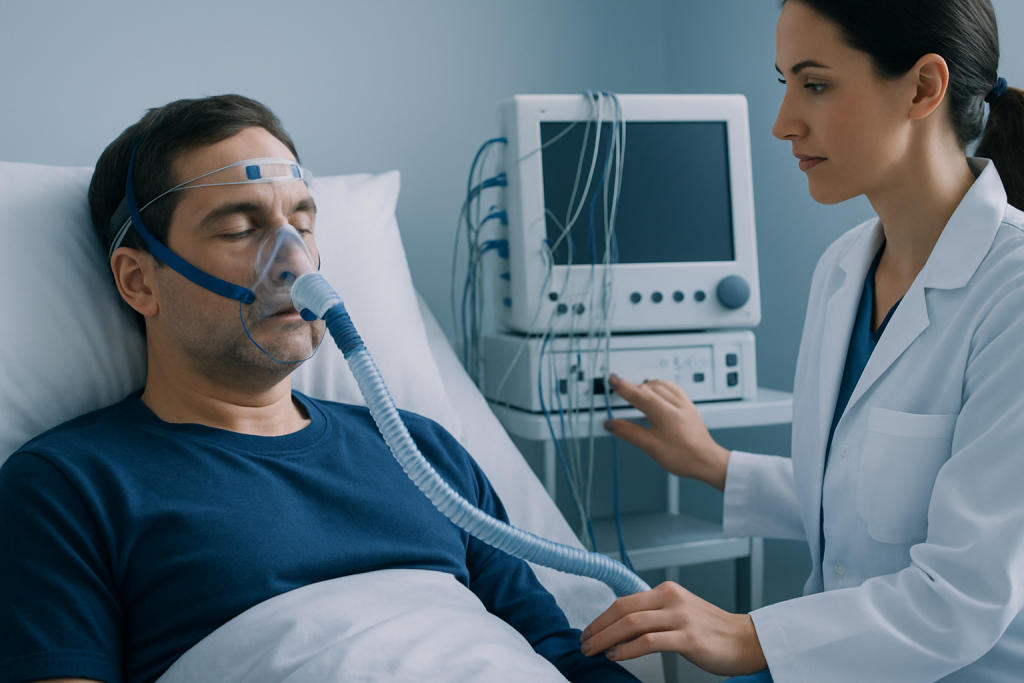
Sleep apnea is often suspected after a bed partner notices loud snoring, choking sounds, or breathing pauses. Some people seek help because they wake with a dry mouth, headache, or the sense that sleep is never truly refreshing. Others are sent for evaluation after high blood pressure, atrial fibrillation, or daytime sleepiness raises concern.
Symptoms do not always look dramatic. A person may simply feel less sharp in meetings, need more caffeine, or struggle to stay awake during long drives. In children and teens, sleep apnea may show up as restless sleep, mouth breathing, learning or behavior changes, or bedwetting rather than obvious sleepiness.
- Loud or habitual snoring
- Observed pauses in breathing during sleep
- Gasping or choking at night
- Morning headaches or dry mouth
- Daytime sleepiness, irritability, or poor concentration
Because these symptoms can overlap with other sleep and medical conditions, testing helps separate sleep apnea from problems such as insomnia, restless legs, nasal obstruction, or medication effects.
Causes and risk factors
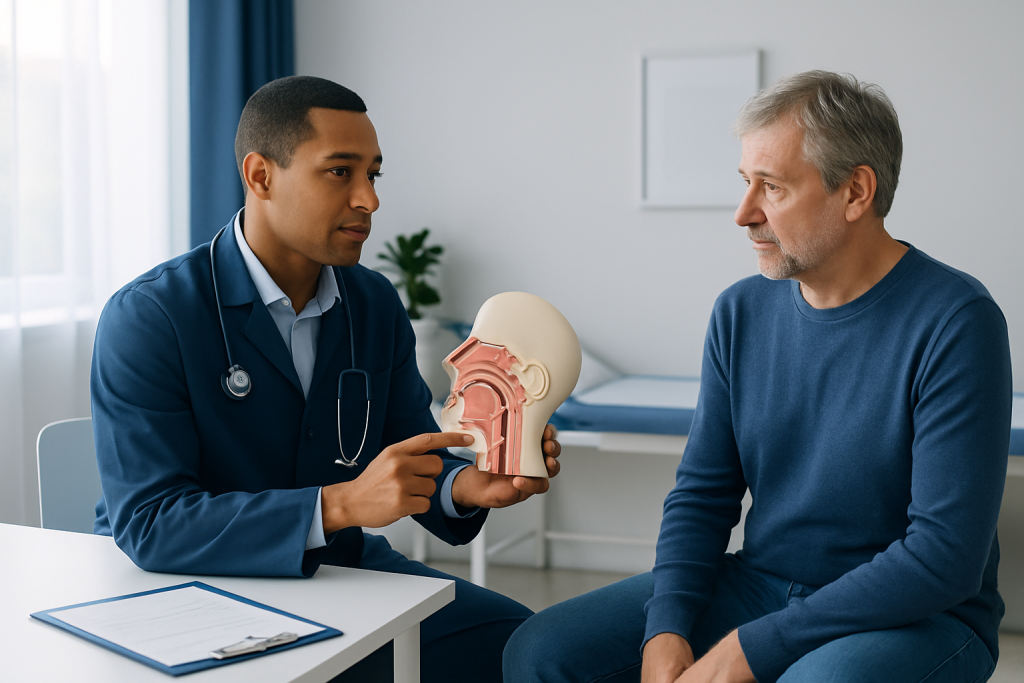
The most common form, obstructive sleep apnea, happens when the upper airway narrows or collapses during sleep. Factors that can increase the chance of airway narrowing include excess weight, enlarged tonsils, nasal blockage, a smaller jaw or airway structure, alcohol use near bedtime, and certain sedating medicines. Age can also play a role, although sleep apnea is not limited to older adults.
Central sleep apnea is different. In that condition, the brain does not send the right signals to keep breathing regular. It is less common and may be associated with heart failure, stroke, opioid use, or certain neurologic conditions. Because the cause is different, the test choice matters even more when the symptoms are not classic for obstructive sleep apnea.
Risk factors help clinicians decide whether a home test is appropriate or whether a more complete lab study is safer and more informative. When the history suggests multiple possible sleep disorders, or when there are important heart, lung, or neurologic conditions, an in-lab study is often preferred.
How the diagnosis is made
Diagnosis begins with a medical history and exam, not with the device alone. A clinician asks about snoring, witnessed pauses, sleep habits, daytime sleepiness, medications, weight changes, nasal symptoms, and medical problems that may affect breathing or sleep quality. This is especially important for patients traveling from abroad, where prior records may need to be reviewed before choosing the next step.
A home sleep apnea test usually measures breathing effort, airflow, oxygen levels, and sometimes pulse rate while the person sleeps in their own bed. It is generally designed to look for obstructive sleep apnea rather than every possible sleep disorder. If the results clearly match the symptoms, the diagnosis may be made without an overnight lab stay.
An in-lab sleep study, also called polysomnography, is more comprehensive. It can record brain waves, eye movements, muscle activity, breathing patterns, oxygen levels, heart rhythm, and limb movements. This broader view helps detect other causes of sleep disruption and is often used when the picture is more complicated, when the home test is negative but suspicion remains, or when the clinician wants a more definitive assessment.
Home sleep apnea test or lab study?
The right test depends on the question being asked. A home test is often a practical option for an adult with strong symptoms of uncomplicated obstructive sleep apnea who can follow instructions reliably. It is less intrusive, usually easier to schedule, and may fit better for someone coordinating care around work, family, or travel.
An in-lab study is usually favored when the case is more complex. That includes people with significant heart or lung disease, neuromuscular conditions, suspected central sleep apnea, seizure disorders, parasomnias, unexplained insomnia, or severe daytime sleepiness with unclear cause. It may also be the better choice when a prior home test was inconclusive or did not match the clinical picture.
Practical considerations matter too. A home test may be a good first step for someone who prefers fewer appointments and can return for follow-up interpretation. A lab study may be worth the extra time when the clinician needs a fuller map of sleep health, especially if treatment decisions could change based on additional findings.
- Home test: best for suspected uncomplicated obstructive sleep apnea
- Lab study: best for complex symptoms or mixed sleep concerns
- Both: may be used if initial testing does not answer the question
What to expect during each test
For a home sleep apnea test, the patient is usually given a small set of sensors and simple instructions. The equipment is worn overnight at home and returned for analysis afterward. Because the test takes place in a familiar bedroom, many people sleep more naturally than they would in a clinic setting, although the device can still feel a little unusual the first time.
An overnight lab study is more structured. A technologist places sensors before bedtime and monitors the study from another room while the patient sleeps in a private or semi-private room. The environment is designed to be calm and safe, but the equipment and unfamiliar surroundings can take some adjustment.
Neither option should feel mysterious. Before the test, the clinician or sleep team usually explains how to prepare, whether to avoid caffeine or alcohol, and which regular medicines can be taken as usual. For patients arriving from another country, it helps to bring medication lists, previous sleep records, and any cardiology or pulmonary reports that might influence the interpretation.
Treatment options after testing
Testing is important because treatment should match the type and severity of the disorder. For obstructive sleep apnea, positive airway pressure therapy is commonly recommended, along with weight management when appropriate, positional strategies, oral appliances in selected cases, and treatment of nasal obstruction or other contributing factors. The exact plan depends on the test findings and the person’s overall health.
If the lab study shows another sleep disorder, treatment may look very different. Restless legs syndrome, periodic limb movements, parasomnias, narcolepsy, or central sleep apnea each require its own approach. This is one reason an in-lab study can be especially helpful when symptoms do not fit a simple pattern.
Follow-up matters as much as the test itself. A result should be reviewed in context, and treatment should be adjusted if symptoms persist, if the device is uncomfortable, or if the diagnosis needs to be refined. For international patients, a clear written plan is useful for continuing care once they return home, including what should be monitored and when re-evaluation is needed.
Prevention, self-care, and when to see a doctor
Not every case of sleep apnea can be prevented, but certain habits may reduce strain on sleep and breathing. A regular sleep schedule, limiting alcohol near bedtime, avoiding sedating medicines unless prescribed, and addressing nasal congestion can all help support better sleep quality. If excess weight is a factor, gradual and medically guided weight reduction may also lessen symptoms in some people.
Good sleep hygiene does not replace testing when apnea is suspected, but it can make symptoms easier to track and may improve overall comfort during evaluation. Keeping a simple log of snoring, awakenings, daytime fatigue, and naps can give the clinician a more accurate picture.
A doctor should be seen when loud snoring is accompanied by breathing pauses, unexplained sleepiness, morning headaches, or trouble concentrating. Urgent review is especially sensible if sleepiness affects driving or if there are major heart, lung, or neurologic conditions. Acibadem Health Point’s multidisciplinary specialists and JCI-accredited hospitals can diagnose and treat sleep apnea for international patients who need coordinated care across the testing and treatment journey.
How patients can prepare for a smoother testing experience
Preparation is simple, but it can improve the quality of the result. Patients are usually advised to keep their usual bedtime routine as much as possible and to note any symptoms that were especially noticeable in the days before testing. If the clinician has given specific instructions about medicines, those should be followed carefully rather than changed on one’s own.
It also helps to be realistic about the role of the test. A home test may be convenient, but if it does not capture enough information, a lab study may still be needed. Likewise, a lab study may feel more involved, but it can provide the detail needed to move quickly toward the right treatment.
For people traveling for evaluation, planning for the follow-up visit is part of the process. Leaving enough time for the result review, treatment discussion, and device fitting or education can prevent unnecessary delays and make the return home easier.
A practical way to think about the choice
In simple terms, a home test is often about efficiency, while an in-lab study is often about depth. Neither is inherently better in every situation. The best choice is the one that is most likely to answer the clinical question clearly, safely, and with the least disruption to the patient’s life.
That choice is usually easiest when made with a clinician who can weigh symptoms, medical history, and logistics together. When the evaluation is thoughtful, sleep apnea testing becomes less about guesswork and more about finding a workable path to better sleep, better daytime function, and better long-term health.
Frequently asked questions
01What is the difference between a home sleep apnea test and a lab sleep study?
A home sleep apnea test checks breathing and oxygen levels during sleep in the patient’s own bed. A lab sleep study records a wider range of body signals and can detect other sleep disorders as well as sleep apnea.
02Who is usually a good candidate for a home sleep apnea test?
It is often used for adults with symptoms that strongly suggest uncomplicated obstructive sleep apnea. People with significant heart, lung, neurologic, or other complex sleep problems often need an in-lab study instead.
03Can a home test miss sleep apnea?
Yes, it can. Home tests are helpful, but they are not as comprehensive as lab studies, so a negative or unclear result may still need further evaluation if symptoms continue.
04Is an in-lab sleep study uncomfortable?
It can feel unfamiliar because sensors are attached before sleep, but the environment is designed to be safe and monitored. Many people adjust once the study begins, and the extra information can be worthwhile when the case is complex.
05Do patients need a referral for sleep apnea testing?
In many settings, yes, because a clinician needs to decide which test is appropriate and how the result should be interpreted. The process may vary by country and health system, so patients should ask locally about the required steps.
06What should a patient bring to the sleep appointment?
It helps to bring a medication list, previous test results, and any records about heart, lung, or neurologic conditions. For international patients, having documents in an organized folder can make interpretation and follow-up much smoother.
This article is for general information only and is not a substitute for professional medical advice. Please consult a qualified doctor about your individual situation.
Get these values checked properly — full body check-up in Turkey
JCI-accredited · board-certified surgeons · reply within 24h
Add us as a Preferred Source to see more of our trusted health content across Google Search, AI Overviews and Discover.