How to Choose a Dentist in Turkey: Accreditation, Materials, Guarantees

Key Takeaways
- Look for hospital or clinic accreditation (such as JCI), a valid Turkish Ministry of Health licence and dentists with verifiable qualifications and specialist training.
- Ask for the exact brand and type of implant, crown or veneer material in writing — generic terms such as "premium porcelain" are not enough.
- Treatment packages vary widely; confirm what is included, what is excluded and how revisions or complications would be handled.
- Costs should be discussed as planning bands rather than fixed quotes, and only finalised after clinical assessment and imaging.
- Most restorative work requires more than one visit or a healing interval, so build realistic timing into travel plans rather than compressing everything.
- Arrange UK-based follow-up and written records before flying home, and speak to a patient coordinator early with questions about logistics, documents and language support.
Choosing a dentist in Turkey is less about finding a single "best" clinic and more about verifying accreditation, dentist credentials, the materials used and the aftercare offered in writing before travel. This guide explains what UK patients should check, what packages usually include, how costs are typically banded and how to plan travel, recovery and follow-up at home.
Answering the Question: What Actually Makes a Good Choice
For UK patients researching how to find the best dentist in Turkey, the honest answer is that no clinic can be objectively ranked “best” for every person. A sound choice is one that can be verified: a licensed and accredited facility, a named dentist whose qualifications and area of practice can be checked, clearly documented materials, a written treatment plan based on your own imaging, and a defined aftercare pathway for when you return home. Marketing photographs, review counts and headline prices are the least reliable signals; documentation and transparency are the most reliable.
Turkey has become a common destination for dental care partly because of shorter waiting times and lower relative costs, and partly because many hospitals and clinics are set up specifically to coordinate international patients — including airport transfers, interpreters and hotel arrangements. That infrastructure is genuinely useful, but it is separate from clinical quality. The two should be assessed independently: convenience of the journey on one hand, and the standard of the dentistry on the other.
It is also worth being clear about what dental treatment abroad can and cannot offer. No dentist anywhere can guarantee a specific aesthetic result, a fixed healing time or a lifetime outcome. Reputable clinicians discuss likely outcomes, risks, alternatives and the possibility that a plan may change once they examine you in person. If a clinic promises a certain look or a permanent result before seeing your scans, treat that as a reason for caution rather than reassurance.
Accreditation and Credentials: How to Verify the Best Dentist in Turkey
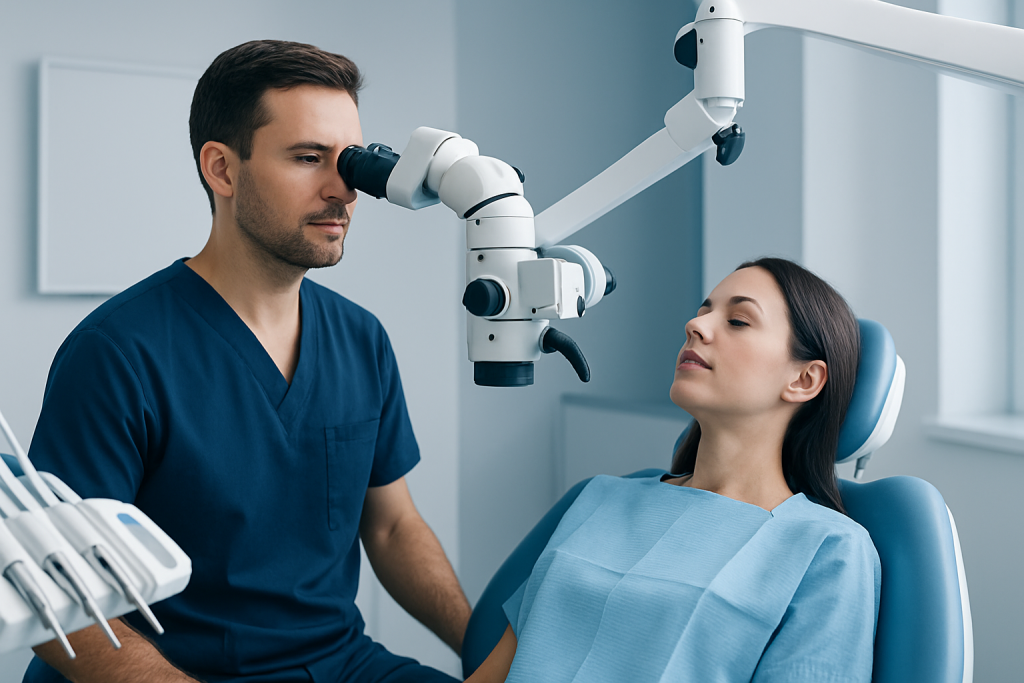
Every dental clinic and hospital operating in Turkey must be licensed by the Turkish Ministry of Health, and dentists must be registered to practise. Beyond that legal minimum, international accreditation gives an additional, independent layer of assurance. Joint Commission International (JCI) accreditation is the most widely recognised standard in medical travel; it assesses areas such as infection control, patient identification, medication safety, sterilisation processes, emergency preparedness and record keeping. JCI accreditation applies to the organisation rather than to an individual dentist, so it tells you about the environment in which care is delivered — an important, but not complete, part of the picture.
The other half is the clinician. Ask directly for the treating dentist’s name, their dental school and graduation, any postgraduate or specialist training (for example in oral surgery, periodontology, prosthodontics or endodontics), and how frequently they perform the procedure you are considering. Complex work — full-arch implant rehabilitation, bone grafting, sinus lifts, or extensive prosthetic reconstruction — benefits from a clinician who does that work routinely and, ideally, from a team approach in which a surgeon, a prosthodontist and a dental technician plan the case together.
Practical checks that UK patients can make before committing:
- Confirm the facility’s licence and any international accreditation, and ask when it was last renewed.
- Request the treating dentist’s full name and credentials in writing, not just a first name on a website.
- Ask whether an in-house or partner laboratory produces the crowns and prostheses, and whether digital planning or guided surgery is used where relevant.
- Check that sterilisation and infection-control procedures are documented and that single-use items are used where appropriate.
- Ask how emergencies or unexpected findings during treatment would be managed, and whether a hospital setting is available if needed.
Materials: The Questions That Reveal the Most

Materials are where vague marketing language most often replaces information. Terms such as “premium implant”, “European porcelain” or “top-quality veneers” mean very little on their own. What matters is the specific product: the implant system’s manufacturer and line, the crown or bridge material (for example monolithic zirconia, layered zirconia, lithium disilicate or metal-ceramic), and whether veneers are laboratory-made porcelain or composite. Each has different indications, longevity profiles and repair options, and the right choice depends on your bite, gum health, remaining tooth structure and aesthetic priorities — not on a package tier.
Implant systems deserve particular attention because they affect your future care. If you have an implant placed in Turkey and later need a replacement abutment, screw or crown in the UK, a widely distributed international system is far easier for a British dentist to service than an obscure one. Ask for the implant brand, the reference numbers used and, after surgery, an implant passport or record card. The same applies to prosthetic components: keep documentation of exactly what was fitted.
A related question is who makes the restorations. Many clinics use in-house dental laboratories, which can speed up production and allow shade adjustments during your stay. Ask whether you will have a try-in stage — a temporary or mock-up phase where you can see and approve the shape, length and shade before the final restorations are cemented. That step is often the difference between a result you are happy with and one you are not, and it also influences how many days you need to stay.
What Treatment Packages Typically Include
Clinics that work with international patients usually present care as a package. Contents vary, but a typical package might include an initial consultation and examination, panoramic X-ray or cone-beam CT imaging where indicated, the planned treatment itself, temporary restorations where relevant, airport transfers, hotel accommodation for a defined number of nights and interpreter support. Some also include a post-treatment review appointment before departure.
Just as important is what is not included. Common exclusions are flights, additional nights if treatment is extended, treatment of unexpected findings such as infection or insufficient bone, bone grafting or sinus procedures, gum treatment, extractions beyond an agreed number, night guards, and any revisions requiring a further trip. Ask for the inclusions and exclusions as a written document, and ask what happens to the cost if the plan changes after the in-person examination — because it sometimes does.
Before travelling, a good coordination process should give you a provisional plan based on records you send in advance (recent X-rays, photographs, a medical history and a medication list), followed by an online or video consultation. This is not a substitute for an in-person assessment, but it should mean there are no major surprises on arrival. If a clinic is willing to commit to a definitive plan and price without any imaging or clinical information, that is a limitation worth noting.
Understanding Cost Bands and Planning a Budget
Dental treatment in Turkey is generally priced per unit — per implant, per crown, per veneer — or per arch for full-mouth rehabilitation. Rather than fixed figures, it is more useful to think in planning bands: single-tooth work such as a crown or veneer sits at the lower end; a single implant with its abutment and final crown sits considerably higher; and full-arch or full-mouth implant rehabilitation is a substantially larger investment, often several times the cost of a single implant per arch. Prices vary by city, clinic, materials chosen and case complexity, and any figure quoted before assessment should be treated as indicative only.
When comparing quotations, compare like with like. A lower headline price may exclude imaging, temporary restorations, the abutment, grafting, or the number of nights you will realistically need. Build in your own flights, extra accommodation, travel insurance that covers planned treatment abroad, and a contingency for a possible second trip. It is also sensible to budget for follow-up care in the UK, since routine checks, hygiene appointments and any adjustments will usually take place at home.
Two further points protect your finances. First, ask how payment is staged and what the refund position would be if treatment is reduced or cannot proceed for clinical reasons. Second, be wary of price pressure — time-limited offers or discounts that expire if you do not book immediately are a sales technique, not a clinical one. A considered decision about permanent restorations is worth more than a saving.
Timing: Treatment, Recovery and Travel Planning
Timing is the area where expectations most often need adjusting. Cosmetic work such as crowns or veneers is commonly completed across a single trip of several days, allowing time for preparation, laboratory production, a try-in and final fitting. Implant treatment is different: after placement, the implant needs a healing period before the definitive restoration can be attached, which is usually measured in months rather than weeks. This normally means two trips, or one trip for surgery with a temporary solution and a second for the final prosthesis. Some protocols allow immediate temporary teeth, but the definitive restoration still follows later.
Plan flights with recovery in mind rather than booking the tightest possible schedule. After surgical procedures, swelling, bruising and discomfort are common in the first few days, and dentists often advise avoiding air travel immediately after certain procedures. Leave a buffer of at least a day or two after your final appointment where possible, and avoid arranging demanding sightseeing, alcohol or strenuous activity around surgery. Tell the clinic about any medical conditions, blood-thinning medication, bisphosphonates, diabetes or smoking history well in advance, as these can influence both the plan and the timeline.
Practical travel considerations also matter. Check passport validity and current entry requirements for Turkey, arrange travel insurance that specifically covers planned medical treatment and any complications, and confirm who will accompany you if sedation or general anaesthesia is planned. Ask about the temperature of your accommodation, its distance from the clinic, and how you will get to unscheduled appointments if an adjustment is needed.
Guarantees, Written Aftercare and Follow-up in the UK
Many clinics offer a warranty on prosthetic work, often expressed in years for crowns, bridges or implants. These can be reassuring, but read the wording closely. Typical conditions include attending regular hygiene appointments, wearing a night guard if prescribed, not smoking, and returning to the original clinic for any assessment — which means the practical value of a warranty depends on whether you are willing and able to fly back. Warranties usually cover material or workmanship failure, not gum disease, trauma, bruxism damage or changes caused by not following aftercare advice. No warranty can guarantee a clinical outcome, and a responsible clinic will say so.
Before you fly home, collect a complete record: the treatment carried out, tooth numbers involved, implant brand and reference numbers, materials used for each restoration, any medication prescribed, post-operative instructions, and pre- and post-treatment radiographs. Ask for these in English. A UK dentist asked to review or repair work is far better placed with this information, and it also supports any warranty claim later.
Arrange your UK follow-up in advance rather than afterwards. Register or confirm your appointment with a local dentist, ideally before you travel, and let them know what is planned. Be aware that NHS or private dentists in the UK are not obliged to take on the ongoing care of work completed abroad, and some may charge to assess it. Establishing that relationship early avoids difficulty if you develop a problem — such as persistent pain, swelling, a loose restoration or bleeding — in the weeks after returning.
When to Speak to a Patient Coordinator
A patient coordinator is the right point of contact once you have a broad idea of what you need but before you commit to dates or payment. Useful early conversations cover which records to send, how a video consultation with the treating dentist can be arranged, whether a second opinion is possible, realistic trip length for your case, what a written plan will include, and how accommodation, transfers and interpreting are organised. Coordinators can also explain visa guidance, invoicing and documentation for insurers, and how communication continues after you return home.
Contact a coordinator again — or your treating clinician directly — if anything changes before travel, such as a new medication, a dental infection, pregnancy, or a change in a medical condition. After treatment, get in touch promptly if you experience increasing pain rather than gradually improving discomfort, fever, spreading swelling, difficulty swallowing or breathing, prolonged bleeding, numbness that does not resolve, or a restoration that loosens or fractures. Urgent symptoms should always be assessed locally and without delay; do not wait for a planned return trip.
Acibadem Health Point coordinates dental and oral health care for international patients across Acıbadem’s network, where multidisciplinary specialists and JCI-accredited hospitals assess, plan and deliver treatment, with support for travel logistics, interpreting and follow-up communication once patients are home. Whichever provider you choose, the same principles apply: verify the credentials, insist on written details of materials and aftercare, allow realistic time, and discuss your plan with a qualified dentist before making a decision.
Frequently asked questions
01Is dental treatment in Turkey safe for UK patients?
Care in licensed, accredited facilities delivered by qualified dentists can meet high standards, but safety depends on the specific clinic and clinician rather than the country. Verifying the facility's licence, any international accreditation such as JCI, the dentist's qualifications and the materials used is the most reliable way to assess this. Discuss your individual medical history with a qualified dentist before deciding.
02How many trips will I need for dental implants?
Implant treatment usually involves a healing period between placing the implant and fitting the final restoration, so two trips are common. Some cases allow a temporary tooth immediately, with the definitive crown or bridge fitted on a later visit. The exact schedule depends on bone quality, healing and the plan your dentist recommends after examining you.
03What should a written treatment plan include?
It should name the treating dentist, describe the procedures and teeth involved, specify the implant system and restoration materials by brand and type, and set out the number of appointments and expected length of stay. It should also list what is included and excluded from any package, and explain how unexpected findings would be handled. Ask for it in English and keep a copy.
04Are clinic guarantees on crowns and implants meaningful?
Warranties can offer some protection against material or workmanship failure, but they usually come with conditions such as regular hygiene visits, wearing a night guard and returning to the original clinic for assessment. They do not cover gum disease, trauma or damage from grinding, and no warranty can guarantee a clinical outcome. Read the terms carefully before treatment.
05Can my UK dentist look after work done in Turkey?
Many UK dentists will review and maintain treatment carried out abroad, but they are not obliged to take on ongoing care and may charge for assessment. Bringing complete records — including implant brand and reference numbers, materials used and radiographs — makes this much easier. Arranging your UK follow-up before you travel is strongly advisable.
06How soon can I fly after dental surgery?
This depends on the procedure and on individual healing, and your dentist will advise based on what was done. Many patients are asked to allow a short buffer after surgical treatment rather than flying immediately, and to avoid strenuous activity in the early recovery period. Follow the specific post-operative instructions you are given.
07When should I contact a patient coordinator?
Contact a coordinator once you know roughly what treatment you are considering but before booking flights or making payments, so records can be reviewed and a video consultation arranged. They can also explain trip length, accommodation, interpreting and documentation. Get back in touch if your health or medication changes before travel.
This article is for general information only and is not a substitute for professional medical advice. Please consult a qualified doctor about your individual situation.
Explore treatments in Turkey — costs, top hospitals & a free quote
JCI-accredited · board-certified surgeons · reply within 24h
Add us as a Preferred Source to see more of our trusted health content across Google Search, AI Overviews and Discover.