When Is an Upper Endoscopy the Right Next Step? Symptoms That Shift the Decision

Key Takeaways
- Upper endoscopy is usually considered when symptoms are persistent, unexplained, or accompanied by warning signs.
- Not every episode of heartburn, nausea, or indigestion requires endoscopy; the decision depends on pattern, severity, and medical history.
- Alarm symptoms such as difficulty swallowing, vomiting blood, black stools, or unintentional weight loss deserve prompt medical evaluation.
- Doctors use upper endoscopy to look directly at the esophagus, stomach, and first part of the small intestine and to obtain tissue samples if needed.
- Preparation and recovery are usually straightforward, and the procedure can help clarify diagnoses when other evaluations are inconclusive.
An upper endoscopy can become the next step when upper digestive symptoms persist, change, or raise concern for an underlying condition that needs direct visualization. This article explains which symptoms often shift the decision, how the test is used, and what patients can expect before and after it.
Overview
An upper endoscopy, also called esophagogastroduodenoscopy or EGD, gives a doctor a direct view of the lining of the esophagus, stomach, and first part of the small intestine. It is often considered when symptoms are not settling as expected, when the story does not fit a simple explanation, or when there is a need to look for inflammation, ulcers, bleeding, narrowing, or other visible changes.
The decision is rarely based on one symptom alone. Instead, clinicians look at how long the symptoms have lasted, whether they are getting worse, what has already been tried, and whether the person’s age, family history, or medicines increase the chance of a significant finding. For international patients, this question can come up after months of treatment in one country and a need for a clearer diagnosis during a short medical trip elsewhere.
Upper endoscopy is not automatically the next step for every case of indigestion. Many digestive complaints improve with time, lifestyle changes, or medication. The test becomes more relevant when the symptoms begin to shift from nuisance to pattern, especially if they interfere with eating, sleep, weight, or daily comfort.
Symptoms That Often Change the Decision
Some symptoms carry more weight than others because they suggest the problem may be structural, inflammatory, or bleeding-related rather than simple irritation. Difficulty swallowing, a feeling that food is sticking, pain with swallowing, or repeated food impactions are especially important because they may point to narrowing, inflammation, or another condition that needs direct inspection.
Persistent heartburn or upper abdominal discomfort may also lead to endoscopy when it does not improve with standard treatment, returns quickly after treatment stops, or appears alongside nausea, early fullness, bloating, or unexplained vomiting. These symptoms can come from reflux, gastritis, ulcers, or less commonly more complex conditions, and endoscopy helps sort them out.
Doctors are also more likely to recommend the test if symptoms come with so-called alarm features. These do not mean a diagnosis has been made; they simply signal that waiting and guessing is less useful than looking carefully.
- Difficulty swallowing or painful swallowing
- Vomiting blood or material that looks like coffee grounds
- Black, tarry stools
- Unintentional weight loss
- Ongoing vomiting
- New or worsening anemia without a clear reason
Age and medical history matter too. In some people, especially those with long-standing reflux, a family history of upper digestive disease, prior ulcers, or regular use of anti-inflammatory medicines, clinicians may have a lower threshold to investigate sooner.
Causes & Risk Factors

Upper endoscopy is usually ordered to look for conditions that can explain upper digestive symptoms. These may include reflux disease, esophagitis, gastritis, peptic ulcers, infections, celiac disease, Barrett’s esophagus, strictures, or growths that need closer assessment. The procedure can also be used to identify the source of bleeding or to take small tissue samples for laboratory analysis.
Several factors make an endoscopic evaluation more likely. These include symptoms that last longer than expected, symptoms that return despite treatment, and symptoms that are hard to classify from history alone. Medication use is also relevant, especially nonsteroidal anti-inflammatory drugs, aspirin, blood thinners, or medicines that may irritate the stomach or affect bleeding risk.
Travel and continuity of care can influence the decision as well. A patient who has already completed blood tests, imaging, or empiric treatment at home may seek a more definitive examination abroad when the clinical picture remains unclear. In that setting, the doctor reviews prior records, current medications, and the pace of symptoms before deciding whether endoscopy is the right next step.
Diagnosis
Before scheduling an upper endoscopy, a doctor usually starts with a focused medical history and examination. The conversation often covers when the symptoms began, where the discomfort is located, whether swallowing is affected, whether there is nausea or vomiting, and whether there has been any change in appetite, energy, bowel color, or body weight.
Depending on the case, the clinician may also order blood tests, stool tests, or imaging studies. These tests can help check for anemia, infection, inflammation, liver-related issues, or signs of bleeding, but they do not replace direct visualization when the concern remains unresolved. If the symptom pattern suggests the lining of the upper digestive tract needs to be examined, endoscopy provides the clearest look.
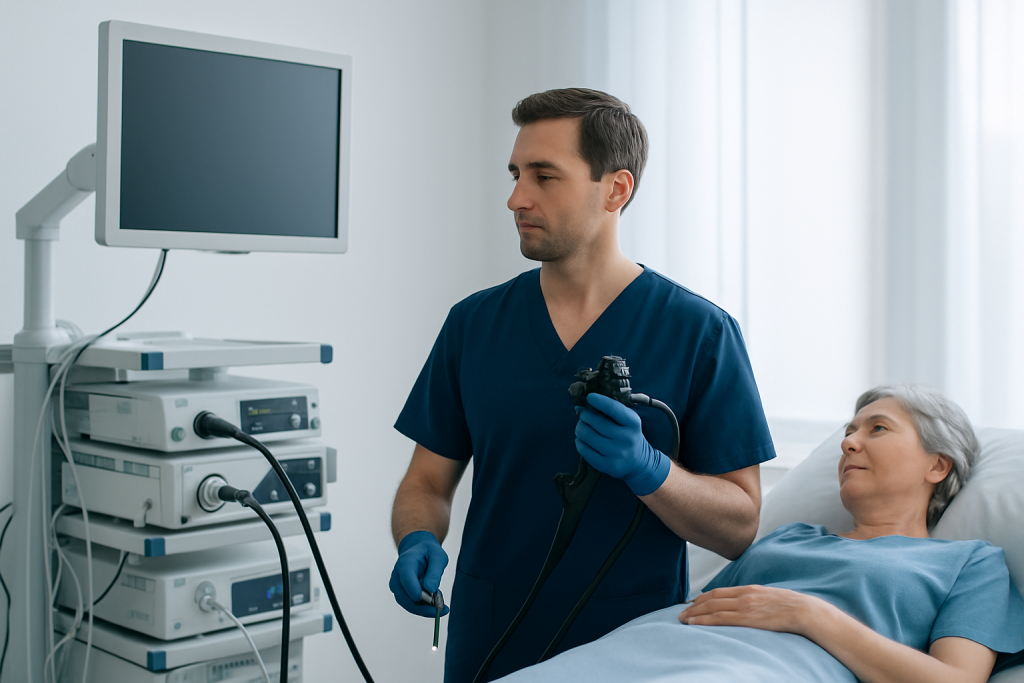
During the procedure, a thin flexible scope is passed through the mouth while the patient is comfortably sedated. The doctor can inspect the lining in real time and, when needed, take tiny tissue samples. These samples are often important because some causes of symptoms look similar from the outside but differ under the microscope.
Treatment Options
It helps to think of upper endoscopy as a diagnostic tool rather than a treatment by itself, although it can sometimes be used to treat certain problems during the same session. For example, a doctor may stop bleeding, widen a narrowed area, remove a small lesion, or collect biopsies to guide the next phase of care. The actual treatment plan depends on what the endoscopy shows.
If the findings suggest reflux, gastritis, an ulcer, or another inflammatory condition, treatment may include medication, diet adjustments, and a review of factors that irritate the stomach or esophagus. If a biopsy identifies infection, autoimmune changes, or a precancerous condition, the follow-up plan is tailored to that result. The goal is not only to relieve symptoms but also to understand why they are happening.
For people traveling from another country, a clear diagnosis can be especially valuable because it reduces guesswork when returning home. A well-documented report, pathology results when relevant, and a follow-up plan help the local physician continue care without restarting the evaluation from the beginning. Acibadem Health Point works with multidisciplinary specialists and JCI-accredited hospitals to diagnose and treat this condition for international patients.
Prevention & Self-care
Self-care can reduce symptom burden, though it should not delay evaluation if warning signs are present. Eating smaller meals, avoiding lying down right after meals, limiting trigger foods if they are clearly linked to symptoms, and moderating alcohol or tobacco use may help some people with reflux-like complaints. Staying hydrated and keeping a symptom diary can also make patterns easier to spot.
Medication habits deserve attention. Some stomach irritation can be related to frequent pain reliever use, and some symptoms are harder to interpret when medicines are started, stopped, or taken inconsistently. A doctor can help decide whether medicines should be adjusted, continued, or reviewed before endoscopy.
For patients planning care abroad, preparation includes bringing prior test results, a list of medications and allergies, and a brief timeline of symptoms. This makes the consultation more efficient and helps the specialist decide whether endoscopy is the right next step or whether another test should come first.
When to See a Doctor
A medical review is appropriate when upper digestive symptoms last longer than expected, return repeatedly, or begin to interfere with eating, sleep, or daily life. It is also wise to seek advice when a familiar symptom changes character, such as heartburn becoming painful swallowing, indigestion becoming vomiting, or mild discomfort becoming persistent pain.
Some situations deserve prompt medical attention rather than routine scheduling. These include vomiting blood, black stools, sudden trouble swallowing, severe chest or upper abdominal pain, fainting, or rapid unexplained weight loss. While these symptoms do not always mean something serious, they do need timely assessment.
For anyone preparing for evaluation in another country, early communication is especially helpful. Sharing prior records before travel can shorten the time to diagnosis and make the visit more productive. A gastroenterologist can then determine whether upper endoscopy is the most useful next step or whether another path fits better.
What to Expect Before and After the Procedure
Preparation is usually simple, but fasting instructions matter because the stomach needs to be empty for a safe and clear examination. The doctor or care team will explain what to stop, when to stop eating or drinking, and how to handle regular medicines. Patients who take blood thinners, diabetes medicines, or other long-term prescriptions should ask for individualized instructions.
After the procedure, most people go home the same day once the sedation wears off. Mild throat soreness, bloating, or sleepiness can occur briefly. A responsible adult is generally needed to accompany the patient home if sedation is used, and the patient should avoid driving or making major decisions until fully alert.
Biopsy results, if taken, may take additional time. The next steps depend on what was seen and whether tissue was collected. In some cases, the endoscopy brings reassurance; in others, it opens the door to targeted treatment that was difficult to plan from symptoms alone.
Frequently asked questions
01What symptoms make an upper endoscopy more likely to be recommended?
Difficulty swallowing, vomiting, black stools, unexplained weight loss, persistent pain, or symptoms that do not improve with standard treatment often shift the decision toward endoscopy. Doctors also consider age, family history, and medication use. The more the symptoms suggest a structural or bleeding-related issue, the more useful direct visualization becomes.
02Is heartburn alone enough reason for an upper endoscopy?
Not always. Many people with heartburn improve with lifestyle changes or medication, so endoscopy is usually reserved for persistent, severe, or changing symptoms, or when warning signs are present. A clinician decides based on the whole pattern, not just one episode of reflux.
03What does an upper endoscopy look for?
It lets the doctor inspect the esophagus, stomach, and first part of the small intestine for inflammation, ulcers, narrowing, bleeding, and other visible changes. The doctor can also take small biopsies if needed. Those samples may help confirm or rule out conditions that are not obvious from symptoms alone.
04Can an upper endoscopy be done if the patient is traveling from another country?
Yes, and it is often helpful when prior tests have not answered the main question. Bringing records, medication lists, and prior imaging or lab results makes the consultation more efficient. A clear report and biopsy results, when relevant, can also support follow-up care after the patient returns home.
05When should urgent medical help be sought instead of waiting for an appointment?
Urgent evaluation is important if there is vomiting blood, black stools, severe pain, sudden trouble swallowing, fainting, or rapid unexplained weight loss. These symptoms do not always mean a serious illness, but they should be assessed promptly. A doctor can decide whether emergency care or a fast outpatient endoscopy is most appropriate.
This article is for general information only and is not a substitute for professional medical advice. Please consult a qualified doctor about your individual situation.
Persistent digestive symptoms? Get evaluated in Turkey
JCI-accredited · board-certified surgeons · reply within 24h
Add us as a Preferred Source to see more of our trusted health content across Google Search, AI Overviews and Discover.